
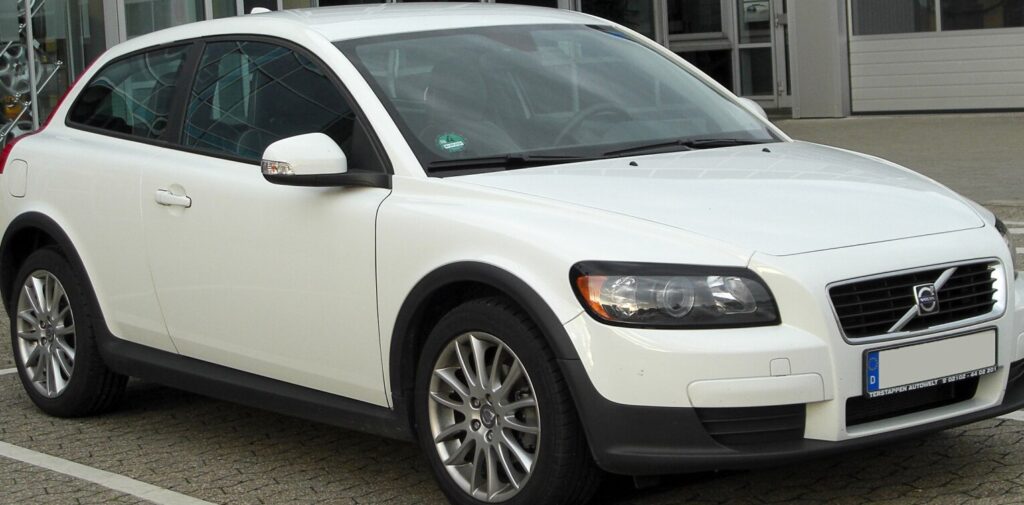
The Volvo C30 2.5 i 20V T5 Automatic, produced from 2008 to 2010, represents a distinctive offering within the second generation of Volvo’s C30 compact coupe. Positioned as a premium trim level, it combined a potent turbocharged five-cylinder engine with a five-speed automatic transmission, aiming to deliver a blend of performance and convenience. This variant was part of the larger C30 lineup built on Volvo’s P1 platform, shared with the Ford Focus and Mazda 3, but distinguished itself through its unique Scandinavian design and focus on driver engagement. The C30, in general, was intended to appeal to a younger demographic seeking a stylish and sporty alternative to traditional hatchbacks.
Technical Specifications
| Brand | Volvo |
| Model | C30 |
| Generation | C30 |
| Type (Engine) | 2.5 i 20V T5 (230 Hp) Automatic |
| Start of production | 2008 |
| End of production | 2010 |
| Powertrain Architecture | Internal Combustion engine |
| Body type | Coupe |
| Seats | 4 |
| Doors | 3 |
| Fuel consumption (urban) | 13.5 l/100 km (17.4 US mpg, 20.9 UK mpg, 7.4 km/l) |
| Fuel consumption (extra urban) | 6.5 l/100 km (36.2 US mpg, 43.5 UK mpg, 15.4 km/l) |
| Fuel consumption (combined) | 9.0 l/100 km (26.1 US mpg, 31.4 UK mpg, 11.1 km/l) |
| CO2 emissions | 211 g/km |
| Fuel Type | Petrol (Gasoline) |
| Acceleration 0 – 100 km/h | 7.1 sec |
| Acceleration 0 – 62 mph | 7.1 sec |
| Acceleration 0 – 60 mph | 6.7 sec |
| Maximum speed | 235 km/h (146.02 mph) |
| Weight-to-power ratio | 6.2 kg/Hp, 160.1 Hp/tonne |
| Weight-to-torque ratio | 4.5 kg/Nm, 222.7 Nm/tonne |
| Power | 230 Hp @ 5000 rpm |
| Torque | 320 Nm @ 1500-5000 rpm (236.02 lb.-ft. @ 1500-5000 rpm) |
| Engine layout | Front, Transverse |
| Engine Model/Code | B5254T7 |
| Engine displacement | 2521 cm3 (153.84 cu. in.) |
| Number of cylinders | 5 |
| Engine configuration | Inline |
| Cylinder Bore | 83 mm (3.27 in.) |
| Piston Stroke | 93.2 mm (3.67 in.) |
| Compression ratio | 9:1 |
| Number of valves per cylinder | 4 |
| Fuel injection system | Multi-port manifold injection |
| Engine aspiration | Turbocharger, Intercooler |
| Engine oil capacity | 5.8 l (6.13 US qt | 5.1 UK qt) |
| Coolant | 10 l (10.57 US qt | 8.8 UK qt) |
| Kerb Weight | 1437 kg (3168.04 lbs.) |
| Max. weight | 1860 kg (4100.6 lbs.) |
| Max load | 423 kg (932.56 lbs.) |
| Trunk (boot) space – minimum | 233 l (8.23 cu. ft.) |
| Fuel tank capacity | 62 l (16.38 US gal | 13.64 UK gal) |
| Permitted trailer load with brakes (12%) | 1500 kg (3306.93 lbs.) |
| Permitted trailer load without brakes | 700 kg (1543.24 lbs.) |
| Permitted towbar download | 75 kg (165.35 lbs.) |
| Length | 4252 mm (167.4 in.) |
| Width | 1782 mm (70.16 in.) |
| Width including mirrors | 2039 mm (80.28 in.) |
| Height | 1447 mm (56.97 in.) |
| Wheelbase | 2640 mm (103.94 in.) |
| Front track | 1535 mm (60.43 in.) |
| Rear (Back) track | 1531 mm (60.28 in.) |
| Minimum turning circle (turning diameter) | 10.6 m (34.78 ft.) |
| Drivetrain Architecture | The Internal combustion engine (ICE) drives the front wheels of the vehicle. |
| Drive wheel | Front wheel drive |
| Number of gears and type of gearbox | 5 gears, automatic transmission |
| Front suspension | Spring Strut |
| Rear suspension | Transverse stabilizer |
| Front brakes | Ventilated discs |
| Rear brakes | Ventilated discs |
| Assisting systems | ABS (Anti-lock braking system) |
| Steering type | Steering rack and pinion |
| Tires size | 205/55 R16 |
| Wheel rims size | 16 |
Powertrain & Engine Architecture
The heart of the C30 T5 Automatic is Volvo’s B5254T7 engine, a 2.5-liter inline-five cylinder powerplant. This engine is a descendant of Volvo’s long-running white block engine family, known for its robustness and tuning potential. The B5254T7 features a light-pressure turbocharger with an intercooler, boosting power output to 230 horsepower at 5000 rpm and 320 Nm (236 lb-ft) of torque available from a low 1500 rpm through to 5000 rpm. Fuel delivery is managed by a multi-port fuel injection system. The engine’s 9:1 compression ratio strikes a balance between performance and fuel efficiency. The five-speed automatic transmission, sourced from Aisin, was chosen for its smooth operation and reliability. While not offering the quickest shifts, it provided a comfortable driving experience, particularly in urban environments.
Driving Characteristics
The C30 2.5 i T5 Automatic offered a respectable level of performance. The 0-60 mph sprint was achieved in approximately 6.7 seconds, and it had a top speed of 146 mph. However, the automatic transmission did slightly diminish the acceleration compared to the six-speed manual version. The automatic’s gear ratios were tuned for a balance of fuel economy and drivability, resulting in a less aggressive feel than the manual. The turbocharger provided a noticeable boost in power, but turbo lag was present, especially at lower engine speeds. The front-wheel-drive configuration, while adequate, could exhibit some torque steer under hard acceleration.
Equipment & Trim Levels
The C30 T5 Automatic typically came well-equipped, reflecting its position as a premium trim. Standard features included leather upholstery, automatic climate control, a premium audio system, and alloy wheels. Optional extras included a sunroof, navigation system, and upgraded interior trim options. Safety features were, as with all Volvos, a priority, with standard inclusion of ABS, traction control, and multiple airbags. The C30’s interior design was minimalist and modern, with a focus on functionality and driver ergonomics.
Chassis & Braking
The C30’s chassis was based on the Ford Focus platform, but Volvo made significant modifications to enhance its handling and ride quality. The front suspension utilized MacPherson struts, while the rear employed a multi-link setup. The T5 Automatic model featured ventilated disc brakes on all four wheels, providing ample stopping power. ABS (Anti-lock Braking System) was standard. The suspension tuning was geared towards a sporty feel, offering a good balance between comfort and handling. Stabilizer bars were fitted front and rear to reduce body roll during cornering.
Market Reception & Comparison
The Volvo C30 2.5 i T5 Automatic received generally positive reviews from automotive critics. It was praised for its stylish design, comfortable interior, and strong performance. However, some critics noted that the automatic transmission wasn’t as engaging as the manual option, and the fuel economy wasn’t particularly impressive for its class. Compared to the lower-powered 1.6L and 2.0L C30 models, the T5 offered a significant performance upgrade, but at a higher price point. Against competitors like the Audi A3 and BMW 1 Series, the C30 offered a unique Scandinavian aesthetic and a strong emphasis on safety.
Legacy
The Volvo C30, while not a massive sales success, has gained a following among enthusiasts who appreciate its distinctive design and driving experience. The B5254T7 engine, in particular, is known for its durability and potential for modification. The five-speed Aisin automatic transmission has proven to be relatively reliable, although regular maintenance is essential. Today, well-maintained C30 T5 Automatics can be found on the used car market at reasonable prices, offering a stylish and capable alternative to more mainstream compact coupes. The C30 represents a bold design statement from Volvo and a unique chapter in the company’s history.
