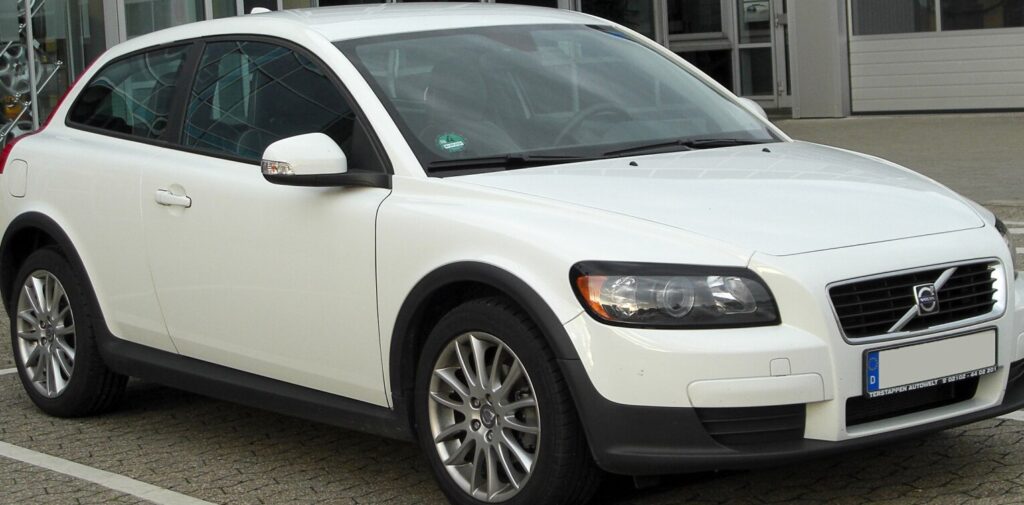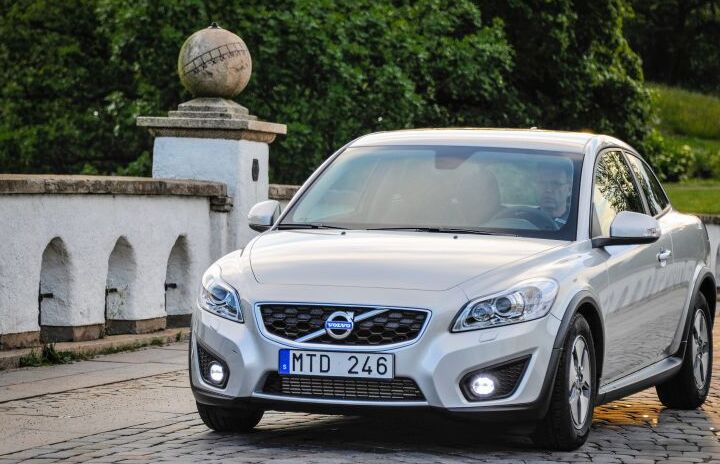
The Volvo C30 1.6 D2, produced from 2010 to 2012, represented an entry-level offering within the C30’s facelifted second generation (internally designated as the 2010 model year update). Positioned as a stylish, compact coupe, the C30 aimed to attract a younger demographic seeking a premium Scandinavian design with improved fuel efficiency. This variant, powered by a 1.6-liter turbocharged diesel engine producing 114 horsepower, was primarily sold in Europe where diesel engines held a significant market share. It offered a balance between affordability and Volvo’s renowned safety standards, though it wasn’t available in the North American market.
Technical Specifications
| Brand | Volvo |
| Model | C30 |
| Generation | C30 (facelift 2010) |
| Type (Engine) | 1.6 D2 (114 Hp) |
| Start of production | 2010 |
| End of production | 2012 |
| Powertrain Architecture | Internal Combustion engine |
| Body type | Coupe |
| Seats | 4 |
| Doors | 3 |
| Fuel consumption (urban) | 5.2 l/100 km (45.2 US mpg, 54.3 UK mpg, 19.2 km/l) |
| Fuel consumption (extra urban) | 3.8 l/100 km (61.9 US mpg, 74.3 UK mpg, 26.3 km/l) |
| Fuel consumption (combined) | 4.3 l/100 km (54.7 US mpg, 65.7 UK mpg, 23.3 km/l) |
| CO2 emissions | 114 g/km |
| Fuel Type | Diesel |
| Acceleration 0 – 100 km/h | 11.3 sec |
| Acceleration 0 – 62 mph | 11.3 sec |
| Acceleration 0 – 60 mph | 10.7 sec |
| Emission standard | Euro 5 |
| Weight-to-power ratio | 11.7 kg/Hp, 85.6 Hp/tonne |
| Weight-to-torque ratio | 4.9 kg/Nm, 202.9 Nm/tonne |
| Power | 114 Hp @ 3600 rpm |
| Power per litre | 73.1 Hp/l |
| Torque | 270 Nm @ 1750-2500 rpm (199.14 lb.-ft. @ 1750-2500 rpm) |
| Engine layout | Front, Transverse |
| Engine Model/Code | D4162T |
| Engine displacement | 1560 cm3 (95.2 cu. in.) |
| Number of cylinders | 4 |
| Engine configuration | Inline |
| Piston Stroke | 75 mm (2.95 in.) |
| Fuel injection system | Diesel Commonrail |
| Engine aspiration | Turbocharger, Intercooler |
| Engine oil capacity | 3.8 l (4.02 US qt | 3.34 UK qt) |
| Coolant | 6.2 l (6.55 US qt | 5.46 UK qt) |
| Kerb Weight | 1331 kg (2934.35 lbs.) |
| Max. weight | 1780 kg (3924.23 lbs.) |
| Max load | 449 kg (989.88 lbs.) |
| Trunk (boot) space – minimum | 233 l (8.23 cu. ft.) |
| Fuel tank capacity | 52 l (13.74 US gal | 11.44 UK gal) |
| Length | 4266 mm (167.95 in.) |
| Width | 1782 mm (70.16 in.) |
| Height | 1447 mm (56.97 in.) |
| Wheelbase | 2640 mm (103.94 in.) |
| Front track | 1548 mm (60.94 in.) |
| Rear (Back) track | 1544 mm (60.79 in.) |
| Minimum turning circle | 11.1 m (36.42 ft.) |
| Drivetrain Architecture | The Internal combustion engine (ICE) drives the front wheels of the vehicle. |
| Drive wheel | Front wheel drive |
| Number of gears | 6 gears, manual transmission |
| Assisting systems | ABS (Anti-lock braking system) |
| Steering type | Steering rack and pinion |
Powertrain & Engine Architecture
The heart of the C30 D2 is Volvo’s D4162T 1.6-liter inline-four cylinder diesel engine. This engine is part of Volvo’s modular engine family, developed in collaboration with Peugeot-Citroën. It utilizes a common-rail direct fuel injection system, delivering fuel at extremely high pressure for optimized combustion. A turbocharger with an intercooler is employed to boost power output and improve torque across a wider rev range. The engine produces 114 horsepower at 3600 rpm and a respectable 270 Nm (199 lb-ft) of torque between 1750 and 2500 rpm. This torque figure is a key characteristic of diesel engines, providing strong low-end pulling power. The engine meets Euro 5 emission standards, incorporating a diesel particulate filter (DPF) to reduce soot emissions. The C30 D2 was exclusively offered with a 6-speed manual transmission, prioritizing fuel economy over outright performance.
Driving Characteristics
The 1.6 D2 powertrain in the C30 delivers a driving experience focused on efficiency and usability rather than sporty performance. Acceleration from 0-60 mph takes around 10.7 seconds, which is adequate for everyday driving but doesn’t offer much in the way of excitement. The strength of this engine lies in its mid-range torque, making it easy to navigate city streets and maintain comfortable cruising speeds on the highway. The 6-speed manual transmission is well-matched to the engine’s characteristics, allowing drivers to keep the engine in its optimal torque band. Compared to the more powerful 2.0-liter diesel variants (like the D4), the D2 feels noticeably slower, but it compensates with significantly improved fuel economy. The gear ratios are tuned for maximizing fuel efficiency, meaning the engine doesn’t rev as freely as in higher-performance models.
Equipment & Trim Levels
The C30 1.6 D2 typically came with a reasonable level of standard equipment, reflecting its position as an entry-level model. Standard features generally included air conditioning, power windows, power mirrors, a basic audio system with CD player, and ABS brakes. Safety features, a hallmark of Volvo, were comprehensive, including airbags, stability control, and traction control. Interior upholstery was typically cloth, with options for leather upgrades. Optional extras included a sunroof, upgraded audio systems, parking sensors, and alloy wheels. Trim levels varied slightly depending on the market, but generally, the D2 was offered with a limited number of option packages to keep the price competitive.
Chassis & Braking
The C30’s chassis is based on the Volvo/Ford C1 platform, shared with the Ford Focus and Mazda 3. The front suspension utilizes MacPherson struts, while the rear suspension employs a multi-link setup. This configuration provides a good balance between ride comfort and handling. The D2 variant, being the lighter of the C30 models, benefits from slightly more agile handling. Braking systems consisted of ventilated front discs and drum brakes at the rear. While adequate for the vehicle’s weight and performance, the rear drum brakes were a cost-saving measure compared to the disc brakes found on higher-spec C30 models. A stabilizer bar was fitted to both the front and rear axles to reduce body roll during cornering.
Market Reception & Comparison
The Volvo C30 1.6 D2 was generally well-received by automotive critics as a stylish and economical coupe. However, its relatively low power output was often cited as a drawback. Compared to the more powerful diesel variants, the D2 offered significantly better fuel economy, making it an attractive option for drivers prioritizing efficiency. Its fuel consumption figures of around 54.7 US mpg combined were highly competitive for its class. Reliability was generally good, with the 1.6-liter diesel engine proving to be durable. However, the DPF required periodic maintenance to prevent clogging, which could be a potential cost for owners.
Legacy
The Volvo C30 1.6 D2 has established a reputation as a reliable and economical used car. The D4162T engine, while not known for blistering performance, is generally considered to be robust and long-lasting. The C30’s distinctive Scandinavian design continues to appeal to buyers looking for a stylish and unique vehicle. While the C30 was discontinued in 2013, the 1.6 D2 variant remains a viable option for those seeking a fuel-efficient and well-equipped coupe at an affordable price point. Parts availability is generally good, and maintenance costs are reasonable, making it a practical choice for everyday use.