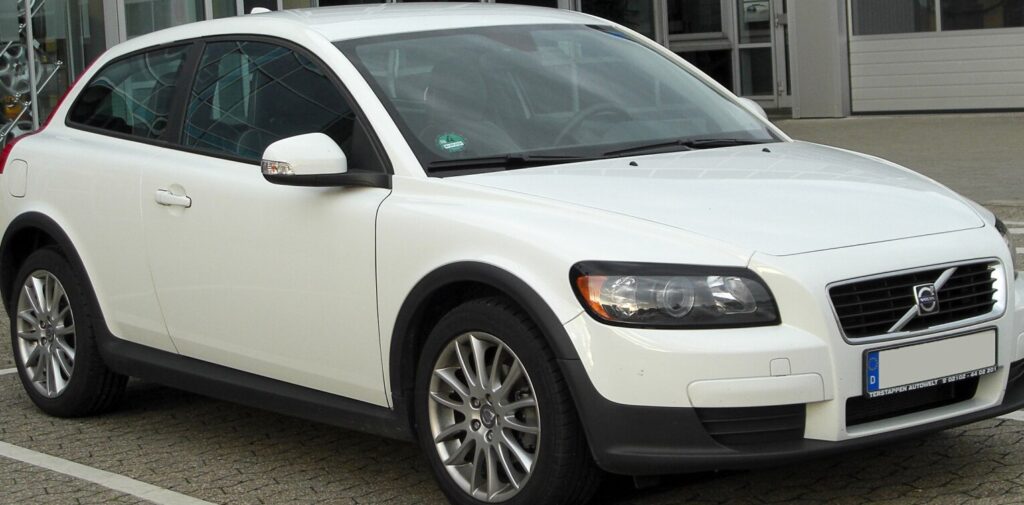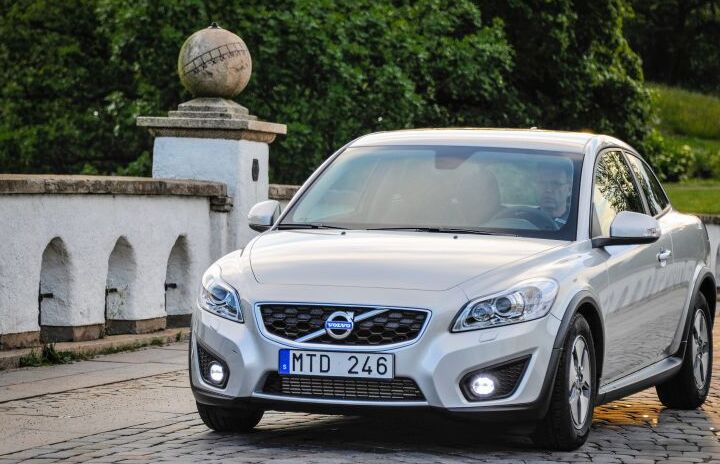
The Volvo C30 D3 Automatic, produced from 2010 to 2012, represents a compelling blend of Scandinavian design, practicality, and fuel efficiency within the broader second-generation C30 lineup (introduced in 2006). This variant, powered by a 2.0-liter turbocharged diesel engine producing 150 horsepower, was positioned as a mid-range offering, appealing to buyers seeking a stylish coupe with reasonable running costs and the convenience of an automatic transmission. It sat below the more powerful petrol variants like the T5, and above the lower-powered D2 model. The C30 itself was Volvo’s attempt to capture a younger demographic with a sporty, compact coupe, and the D3 Automatic aimed to broaden its appeal by offering a refined and economical driving experience.
Technical Specifications
| Brand | Volvo |
| Model | C30 |
| Generation | C30 (facelift 2010) |
| Type (Engine) | 2.0 D3 (150 Hp) Automatic |
| Start of production | 2010 |
| End of production | 2012 |
| Powertrain Architecture | Internal Combustion engine |
| Body type | Coupe |
| Seats | 4 |
| Doors | 3 |
| Fuel consumption (urban) | 7.9 l/100 km (29.8 US mpg, 35.8 UK mpg, 12.7 km/l) |
| Fuel consumption (extra urban) | 4.6 l/100 km (51.1 US mpg, 61.4 UK mpg, 21.7 km/l) |
| Fuel consumption (combined) | 5.8 l/100 km (40.6 US mpg, 48.7 UK mpg, 17.2 km/l) |
| CO2 emissions | 154 g/km |
| Fuel Type | Diesel |
| Acceleration 0 – 100 km/h | 9.5 sec |
| Acceleration 0 – 62 mph | 9.5 sec |
| Acceleration 0 – 60 mph | 9 sec |
| Emission standard | Euro 5 |
| Weight-to-power ratio | 9.7 kg/Hp, 103.4 Hp/tonne |
| Weight-to-torque ratio | 4.1 kg/Nm, 241.4 Nm/tonne |
| Power | 150 Hp @ 3500 rpm |
| Power per litre | 75.6 Hp/l |
| Torque | 350 Nm @ 1500-2750 rpm (258.15 lb.-ft. @ 1500-2750 rpm) |
| Engine layout | Front, Transverse |
| Engine Model/Code | D5204T5 |
| Engine displacement | 1984 cm3 (121.07 cu. in.) |
| Number of cylinders | 5 |
| Engine configuration | Inline |
| Piston Stroke | 81 mm (3.19 in.) |
| Fuel injection system | Diesel Commonrail |
| Engine aspiration | Turbocharger, Intercooler |
| Engine oil capacity | 5.9 l (6.23 US qt | 5.19 UK qt) |
| Coolant | 8.5 l (8.98 US qt | 7.48 UK qt) |
| Kerb Weight | 1450 kg (3196.7 lbs.) |
| Max. weight | 1900 kg (4188.78 lbs.) |
| Max load | 450 kg (992.08 lbs.) |
| Trunk (boot) space – minimum | 233 l (8.23 cu. ft.) |
| Fuel tank capacity | 52 l (13.74 US gal | 11.44 UK gal) |
| Length | 4266 mm (167.95 in.) |
| Width | 1782 mm (70.16 in.) |
| Height | 1447 mm (56.97 in.) |
| Wheelbase | 2640 mm (103.94 in.) |
| Front track | 1548 mm (60.94 in.) |
| Rear (Back) track | 1544 mm (60.79 in.) |
| Minimum turning circle | 11.1 m (36.42 ft.) |
| Drivetrain Architecture | The Internal combustion engine (ICE) drives the front wheels of the vehicle. |
| Drive wheel | Front wheel drive |
| Number of gears and type of gearbox | 6 gears, automatic transmission |
| Assisting systems | ABS (Anti-lock braking system) |
| Steering type | Steering rack and pinion |
Powertrain & Engine Architecture
The heart of the C30 D3 Automatic is Volvo’s D5204T5 2.0-liter inline-five cylinder diesel engine. This engine is a member of Volvo’s modular engine family, known for its robust construction and relatively simple design. It utilizes a common rail direct injection system, delivering fuel at extremely high pressure for optimized combustion. A variable geometry turbocharger (VGT) with an intercooler is employed to boost power and torque, mitigating turbo lag and providing a broad, usable powerband. The engine produces 150 horsepower at 3500 rpm and a substantial 350 Nm (258 lb-ft) of torque between 1500 and 2750 rpm. This torque output is a key characteristic of the engine, providing strong acceleration in everyday driving situations. The automatic transmission is a six-speed unit, offering smooth shifts and contributing to the car’s overall refinement. While not a dual-clutch transmission, it’s well-matched to the engine’s characteristics, providing adequate response for most drivers.
Driving Characteristics
The C30 D3 Automatic delivers a comfortable and composed driving experience. The abundance of low-end torque from the diesel engine means that the car feels responsive even at lower speeds, making it well-suited for urban driving. The automatic transmission shifts smoothly, although it isn’t particularly sporty or quick to respond to throttle inputs. Compared to the manual transmission versions of the D3, the automatic sacrifices some driver engagement, but gains in convenience. Against the more powerful T5 petrol variant, the D3 Automatic is noticeably slower in acceleration, taking around 9.5 seconds to reach 62 mph. However, the D3 offers significantly better fuel economy, making it a more economical choice for high-mileage drivers. The gear ratios are tuned for fuel efficiency and relaxed cruising, rather than outright performance.
Equipment & Trim Levels
The C30 D3 Automatic typically came equipped with a respectable level of standard features. These included climate control, power windows and mirrors, a CD stereo system with auxiliary input, and alloy wheels. Safety features were, as with all Volvos, a priority, with standard equipment including ABS brakes, traction control, and multiple airbags. Optional extras included leather upholstery, a sunroof, a premium audio system, and parking sensors. The interior design was minimalist and Scandinavian, with a focus on functionality and ergonomics. The dashboard layout was clean and uncluttered, and the seats provided good support.
Chassis & Braking
The C30’s chassis is based on the Volvo S40/V50 platform. The front suspension utilizes MacPherson struts, while the rear suspension employs a multi-link setup. This configuration provides a good balance between ride comfort and handling. The D3 Automatic variant typically featured disc brakes on the front wheels and drum brakes on the rear, which was common for this weight class and trim level. Anti-lock brakes (ABS) were standard, providing enhanced braking performance and stability. The steering is a rack and pinion system, offering precise and responsive control.
Market Reception & Comparison
The Volvo C30 D3 Automatic was generally well-received by automotive critics. It was praised for its stylish design, comfortable interior, and fuel-efficient engine. However, some critics noted that the automatic transmission wasn’t as engaging as the manual gearbox, and that the car’s rear seats were somewhat cramped. Compared to rivals like the Audi A3 and BMW 1 Series, the C30 offered a unique Scandinavian aesthetic and a strong emphasis on safety. The D3 Automatic’s fuel economy was competitive with other diesel-powered coupes in its class, and its reliability was generally considered to be good.
Legacy
The Volvo C30, while not a massive sales success, has gained a cult following among enthusiasts who appreciate its distinctive design and quirky character. The D5204T5 engine, in particular, is known for its durability and relatively straightforward maintenance. The automatic transmission, while not the most advanced, has proven to be reliable in many cases. Today, well-maintained C30 D3 Automatics can be found on the used car market at reasonable prices, offering a stylish and economical alternative to more mainstream coupes. Parts availability is generally good, and the car’s relatively simple construction makes it a viable option for DIY mechanics.