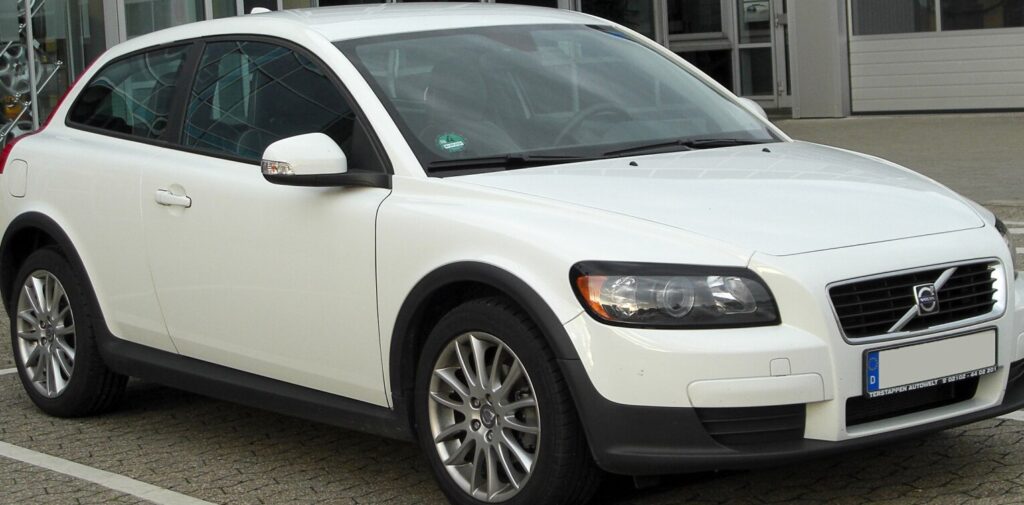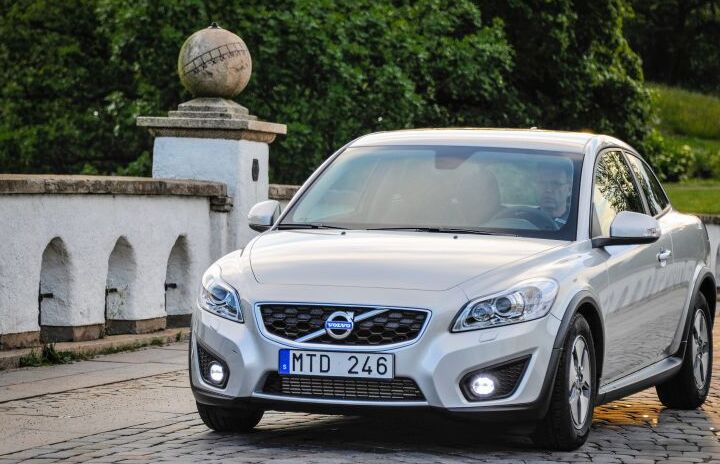
The Volvo C30 2.0F 16V (145 hp) Ethanol, produced from 2010 to 2012, represents a mid-cycle refresh of Volvo’s compact coupe. Part of the first-generation C30 (introduced in 2006), this variant was primarily aimed at the European market, offering a blend of Scandinavian design, practicality, and a flexible fuel option. It sat within the C30 lineup as a mid-range offering, positioned between the lower-powered 1.6L models and the performance-oriented T5 variants. The facelift brought styling updates, improved safety features, and refinements to the engine range, including optimized ethanol compatibility.
Technical Specifications
| Brand | Volvo |
| Model | C30 |
| Generation | C30 (facelift 2010) |
| Type (Engine) | 2.0F 16V (145 Hp) Ethanol |
| Start of production | 2010 |
| End of production | 2012 |
| Powertrain Architecture | Internal Combustion engine |
| Body type | Coupe |
| Seats | 4 |
| Doors | 3 |
| Fuel consumption (economy) – urban | 10.9 l/100 km (21.6 US mpg, 25.9 UK mpg, 9.2 km/l) |
| Fuel consumption (economy) – urban (Ethanol – E85) | 14.8 l/100 km |
| Fuel consumption (economy) – extra urban | 5.9 l/100 km (39.9 US mpg, 47.9 UK mpg, 16.9 km/l) |
| Fuel consumption (economy) – extra urban (Ethanol – E85) | 8.2 l/100 km |
| Fuel consumption (economy) – combined | 7.7 l/100 km (30.5 US mpg, 36.7 UK mpg, 13 km/l) |
| Fuel consumption (economy) – combined (Ethanol – E85) | 10.6 l/100 km |
| CO2 emissions | 180 g/km |
| CO2 emissions (Ethanol – E85) | 174 g/km |
| Fuel Type | Petrol / Ethanol – E85 |
| Acceleration 0 – 100 km/h | 9.4 sec |
| Acceleration 0 – 62 mph | 9.4 sec |
| Acceleration 0 – 60 mph | 8.9 sec |
| Maximum speed | 210 km/h (130.49 mph) |
| Emission standard | Euro 4 |
| Weight-to-power ratio | 9.7 kg/Hp, 102.9 Hp/tonne |
| Weight-to-torque ratio | 7.6 kg/Nm, 131.3 Nm/tonne |
| Power | 145 Hp @ 6000 rpm |
| Power per litre | 72.5 Hp/l |
| Torque | 185 Nm @ 4500 rpm (136.45 lb.-ft. @ 4500 rpm) |
| Engine layout | Front, Transverse |
| Engine Model/Code | B4204S4 |
| Engine displacement | 1999 cm3 (121.99 cu. in.) |
| Number of cylinders | 4 |
| Engine configuration | Inline |
| Cylinder Bore | 87.5 mm (3.44 in.) |
| Piston Stroke | 83.1 mm (3.27 in.) |
| Compression ratio | 10.8:1 |
| Number of valves per cylinder | 4 |
| Fuel injection system | Multi-port manifold injection |
| Engine aspiration | Naturally aspirated engine |
| Valvetrain | DOHC |
| Engine oil capacity | 4.3 l (4.54 US qt | 3.78 UK qt) |
| Coolant | 6.5 l (6.87 US qt | 5.72 UK qt) |
| Kerb Weight | 1409 kg (3106.31 lbs.) |
| Max. weight | 1750 kg (3858.09 lbs.) |
| Max load | 341 kg (751.78 lbs.) |
| Trunk (boot) space – minimum | 278 l (9.82 cu. ft.) |
| Trunk (boot) space – maximum | 921 l (32.52 cu. ft.) |
| Fuel tank capacity | 55 l (14.53 US gal | 12.1 UK gal) |
| Permitted trailer load with brakes (12%) | 1350 kg (2976.24 lbs.) |
| Permitted trailer load without brakes | 700 kg (1543.24 lbs.) |
| Permitted towbar download | 75 kg (165.35 lbs.) |
| Length | 4266 mm (167.95 in.) |
| Width | 1782 mm (70.16 in.) |
| Width including mirrors | 2039 mm (80.28 in.) |
| Height | 1447 mm (56.97 in.) |
| Wheelbase | 2640 mm (103.94 in.) |
| Front track | 1535 mm (60.43 in.) |
| Rear (Back) track | 1531 mm (60.28 in.) |
| Minimum turning circle | 10.6 m (34.78 ft.) |
| Drivetrain Architecture | The Internal combustion engine (ICE) drives the front wheels of the vehicle. |
| Drive wheel | Front wheel drive |
| Number of gears and type of gearbox | 5 gears, manual transmission |
| Front suspension | Spring Strut |
| Rear suspension | Transverse stabilizer |
| Front brakes | Ventilated discs |
| Rear brakes | Ventilated discs |
| Assisting systems | ABS (Anti-lock braking system) |
| Steering type | Steering rack and pinion |
| Tires size | 205/50 R17 |
| Wheel rims size | 17 |
Powertrain & Engine Architecture
The C30 2.0F 16V utilizes Volvo’s B4204S4 engine, a 1.999-liter inline-four cylinder powerplant. This engine is a naturally aspirated design featuring multi-port fuel injection and a double overhead camshaft (DOHC) valvetrain with four valves per cylinder. The engine was specifically designed to run on both gasoline and E85 ethanol fuel, offering drivers a flexible fuel option. The 145 horsepower output is achieved at 6000 rpm, while peak torque of 185 Nm (136.45 lb-ft) arrives at 4500 rpm. The engine’s compression ratio is 10.8:1. The transmission paired with this engine is a 5-speed manual gearbox, delivering power to the front wheels. While an automatic transmission was available on other C30 variants, the 2.0F Ethanol was exclusively offered with the manual.
Driving Characteristics
The 145 hp 2.0F Ethanol C30 provides adequate performance for everyday driving. Acceleration from 0-100 km/h (0-62 mph) takes approximately 9.4 seconds. The manual transmission allows for a more engaging driving experience compared to the automatic options available on other C30 models. The gear ratios are tuned for a balance between fuel efficiency and responsiveness. While not a sports car, the C30 handles reasonably well, offering a stable and predictable ride. Compared to the more powerful T5 models, the 2.0F feels less urgent in its acceleration, but it offers a more economical driving experience. The E85 compatibility allows for potentially lower fuel costs, depending on local pricing, but typically results in a slight decrease in fuel economy.
Equipment & Trim Levels
The 2.0F Ethanol trim typically included standard features such as air conditioning, power windows and mirrors, a CD stereo system, and ABS brakes. Safety was a key focus for Volvo, and this model included features like side airbags and a whiplash protection system. Interior upholstery was typically cloth, with options for leather upgrades. Available optional extras included a sunroof, upgraded audio system, and parking sensors. The dashboard layout was typical of Volvo’s Scandinavian design aesthetic, emphasizing simplicity and functionality.
Chassis & Braking
The C30 utilizes a MacPherson strut front suspension and a multi-link rear suspension, providing a comfortable and controlled ride. The chassis is relatively lightweight, contributing to the car’s agility. Braking duties are handled by ventilated disc brakes on all four wheels, providing adequate stopping power. ABS (Anti-lock Braking System) is standard, enhancing safety during emergency braking situations. The C30’s suspension tuning is geared towards comfort rather than outright sportiness, but it still offers a reasonably engaging driving experience.
Market Reception & Comparison
The Volvo C30 2.0F Ethanol was generally well-received by critics as a stylish and practical coupe. The E85 compatibility was seen as a positive feature, appealing to environmentally conscious drivers. However, some reviewers noted that the 145 hp engine felt somewhat underpowered, particularly when compared to the more potent T5 models. Fuel economy was considered reasonable, especially when running on E85. Compared to rivals like the Audi A3 and BMW 1 Series, the C30 offered a unique Scandinavian design and a strong emphasis on safety.
Legacy
The Volvo C30, while not a massive sales success, has gained a following among enthusiasts for its distinctive styling and practicality. The B4204S4 engine, while not known for being particularly complex, is generally considered reliable with proper maintenance. The ethanol compatibility adds a unique aspect to this variant, making it appealing to those seeking a flexible fuel option. In the used car market, the C30 2.0F Ethanol represents a relatively affordable entry point into Volvo ownership, offering a blend of style, safety, and fuel efficiency. Regular maintenance, including oil changes and timing belt replacements, is crucial for ensuring the long-term reliability of this powertrain.