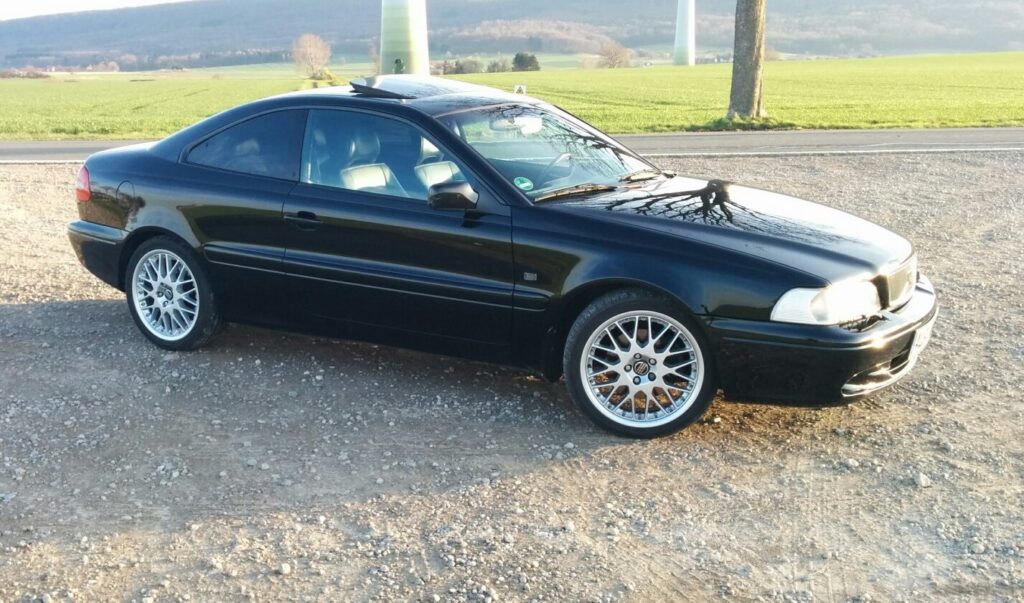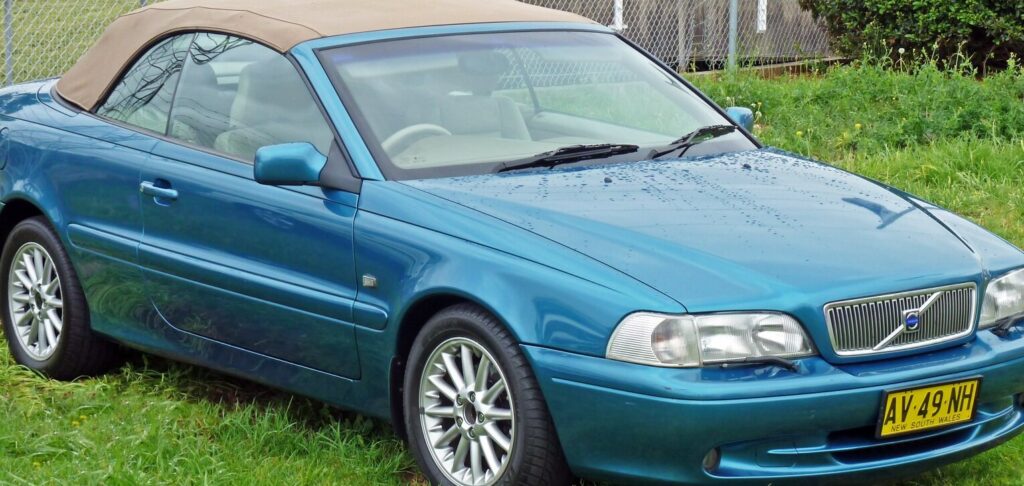
The Volvo C70 Convertible, specifically the 2.0 20V variant producing 180 horsepower, was a stylish and relatively accessible entry into the premium convertible market. Produced from 1997 to 2005, this generation (internally designated as the first generation C70) represented Volvo’s attempt to capture a larger share of the open-top luxury segment. It was built in collaboration with Pininfarina, the renowned Italian design house, and shared its platform with the S40 and V40 models. The 2.0 20V trim occupied a middle ground in the C70 lineup, offering a balance between performance and affordability compared to the higher-output turbocharged versions.
Technical Specifications
| Brand | Volvo |
| Model | C70 |
| Generation | C70 Convertible |
| Type (Engine) | 2.0 20V (180 Hp) |
| Start of production | 1997 |
| End of production | 2005 |
| Powertrain Architecture | Internal Combustion engine |
| Body type | Cabriolet |
| Seats | 4 |
| Doors | 2 |
| Fuel consumption (urban) | 16.3 l/100 km (14.4 US mpg, 17.3 UK mpg, 6.1 km/l) |
| Fuel consumption (extra urban) | 8.4 l/100 km (28 US mpg, 33.6 UK mpg, 11.9 km/l) |
| Fuel Type | Petrol (Gasoline) |
| Acceleration 0 – 100 km/h | 9.3 sec |
| Acceleration 0 – 62 mph | 9.3 sec |
| Acceleration 0 – 60 mph | 8.8 sec |
| Maximum speed | 220 km/h (136.7 mph) |
| Weight-to-power ratio | 8.7 kg/Hp, 114.6 Hp/tonne |
| Weight-to-torque ratio | 7.1 kg/Nm, 140.1 Nm/tonne |
| Power | 180 Hp @ 5700 rpm |
| Power per litre | 90.7 Hp/l |
| Torque | 220 Nm @ 2100 rpm (162.26 lb.-ft. @ 2100 rpm) |
| Engine layout | Front, Transverse |
| Engine Model/Code | B5204T2 |
| Engine displacement | 1984 cm3 (121.07 cu. in.) |
| Number of cylinders | 5 |
| Engine configuration | Inline |
| Cylinder Bore | 81 mm (3.19 in.) |
| Piston Stroke | 77 mm (3.03 in.) |
| Compression ratio | 8.4:1 |
| Number of valves per cylinder | 4 |
| Fuel injection system | Multi-port manifold injection |
| Engine aspiration | Turbocharger |
| Valvetrain | DOHC |
| Engine oil capacity | 5.8 l (6.13 US qt | 5.1 UK qt) |
| Coolant | 7 l (7.4 US qt | 6.16 UK qt) |
| Kerb Weight | 1570 kg (3461.26 lbs.) |
| Max. weight | 1970 kg (4343.11 lbs.) |
| Max load | 400 kg (881.85 lbs.) |
| Trunk (boot) space – minimum | 260 l (9.18 cu. ft.) |
| Fuel tank capacity | 70 l (18.49 US gal | 15.4 UK gal) |
| Length | 4720 mm (185.83 in.) |
| Width | 1820 mm (71.65 in.) |
| Height | 1410 mm (55.51 in.) |
| Wheelbase | 2660 mm (104.72 in.) |
| Front track | 1520 mm (59.84 in.) |
| Rear (Back) track | 1520 mm (59.84 in.) |
| Drivetrain Architecture | The Internal combustion engine (ICE) drives the front wheels of the vehicle. |
| Drive wheel | Front wheel drive |
| Number of gears and type of gearbox | 5 gears, manual transmission |
| Front suspension | Wishbone |
| Rear suspension | Coil spring |
| Front brakes | Ventilated discs |
| Rear brakes | Disc |
| Assisting systems | ABS (Anti-lock braking system) |
| Steering type | Steering rack and pinion |
| Power steering | Hydraulic Steering |
| Tires size | 225/50 R17 |
| Wheel rims size | 17 |
Powertrain & Engine Architecture
The C70 2.0 20V was powered by Volvo’s B5204T2 engine, a 1.984-liter inline-five cylinder powerplant. This engine featured a light-pressure turbocharger, multi-port fuel injection, and a double overhead camshaft (DOHC) valvetrain with four valves per cylinder. The 20V designation refers to the 20 valves (four per cylinder) which contributed to the engine’s relatively smooth power delivery. The B5204T2 produced 180 horsepower at 5700 rpm and 220 Nm (162 lb-ft) of torque at 2100 rpm. The engine was transversely mounted in the front of the vehicle. The standard transmission for this variant was a 5-speed manual gearbox, providing direct control over the engine’s power. While an automatic transmission was available, it was less common and often perceived as detracting from the driving experience.
Driving Characteristics
The 180 hp C70 2.0 20V offered a respectable, though not exhilarating, driving experience. Acceleration from 0 to 60 mph took around 8.8 seconds, and it had a top speed of 136.7 mph. Compared to the turbocharged T5 version, the 2.0 20V felt noticeably less powerful, particularly during overtaking maneuvers. However, the turbocharger did provide a useful boost in mid-range torque, making it reasonably responsive in everyday driving situations. The 5-speed manual transmission was well-matched to the engine, offering precise shifts and allowing the driver to keep the engine in its optimal power band. The front-wheel-drive configuration provided predictable handling, although it wasn’t as engaging as a rear-wheel-drive setup.
Equipment & Trim Levels
The C70 2.0 20V typically came equipped with a reasonable level of standard features, including power windows, power locks, air conditioning, and an AM/FM stereo. Upholstery was typically cloth, although leather was available as an option. Optional extras included a premium sound system, heated front seats, and automatic climate control. The convertible top was fully automatic and featured a glass rear window. Safety features, a hallmark of Volvo, were also standard, including ABS brakes and front airbags. The trim level was generally considered a step above the base models, offering a more refined interior and a slightly more comprehensive feature set.
Chassis & Braking
The C70 Convertible utilized a front-wheel-drive chassis with independent wishbone suspension at the front and a coil spring rear suspension. The front brakes were ventilated discs, providing good stopping power, while the rear brakes were solid discs. ABS (Anti-lock Braking System) was standard, enhancing safety and control during hard braking. The steering was rack and pinion with hydraulic power assistance, offering a responsive and precise feel. The suspension was tuned for a balance between comfort and handling, providing a relatively smooth ride without excessive body roll.
Market Reception & Comparison
The Volvo C70 2.0 20V was generally well-received by automotive critics as a stylish and comfortable convertible. However, it was often criticized for its lack of outright performance compared to its turbocharged siblings and competitors like the BMW 3 Series Convertible and Audi Cabriolet. Fuel economy was reasonable for a convertible of its class, averaging around 28 mpg on the highway. Reliability was generally good, although some owners reported issues with the convertible top mechanism and electrical components. The 2.0 20V offered a more affordable entry point into the C70 range, appealing to buyers who prioritized style and comfort over outright performance.
Legacy
The Volvo C70 2.0 20V has become a sought-after classic among Volvo enthusiasts. The B5204T2 engine, while not the most powerful in the lineup, is known for its durability and relatively simple maintenance requirements. The inline-five configuration gives it a unique engine note. Today, well-maintained examples of the C70 2.0 20V are relatively rare and can command a premium price on the used car market. The car represents a unique blend of Scandinavian design, Italian flair, and Volvo’s commitment to safety and reliability, making it a desirable and enjoyable classic convertible.