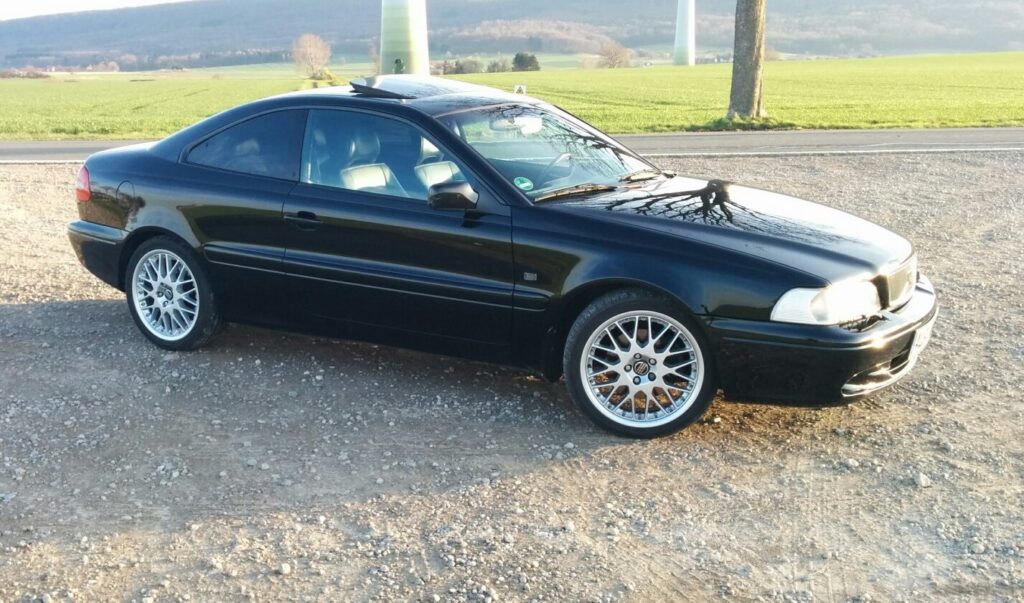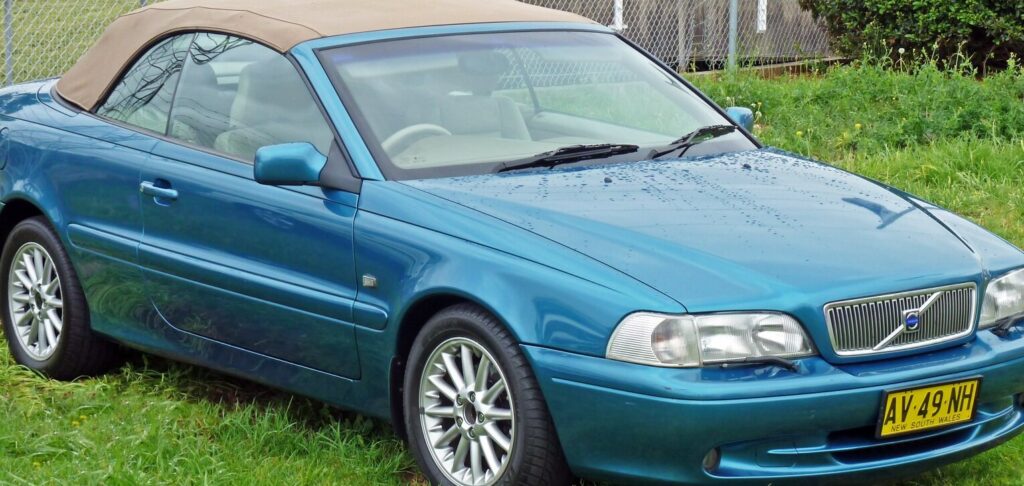
The Volvo C70 Convertible, specifically the 2.0 20V Turbo variant with an automatic transmission, represented a significant entry into the premium convertible market for the Swedish automaker. Produced from 1997 to 2005, this generation (internally designated as the first generation C70) aimed to blend Scandinavian design with capable performance and a luxurious open-air experience. Positioned as a mid-range offering within the C70 lineup, it provided a more accessible price point compared to the higher-performance models while still delivering a compelling driving experience. It was built on Volvo’s 60 series platform, sharing underpinnings with the S70 and V70.
Technical Specifications
| Brand | Volvo |
| Model | C70 |
| Generation | C70 Convertible |
| Type (Engine) | 2.0 20V Turbo (225 Hp) Automatic |
| Start of production | 1997 |
| End of production | 2005 |
| Powertrain Architecture | Internal Combustion engine |
| Body type | Cabriolet |
| Seats | 4 |
| Doors | 2 |
| Fuel consumption (urban) | 16.4 l/100 km (14.3 US mpg, 17.2 UK mpg, 6.1 km/l) |
| Fuel consumption (extra urban) | 8.3 l/100 km (28.3 US mpg, 34 UK mpg, 12 km/l) |
| Fuel Type | Petrol (Gasoline) |
| Acceleration 0 – 100 km/h | 8.2 sec |
| Acceleration 0 – 62 mph | 8.2 sec |
| Acceleration 0 – 60 mph | 7.8 sec |
| Maximum speed | 225 km/h (139.81 mph) |
| Weight-to-power ratio | 7 kg/Hp, 143.3 Hp/tonne |
| Weight-to-torque ratio | 5.1 kg/Nm, 197.5 Nm/tonne |
| Power | 225 Hp @ 5700 rpm |
| Power per litre | 113.4 Hp/l |
| Torque | 310 Nm @ 2700 rpm (228.64 lb.-ft. @ 2700 rpm) |
| Engine layout | Front, Transverse |
| Engine Model/Code | B5204T3 |
| Engine displacement | 1984 cm3 (121.07 cu. in.) |
| Number of cylinders | 5 |
| Engine configuration | Inline |
| Cylinder Bore | 81 mm (3.19 in.) |
| Piston Stroke | 77 mm (3.03 in.) |
| Compression ratio | 8.4:1 |
| Number of valves per cylinder | 4 |
| Fuel injection system | Multi-port manifold injection |
| Engine aspiration | Turbocharger |
| Valvetrain | DOHC |
| Engine oil capacity | 5.8 l (6.13 US qt | 5.1 UK qt) |
| Coolant | 7 l (7.4 US qt | 6.16 UK qt) |
| Kerb Weight | 1570 kg (3461.26 lbs.) |
| Max. weight | 1970 kg (4343.11 lbs.) |
| Max load | 400 kg (881.85 lbs.) |
| Trunk (boot) space – minimum | 260 l (9.18 cu. ft.) |
| Fuel tank capacity | 70 l (18.49 US gal | 15.4 UK gal) |
| Length | 4720 mm (185.83 in.) |
| Width | 1820 mm (71.65 in.) |
| Height | 1410 mm (55.51 in.) |
| Wheelbase | 2660 mm (104.72 in.) |
| Front track | 1520 mm (59.84 in.) |
| Rear (Back) track | 1520 mm (59.84 in.) |
| Drivetrain Architecture | The Internal combustion engine (ICE) drives the front wheels of the vehicle. |
| Drive wheel | Front wheel drive |
| Number of gears and type of gearbox | 4 gears, automatic transmission |
| Front suspension | Wishbone |
| Rear suspension | Coil spring |
| Front brakes | Ventilated discs |
| Rear brakes | Disc |
| Assisting systems | ABS (Anti-lock braking system) |
| Steering type | Steering rack and pinion |
| Power steering | Hydraulic Steering |
| Tires size | 225/50 R17 |
| Wheel rims size | 17 |
Powertrain & Engine Architecture
At the heart of the C70 2.0 Turbo Automatic lies the Volvo B5204T3 engine, a 1.984-liter inline-five cylinder powerplant. This engine was a hallmark of Volvo’s engineering during the late 1990s and early 2000s, known for its relatively smooth operation and robust construction. The “20V” designation refers to the engine’s 20 valves (four valves per cylinder), contributing to its improved breathing and power output. A Mitsubishi TD04HL-13C turbocharger, with an intercooler, forces air into the engine, boosting horsepower and torque. Fuel delivery is managed by a Bosch multi-port fuel injection system. The engine utilizes a double overhead camshaft (DOHC) valvetrain, optimizing valve timing for enhanced performance. The automatic transmission is a four-speed unit, designed to provide smooth shifts and ease of driving. While not as sporty as a manual transmission, it catered to the target audience seeking a comfortable and convenient driving experience.
Driving Characteristics
The 225 horsepower and 228 lb-ft of torque produced by the B5204T3 engine provided the C70 Convertible with respectable, though not blistering, performance. Acceleration from 0 to 60 mph took around 7.8 seconds, making it competitive with other convertibles in its class. The automatic transmission, while smooth, did result in some power loss compared to the available manual transmission. Gear ratios were tuned for a balance between acceleration and fuel economy. The turbocharger provided a noticeable boost in power during acceleration, but turbo lag was present, particularly at lower engine speeds. Handling was generally secure, but the C70 was more focused on comfortable cruising than aggressive cornering. The front-wheel-drive configuration offered predictable handling characteristics, but could exhibit some torque steer under hard acceleration.
Equipment & Trim Levels
The C70 2.0 Turbo Automatic typically came equipped with a generous array of standard features. These included leather upholstery, power windows and locks, a premium audio system, and automatic climate control. Safety features, a Volvo hallmark, were also abundant, including ABS brakes, airbags, and side impact protection. Optional extras included a wood trim interior, upgraded audio systems, and a retractable hardtop (in addition to the standard soft top). Trim levels were relatively simple, with the 2.0 Turbo Automatic representing a mid-range offering. Higher trims featured more luxurious appointments and additional features.
Chassis & Braking
The C70 Convertible utilized a front-wheel-drive chassis with independent wishbone suspension in the front and a coil spring setup in the rear. This suspension configuration provided a comfortable ride, absorbing bumps and imperfections in the road effectively. Braking duties were handled by ventilated discs in the front and solid discs in the rear. ABS (Anti-lock Braking System) was standard, enhancing braking performance and stability. The steering system employed a hydraulic power steering rack and pinion, providing responsive and precise steering feel.
Market Reception & Comparison
The Volvo C70 Convertible 2.0 Turbo Automatic was generally well-received by automotive critics. It was praised for its stylish design, comfortable interior, and strong safety features. However, some critics noted that the performance was not as exhilarating as some of its competitors, and the automatic transmission could feel somewhat dated. Compared to the higher-output C70 models (such as the T5), the 2.0 Turbo offered a more affordable entry point into the C70 range, but at the expense of some performance. Fuel economy was reasonable for a convertible of its size and class, but not exceptional. Reliability was generally good, typical of Volvo’s reputation for build quality.
Legacy
The Volvo C70 Convertible 2.0 Turbo Automatic has proven to be a relatively reliable and durable vehicle. The B5204T3 engine, while not without its quirks, is generally considered to be a robust powerplant. Common issues include turbocharger wear and potential oil leaks. Today, the C70 Convertible remains a popular choice among enthusiasts seeking a stylish and comfortable open-air driving experience. The availability of parts is generally good, and the C70’s relatively simple mechanical design makes it a relatively straightforward vehicle to maintain. The 2.0 Turbo Automatic variant offers a good balance of performance, comfort, and affordability, making it a compelling option in the used car market.