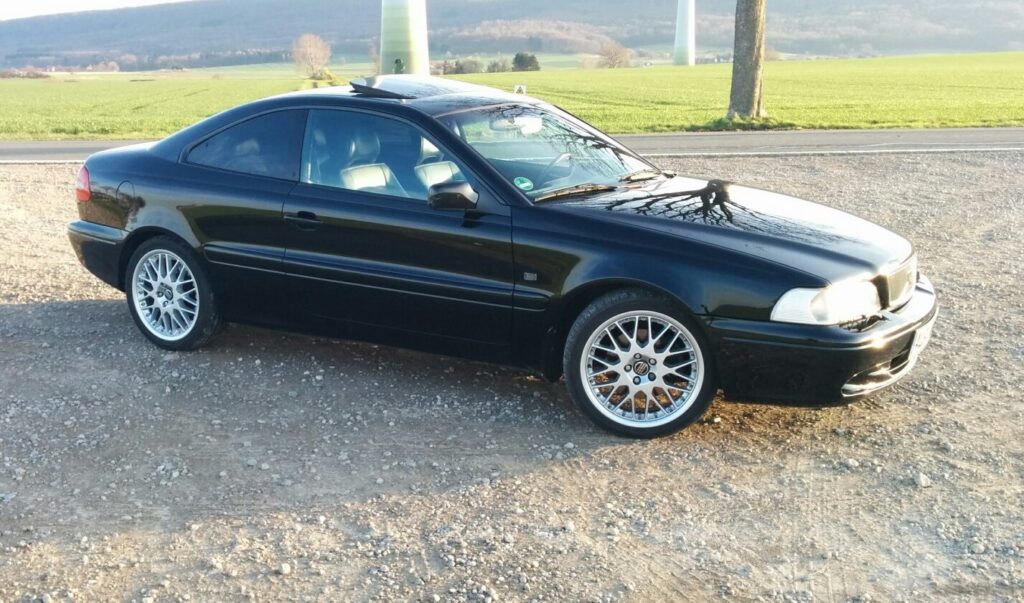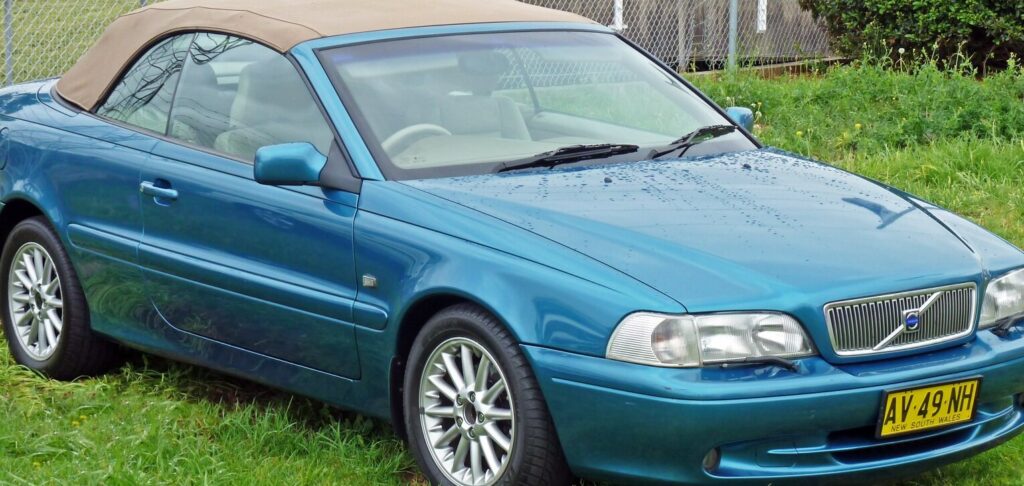
The Volvo C70 Convertible, specifically the 2.3 20V T5 variant produced between 1997 and 2005, represented Volvo’s entry into the premium, sporty convertible market. This generation (internally designated as the first generation C70) was a collaborative effort with French manufacturer Renault, sharing its platform with the Renault Megane Convertible. The C70 aimed to blend Scandinavian practicality and safety with open-air driving enjoyment, targeting buyers who desired a stylish and comfortable grand tourer. The 2.3 T5, equipped with an automatic transmission, occupied a middle ground in the C70 lineup, offering a balance between performance and ease of use, positioned below the more powerful and often manually-equipped higher-trim models.
Technical Specifications
| Brand | Volvo |
| Model | C70 |
| Generation | C70 Convertible |
| Type (Engine) | 2.3 20V T5 (239 Hp) |
| Start of production | 1997 |
| End of production | 2005 |
| Powertrain Architecture | Internal Combustion engine |
| Body type | Cabriolet |
| Seats | 4 |
| Doors | 2 |
| Fuel consumption (urban) | 17.1 l/100 km (13.8 US mpg, 16.5 UK mpg, 5.8 km/l) |
| Fuel consumption (extra urban) | 8.7 l/100 km (27 US mpg, 32.5 UK mpg, 11.5 km/l) |
| Fuel consumption (combined) | 11.7 l/100 km (20.1 US mpg, 24.1 UK mpg, 8.5 km/l) |
| Fuel Type | Petrol (Gasoline) |
| Acceleration 0 – 100 km/h | 7.2 sec |
| Acceleration 0 – 62 mph | 7.2 sec |
| Acceleration 0 – 60 mph | 6.8 sec |
| Maximum speed | 240 km/h (149.13 mph) |
| Weight-to-power ratio | 6.8 kg/Hp, 147.5 Hp/tonne |
| Weight-to-torque ratio | 4.9 kg/Nm, 203.7 Nm/tonne |
| Power | 239 Hp @ 5100 rpm |
| Power per litre | 103.1 Hp/l |
| Torque | 330 Nm @ 2700 rpm (243.4 lb.-ft. @ 2700 rpm) |
| Engine layout | Front, Transverse |
| Engine Model/Code | B5234T3 |
| Engine displacement | 2319 cm3 (141.51 cu. in.) |
| Number of cylinders | 5 |
| Engine configuration | Inline |
| Cylinder Bore | 81 mm (3.19 in.) |
| Piston Stroke | 90 mm (3.54 in.) |
| Compression ratio | 8.5:1 |
| Number of valves per cylinder | 4 |
| Fuel injection system | Multi-port manifold injection |
| Engine aspiration | Turbocharger |
| Valvetrain | DOHC |
| Engine oil capacity | 5.8 l (6.13 US qt | 5.1 UK qt) |
| Coolant | 7 l (7.4 US qt | 6.16 UK qt) |
| Kerb Weight | 1620 kg (3571.49 lbs.) |
| Max. weight | 2070 kg (4563.57 lbs.) |
| Max load | 450 kg (992.08 lbs.) |
| Trunk (boot) space – minimum | 260 l (9.18 cu. ft.) |
| Fuel tank capacity | 70 l (18.49 US gal | 15.4 UK gal) |
| Length | 4720 mm (185.83 in.) |
| Width | 1820 mm (71.65 in.) |
| Height | 1410 mm (55.51 in.) |
| Wheelbase | 2660 mm (104.72 in.) |
| Front track | 1520 mm (59.84 in.) |
| Rear (Back) track | 1520 mm (59.84 in.) |
| Drivetrain Architecture | The Internal combustion engine (ICE) drives the front wheels of the vehicle. |
| Drive wheel | Front wheel drive |
| Number of gears and type of gearbox | 4 gears, automatic transmission |
| Front suspension | Wishbone |
| Rear suspension | Coil spring |
| Front brakes | Ventilated discs |
| Rear brakes | Disc |
| Assisting systems | ABS (Anti-lock braking system) |
| Steering type | Steering rack and pinion |
| Power steering | Hydraulic Steering |
| Tires size | 225/45 R17 |
| Wheel rims size | 17 |
Powertrain & Engine Architecture
The heart of the C70 2.3 T5 is the Volvo B5234T3 engine, a 2.3-liter inline-five cylinder powerplant. This engine is a descendant of Volvo’s long-running “Redblock” family, known for its robustness and tunability. The “T5” designation indicates the presence of a low-pressure turbocharger and five cylinders. The B5234T3 utilizes multi-port fuel injection and a double overhead camshaft (DOHC) valvetrain with four valves per cylinder, contributing to its relatively high specific output. The engine’s turbocharger provides a significant boost in power and torque, delivering 239 horsepower and 243 lb-ft of torque. The automatic transmission paired with this engine is a four-speed unit, designed for smooth and comfortable shifting. While not as sporty as a manual transmission, it catered to buyers prioritizing convenience.
Driving Characteristics
The C70 2.3 T5 automatic offered a comfortable and refined driving experience. Acceleration from 0-60 mph took around 6.8 seconds, respectable for the late 1990s and early 2000s. The automatic transmission, while smooth, did result in some power loss compared to the manual versions. The gear ratios were tuned for relaxed cruising, making it well-suited for long highway journeys. The turbocharger provided a noticeable surge of power once it spooled up, but the delivery wasn’t as immediate or aggressive as in some other turbocharged vehicles of the era. Compared to the higher-output C70 variants, the 2.3 T5 felt less eager to rev, but it offered a more forgiving and accessible powerband for everyday driving.
Equipment & Trim Levels
The C70 2.3 T5 typically came standard with features such as leather upholstery, power windows and locks, a premium audio system, and automatic climate control. Safety features, a Volvo hallmark, were also abundant, including ABS brakes, side airbags, and a rollover protection system (ROPS) that automatically deployed protective bars behind the rear passengers in the event of a rollover. Optional extras included upgraded audio systems, wood trim, and a navigation system. The interior design was typically Scandinavian – clean, functional, and focused on comfort.
Chassis & Braking
The C70 Convertible utilized a front-wheel-drive layout with independent wishbone suspension in the front and a coil spring setup in the rear. The suspension was tuned for a balance between comfort and handling, providing a relatively smooth ride while still offering decent body control. Braking duties were handled by ventilated discs in the front and solid discs in the rear, assisted by an anti-lock braking system (ABS). The steering was hydraulic power-assisted rack and pinion, providing a reasonably direct and responsive feel.
Market Reception & Comparison
The Volvo C70 Convertible was generally well-received by critics, who praised its stylish design, comfortable interior, and strong safety features. The 2.3 T5 automatic variant was seen as a good all-rounder, offering a balance of performance, comfort, and convenience. However, some reviewers noted that the automatic transmission dulled the driving experience compared to the manual versions. Fuel economy was average for a vehicle in its class, with combined figures around 20 mpg. Compared to rivals like the BMW 3 Series Convertible and the Mercedes-Benz CLK Convertible, the C70 offered a more unique and understated style, along with Volvo’s reputation for safety.
Legacy
The Volvo C70 Convertible, particularly the 2.3 T5 variant, has proven to be a relatively reliable vehicle over the long term. The B5234T3 engine is known for its durability, and with proper maintenance, it can withstand high mileage. However, like any older vehicle, it’s prone to age-related issues such as oil leaks, worn suspension components, and electrical gremlins. In the used car market today, the C70 2.3 T5 represents an affordable entry point into the world of premium convertibles. Its classic Scandinavian design and comfortable driving experience continue to appeal to enthusiasts seeking a stylish and reliable open-top car.