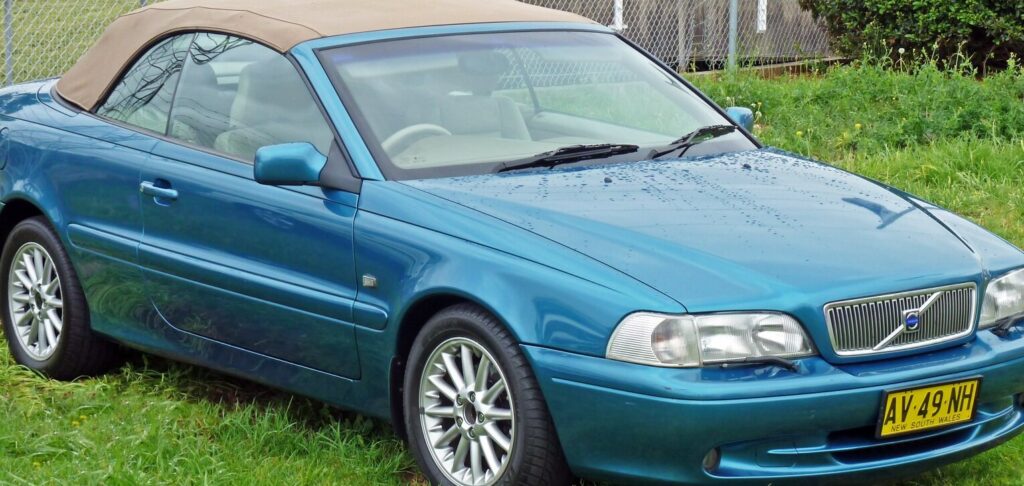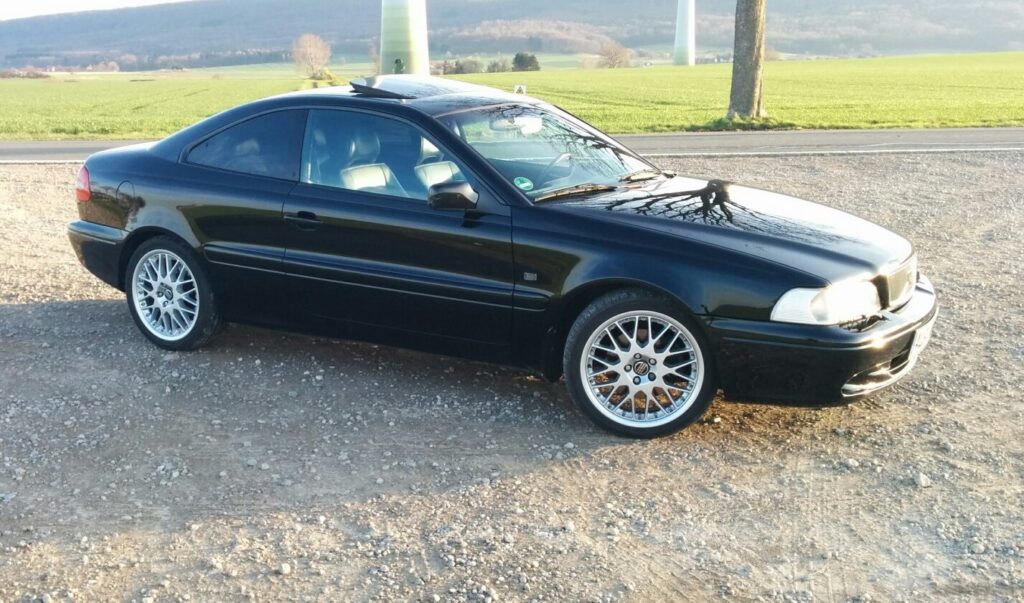
The Volvo C70 Coupe 2.0 20V, produced between 1996 and 2000, represented Volvo’s foray into the premium coupe market. Positioned as a more sporting alternative to the traditional Volvo sedan, the C70 aimed to attract a younger demographic while retaining the brand’s reputation for safety and build quality. This particular variant, powered by the turbocharged 2.0-liter inline-five engine producing 180 horsepower, served as the entry point into the C70 coupe range, offering a balance between performance and affordability. It was built on Volvo’s Series 60 platform, shared with the S70 and V70 models, but distinguished itself with its sleek, two-door coupe body style designed in collaboration with Pininfarina.
Technical Specifications
| Brand | Volvo |
| Model | C70 |
| Generation | C70 Coupe |
| Type (Engine) | 2.0 20V (180 Hp) |
| Start of production | 1996 |
| End of production | 2000 |
| Powertrain Architecture | Internal Combustion engine |
| Body type | Coupe |
| Seats | 4 |
| Doors | 2 |
| Fuel consumption (urban) | 16.3 l/100 km (14.4 US mpg, 17.3 UK mpg, 6.1 km/l) |
| Fuel consumption (extra urban) | 8.4 l/100 km (28 US mpg, 33.6 UK mpg, 11.9 km/l) |
| Fuel Type | Petrol (Gasoline) |
| Acceleration 0 – 100 km/h | 9.3 sec |
| Acceleration 0 – 62 mph | 9.3 sec |
| Acceleration 0 – 60 mph | 8.8 sec |
| Maximum speed | 220 km/h (136.7 mph) |
| Weight-to-power ratio | 8.1 kg/Hp, 124.1 Hp/tonne |
| Weight-to-torque ratio | 6.6 kg/Nm, 151.7 Nm/tonne |
| Power | 180 Hp @ 5700 rpm |
| Power per litre | 90.7 Hp/l |
| Torque | 220 Nm @ 2100 rpm (162.26 lb.-ft. @ 2100 rpm) |
| Engine layout | Front, Transverse |
| Engine Model/Code | B5204T2 |
| Engine displacement | 1984 cm3 (121.07 cu. in.) |
| Number of cylinders | 5 |
| Engine configuration | Inline |
| Cylinder Bore | 81 mm (3.19 in.) |
| Piston Stroke | 77 mm (3.03 in.) |
| Compression ratio | 8.4:1 |
| Number of valves per cylinder | 4 |
| Fuel injection system | Multi-port manifold injection |
| Engine aspiration | Turbocharger |
| Valvetrain | DOHC |
| Engine oil capacity | 5.8 l (6.13 US qt | 5.1 UK qt) |
| Coolant | 7 l (7.4 US qt | 6.16 UK qt) |
| Kerb Weight | 1450 kg (3196.7 lbs.) |
| Max. weight | 1900 kg (4188.78 lbs.) |
| Max load | 450 kg (992.08 lbs.) |
| Trunk (boot) space – minimum | 403 l (14.23 cu. ft.) |
| Fuel tank capacity | 70 l (18.49 US gal | 15.4 UK gal) |
| Length | 4720 mm (185.83 in.) |
| Width | 1820 mm (71.65 in.) |
| Height | 1410 mm (55.51 in.) |
| Wheelbase | 2660 mm (104.72 in.) |
| Front track | 1520 mm (59.84 in.) |
| Rear (Back) track | 1520 mm (59.84 in.) |
| Drivetrain Architecture | The Internal combustion engine (ICE) drives the front wheels of the vehicle. |
| Drive wheel | Front wheel drive |
| Number of gears and type of gearbox | 5 gears, manual transmission |
| Front suspension | Wishbone |
| Rear suspension | Coil spring |
| Front brakes | Ventilated discs |
| Rear brakes | Disc |
| Assisting systems | ABS (Anti-lock braking system) |
| Steering type | Steering rack and pinion |
| Power steering | Hydraulic Steering |
| Tires size | 225/50 R17 |
| Wheel rims size | 17 |
Powertrain & Engine Architecture
The heart of the C70 2.0 was the B5204T2 engine, a 1.984-liter inline-five cylinder powerplant. This engine was a development of Volvo’s ‘Redblock’ family, known for its robustness and tunability. The ‘20V’ designation refers to the engine’s 20-valve cylinder head (four valves per cylinder), contributing to improved breathing and power output. A Mitsubishi TD04HL-13C turbocharger provided forced induction, boosting power and torque. Fuel delivery was handled by a Bosch Motronic MP5.2 multi-port fuel injection system. The engine featured a double overhead camshaft (DOHC) valvetrain, optimizing valve timing for enhanced performance. The C70 2.0 was exclusively offered with a 5-speed manual transmission, delivering power to the front wheels. This transmission was chosen to complement the engine’s characteristics and provide a more engaging driving experience.
Driving Characteristics
The C70 2.0 offered a respectable, if not blistering, driving experience. The 180 horsepower and 220 Nm (162 lb-ft) of torque provided adequate acceleration, with a 0-60 mph time of around 8.8 seconds. While not a sports car, the turbocharger provided a noticeable boost in power, making overtaking maneuvers relatively effortless. The manual transmission offered precise shifts, and the front-wheel-drive configuration provided good traction in most conditions. Compared to the higher-spec C70 models with the 2.4-liter turbocharged engine, the 2.0 felt less powerful, particularly at higher speeds. However, the 2.0’s lighter weight and more balanced handling made it a more nimble and enjoyable car to drive on winding roads. The gear ratios were tuned for a balance of acceleration and fuel economy, with fifth gear acting as an overdrive for comfortable highway cruising.
Equipment & Trim Levels
The C70 2.0 typically came with a fairly comprehensive list of standard features for a car in its class. These included power windows, power door locks, central locking, and an AM/FM stereo with cassette player. Air conditioning was often standard, though some base models may have offered it as an option. Interior upholstery was typically cloth, with leather options available at extra cost. Optional extras included a sunroof, upgraded audio systems, and alloy wheels. The dashboard layout was typical of Volvo’s design language of the era, prioritizing functionality and ergonomics. Safety features, a Volvo hallmark, were also well-represented, including ABS brakes and a driver’s airbag.
Chassis & Braking
The C70 Coupe utilized a MacPherson strut front suspension and a multi-link coil spring rear suspension. This setup provided a comfortable ride while maintaining reasonable handling characteristics. The front suspension incorporated a stabilizer bar to reduce body roll during cornering. Braking duties were handled by ventilated discs at the front and solid discs at the rear, providing adequate stopping power. The ABS anti-lock braking system was standard, enhancing safety by preventing wheel lockup during hard braking. The steering was a rack-and-pinion system with hydraulic power assistance, offering precise and responsive steering feel.
Market Reception & Comparison
The C70 2.0 was generally well-received by automotive critics, who praised its stylish design, comfortable interior, and strong safety credentials. However, some reviewers noted that the 2.0-liter engine felt somewhat underpowered compared to its rivals. Fuel economy was considered reasonable for a car of its size and performance, averaging around 28 mpg on the highway. Compared to the more powerful C70 variants, the 2.0 offered a more affordable entry point into the C70 range, making it attractive to buyers who prioritized value and fuel efficiency over outright performance. It also offered a more balanced driving experience than the heavier, more powerful models.
Legacy
The Volvo C70 2.0, while not the most powerful or sought-after variant, remains a desirable classic car. The B5204T2 engine is known for its durability and reliability, provided it is properly maintained. Common issues include turbocharger wear and potential oil leaks. Today, well-maintained examples of the C70 2.0 can be found on the used car market, offering a stylish and affordable way to experience Volvo’s heritage. Its combination of Scandinavian design, turbocharged performance, and robust engineering has ensured its continued appeal to enthusiasts and collectors alike.