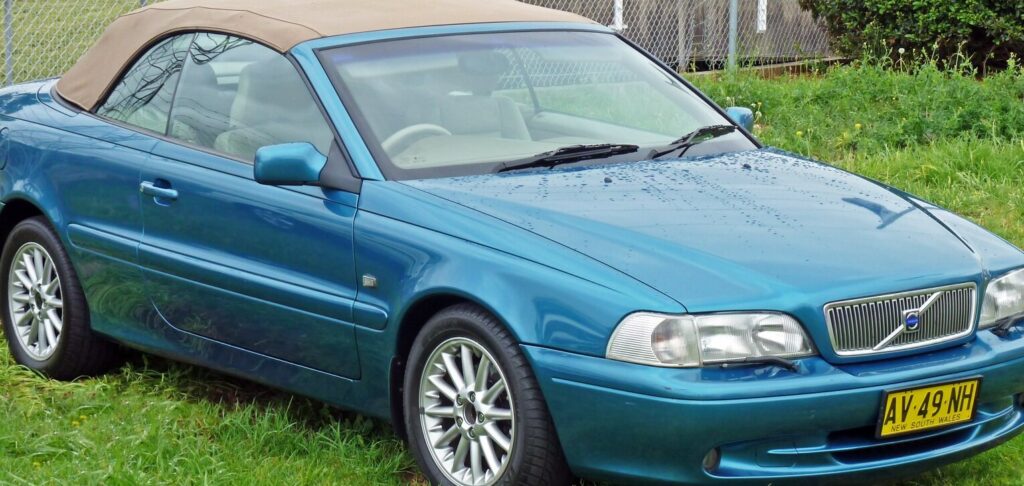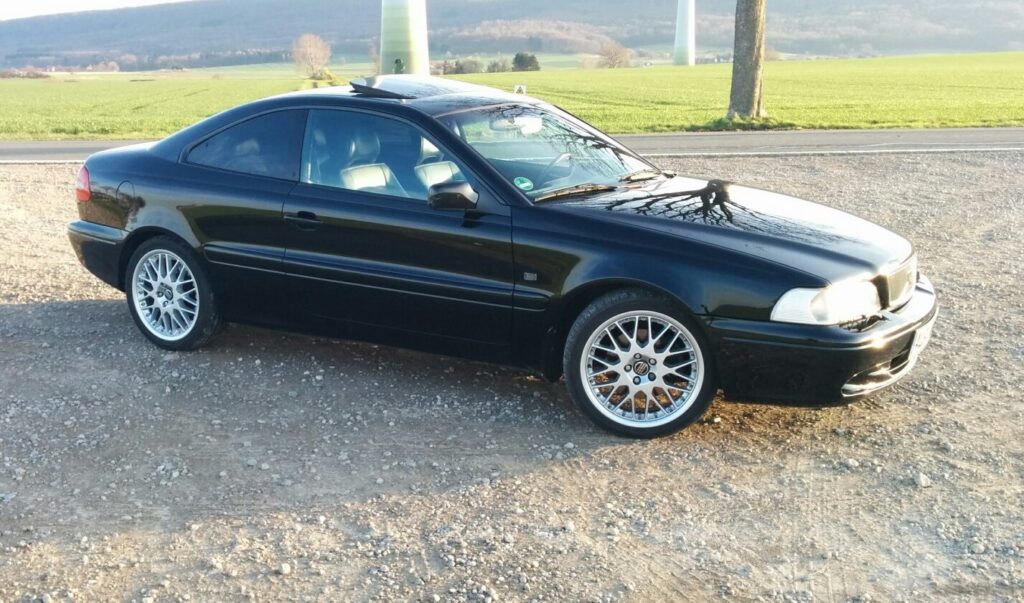
The Volvo C70 Coupe 2.0 20V Turbo, produced between 1996 and 2002, represented Volvo’s foray into the premium coupe market. Positioned as a stylish and sporty alternative to more traditional Volvo offerings, the C70 aimed to attract a younger demographic while retaining the brand’s reputation for safety and build quality. This particular variant, powered by the 2.0-liter turbocharged inline-five engine producing 225 horsepower, served as a mid-range offering within the C70 lineup, slotting between the base 2.3-liter non-turbo model and the higher-performance 2.4-liter turbocharged versions. The C70 Coupe was built on Volvo’s 60 series platform, sharing underpinnings with the S70 and V70 models, but distinguished itself with its unique two-door coupe body style and retractable headlight design (early models).
Technical Specifications
| Brand | Volvo |
| Model | C70 |
| Generation | C70 Coupe |
| Type (Engine) | 2.0 20V Turbo (225 Hp) |
| Start of production | 1996 |
| End of production | 2002 |
| Powertrain Architecture | Internal Combustion engine |
| Body type | Coupe |
| Seats | 4 |
| Doors | 2 |
| Fuel consumption (urban) | 16.4 l/100 km (14.3 US mpg) |
| Fuel consumption (extra urban) | 8.3 l/100 km (28.3 US mpg) |
| Fuel Type | Petrol (Gasoline) |
| Acceleration 0 – 100 km/h | 7.5 sec |
| Acceleration 0 – 62 mph | 7.5 sec |
| Acceleration 0 – 60 mph | 7.1 sec |
| Maximum speed | 245 km/h (152.24 mph) |
| Weight-to-power ratio | 6.4 kg/Hp |
| Weight-to-torque ratio | 4.7 kg/Nm |
| Power | 225 Hp @ 5700 rpm |
| Torque | 310 Nm @ 2700 rpm (228.64 lb.-ft. @ 2700 rpm) |
| Engine layout | Front, Transverse |
| Engine Model/Code | B5204T3 |
| Engine displacement | 1984 cm3 (121.07 cu. in.) |
| Number of cylinders | 5 |
| Engine configuration | Inline |
| Cylinder Bore | 81 mm (3.19 in.) |
| Piston Stroke | 77 mm (3.03 in.) |
| Compression ratio | 8.4:1 |
| Number of valves per cylinder | 4 |
| Fuel injection system | Multi-port manifold injection |
| Engine aspiration | Turbocharger |
| Valvetrain | DOHC |
| Engine oil capacity | 5.8 l (6.13 US qt | 5.1 UK qt) |
| Coolant capacity | 7 l (7.4 US qt | 6.16 UK qt) |
| Kerb Weight | 1450 kg (3196.7 lbs.) |
| Max. weight | 1900 kg (4188.78 lbs.) |
| Max load | 450 kg (992.08 lbs.) |
| Trunk (boot) space | 403 l (14.23 cu. ft.) |
| Fuel tank capacity | 70 l (18.49 US gal | 15.4 UK gal) |
| Length | 4720 mm (185.83 in.) |
| Width | 1820 mm (71.65 in.) |
| Height | 1410 mm (55.51 in.) |
| Wheelbase | 2660 mm (104.72 in.) |
| Front track | 1520 mm (59.84 in.) |
| Rear track | 1520 mm (59.84 in.) |
| Drivetrain | Front wheel drive |
| Number of gears | 5 |
| Gearbox type | Manual transmission |
| Front suspension | Wishbone |
| Rear suspension | Coil spring |
| Front brakes | Ventilated discs |
| Rear brakes | Disc |
| Assisting systems | ABS (Anti-lock braking system) |
| Steering type | Steering rack and pinion |
| Power steering | Hydraulic |
| Tires size | 225/45 R17 |
| Wheel rims size | 17 |
Powertrain & Engine Architecture
The heart of the C70 2.0 Turbo is the B5204T3 engine, a 1.984-liter inline-five cylinder powerplant. This engine is notable for its relatively smooth operation and distinctive sound, a characteristic of Volvo’s five-cylinder designs. The B5204T3 utilizes a light-pressure turbocharger, coupled with multi-port fuel injection, to deliver a balance of performance and fuel efficiency. The engine features a double overhead camshaft (DOHC) valvetrain with four valves per cylinder, optimizing airflow for increased power output. The 5-speed manual transmission was standard, providing direct control over the engine’s power. The engine’s design prioritized drivability, with peak torque arriving at a relatively low 2700 rpm, making it responsive in everyday driving situations.
Driving Characteristics
The C70 2.0 Turbo offered a respectable driving experience. Acceleration from 0-60 mph took approximately 7.1 seconds, making it competitive with other coupes in its class. While not as overtly sporty as some rivals, the C70 provided a comfortable and composed ride. The manual transmission allowed for engaging driving, and the turbocharger provided a noticeable boost in power when needed. Compared to the base 2.3-liter model, the 2.0 Turbo offered significantly improved acceleration and overall performance. However, it didn’t quite match the outright speed of the 2.4-liter turbocharged variants. The gear ratios were tuned for a balance between acceleration and fuel economy, making it suitable for both city and highway driving.
Equipment & Trim Levels
The C70 2.0 Turbo typically came equipped with a generous level of standard features. These included power windows, power locks, a premium sound system, and air conditioning. Interior upholstery was typically cloth, although leather was available as an option. Dashboard design was typical of Volvo in the late 1990s, emphasizing functionality and ergonomics. Optional extras included a sunroof, heated front seats, and upgraded audio systems. Safety features, a Volvo hallmark, were also plentiful, including ABS brakes and front airbags.
Chassis & Braking
The C70 Coupe utilized a front-wheel-drive layout with independent wishbone suspension in the front and a coil spring setup in the rear. This suspension configuration provided a comfortable ride while maintaining reasonable handling characteristics. The car was equipped with ventilated disc brakes in the front and solid disc brakes in the rear, providing adequate stopping power. ABS (Anti-lock Braking System) was standard, enhancing safety during emergency braking situations. The chassis was reinforced to provide increased rigidity compared to the S70 and V70 models, improving handling and reducing body roll.
Market Reception & Comparison
The Volvo C70 Coupe was generally well-received by automotive critics. It was praised for its stylish design, comfortable interior, and strong safety features. However, some critics noted that its performance, while adequate, wasn’t as exhilarating as some of its competitors. Compared to other trims in the C70 lineup, the 2.0 Turbo offered a good balance of performance and fuel economy. It was more affordable than the higher-powered 2.4-liter models, making it an attractive option for buyers who wanted a sporty coupe without breaking the bank. Fuel economy was reasonable for the time, averaging around 28.3 US mpg on the highway.
Legacy
The Volvo C70 2.0 Turbo has proven to be a relatively reliable vehicle, with the B5204T3 engine being known for its durability. However, like any older vehicle, it requires regular maintenance to keep it in good condition. Common issues include turbocharger wear and potential oil leaks. In the used car market today, the C70 2.0 Turbo represents an affordable entry point into Volvo ownership. It’s appreciated by enthusiasts for its unique styling, comfortable ride, and distinctive five-cylinder engine. While not a high-performance machine, it offers a compelling combination of style, safety, and practicality.