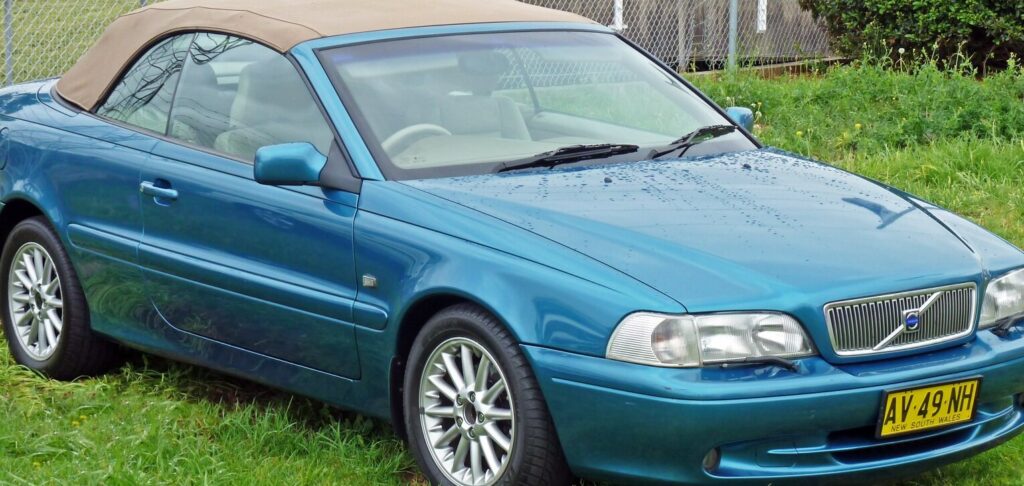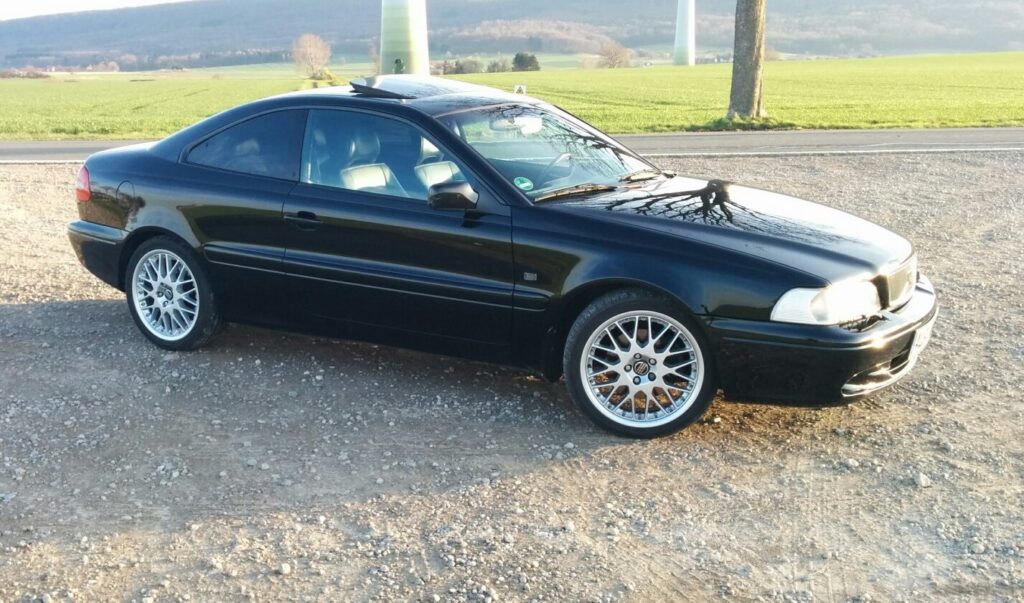
The Volvo C70 Coupe 2.0 i T, produced between 2001 and 2002, represented a compelling entry point into Volvo’s stylish coupe range. Positioned as a more accessible alternative to the higher-performance and more expensive C70 variants, the 2.0 i T offered a blend of Scandinavian design, reasonable performance, and Volvo’s renowned safety features. This model was part of the first generation C70 (introduced in 1996), designated internally as the S40/V40 platform, and aimed to attract buyers seeking a sophisticated and comfortable coupe without the financial commitment of the flagship models. It served as a bridge between the more basic offerings and the more powerful turbocharged options available in the C70 lineup.
Technical Specifications
| Brand | Volvo |
| Model | C70 |
| Generation | C70 Coupe |
| Type (Engine) | 2.0 i T (163 Hp) |
| Start of production | 2001 |
| End of production | 2002 |
| Powertrain Architecture | Internal Combustion engine |
| Body type | Coupe |
| Seats | 4 |
| Doors | 2 |
| Fuel consumption (urban) | 13.5 l/100 km (17.4 US mpg, 20.9 UK mpg) |
| Fuel consumption (extra urban) | 7.4 l/100 km (31.8 US mpg, 38.2 UK mpg) |
| Fuel Type | Petrol (Gasoline) |
| Acceleration 0 – 100 km/h | 10.3 sec |
| Acceleration 0 – 62 mph | 10.3 sec |
| Acceleration 0 – 60 mph | 9.8 sec |
| Maximum speed | 210 km/h (130.49 mph) |
| Weight-to-power ratio | 9 kg/Hp |
| Weight-to-torque ratio | 6.4 kg/Nm |
| Power | 163 Hp @ 5100 rpm |
| Power per litre | 82.2 Hp/l |
| Torque | 230 Nm @ 1800 rpm (169.64 lb.-ft. @ 1800 rpm) |
| Engine layout | Front, Transverse |
| Engine Model/Code | B5204T4 |
| Engine displacement | 1984 cm3 (121.07 cu. in.) |
| Number of cylinders | 5 |
| Engine configuration | Inline |
| Cylinder Bore | 81 mm (3.19 in.) |
| Piston Stroke | 77 mm (3.03 in.) |
| Compression ratio | 9.7:1 |
| Number of valves per cylinder | 4 |
| Fuel injection system | Multi-port manifold injection |
| Engine aspiration | Turbocharger, Intercooler |
| Valvetrain | DOHC |
| Engine oil capacity | 5.8 l (6.13 US qt | 5.1 UK qt) |
| Coolant | 7 l (7.4 US qt | 6.16 UK qt) |
| Kerb Weight | 1465 kg (3229.77 lbs.) |
| Max. weight | 1900 kg (4188.78 lbs.) |
| Max load | 435 kg (959.01 lbs.) |
| Trunk (boot) space – minimum | 403 l (14.23 cu. ft.) |
| Fuel tank capacity | 68 l (17.96 US gal | 14.96 UK gal) |
| Length | 4716 mm (185.67 in.) |
| Width | 1817 mm (71.54 in.) |
| Height | 1414 mm (55.67 in.) |
| Wheelbase | 2660 mm (104.72 in.) |
| Front track | 1520 mm (59.84 in.) |
| Rear (Back) track | 1520 mm (59.84 in.) |
| Drivetrain Architecture | Front wheel drive |
| Number of gears | 5 |
| Gearbox type | Manual transmission |
| Front suspension | Wishbone |
| Rear suspension | Coil spring |
| Front brakes | Ventilated discs |
| Rear brakes | Disc |
| Assisting systems | ABS (Anti-lock braking system) |
| Steering type | Steering rack and pinion |
| Power steering | Hydraulic Steering |
| Tires size | 225/50 R16 |
| Wheel rims size | 16 |
Powertrain & Engine Architecture
The heart of the C70 2.0 i T was the Volvo B5204T4 engine, a 1.984-liter inline-five cylinder powerplant. This engine was a key component of Volvo’s modular engine family, known for its robustness and relatively straightforward maintenance. The “T” designation indicated the presence of a turbocharger and intercooler, boosting power output to 163 horsepower and 230 Nm (169.64 lb-ft) of torque. Fuel delivery was managed by a multi-port fuel injection system, providing precise control over the air-fuel mixture. The engine featured a double overhead camshaft (DOHC) valvetrain, optimizing airflow for improved performance. The five-cylinder configuration, while less common than inline-fours or V6s, provided a unique engine note and a good balance of power and smoothness. The standard transmission was a 5-speed manual, although an optional 4-speed automatic transmission was available, impacting acceleration and fuel economy.
Driving Characteristics
The C70 2.0 i T with the manual transmission offered a reasonably engaging driving experience. Acceleration from 0-60 mph took around 9.8 seconds, and top speed was limited to 130.49 mph. While not a sports car, the turbocharger provided a noticeable boost in power, making overtaking maneuvers relatively effortless. The 5-speed manual gearbox was well-matched to the engine’s characteristics, offering precise shifts and a decent spread of ratios. The automatic transmission, while providing convenience, resulted in slightly slower acceleration and a less direct connection to the engine. The front-wheel-drive layout provided predictable handling, although it could exhibit some understeer when pushed hard. The suspension was tuned for comfort, absorbing bumps and providing a relatively smooth ride, making it well-suited for long-distance cruising.
Equipment & Trim Levels
The C70 2.0 i T typically came equipped with a respectable level of standard features. Interior appointments included cloth upholstery, power windows and locks, and a basic audio system. Air conditioning was generally standard. Optional extras included leather upholstery, a premium audio system, sunroof, and alloy wheels. The dashboard layout was typical of Volvo at the time, prioritizing functionality and ergonomics. Safety features were a key selling point, with standard ABS brakes and available side airbags. The overall interior ambiance was one of understated elegance and Scandinavian practicality.
Chassis & Braking
The C70 Coupe utilized a front-wheel-drive chassis with independent wishbone suspension at the front and a coil spring setup at the rear. This configuration provided a good balance of ride comfort and handling. The front brakes were ventilated discs, offering strong stopping power, while the rear brakes were solid discs. The steering was rack and pinion with hydraulic power assistance, providing a responsive and precise feel. The car rode on 225/50 R16 tires, providing adequate grip in most conditions. Stabilizer bars were fitted to both the front and rear axles to reduce body roll during cornering.
Market Reception & Comparison
The C70 2.0 i T was generally well-received by automotive critics as an affordable and stylish entry into the coupe market. It was praised for its comfortable ride, spacious interior, and Volvo’s reputation for safety. However, some critics noted that the 2.0-liter engine, while adequate, lacked the outright performance of the higher-output turbocharged models. Compared to the C70 2.4 T, the 2.0 i T offered lower running costs and a more accessible price point, but at the expense of performance. Fuel economy was reasonable for its class, averaging around 20.9 UK mpg (31.8 US mpg) on the extra-urban cycle. Reliability was generally good, although turbocharger issues could occasionally arise.
Legacy
The Volvo C70 2.0 i T, while not the most powerful or sought-after variant, remains a desirable classic car for enthusiasts. The B5204T4 engine is known for its durability, and parts availability is generally good. Well-maintained examples are becoming increasingly rare, and values are slowly appreciating. The C70 Coupe, in general, is remembered as a stylish and well-built coupe that offered a unique blend of Scandinavian design and practicality. The 2.0 i T variant provides an affordable entry point into C70 ownership, offering a comfortable and reliable driving experience for those seeking a classic Volvo coupe.