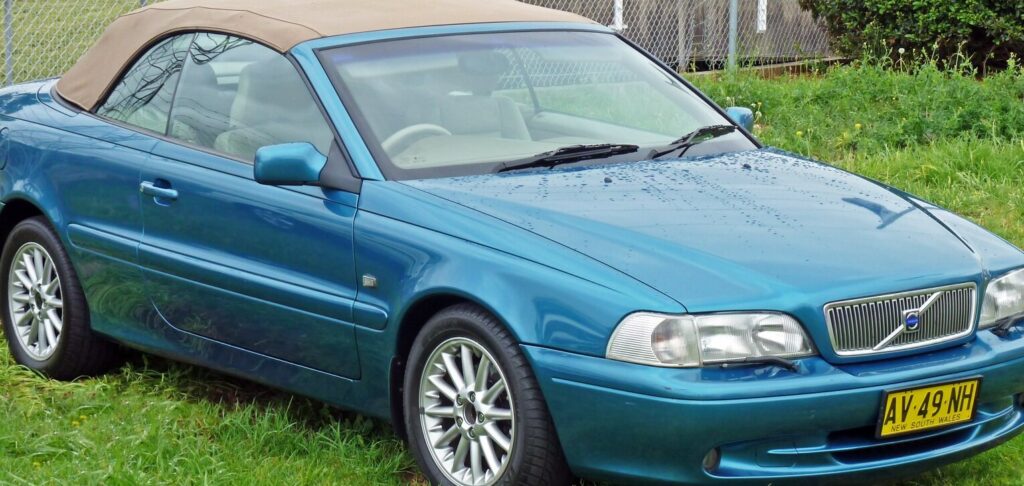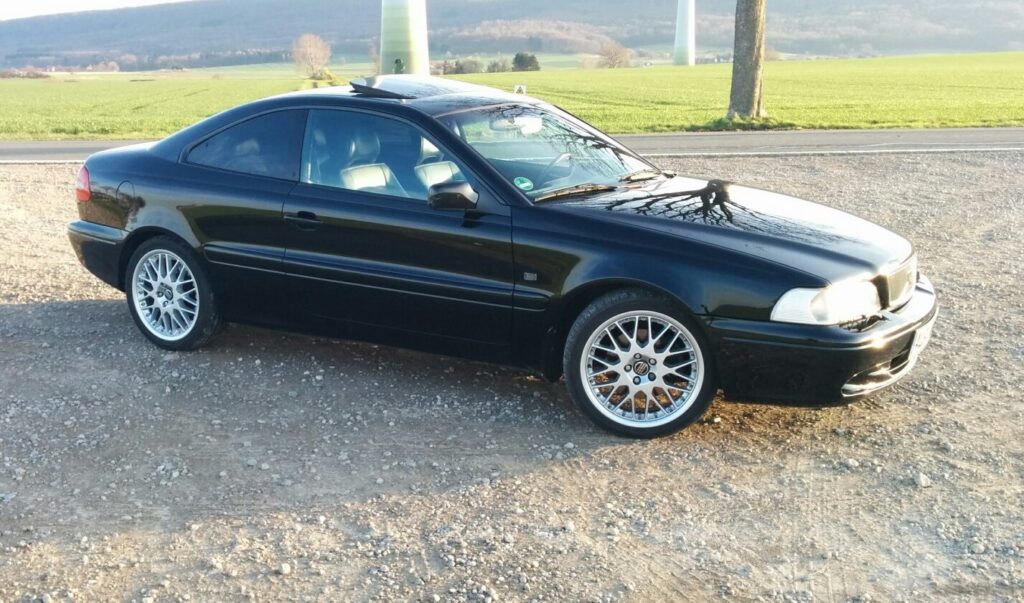
The Volvo C70 Coupe 2.5 20V T, produced between 1996 and 2001, represented Volvo’s foray into the premium coupe market. This variant, powered by a 2.4-liter turbocharged inline-five engine paired with a four-speed automatic transmission, occupied a middle ground within the C70 lineup. It offered a blend of performance and convenience, appealing to buyers who desired a stylish and comfortable grand tourer without the engagement of a manual gearbox or the higher price tag of the more powerful trims. The C70 Coupe itself was the first generation of the C70, built on Volvo’s 60 series platform, and distinguished itself with a retractable hardtop convertible version also available during the same period.
Technical Specifications
| Brand | Volvo |
| Model | C70 |
| Generation | C70 Coupe |
| Type (Engine) | 2.5 20V T (193 Hp) Automatic |
| Start of production | 1996 |
| End of production | 2001 |
| Powertrain Architecture | Internal Combustion engine |
| Body type | Coupe |
| Seats | 4 |
| Doors | 2 |
| Fuel consumption (urban) | 16.4 l/100 km (14.3 US mpg, 17.2 UK mpg, 6.1 km/l) |
| Fuel consumption (extra urban) | 8.8 l/100 km (26.7 US mpg, 32.1 UK mpg, 11.4 km/l) |
| Fuel consumption (combined) | 11.5 l/100 km (20.5 US mpg, 24.6 UK mpg, 8.7 km/l) |
| Fuel Type | Petrol (Gasoline) |
| Acceleration 0 – 100 km/h | 8.2 sec |
| Acceleration 0 – 62 mph | 8.2 sec |
| Acceleration 0 – 60 mph | 7.8 sec |
| Maximum speed | 225 km/h (139.81 mph) |
| Power | 193 Hp @ 5100 rpm |
| Torque | 270 Nm @ 1800-5100 rpm (199.14 lb.-ft. @ 1800-5100 rpm) |
| Engine layout | Front, Transverse |
| Engine Model/Code | B5254T |
| Engine displacement | 2435 cm3 (148.59 cu. in.) |
| Number of cylinders | 5 |
| Engine configuration | Inline |
| Cylinder Bore | 83 mm (3.27 in.) |
| Piston Stroke | 90 mm (3.54 in.) |
| Compression ratio | 9:1 |
| Number of valves per cylinder | 4 |
| Fuel injection system | Multi-port manifold injection |
| Engine aspiration | Turbocharger |
| Valvetrain | DOHC |
| Engine oil capacity | 5.8 l (6.13 US qt | 5.1 UK qt) |
| Coolant capacity | 7 l (7.4 US qt | 6.16 UK qt) |
| Max. weight | 1900 kg (4188.78 lbs.) |
| Trunk (boot) space – minimum | 427 l (15.08 cu. ft.) |
| Fuel tank capacity | 70 l (18.49 US gal | 15.4 UK gal) |
| Max. roof load | 100 kg (220.46 lbs.) |
| Permitted trailer load with brakes (12%) | 1103 kg (2431.7 lbs.) |
| Length | 4720 mm (185.83 in.) |
| Width | 1820 mm (71.65 in.) |
| Height | 1410 mm (55.51 in.) |
| Wheelbase | 2660 mm (104.72 in.) |
| Front track | 1520 mm (59.84 in.) |
| Rear track | 1520 mm (59.84 in.) |
| Ride height (ground clearance) | 121 mm (4.76 in.) |
| Drag coefficient (Cd) | 0.29 |
| Minimum turning circle | 11.7 m (38.39 ft.) |
| Drivetrain Architecture | Front wheel drive |
| Number of gears | 4 |
| Gearbox type | Automatic transmission |
| Front suspension | Wishbone |
| Rear suspension | Coil spring |
| Front brakes | Ventilated discs, 280 mm |
| Rear brakes | Ventilated discs, 295 mm |
| Assisting systems | ABS (Anti-lock braking system) |
| Steering type | Steering rack and pinion |
| Power steering | Hydraulic |
| Tires size | 225/45R 17 |
| Wheel rims size | 17 |
Powertrain & Engine Architecture
The heart of the C70 2.5 20V T is the B5254T engine, a 2.4-liter inline-five cylinder powerplant. This engine utilizes a light-pressure turbocharger, providing a boost in power and torque without the aggressive spool-up characteristics of higher-boost setups. The engine features multi-port fuel injection and a double overhead camshaft (DOHC) valvetrain, contributing to its relatively smooth power delivery. The 20V designation refers to the 20 valves (four per cylinder) which enhance breathing and overall engine efficiency. Paired with this engine is a four-speed automatic transmission, designed for comfortable cruising rather than sporty performance. This transmission, while reliable, lacks the responsiveness and efficiency of more modern automatic gearboxes.
Driving Characteristics
The C70 2.5 20V T Automatic offered a comfortable and refined driving experience. Acceleration from 0-60 mph took around 7.8 seconds, respectable for the era but noticeably slower than the manual transmission or higher-powered versions of the C70. The automatic transmission, while smooth, resulted in some power loss and a less engaging driving feel. The turbocharger provided a noticeable surge of power in the mid-range, making overtaking maneuvers relatively easy. However, the four-speed transmission meant that the engine often operated at higher RPMs during highway cruising, impacting fuel economy. The front-wheel-drive configuration provided predictable handling, but lacked the all-weather capability of an all-wheel-drive system.
Equipment & Trim Levels
The C70 2.5 20V T Automatic typically came equipped with a reasonable level of standard features. These included power windows, power locks, air conditioning, and a basic audio system. Interior upholstery was typically cloth, although leather was available as an option. Optional extras included a premium audio system, sunroof, and heated front seats. The dashboard layout was typical of Volvo designs of the period – functional and ergonomically focused, with a clean and uncluttered appearance. The trim level generally sat in the mid-range of the C70 lineup, offering a good balance of features and affordability.
Chassis & Braking
The C70 Coupe utilized a front-wheel-drive chassis with independent wishbone suspension at the front and a coil spring rear suspension. This setup provided a comfortable ride, absorbing bumps and imperfections in the road effectively. Braking duties were handled by ventilated disc brakes on all four wheels, providing adequate stopping power. An Anti-lock Braking System (ABS) was standard, enhancing safety and control during emergency braking situations. The C70’s suspension was tuned for comfort rather than outright handling prowess, prioritizing a smooth and stable ride over sharp cornering ability.
Market Reception & Comparison
The C70 2.5 20V T Automatic was generally well-received by automotive critics as a stylish and comfortable coupe. However, some reviewers noted that the automatic transmission detracted from the driving experience and that the performance was not as exhilarating as some of its competitors. Compared to the manual transmission version of the same engine, the automatic offered slightly worse fuel economy and slower acceleration. The higher-powered C70 variants, such as the T5, provided significantly more performance but came at a higher price point. The C70’s main competitors included the BMW 3 Series Coupe and the Mercedes-Benz CLK, both of which offered a more sporty driving experience.
Legacy
The Volvo C70 2.5 20V T Automatic has proven to be a relatively reliable vehicle, with the B5254T engine being known for its durability. However, like any older vehicle, it is prone to age-related issues such as oil leaks and worn suspension components. The four-speed automatic transmission, while generally reliable, can experience issues with shifting smoothness as it ages. Today, the C70 Coupe 2.5 20V T can be found on the used car market at relatively affordable prices, making it an attractive option for buyers seeking a stylish and comfortable coupe with a touch of Scandinavian flair. Its blend of practicality, comfort, and reasonable performance has ensured its continued appeal to enthusiasts and collectors alike.