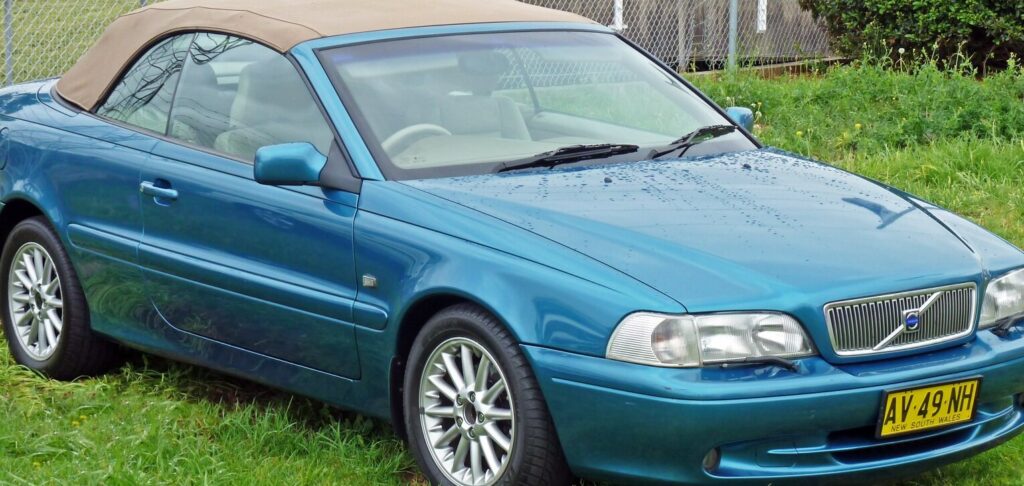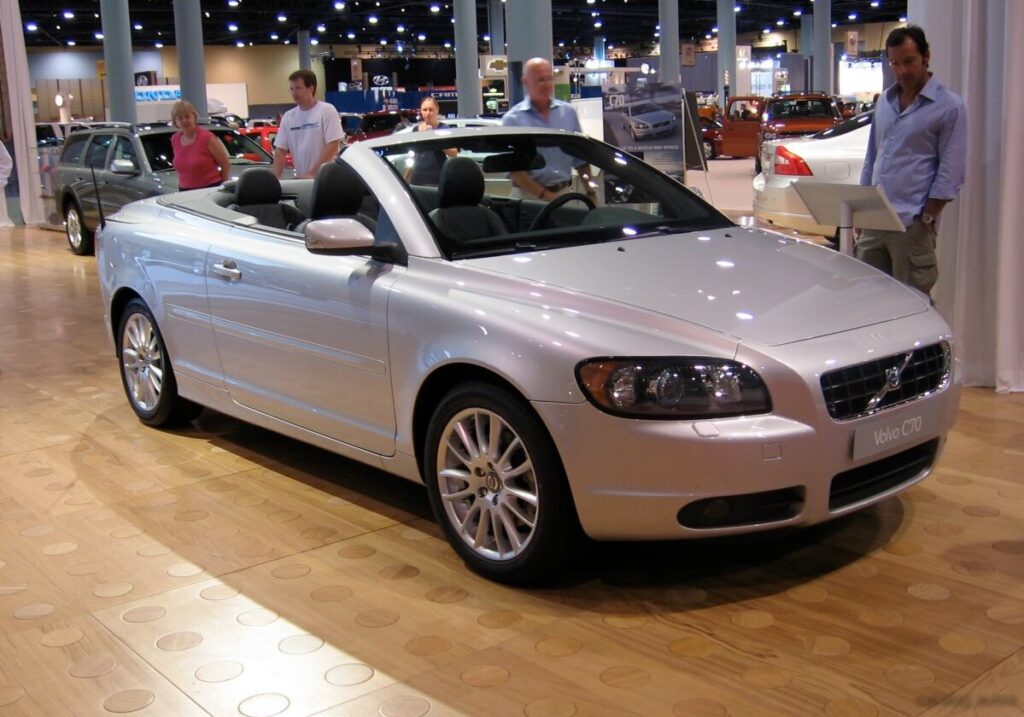
The Volvo C70 Coupe Cabriolet II, specifically the 2.0 D variant with the Geartronic automatic transmission, represented a key offering in Volvo’s premium convertible market segment between 2007 and 2009. Positioned as a more economical alternative to the petrol-powered models, the 2.0 D aimed to broaden the C70’s appeal, particularly in European markets where diesel engines were favored for their fuel efficiency. This generation, designated internally as the 1HX0 chassis code, combined the practicality of a coupe with the open-air enjoyment of a convertible, featuring a retractable hardtop – a significant advancement over the previous C70’s soft-top design. The 2.0 D Geartronic trim occupied a mid-range position within the C70 lineup, offering a balance between performance, fuel economy, and features.
Technical Specifications
| Brand | Volvo |
| Model | C70 |
| Generation | C70 Coupe Cabrio II |
| Type (Engine) | 2.0 D (136 Hp) Geartronic |
| Start of production | 2007 |
| End of production | 2009 |
| Powertrain Architecture | Internal Combustion engine |
| Body type | Coupe – Cabriolet |
| Seats | 4 |
| Doors | 2 |
| Fuel consumption (urban) | 8.1 l/100 km (29 US mpg, 34.9 UK mpg, 12.3 km/l) |
| Fuel consumption (extra urban) | 5.3 l/100 km (44.4 US mpg, 53.3 UK mpg, 18.9 km/l) |
| Fuel consumption (combined) | 6.3 l/100 km (37.3 US mpg, 44.8 UK mpg, 15.9 km/l) |
| CO2 emissions | 167 g/km |
| Fuel Type | Diesel |
| Acceleration 0 – 100 km/h | 11.1 sec |
| Acceleration 0 – 62 mph | 11.1 sec |
| Acceleration 0 – 60 mph | 10.5 sec |
| Weight-to-power ratio | 10.8 kg/Hp, 92.4 Hp/tonne |
| Weight-to-torque ratio | 4.6 kg/Nm, 217.4 Nm/tonne |
| Power | 136 Hp @ 4000 rpm |
| Power per litre | 68.1 Hp/l |
| Torque | 320 Nm @ 2000 rpm (236.02 lb.-ft. @ 2000 rpm) |
| Engine layout | Front, Transverse |
| Engine Model/Code | D4204T |
| Engine displacement | 1997 cm3 (121.86 cu. in.) |
| Number of cylinders | 4 |
| Engine configuration | Inline |
| Piston Stroke | 85 mm (3.35 in.) |
| Fuel injection system | Diesel Commonrail |
| Engine aspiration | Turbocharger, Intercooler |
| Engine oil capacity | 5 l (5.28 US qt | 4.4 UK qt) |
| Coolant | 9.5 l (10.04 US qt | 8.36 UK qt) |
| Kerb Weight | 1472 kg (3245.2 lbs.) |
| Max. weight | 1960 kg (4321.06 lbs.) |
| Max load | 488 kg (1075.86 lbs.) |
| Trunk (boot) space – minimum | 417 l (14.73 cu. ft.) |
| Fuel tank capacity | 52 l (13.74 US gal | 11.44 UK gal) |
| Length | 4582 mm (180.39 in.) |
| Width | 1770 mm (69.69 in.) |
| Width including mirrors | 2025 mm (79.72 in.) |
| Height | 1457 mm (57.36 in.) |
| Wheelbase | 2640 mm (103.94 in.) |
| Front track | 1535 mm (60.43 in.) |
| Rear (Back) track | 1531 mm (60.28 in.) |
| Minimum turning circle | 11.1 m (36.42 ft.) |
| Drivetrain Architecture | Front wheel drive |
| Number of gears | 5 |
| Gearbox type | Automatic transmission |
Powertrain & Engine Architecture
The heart of the C70 2.0 D Geartronic is the Volvo D4204T, a 1997cc inline-four cylinder diesel engine. This engine utilizes a common rail direct injection system, delivering fuel at extremely high pressure for optimized combustion. A turbocharger with an intercooler is employed to boost power output and improve torque across a wider rev range. The engine’s design prioritizes efficiency and reduced emissions, incorporating features like exhaust gas recirculation (EGR) and a diesel particulate filter (DPF). The Geartronic transmission is a five-speed automatic, known for its smooth shifts and adaptive learning capabilities. It allows for both fully automatic operation and manual gear selection via a Tiptronic-style mode. This transmission was designed to handle the engine’s torque output effectively, providing reasonable acceleration and comfortable cruising.
Driving Characteristics
The 136 horsepower and 236 lb-ft of torque produced by the 2.0 D engine provide adequate, though not exhilarating, performance. Acceleration from 0-60 mph takes around 10.5 seconds, making it suitable for everyday driving but not particularly sporty. The automatic transmission contributes to a relaxed driving experience, particularly in urban environments. Compared to the higher-output petrol versions of the C70, the 2.0 D feels noticeably slower, especially during overtaking maneuvers. However, the diesel engine’s strong low-end torque makes it feel responsive in most situations. The gear ratios are tuned for fuel efficiency, meaning the engine doesn’t rev as high as its petrol counterparts. The focus is on providing a comfortable and economical ride rather than outright performance.
Equipment & Trim Levels
The C70 2.0 D Geartronic typically came equipped with a respectable level of standard features. These included climate control, power windows and mirrors, a leather-wrapped steering wheel, and a basic audio system. Safety features, a hallmark of Volvo, were also comprehensive, including ABS brakes, traction control, and multiple airbags. Optional extras included leather upholstery, premium audio systems (often from Dynaudio), navigation systems, and parking sensors. The interior design was typically Scandinavian in style – clean, functional, and well-built. The dashboard layout was straightforward and easy to use, with a focus on ergonomics.
Chassis & Braking
The C70’s chassis was designed to provide a balance between comfort and handling. It utilizes independent suspension all around, with MacPherson struts at the front and multi-link suspension at the rear. The 2.0 D variant typically featured slightly softer suspension settings compared to the more powerful models, prioritizing ride comfort. Braking duties are handled by disc brakes at the front and, depending on the specific market and year, either disc or drum brakes at the rear. The braking system is assisted by ABS and electronic brakeforce distribution (EBD). Stabilizer bars are fitted front and rear to reduce body roll during cornering.
Market Reception & Comparison
The C70 2.0 D Geartronic was generally well-received by critics as a practical and economical option within the premium convertible segment. Its fuel economy – around 37 mpg combined – was a significant selling point, particularly in Europe. However, some reviewers noted that the engine lacked the refinement and performance of its petrol counterparts. Compared to other diesel-powered convertibles of the time, such as the BMW 1 Series Convertible and the Audi A3 Cabriolet, the C70 offered a more spacious interior and a more comfortable ride. Reliability was generally good, although the diesel particulate filter (DPF) could be a potential source of issues if the vehicle was primarily used for short trips.
Legacy
The Volvo C70 2.0 D Geartronic, while not the most powerful or sporty version of the C70, remains a popular choice in the used car market. Its combination of style, practicality, and fuel efficiency continues to appeal to buyers looking for a premium convertible at a reasonable price. The D4204T engine, when properly maintained, is known for its durability. Common maintenance items include regular oil changes, filter replacements, and periodic DPF regeneration. The Geartronic transmission is also generally reliable, but it’s important to ensure that it has been serviced according to Volvo’s recommendations. Today, the C70 2.0 D represents a well-rounded and relatively affordable entry point into the world of Volvo convertibles.