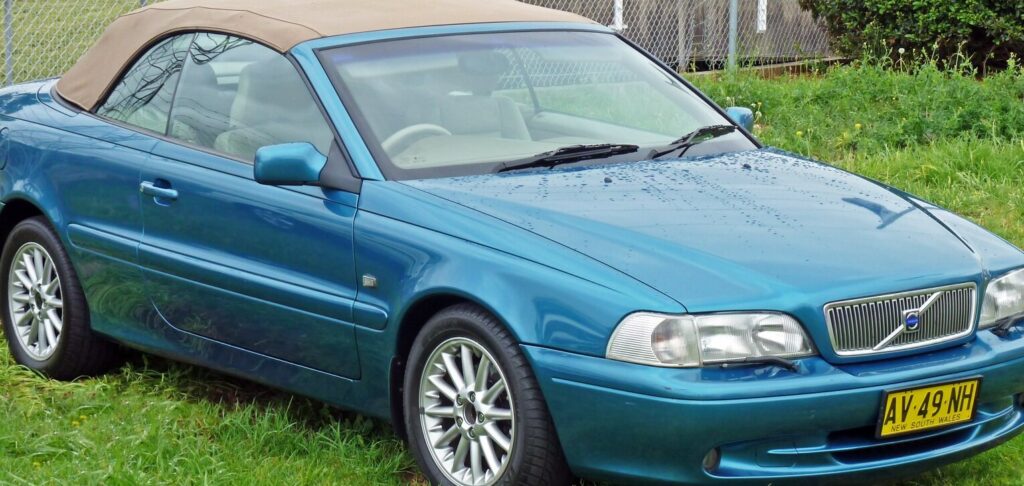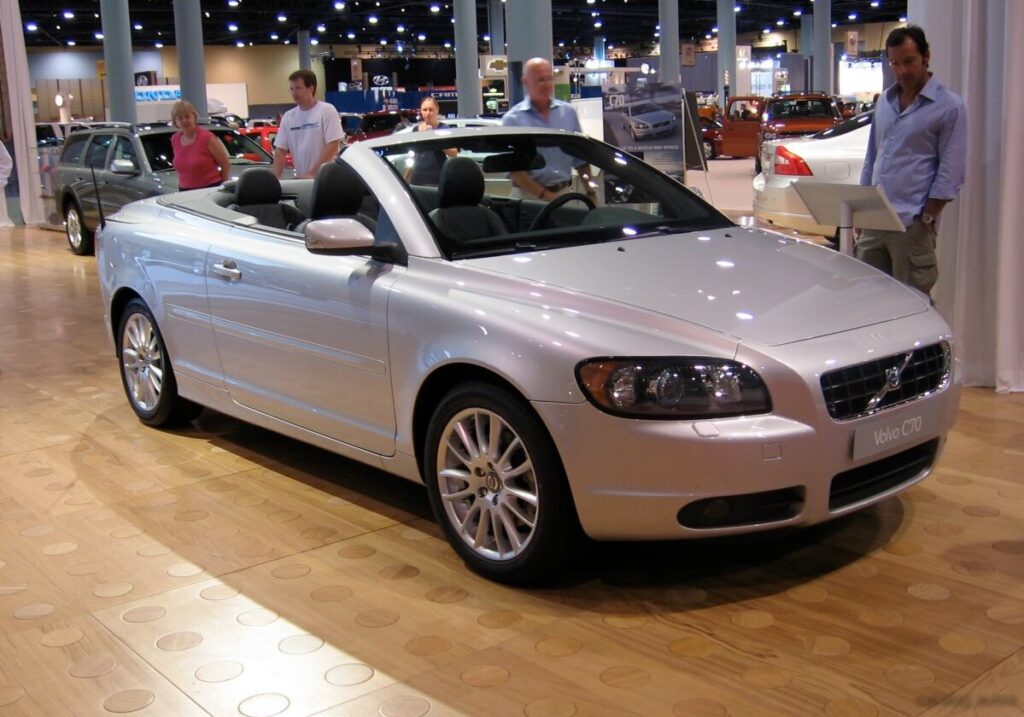
The Volvo C70 Coupe Cabriolet II, produced from 2005 to 2009, represented Volvo’s entry into the premium retractable hardtop convertible market. This second generation C70, built on the Volvo P24 platform shared with the Ford Focus and Mazda 3, aimed to combine the practicality of a coupe with the open-air enjoyment of a convertible. The 2.4i 20V variant, equipped with a 2.4-liter inline-five engine producing 140 horsepower, served as the entry point to the C70 range, offering a balance of affordability and Scandinavian style. It was positioned below the higher-performance 2.5T models, targeting buyers who prioritized comfort and fuel efficiency over outright speed.
Technical Specifications
| Brand | Volvo |
| Model | C70 |
| Generation | C70 Coupe Cabrio II |
| Type (Engine) | 2.4 i 20V (140 Hp) |
| Start of production | 2005 |
| End of production | 2009 |
| Powertrain Architecture | Internal Combustion engine |
| Body type | Coupe – Cabriolet |
| Seats | 4 |
| Doors | 2 |
| Fuel consumption (urban) | 12.8 l/100 km (18.4 US mpg, 22.1 UK mpg, 7.8 km/l) |
| Fuel consumption (extra urban) | 6.7 l/100 km (35.1 US mpg, 42.2 UK mpg, 14.9 km/l) |
| Fuel consumption (combined) | 9.0 l/100 km (26.1 US mpg, 31.4 UK mpg, 11.1 km/l) |
| CO2 emissions | 215 g/km |
| Fuel Type | Petrol (Gasoline) |
| Acceleration 0 – 100 km/h | 11 sec |
| Acceleration 0 – 62 mph | 11 sec |
| Acceleration 0 – 60 mph | 10.5 sec |
| Maximum speed | 205 km/h (127.38 mph) |
| Weight-to-power ratio | 11.8 kg/Hp, 85.1 Hp/tonne |
| Weight-to-torque ratio | 7.5 kg/Nm, 133.7 Nm/tonne |
| Power | 140 Hp @ 5000 rpm |
| Power per litre | 57.5 Hp/l |
| Torque | 220 Nm @ 4000 rpm (162.26 lb.-ft. @ 4000 rpm) |
| Engine layout | Front, Transverse |
| Engine Model/Code | B5244S4 |
| Engine displacement | 2435 cm3 (148.59 cu. in.) |
| Number of cylinders | 5 |
| Engine configuration | Inline |
| Cylinder Bore | 83 mm (3.27 in.) |
| Piston Stroke | 90 mm (3.54 in.) |
| Compression ratio | 10.3:1 |
| Number of valves per cylinder | 4 |
| Fuel injection system | Multi-port manifold injection |
| Engine aspiration | Naturally aspirated engine |
| Valvetrain | DOHC |
| Engine oil capacity | 5.8 l (6.13 US qt | 5.1 UK qt) |
| Coolant | 9.5 l (10.04 US qt | 8.36 UK qt) |
| Kerb Weight | 1646 kg (3628.81 lbs.) |
| Max. weight | 2090 kg (4607.66 lbs.) |
| Max load | 444 kg (978.85 lbs.) |
| Trunk (boot) space – minimum | 200 l (7.06 cu. ft.) |
| Trunk (boot) space – maximum | 404 l (14.27 cu. ft.) |
| Fuel tank capacity | 62 l (16.38 US gal | 13.64 UK gal) |
| Length | 4582 mm (180.39 in.) |
| Width | 1770 mm (69.69 in.) |
| Width including mirrors | 2025 mm (79.72 in.) |
| Height | 1400 mm (55.12 in.) |
| Wheelbase | 2640 mm (103.94 in.) |
| Front track | 1550 mm (61.02 in.) |
| Rear (Back) track | 1560 mm (61.42 in.) |
| Drivetrain Architecture | The Internal combustion engine (ICE) drives the front wheels of the vehicle. |
| Drive wheel | Front wheel drive |
| Number of gears and type of gearbox | 5 gears, manual transmission |
| Front suspension | Coil spring |
| Rear suspension | Coil spring |
| Front brakes | Ventilated discs |
| Rear brakes | Disc |
| Assisting systems | ABS (Anti-lock braking system) |
| Steering type | Steering rack and pinion |
| Tires size | 215/55 R16 |
| Wheel rims size | 16 |
Powertrain & Engine Architecture
The heart of the C70 2.4i is the Volvo B5244S4 engine, a 2.4-liter inline-five cylinder powerplant. This engine, a staple of Volvo’s mid-size offerings for many years, features a cast iron block and an aluminum cylinder head. The “20V” designation indicates the engine’s 20-valve configuration – four valves per cylinder (two intake and two exhaust) operated by a double overhead camshaft (DOHC) design. Fuel delivery is managed by a multi-port fuel injection system, providing precise fuel metering for optimal combustion. The engine’s naturally aspirated design contributes to a smooth, predictable power delivery. The 140 horsepower and 220 Nm (162 lb-ft) of torque are sent to the front wheels through a 5-speed manual transmission. While an automatic transmission was available, the manual was favored by enthusiasts for its more engaging driving experience.
Driving Characteristics
The C70 2.4i, with its 140 hp and front-wheel drive configuration, offered a comfortable and refined driving experience, but wasn’t designed for outright performance. Acceleration from 0-60 mph took around 10.5 seconds, and top speed was limited to 127 mph. The 5-speed manual transmission provided adequate control, but the engine’s relatively low output meant frequent downshifts were necessary for spirited driving. Compared to the turbocharged 2.5T models, the 2.4i felt noticeably slower, particularly during overtaking maneuvers. However, the naturally aspirated engine offered a more linear power delivery, making it easier to modulate throttle response. The suspension, tuned for comfort, provided a smooth ride, absorbing bumps and imperfections in the road effectively.
Equipment & Trim Levels
The C70 2.4i typically came equipped with a respectable level of standard features, including automatic climate control, power windows and locks, a premium audio system, and leather upholstery. Safety was, as always with Volvo, a priority, with standard features like ABS brakes, traction control, and side airbags. Optional extras included a navigation system, upgraded audio systems, and various cosmetic enhancements. Trim levels were relatively simple, with most variations stemming from the addition of optional packages. The retractable hardtop itself was a significant feature, providing the security and weather protection of a coupe with the open-air freedom of a convertible.
Chassis & Braking
The C70’s chassis utilized a MacPherson strut front suspension and a multi-link rear suspension, providing a good balance of ride comfort and handling. The front brakes were ventilated discs, offering strong stopping power, while the rear brakes were solid discs. The steering was a rack-and-pinion system, providing precise and responsive steering feel. The car’s weight, at approximately 3629 lbs, contributed to its stable handling characteristics, but also limited its acceleration and agility. Standard tire size was 215/55 R16, providing a good compromise between grip and ride comfort.
Market Reception & Comparison
The C70 2.4i was generally well-received by critics, who praised its stylish design, comfortable interior, and innovative retractable hardtop. However, the engine’s lack of power was a common criticism, with many reviewers suggesting that the 2.5T models offered a more rewarding driving experience. Fuel economy was considered average for its class, and reliability was generally good, although some owners reported minor issues with the retractable hardtop mechanism. Compared to competitors like the BMW 3 Series Convertible and the Mercedes-Benz CLK Convertible, the C70 offered a unique combination of style, practicality, and safety, but often lacked the performance and prestige of its German rivals.
Legacy
The Volvo C70 Coupe Cabriolet II, particularly the 2.4i variant, has become a popular choice among used car buyers seeking a stylish and reliable convertible. The B5244S4 engine is known for its durability and relatively low maintenance costs. While not a performance icon, the C70 2.4i offers a comfortable and enjoyable driving experience, making it a practical and appealing option for those who prioritize style and comfort over outright speed. The retractable hardtop continues to be a desirable feature, providing year-round usability and security. Today, well-maintained examples of the C70 2.4i can be found at reasonable prices, making it an accessible entry point into the world of premium convertibles.