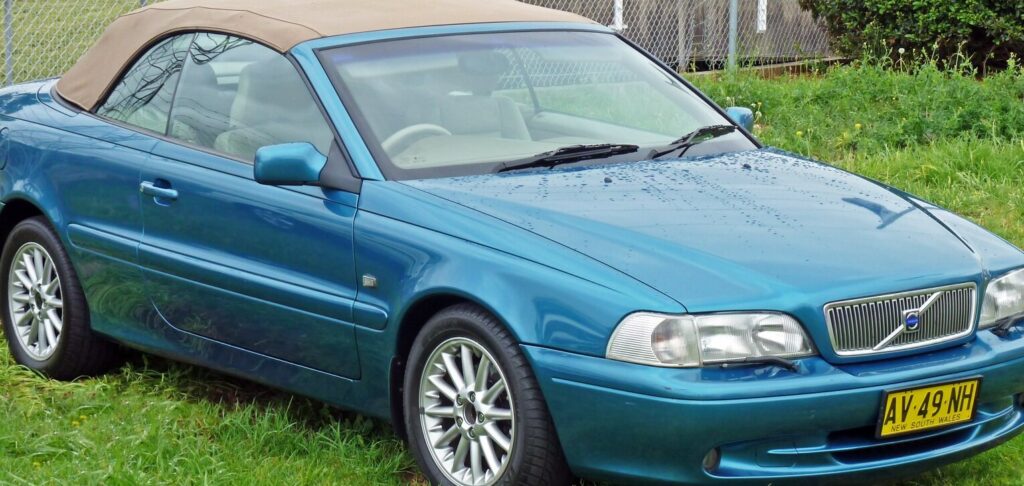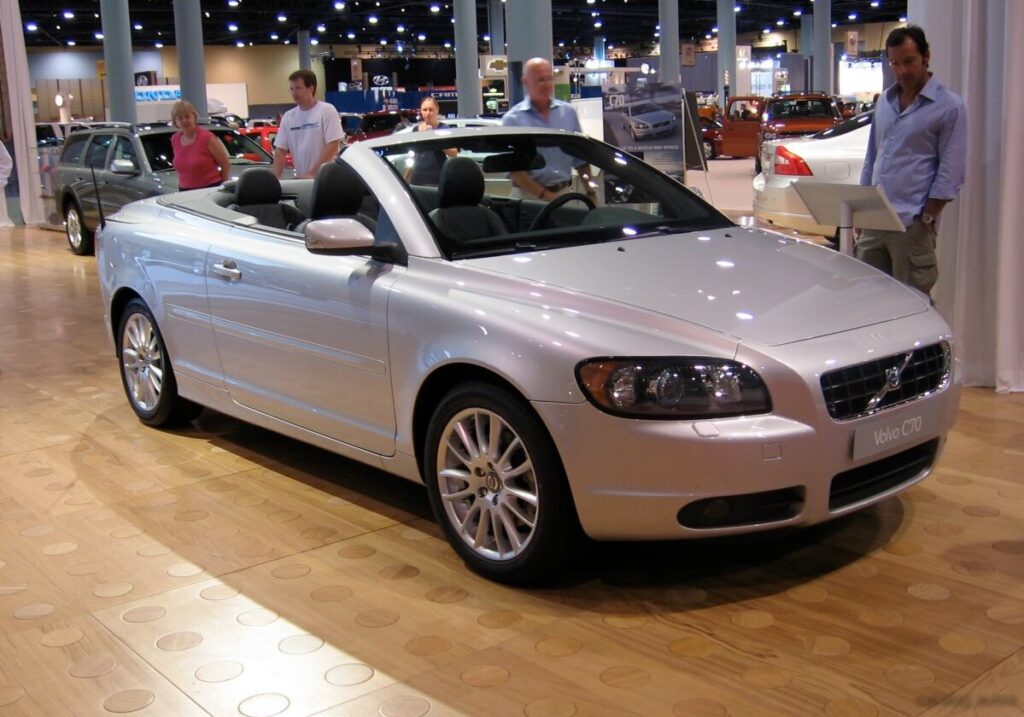
The Volvo C70 Coupe Cabriolet II, produced from 2005 to 2009, represented Volvo’s entry into the premium retractable hardtop convertible market. This second generation C70, built on the Volvo P24 platform shared with the Ford Focus and Mazda 3, aimed to combine the practicality of a coupe with the open-air enjoyment of a convertible. The 2.4i 20V variant, equipped with a 2.4-liter inline-five engine and a five-speed Geartronic automatic transmission, served as a popular mid-range option, balancing performance with affordability and ease of use. It occupied a position between the base 2.0L model and the more powerful 2.5T turbocharged versions.
Technical Specifications
| Brand | Volvo |
| Model | C70 |
| Generation | C70 Coupe Cabrio II |
| Type (Engine) | 2.4 i 20V (140 Hp) Geartronic |
| Start of production | 2005 |
| End of production | 2009 |
| Powertrain Architecture | Internal Combustion engine |
| Body type | Coupe – Cabriolet |
| Seats | 4 |
| Doors | 2 |
| Fuel consumption (urban) | 13.8 l/100 km (17 US mpg, 20.5 UK mpg, 7.2 km/l) |
| Fuel consumption (extra urban) | 7 l/100 km (33.6 US mpg, 40.4 UK mpg, 14.3 km/l) |
| Fuel consumption (combined) | 9.6 l/100 km (24.5 US mpg, 29.4 UK mpg, 10.4 km/l) |
| CO2 emissions | 229 g/km |
| Fuel Type | Petrol (Gasoline) |
| Acceleration 0 – 100 km/h | 11.8 sec |
| Acceleration 0 – 62 mph | 11.8 sec |
| Acceleration 0 – 60 mph | 11.2 sec |
| Maximum speed | 205 km/h (127.38 mph) |
| Weight-to-power ratio | 11.8 kg/Hp, 85.1 Hp/tonne |
| Weight-to-torque ratio | 7.5 kg/Nm, 133.7 Nm/tonne |
| Power | 140 Hp @ 5000 rpm |
| Power per litre | 57.5 Hp/l |
| Torque | 220 Nm @ 4000 rpm (162.26 lb.-ft. @ 4000 rpm) |
| Engine layout | Front, Transverse |
| Engine Model/Code | B5244S4 |
| Engine displacement | 2435 cm3 (148.59 cu. in.) |
| Number of cylinders | 5 |
| Engine configuration | Inline |
| Cylinder Bore | 83 mm (3.27 in.) |
| Piston Stroke | 90 mm (3.54 in.) |
| Compression ratio | 10.3:1 |
| Number of valves per cylinder | 4 |
| Fuel injection system | Multi-port manifold injection |
| Engine aspiration | Naturally aspirated engine |
| Valvetrain | DOHC |
| Engine oil capacity | 5.8 l (6.13 US qt | 5.1 UK qt) |
| Coolant | 10 l (10.57 US qt | 8.8 UK qt) |
| Kerb Weight | 1646 kg (3628.81 lbs.) |
| Max. weight | 2090 kg (4607.66 lbs.) |
| Max load | 444 kg (978.85 lbs.) |
| Trunk (boot) space – minimum | 200 l (7.06 cu. ft.) |
| Trunk (boot) space – maximum | 404 l (14.27 cu. ft.) |
| Fuel tank capacity | 62 l (16.38 US gal | 13.64 UK gal) |
| Length | 4582 mm (180.39 in.) |
| Width | 1770 mm (69.69 in.) |
| Width including mirrors | 2025 mm (79.72 in.) |
| Height | 1400 mm (55.12 in.) |
| Wheelbase | 2640 mm (103.94 in.) |
| Front track | 1550 mm (61.02 in.) |
| Rear (Back) track | 1560 mm (61.42 in.) |
| Drivetrain Architecture | The Internal combustion engine (ICE) drives the front wheels of the vehicle. |
| Drive wheel | Front wheel drive |
| Number of gears and type of gearbox | 5 gears, automatic transmission |
| Front suspension | Coil spring |
| Rear suspension | Coil spring |
| Front brakes | Ventilated discs |
| Rear brakes | Disc |
| Assisting systems | ABS (Anti-lock braking system) |
| Steering type | Steering rack and pinion |
| Tires size | 215/55 R16 |
| Wheel rims size | 16 |
Powertrain & Engine Architecture
The heart of the C70 2.4i is the Volvo B5244S4 engine, a naturally aspirated 2.4-liter inline-five cylinder powerplant. This engine, a staple of Volvo’s mid-size offerings for many years, features a cast iron block and an aluminum cylinder head. It utilizes multi-port fuel injection and a double overhead camshaft (DOHC) valvetrain with four valves per cylinder, contributing to its relatively smooth power delivery. The engine’s 140 horsepower at 5000 rpm and 220 Nm (162 lb-ft) of torque at 4000 rpm were considered adequate for comfortable cruising and everyday driving. The five-speed Geartronic automatic transmission, co-developed with Aisin, offered a conventional torque converter setup with the option for manual gear selection. While not known for its blistering speed, the Geartronic provided smooth shifts and contributed to the car’s overall refinement.
Driving Characteristics
The 2.4i Geartronic C70 offered a relaxed and comfortable driving experience. Acceleration from 0-60 mph took around 11.2 seconds, making it noticeably slower than the turbocharged variants. The automatic transmission, while smooth, could feel somewhat hesitant during quick overtaking maneuvers. The gear ratios were tuned for fuel efficiency and comfort rather than outright performance. The inline-five engine provided a distinctive sound, and the car felt stable and well-balanced on the road. Compared to the manual transmission versions, the automatic offered greater convenience, particularly in urban traffic, but at the expense of driver engagement and responsiveness.
Equipment & Trim Levels
The C70 2.4i typically came standard with features such as leather upholstery, automatic climate control, power windows and mirrors, and a premium audio system. Safety features, a hallmark of Volvo, were also comprehensive, including ABS brakes, traction control, and multiple airbags. Optional extras included navigation systems, upgraded audio systems, and various cosmetic enhancements. Trim levels varied depending on the market, but generally offered packages that added features like heated seats, wood trim, and upgraded wheels.
Chassis & Braking
The C70’s chassis featured independent suspension all around, with coil springs and stabilizer bars. The front suspension utilized MacPherson struts, while the rear employed a multi-link setup. This configuration provided a comfortable ride and decent handling characteristics. The braking system consisted of ventilated discs at the front and solid discs at the rear, providing adequate stopping power for the car’s weight and performance. ABS (Anti-lock Braking System) was standard, enhancing safety during emergency braking situations.
Market Reception & Comparison
The C70 2.4i was generally well-received by critics as a stylish and comfortable convertible. However, its performance was often criticized as being underwhelming compared to its turbocharged siblings. Fuel economy, at around 24.5 mpg combined, was reasonable for a vehicle of its type, but not exceptional. Compared to the 2.5T models, the 2.4i offered a lower price point and potentially lower maintenance costs, making it an attractive option for buyers prioritizing affordability and practicality. The 2.0L model was even more affordable, but offered significantly less power.
Legacy
The B5244S4 engine, while not known for being particularly complex, has proven to be relatively reliable over the long term, provided it receives regular maintenance. Common issues include oil leaks and occasional sensor failures. The Geartronic transmission is also generally durable, but can require servicing to maintain smooth operation. Today, the C70 2.4i represents an affordable entry point into the world of premium retractable hardtop convertibles. Its classic Volvo styling and comfortable ride continue to appeal to enthusiasts, and parts availability remains reasonably good. While it may not offer the performance of its more powerful counterparts, the 2.4i C70 provides a refined and enjoyable driving experience for those seeking a stylish and practical open-top car.