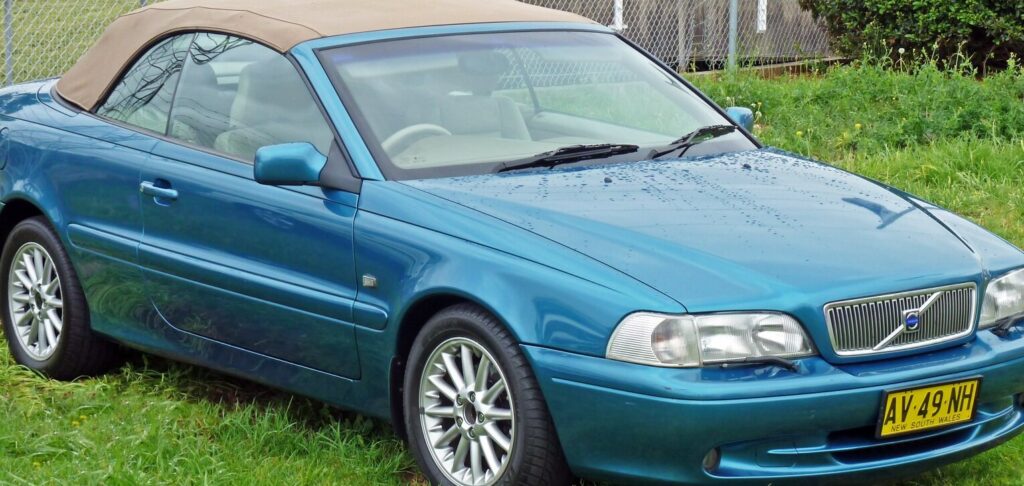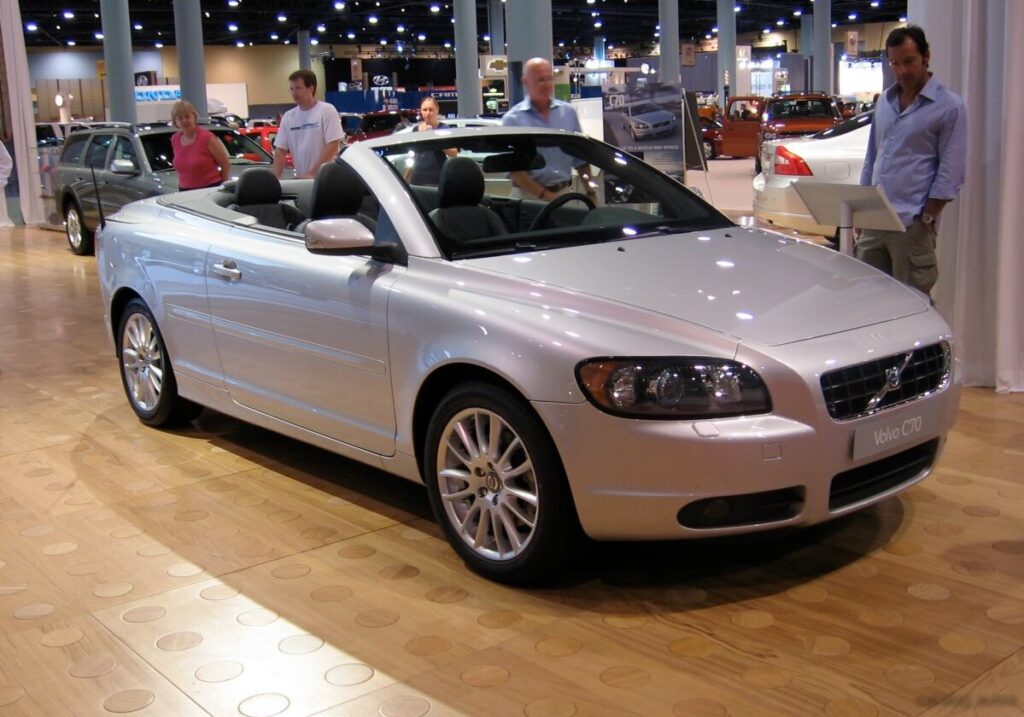
The Volvo C70 Coupe Cabriolet II, produced from 2006 to 2009, represented Volvo’s entry into the premium retractable hardtop convertible market. Positioned as a stylish and sophisticated grand tourer, the C70 aimed to combine the open-air experience of a convertible with the security and practicality of a coupe. This generation, based on the Volvo P24 platform shared with the Ford Focus and Mazda 3, offered a more refined and upscale experience than its predecessor. The 2.5 T5 20V variant, equipped with a 2.5-liter turbocharged inline-five engine producing 230 horsepower, served as the primary performance offering for the C70 range in many markets, including North America. It occupied a mid-range position within the C70 lineup, offering a balance between performance and fuel efficiency.
Technical Specifications
| Brand | Volvo |
| Model | C70 |
| Generation | C70 Coupe Cabrio II |
| Type (Engine) | 2.5 T5 20V (230 Hp) |
| Start of production | 2006 |
| End of production | 2009 |
| Powertrain Architecture | Internal Combustion engine |
| Body type | Coupe – Cabriolet |
| Seats | 4 |
| Doors | 2 |
| Fuel consumption (combined) | 9.1 l/100 km |
| Fuel consumption (US mpg) | 25.8 US mpg |
| Fuel consumption (UK mpg) | 31 UK mpg |
| Fuel consumption (km/l) | 11 km/l |
| CO2 emissions | 217 g/km |
| Fuel Type | Petrol (Gasoline) |
| Acceleration 0 – 100 km/h | 7.6 sec |
| Acceleration 0 – 62 mph | 7.6 sec |
| Acceleration 0 – 60 mph | 7.2 sec |
| Maximum speed | 240 km/h (149.13 mph) |
| Power | 230 Hp @ 5000 rpm |
| Power per litre | 91.2 Hp/l |
| Torque | 320 Nm @ 1500-5000 rpm (236.02 lb.-ft. @ 1500-5000 rpm) |
| Engine layout | Front, Transverse |
| Engine Model/Code | B5254T7 |
| Engine displacement | 2521 cm3 (153.84 cu. in.) |
| Number of cylinders | 5 |
| Engine configuration | Inline |
| Cylinder Bore | 83 mm (3.27 in.) |
| Piston Stroke | 93.2 mm (3.67 in.) |
| Compression ratio | 9:1 |
| Number of valves per cylinder | 4 |
| Fuel injection system | Multi-port manifold injection |
| Engine aspiration | Turbocharger, Intercooler |
| Engine oil capacity | 5.8 l (6.13 US qt | 5.1 UK qt) |
| Coolant capacity | 9.5 l (10.04 US qt | 8.36 UK qt) |
| Trunk (boot) space – minimum | 200 l (7.06 cu. ft.) |
| Trunk (boot) space – maximum | 404 l (14.27 cu. ft.) |
| Fuel tank capacity | 62 l (16.38 US gal | 13.64 UK gal) |
| Length | 4582 mm (180.39 in.) |
| Width | 1770 mm (69.69 in.) |
| Width including mirrors | 2025 mm (79.72 in.) |
| Height | 1400 mm (55.12 in.) |
| Wheelbase | 2640 mm (103.94 in.) |
| Front track | 1550 mm (61.02 in.) |
| Rear track | 1560 mm (61.42 in.) |
| Drivetrain Architecture | Front wheel drive |
| Number of gears | 6 gears, manual transmission |
| Front suspension | Coil spring |
| Rear suspension | Coil spring |
| Front brakes | Ventilated discs |
| Rear brakes | Disc |
| Assisting systems | ABS (Anti-lock braking system) |
| Steering type | Steering rack and pinion |
| Tires size | 215/50 R17 |
| Wheel rims size | 17 |
Powertrain & Engine Architecture
The heart of the C70 2.5 T5 is the B5254T7 engine, a 2.5-liter inline-five cylinder powerplant. This engine is a descendant of Volvo’s long-running “Whiteblock” family of engines, known for their robustness and tunability. The “T5” designation indicates the presence of a light-pressure turbocharger and five cylinders. The B5254T7 utilizes a cast iron block and aluminum cylinder head, featuring multi-port fuel injection and a variable valve timing system on the intake camshaft. The turbocharger provides a significant boost in power and torque, delivering peak output of 230 horsepower at 5000 rpm and 320 Nm (236 lb-ft) of torque between 1500 and 5000 rpm. The engine is transversely mounted in the front of the vehicle. The 6-speed manual transmission was standard, providing precise gear changes and enhancing the driving experience.
Driving Characteristics
The C70 2.5 T5 offered a compelling blend of performance and comfort. The turbocharged engine provided ample power for both city driving and highway cruising. Acceleration from 0 to 60 mph was achieved in approximately 7.2 seconds, making it a reasonably quick vehicle for its class. The manual transmission allowed for greater driver control, while the turbocharger’s boost provided a noticeable surge of power during acceleration. Compared to the base 2.4i model, the T5 offered a significantly more engaging driving experience. While not as sporty as some of its rivals, the C70 T5 provided a smooth and refined ride, making it well-suited for long-distance travel. The front-wheel-drive configuration offered good traction in most conditions, although torque steer could be noticeable under hard acceleration.
Equipment & Trim Levels
The C70 2.5 T5 typically came well-equipped with standard features such as leather upholstery, automatic climate control, a premium audio system, and power-adjustable front seats. Safety features were also a priority, with standard inclusion of ABS brakes, traction control, and multiple airbags. Optional extras included navigation system, upgraded audio systems (often from Dynaudio), and various cosmetic enhancements. The retractable hardtop was, of course, a key feature, allowing the C70 to transform from a coupe to a convertible in approximately 30 seconds. Interior trim options included various wood or aluminum finishes, and exterior colors were plentiful, allowing buyers to personalize their vehicles.
Chassis & Braking
The C70’s chassis was based on the Volvo P24 platform, which also underpinned the Ford Focus and Mazda 3. The suspension consisted of independent coil springs all around, providing a comfortable ride and decent handling. The front suspension utilized MacPherson struts, while the rear employed a multi-link setup. Braking duties were handled by ventilated discs at the front and solid discs at the rear, with ABS standard. The steering was a rack-and-pinion system, providing precise and responsive steering feel. The C70’s structure was reinforced to compensate for the loss of a fixed roof, ensuring a high level of structural rigidity.
Market Reception & Comparison
The Volvo C70 Coupe Cabriolet II was generally well-received by automotive critics. It was praised for its stylish design, comfortable interior, and refined driving experience. The retractable hardtop was a major selling point, offering the convenience of a coupe with the open-air enjoyment of a convertible. However, some critics noted that the C70 was not as sporty as some of its rivals, such as the BMW 3 Series Convertible or the Audi A4 Cabriolet. Fuel economy was also a concern for some, with the 2.5 T5 engine returning around 25.8 mpg in combined driving. Compared to the lower-powered 2.4i model, the T5 offered a significant performance upgrade, but at a higher price point.
Legacy
The Volvo C70 Coupe Cabriolet II remains a desirable used car today, particularly for those seeking a stylish and well-equipped convertible. The B5254T7 engine is known for its reliability, although regular maintenance is essential. Common issues include oil leaks and occasional turbocharger problems. The retractable hardtop mechanism can also require maintenance over time. Despite these potential issues, the C70 T5 offers a compelling combination of performance, comfort, and style, making it a popular choice among enthusiasts and those looking for a unique and sophisticated grand tourer. Its blend of Scandinavian design and engineering continues to appeal to buyers seeking a premium convertible experience.