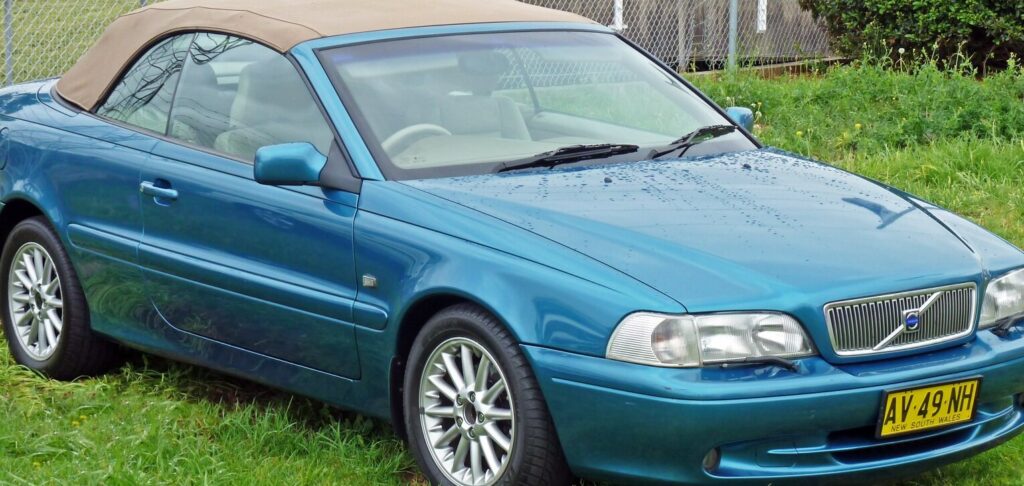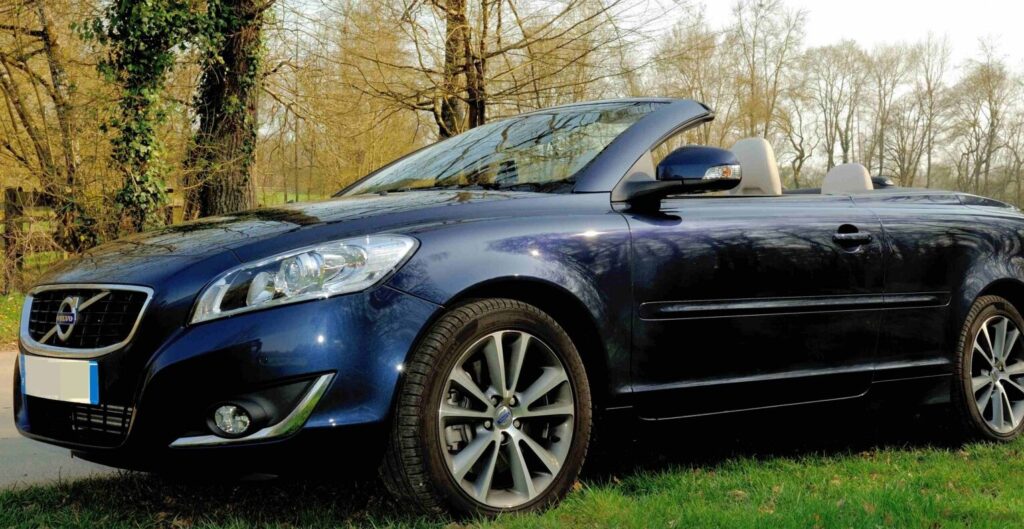
The Volvo C70 Coupe Cabriolet II, specifically the 2.0 D3 variant produced from 2011 to 2013 (following the 2009 facelift), represented a compelling entry point into Volvo’s premium retractable hardtop market. Positioned as a more fuel-efficient alternative to the gasoline-powered models, the D3 offered a blend of Scandinavian style, open-air driving enjoyment, and relatively economical diesel power. This version primarily targeted European markets where diesel engines held significant popularity due to fuel costs and emissions regulations. While not officially sold in the United States during this generation, the C70 was a significant model for Volvo, showcasing their engineering prowess and design capabilities.
Technical Specifications
| Brand | Volvo |
| Model | C70 |
| Generation | C70 Coupe Cabrio II (facelift 2009) |
| Type (Engine) | 2.0 D3 (150 Hp) |
| Start of production | 2011 |
| End of production | May, 2013 |
| Powertrain Architecture | Internal Combustion engine |
| Body type | Cabriolet, Coupe |
| Seats | 4 |
| Doors | 2 |
| Fuel consumption (urban) | 7.9 l/100 km (29.8 US mpg, 35.8 UK mpg, 12.7 km/l) |
| Fuel consumption (extra urban) | 5.9 l/100 km (39.9 US mpg, 47.9 UK mpg, 16.9 km/l) |
| CO2 emissions | 154 g/km |
| Fuel Type | Diesel |
| Acceleration 0 – 100 km/h | 10.9 sec |
| Acceleration 0 – 62 mph | 10.9 sec |
| Acceleration 0 – 60 mph | 10.4 sec |
| Maximum speed | 210 km/h (130.49 mph) |
| Emission standard | Euro 5 |
| Weight-to-power ratio | 11.6 kg/Hp, 86.2 Hp/tonne |
| Weight-to-torque ratio | 5 kg/Nm, 201.1 Nm/tonne |
| Power | 150 Hp @ 3500 rpm |
| Torque | 350 Nm @ 1500-2750 rpm (258.15 lb.-ft. @ 1500-2750 rpm) |
| Engine layout | Front, Transverse |
| Engine Model/Code | D5204T5 |
| Engine displacement | 1984 cm3 (121.07 cu. in.) |
| Number of cylinders | 5 |
| Engine configuration | Inline |
| Piston Stroke | 81 mm (3.19 in.) |
| Fuel injection system | Diesel Commonrail |
| Engine aspiration | Turbocharger, Intercooler |
| Engine oil capacity | 5.9 l (6.23 US qt | 5.19 UK qt) |
| Coolant | 8.5 l (8.98 US qt | 7.48 UK qt) |
| Kerb Weight | 1740 kg (3836.04 lbs.) |
| Max. weight | 2130 kg (4695.85 lbs.) |
| Max load | 390 kg (859.8 lbs.) |
| Trunk (boot) space – minimum | 404 l (14.27 cu. ft.) |
| Fuel tank capacity | 60 l (15.85 US gal | 13.2 UK gal) |
| Length | 4615 mm (181.69 in.) |
| Width | 1836 mm (72.28 in.) |
| Height | 1400 mm (55.12 in.) |
| Wheelbase | 2640 mm (103.94 in.) |
| Drivetrain Architecture | Front wheel drive |
| Number of gears and type of gearbox | 6 gears, manual transmission |
| Assisting systems | ABS (Anti-lock braking system) |
INTRODUCTION
The Volvo C70 II, launched in 2006, represented a significant departure from its predecessor, moving to a retractable hardtop configuration. The 2.0 D3 variant, introduced in 2011, was a key component of Volvo’s efforts to broaden the C70’s appeal with a more economical engine option. Built on the Volvo P24 platform (shared with the Ford S40 and V50), the C70 aimed to combine the practicality of a coupe with the open-air experience of a convertible. The D3 model, with its 150 horsepower, was positioned as the entry-level engine choice, offering a balance between performance and fuel efficiency. Production of this specific configuration concluded in May 2013, marking the end of the C70’s production run.
Powertrain & Engine Architecture
The heart of the C70 D3 is Volvo’s D5204T5 engine, a 1.984-liter inline-five cylinder diesel. This engine utilizes a common rail direct injection system, delivering fuel at extremely high pressure for optimized combustion. A turbocharger with an intercooler is employed to boost power output and improve torque across a wide rev range. The D3 engine produces 150 horsepower at 3500 rpm and a substantial 350 Nm (258 lb-ft) of torque between 1500 and 2750 rpm. This torque curve provides strong low-end and mid-range acceleration, making it well-suited for everyday driving. The engine is transversely mounted in the front of the vehicle. The C70 D3 was exclusively offered with a 6-speed manual transmission, prioritizing fuel economy and driver engagement over the convenience of an automatic.
Driving Characteristics
The C70 2.0 D3, with its manual transmission, delivers a surprisingly engaging driving experience. While not a sports car, the engine’s strong torque output provides ample power for overtaking and merging onto highways. The 6-speed gearbox is well-matched to the engine’s characteristics, allowing drivers to keep the engine in its optimal power band. Acceleration from 0 to 100 km/h (0-62 mph) takes approximately 10.9 seconds. Compared to the higher-output gasoline versions of the C70, the D3 feels less urgent in its acceleration, but it compensates with significantly improved fuel economy. The manual transmission also provides a more connected feel to the driving experience compared to an automatic.
Equipment & Trim Levels
The C70 D3 typically came equipped with a generous level of standard features, reflecting its premium positioning. Standard equipment included leather upholstery, automatic climate control, a premium audio system, and alloy wheels. Safety features were also a priority, with standard inclusion of ABS, traction control, and multiple airbags. Optional extras included navigation system, parking sensors, and upgraded audio systems. Trim levels were relatively limited, with most variations stemming from optional packages rather than distinct model designations. The interior design emphasized Scandinavian minimalism, with clean lines and high-quality materials.
Chassis & Braking
The C70 D3 utilizes a MacPherson strut front suspension and a multi-link rear suspension, providing a comfortable and controlled ride. The suspension was tuned to balance handling with ride comfort, making it suitable for both city driving and longer journeys. The braking system consists of ventilated disc brakes on the front wheels and solid disc brakes on the rear wheels. ABS (Anti-lock Braking System) is standard, enhancing braking performance and stability. The steering is a rack-and-pinion system, providing precise and responsive steering feel.
Market Reception & Comparison
The C70 2.0 D3 was generally well-received by automotive critics, particularly for its fuel efficiency and comfortable ride. It was praised as a stylish and practical convertible that offered a good value proposition. Compared to the higher-powered gasoline versions, the D3 was seen as a more sensible choice for drivers prioritizing economy over outright performance. Its fuel consumption of around 5.9 l/100 km (39.9 US mpg) was a significant advantage. However, some critics noted that the engine could feel slightly underpowered when fully loaded or tackling steep hills. Compared to competitors like the BMW 1 Series Convertible and Audi A3 Cabriolet, the C70 offered a unique combination of Scandinavian design and a retractable hardtop.
Legacy
The Volvo C70 D3, while not a high-volume seller, has established a reputation for reliability and durability. The D5204T5 engine is known for its robustness and longevity, provided it receives regular maintenance. On the used car market, the C70 D3 represents a relatively affordable entry point into the premium convertible segment. Common issues include wear and tear on the retractable hardtop mechanism and potential problems with the diesel particulate filter (DPF) if the vehicle has not been properly maintained. Overall, the C70 D3 remains a desirable and well-regarded vehicle for those seeking a stylish, comfortable, and fuel-efficient convertible.