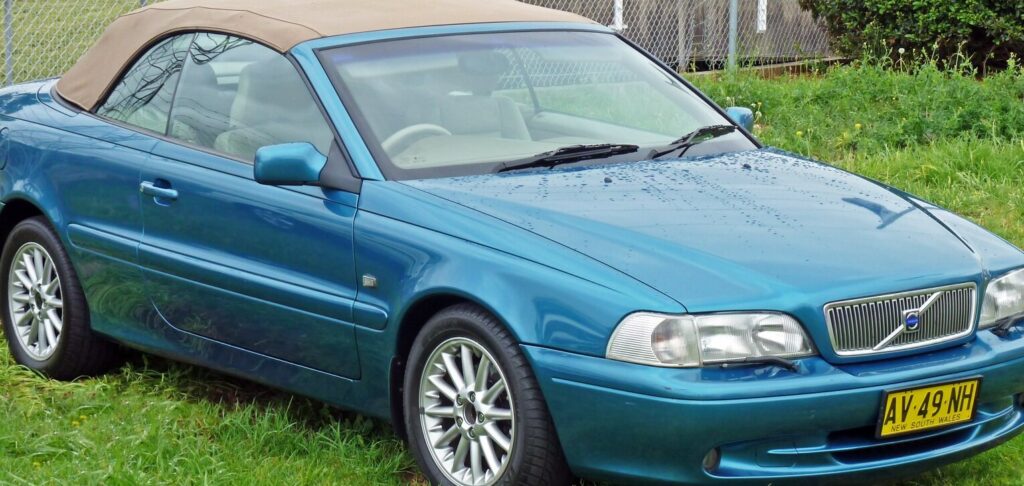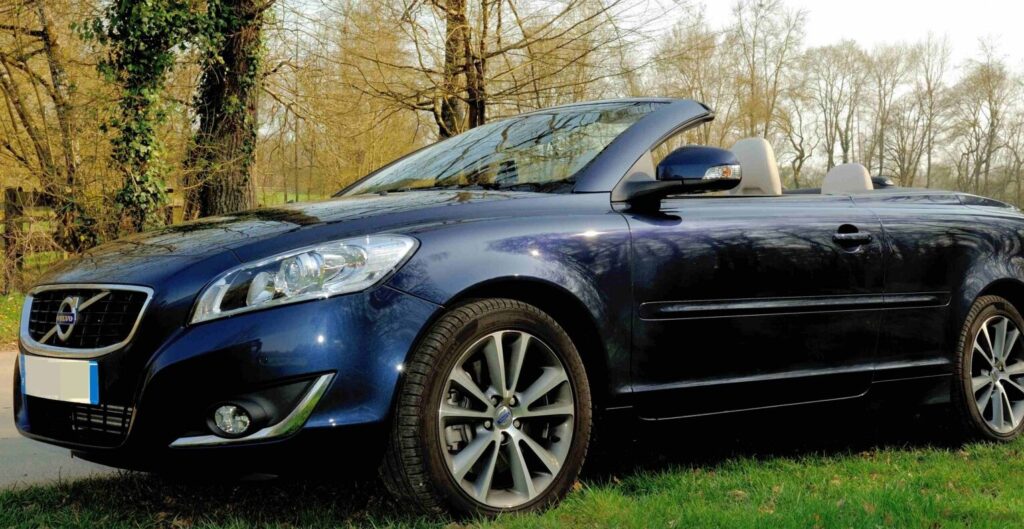
The Volvo C70 Coupe Cabriolet, particularly the 2.0 D4 variant produced from 2011 to 2013, represents a refined iteration of Volvo’s premium retractable hardtop. This model falls within the second generation of the C70 (internally designated as the 144/145 series), which debuted in 2006 and received a significant facelift in 2009. The 2.0 D4 trim occupied a middle ground in the C70 lineup, offering a balance between fuel efficiency, reasonable performance, and a comfortable driving experience. It was positioned below the more powerful gasoline-fueled variants like the T5 and T6, and aimed at buyers prioritizing economy and lower running costs without sacrificing the C70’s core appeal as a stylish and versatile convertible.
Technical Specifications
| Brand | Volvo |
| Model | C70 |
| Generation | C70 Coupe Cabrio II (facelift 2009) |
| Type (Engine) | 2.0 D4 (177 Hp) |
| Start of production | 2011 |
| End of production | May, 2013 |
| Powertrain Architecture | Internal Combustion engine |
| Body type | Cabriolet, Coupe |
| Seats | 4 |
| Doors | 2 |
| Fuel consumption (urban) | 7.7 l/100 km (30.5 US mpg) |
| Fuel consumption (extra urban) | 4.8 l/100 km (49 US mpg) |
| Fuel consumption (combined) | 5.9 l/100 km (39.9 US mpg) |
| CO2 emissions | 154 g/km |
| Fuel Type | Diesel |
| Acceleration 0 – 100 km/h | 9.9 sec |
| Acceleration 0 – 62 mph | 9.9 sec |
| Acceleration 0 – 60 mph | 9.4 sec |
| Emission standard | Euro 5 |
| Weight-to-power ratio | 9.8 kg/Hp |
| Weight-to-torque ratio | 4.4 kg/Nm |
| Power | 177 Hp @ 3500 rpm |
| Torque | 400 Nm @ 1750-2750 rpm (295.02 lb.-ft.) |
| Engine layout | Front, Transverse |
| Engine Model/Code | D5204T |
| Engine displacement | 1984 cm3 (121.07 cu. in.) |
| Number of cylinders | 5 |
| Engine configuration | Inline |
| Piston Stroke | 81 mm (3.19 in.) |
| Fuel injection system | Diesel Commonrail |
| Engine aspiration | Turbocharger, Intercooler |
| Engine oil capacity | 5.9 l (6.23 US qt | 5.19 UK qt) |
| Coolant capacity | 8.5 l (8.98 US qt | 7.48 UK qt) |
| Kerb Weight | 1740 kg (3836.04 lbs.) |
| Max. weight | 2130 kg (4695.85 lbs.) |
| Max load | 390 kg (859.8 lbs.) |
| Trunk (boot) space – minimum | 404 l (14.27 cu. ft.) |
| Fuel tank capacity | 60 l (15.85 US gal | 13.2 UK gal) |
| Length | 4615 mm (181.69 in.) |
| Width | 1836 mm (72.28 in.) |
| Width with mirrors folded | 1847 mm (72.72 in.) |
| Width including mirrors | 2025 mm (79.72 in.) |
| Height | 1400 mm (55.12 in.) |
| Wheelbase | 2640 mm (103.94 in.) |
| Front track | 1550 mm (61.02 in.) |
| Rear (Back) track | 1560 mm (61.42 in.) |
| Minimum turning circle | 11.95 m (39.21 ft.) |
| Drivetrain Architecture | Front wheel drive |
| Number of gears | 6 gears, manual transmission |
| Assisting systems | ABS (Anti-lock braking system) |
| Steering type | Steering rack and pinion |
| Power steering | Electric Steering |
Powertrain & Engine Architecture
The heart of the C70 D4 is Volvo’s D5204T, a 2.0-liter inline-five cylinder diesel engine. This engine is part of Volvo’s modular engine family and utilizes common-rail direct injection, a turbocharger with intercooling, and four valves per cylinder. The D5204T produces 177 horsepower at 3500 rpm and a substantial 400 Nm (295 lb-ft) of torque between 1750 and 2750 rpm. This torque output is a key characteristic of the engine, providing strong pulling power at lower engine speeds. The engine meets Euro 5 emission standards, incorporating a diesel particulate filter (DPF) to reduce soot emissions. The 6-speed manual transmission was standard, offering precise shifts and contributing to the car’s overall efficiency. While an automatic transmission was available in other C70 variants, it wasn’t offered with the D4 engine.
Driving Characteristics
The C70 2.0 D4 delivers a comfortable and refined driving experience. While not a sports car, the engine’s torque provides brisk acceleration, with 0-60 mph taking approximately 9.4 seconds. The manual transmission allows for good control, and the gear ratios are well-suited for both city driving and highway cruising. Compared to the more powerful T5 and T6 models, the D4 feels less urgent in its acceleration, but it offers a more relaxed and fuel-efficient driving style. The suspension is tuned for comfort, absorbing bumps and providing a stable ride. The steering is precise and well-weighted, offering good feedback to the driver.
Equipment & Trim Levels
The C70 D4 typically came well-equipped, reflecting its position as a premium vehicle. Standard features included leather upholstery, automatic climate control, a premium audio system, and alloy wheels. Safety features were also comprehensive, including ABS, traction control, and multiple airbags. Optional extras included navigation system, parking sensors, and upgraded audio systems. Interior trim levels varied, with options for different leather colors and wood or aluminum trim accents. The C70’s retractable hardtop was a key feature, providing the open-air experience of a convertible with the security and weather protection of a coupe.
Chassis & Braking
The C70 utilizes a MacPherson strut front suspension and a multi-link rear suspension, providing a good balance of comfort and handling. The chassis is reinforced to compensate for the lack of a fixed roof, ensuring structural rigidity. Braking duties are handled by ventilated disc brakes at the front and solid disc brakes at the rear. ABS (Anti-lock Braking System) is standard, enhancing braking performance and stability. The steering system is a rack-and-pinion setup with electric power assistance, providing precise and responsive steering feel.
Market Reception & Comparison
The C70 2.0 D4 was generally well-received by automotive critics. It was praised for its fuel efficiency, comfortable ride, and stylish design. However, some critics noted that the engine lacked the outright performance of the gasoline-powered variants. Compared to the T5, the D4 offered significantly better fuel economy, making it a more practical choice for drivers covering long distances. Compared to the T6, the D4 was more affordable and offered a more balanced driving experience. The C70 competed with other premium convertibles such as the BMW 3 Series Convertible and the Audi A5 Cabriolet.
Legacy
The Volvo C70 2.0 D4 has proven to be a reliable and durable vehicle. The D5204T engine is known for its longevity, and with regular maintenance, it can provide many years of trouble-free service. The C70’s retractable hardtop mechanism is generally reliable, although it can require occasional maintenance. In the used car market, the C70 D4 represents a good value proposition, offering a stylish and well-equipped convertible at a reasonable price. Its fuel efficiency and relatively low running costs make it an attractive option for buyers seeking a premium convertible experience without breaking the bank. The C70, in general, is remembered as a stylish and innovative vehicle that showcased Volvo’s commitment to safety, comfort, and design.