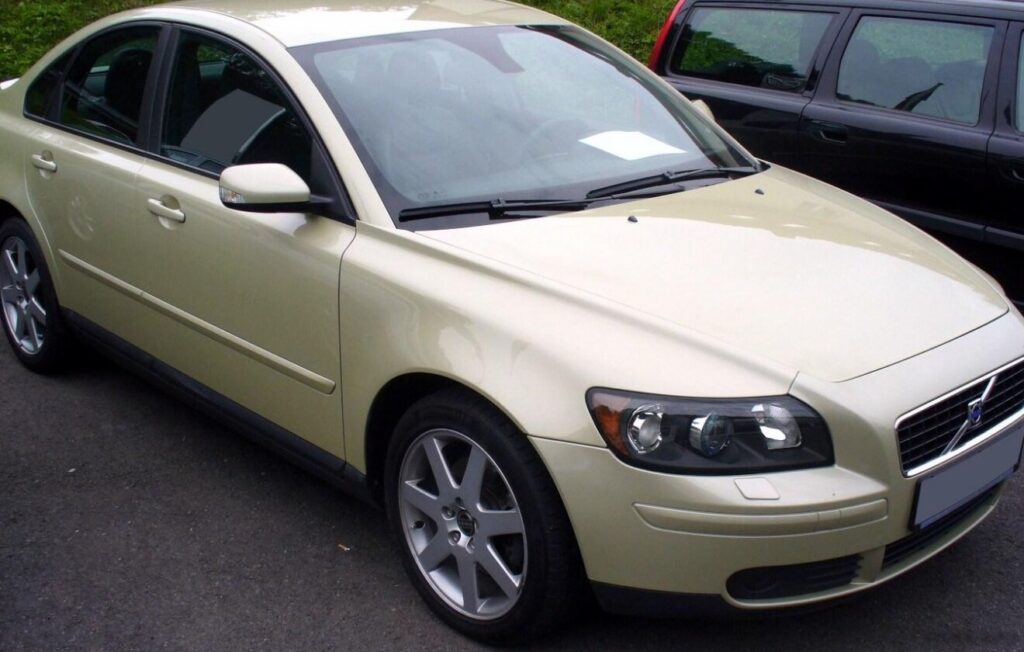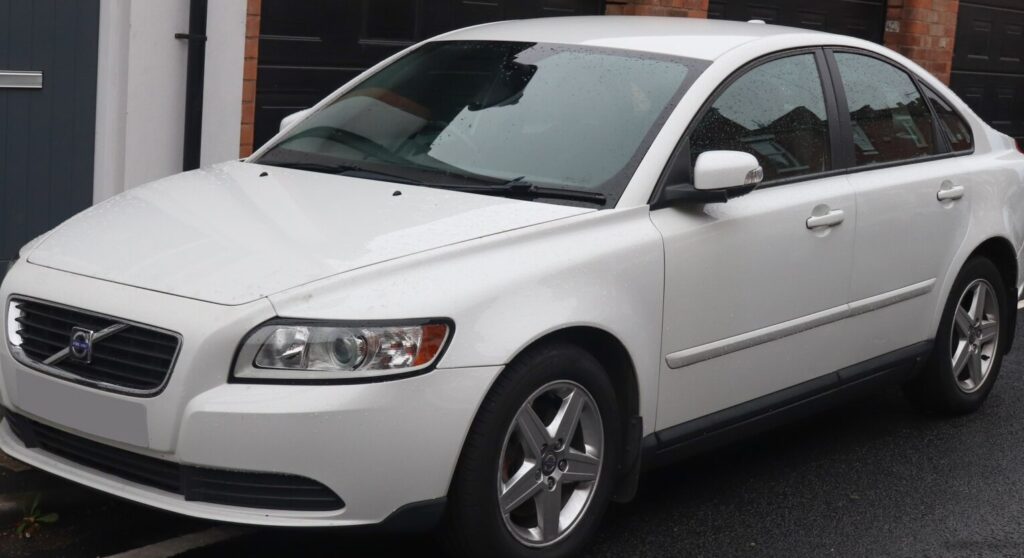
The Volvo S40 II 1.6i, produced from 2011 to 2012, represented an entry-level offering within the second generation of Volvo’s compact executive car. This facelifted version of the S40, part of the 1HX0 chassis series shared with the Mazda 3, aimed to provide an accessible and fuel-efficient option for buyers seeking Scandinavian safety and design in a smaller package. Positioned below the more powerful 2.0 and 2.5-liter variants, the 1.6i catered to drivers prioritizing economy and practicality over outright performance. It was primarily sold in the European market, where compact sedans were highly popular.
Technical Specifications
| Brand | Volvo |
| Model | S40 |
| Generation | S40 II (facelift 2007) |
| Type (Engine) | 1.6i (100 Hp) |
| Start of production | 2011 |
| End of production | 2012 |
| Powertrain Architecture | Internal Combustion engine |
| Body type | Sedan |
| Seats | 5 |
| Doors | 4 |
| Fuel consumption (urban) | 9.2 l/100 km (25.6 US mpg) |
| Fuel consumption (extra urban) | 5.8 l/100 km (40.6 US mpg) |
| Fuel consumption (combined) | 7.1 l/100 km (33.1 US mpg) |
| Fuel Type | Petrol (Gasoline) |
| Acceleration 0 – 100 km/h | 11.9 sec |
| Acceleration 0 – 62 mph | 11.9 sec |
| Acceleration 0 – 60 mph | 11.3 sec |
| Emission standard | Euro 4 |
| Weight-to-power ratio | 13.1 kg/Hp |
| Weight-to-torque ratio | 8.7 kg/Nm |
| Power | 100 Hp @ 6000 rpm |
| Torque | 150 Nm @ 4000 rpm (110.63 lb.-ft. @ 4000 rpm) |
| Engine layout | Front, Transverse |
| Engine Model/Code | B4164S3 |
| Engine displacement | 1596 cm3 (97.39 cu. in.) |
| Number of cylinders | 4 |
| Engine configuration | Inline |
| Piston Stroke | 79 mm (3.11 in.) |
| Fuel injection system | Multi-port manifold injection |
| Engine aspiration | Naturally aspirated |
| Engine oil capacity | 4 l (4.23 US qt | 3.52 UK qt) |
| Coolant capacity | 5.8 l (6.13 US qt | 5.1 UK qt) |
| Kerb Weight | 1311 kg (2890.26 lbs.) |
| Max. weight | 1800 kg (3968.32 lbs.) |
| Max load | 489 kg (1078.06 lbs.) |
| Trunk (boot) space – minimum | 404 l (14.27 cu. ft.) |
| Fuel tank capacity | 55 l (14.53 US gal | 12.1 UK gal) |
| Length | 4476 mm (176.22 in.) |
| Width | 1770 mm (69.69 in.) |
| Height | 1454 mm (57.24 in.) |
| Wheelbase | 2640 mm (103.94 in.) |
| Front track | 1548 mm (60.94 in.) |
| Rear track | 1544 mm (60.79 in.) |
| Minimum turning circle | 11.1 m (36.42 ft.) |
| Drivetrain | Front wheel drive |
| Number of gears | 6 |
| Gearbox type | Manual transmission |
| Assisting systems | ABS (Anti-lock braking system) |
Powertrain & Engine Architecture
The S40 1.6i was powered by Volvo’s B4164S3 engine, a 1.6-liter inline-four cylinder gasoline engine. This engine, while not a Volvo-designed unit (it was sourced from Ford’s Duratec family following Volvo’s acquisition by Ford), was chosen for its balance of fuel efficiency and acceptable performance. It utilized a multi-port fuel injection system, delivering fuel directly into the intake ports, and featured a single overhead camshaft (SOHC) valvetrain. The engine produced 100 horsepower at 6000 rpm and 150 Nm (110.63 lb-ft) of torque at 4000 rpm. The six-speed manual transmission was standard, offering a relatively wide range of gear ratios designed to maximize fuel economy and provide adequate acceleration.
Driving Characteristics
The 1.6i variant of the S40 offered a comfortable, but not particularly sporty, driving experience. Acceleration from 0-60 mph took approximately 11.3 seconds, making it noticeably slower than the 2.0 or 2.5-liter models. The six-speed manual transmission helped to keep the engine in its optimal power band, but drivers often needed to downshift for overtaking maneuvers. The focus was clearly on fuel efficiency, with combined fuel economy figures around 33.1 US mpg. The steering was light and precise, typical of Volvo’s tuning, and the suspension provided a comfortable ride, absorbing bumps and imperfections in the road well. Compared to the more powerful S40s, the 1.6i felt less refined and had a more noticeable engine note under hard acceleration.
Equipment & Trim Levels
The S40 1.6i typically came with a reasonable level of standard equipment, reflecting Volvo’s commitment to safety and comfort. Standard features included ABS brakes, front and side airbags, air conditioning, power windows and mirrors, and a basic audio system. Interior upholstery was typically cloth, and the dashboard featured a straightforward layout with easy-to-use controls. Optional extras included alloy wheels, a sunroof, leather upholstery, and a more advanced audio system with CD changer. The trim level was generally considered the base model, aimed at buyers seeking a practical and affordable Volvo.
Chassis & Braking
The S40 II utilized a MacPherson strut front suspension and a multi-link rear suspension, providing a good balance of ride comfort and handling. The front brakes were ventilated discs, while the rear brakes were typically solid discs on higher trim levels, but drums on the base 1.6i model. The steering system was a rack and pinion setup, offering precise and responsive steering. Stabilizer bars were fitted to both the front and rear axles to reduce body roll during cornering. The chassis was designed to provide a safe and stable platform, prioritizing passenger comfort and security.
Market Reception & Comparison
The Volvo S40 1.6i was generally well-received as an affordable and fuel-efficient entry into the compact executive segment. Critics praised its safety features and comfortable ride, but noted its lack of outright performance compared to rivals like the Audi A3 or BMW 1 Series. Compared to the other engines in the S40 lineup, the 1.6i offered the best fuel economy but the slowest acceleration. The 2.0-liter engine provided a noticeable performance boost, while the 2.5-liter T5 model offered significantly more power and a more engaging driving experience. However, these higher-output models came at a higher price point.
Legacy
The B4164S3 engine, while not known for being particularly groundbreaking, proved to be a relatively reliable unit. Common issues included occasional oil leaks and sensor failures, but these were generally not major concerns. Today, the S40 1.6i can be found on the used car market at very affordable prices. Its simplicity and relatively low maintenance costs make it an attractive option for budget-conscious buyers. While it may not offer the performance or prestige of its more powerful siblings, the S40 1.6i remains a practical and safe choice for those seeking a comfortable and economical compact sedan.