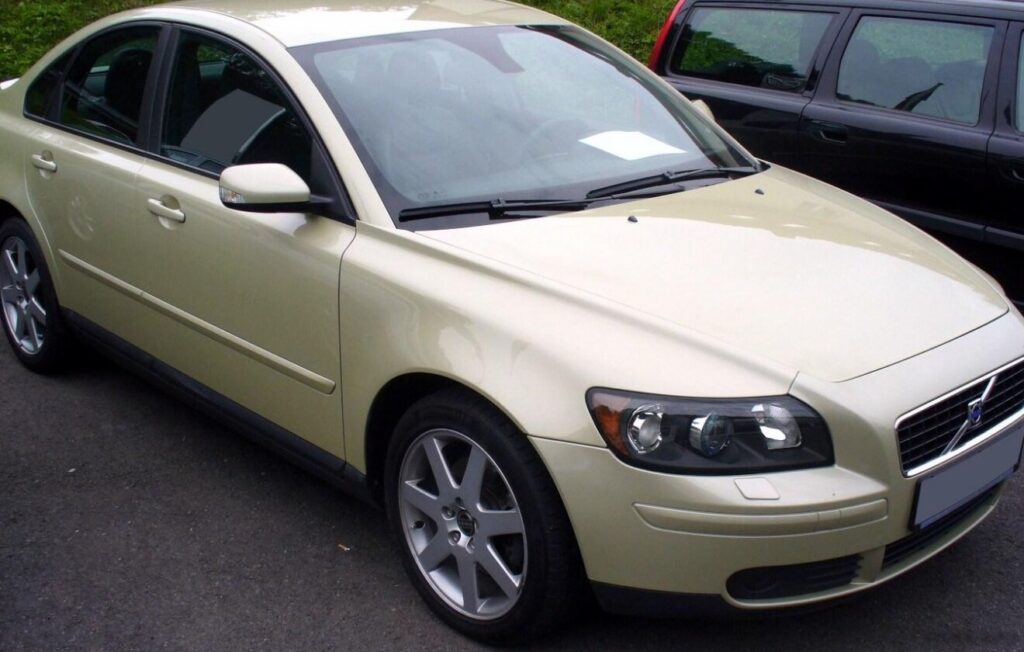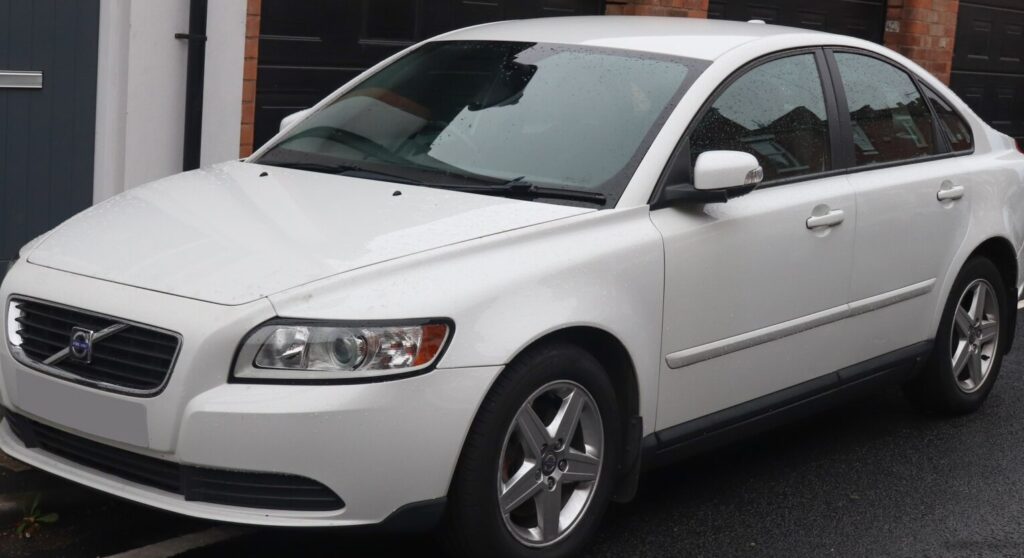
The Volvo S40 II 1.6i, produced from April 2007 through 2012, represented the entry point into the second generation of Volvo’s compact executive sedan. This facelifted version of the S40, built on the Ford-derived C1 platform (internally designated as 1HX0/A3), aimed to provide a balance of Scandinavian practicality, safety, and affordability. Positioned as the base model, the 1.6i offered a more economical alternative to the higher-performance 1.8, 2.0, and T5 turbocharged variants. It primarily targeted buyers seeking a comfortable and reliable daily driver with Volvo’s renowned safety features, rather than outright performance.
Technical Specifications
| Brand | Volvo |
| Model | S40 |
| Generation | S40 II (facelift 2007) |
| Type (Engine) | 1.6i (101 Hp) |
| Start of production | April, 2007 |
| End of production | 2012 |
| Powertrain Architecture | Internal Combustion engine |
| Body type | Sedan |
| Seats | 5 |
| Doors | 4 |
| Fuel consumption (urban) | 9.5 l/100 km (24.8 US mpg) |
| Fuel consumption (extra urban) | 5.8 l/100 km (40.6 US mpg) |
| Fuel consumption (combined) | 7.2 l/100 km (32.7 US mpg) |
| Fuel Type | Petrol (Gasoline) |
| Acceleration 0 – 100 km/h | 11.9 sec |
| Acceleration 0 – 62 mph | 11.9 sec |
| Acceleration 0 – 60 mph | 11.3 sec |
| Maximum speed | 185 km/h (114.95 mph) |
| Emission standard | Euro 4 |
| Weight-to-power ratio | 12.2 kg/Hp |
| Weight-to-torque ratio | 8.2 kg/Nm |
| Power | 101 Hp @ 6000 rpm |
| Torque | 150 Nm @ 4000 rpm (110.63 lb.-ft. @ 4000 rpm) |
| Engine layout | Front, Transverse |
| Engine Model/Code | B4164S3 |
| Engine displacement | 1596 cm3 (97.39 cu. in.) |
| Number of cylinders | 4 |
| Engine configuration | Inline |
| Cylinder Bore | 79 mm (3.11 in.) |
| Piston Stroke | 81.4 mm (3.2 in.) |
| Compression ratio | 11:1 |
| Number of valves per cylinder | 4 |
| Fuel injection system | Multi-port manifold injection |
| Engine aspiration | Naturally aspirated engine |
| Valvetrain | DOHC |
| Engine oil capacity | 4 l (4.23 US qt | 3.52 UK qt) |
| Coolant | 6.2 l (6.55 US qt | 5.46 UK qt) |
| Kerb Weight | 1235 kg (2722.71 lbs.) |
| Trunk (boot) space – minimum | 404 l (14.27 cu. ft.) |
| Trunk (boot) space – maximum | 883 l (31.18 cu. ft.) |
| Fuel tank capacity | 55 l (14.53 US gal | 12.1 UK gal) |
| Length | 4468 mm (175.91 in.) |
| Width | 1770 mm (69.69 in.) |
| Height | 1452 mm (57.17 in.) |
| Wheelbase | 2640 mm (103.94 in.) |
| Front track | 1531 mm (60.28 in.) |
| Rear (Back) track | 1535 mm (60.43 in.) |
| Minimum turning circle | 10.6 m (34.78 ft.) |
| Drivetrain Architecture | The Internal combustion engine (ICE) drives the front wheels of the vehicle. |
| Drive wheel | Front wheel drive |
| Number of gears and type of gearbox | 5 gears, manual transmission |
| Front suspension | Independent type McPherson |
| Rear suspension | Independent multi-link spring suspension with stabilizer |
| Front brakes | Ventilated discs |
| Rear brakes | Disc |
| Assisting systems | ABS (Anti-lock braking system) |
| Power steering | Hydraulic Steering |
Powertrain & Engine Architecture
The S40 1.6i was powered by Volvo’s B4164S3 engine, a 1.6-liter inline-four cylinder gasoline engine. This engine, part of Volvo’s modular engine family, featured a cast iron block and aluminum cylinder head. It utilized a multi-port fuel injection system, delivering fuel directly into the intake ports, and a double overhead camshaft (DOHC) valvetrain with four valves per cylinder. The engine produced 101 horsepower at 6000 rpm and 150 Nm (110.63 lb-ft) of torque at 4000 rpm. The engine’s relatively modest output was intended for fuel efficiency rather than high performance. The engine was paired with a 5-speed manual transmission as standard, providing a fairly conventional driving experience.
Driving Characteristics
The 1.6i S40 offered a comfortable, but not particularly sporty, driving experience. Acceleration from 0-60 mph took around 11.3 seconds, and top speed was limited to 114.95 mph. The engine felt adequate for everyday driving, but required downshifting for quicker overtaking maneuvers or when climbing hills. The 5-speed manual transmission had relatively long gearing, prioritizing fuel economy over responsiveness. Compared to the more powerful 1.8L and 2.0L models, the 1.6i felt noticeably slower, but it offered a smoother and more relaxed driving experience. The suspension, tuned for comfort, absorbed bumps well, but didn’t provide the same level of handling precision as the sportier trims.
Equipment & Trim Levels
The S40 1.6i typically came with a reasonable level of standard equipment. This included air conditioning, power windows and mirrors, a CD stereo system, and ABS brakes. Safety features were a Volvo hallmark, and even the base model included front and side airbags, as well as whiplash protection system (WHIPS) for the front seats. Optional extras included alloy wheels, a sunroof, leather upholstery, and a premium audio system. Interior upholstery was typically cloth, with a functional and understated design. The dashboard layout was clean and ergonomic, typical of Scandinavian design principles.
Chassis & Braking
The S40 1.6i utilized an independent McPherson strut suspension at the front and an independent multi-link suspension at the rear, providing a comfortable ride and decent handling. The front suspension included a stabilizer bar to reduce body roll. Braking duties were handled by ventilated discs at the front and solid discs at the rear. The hydraulic power steering provided light and precise steering feel. The chassis was designed to balance comfort and handling, prioritizing ride quality over outright performance.
Market Reception & Comparison
The S40 1.6i was generally well-received as an affordable and practical entry-level luxury sedan. Critics praised its safety features, comfortable ride, and fuel efficiency. However, some reviewers noted its lack of performance compared to its rivals and higher-trim S40 models. Fuel economy was a strong point, achieving around 32.7 US mpg in combined driving. Compared to the 1.8L variant, the 1.6i offered lower running costs but sacrificed performance. The 1.8L provided a noticeable boost in power and torque, making it a more engaging driving experience, but at the expense of fuel economy.
Legacy
The Volvo S40 1.6i, while not the most exciting variant in the lineup, proved to be a reliable and durable vehicle. The B4164S3 engine, while not known for its high performance, was generally considered to be a robust and long-lasting unit. In the used car market, these models are often sought after by buyers looking for an affordable and safe Volvo sedan. Maintenance costs are relatively low, and parts availability is generally good. While not a collector’s item, the S40 1.6i remains a practical and dependable choice for those seeking a comfortable and fuel-efficient compact sedan.