Technical Specifications
| Brand | Volvo |
| Model | S40 |
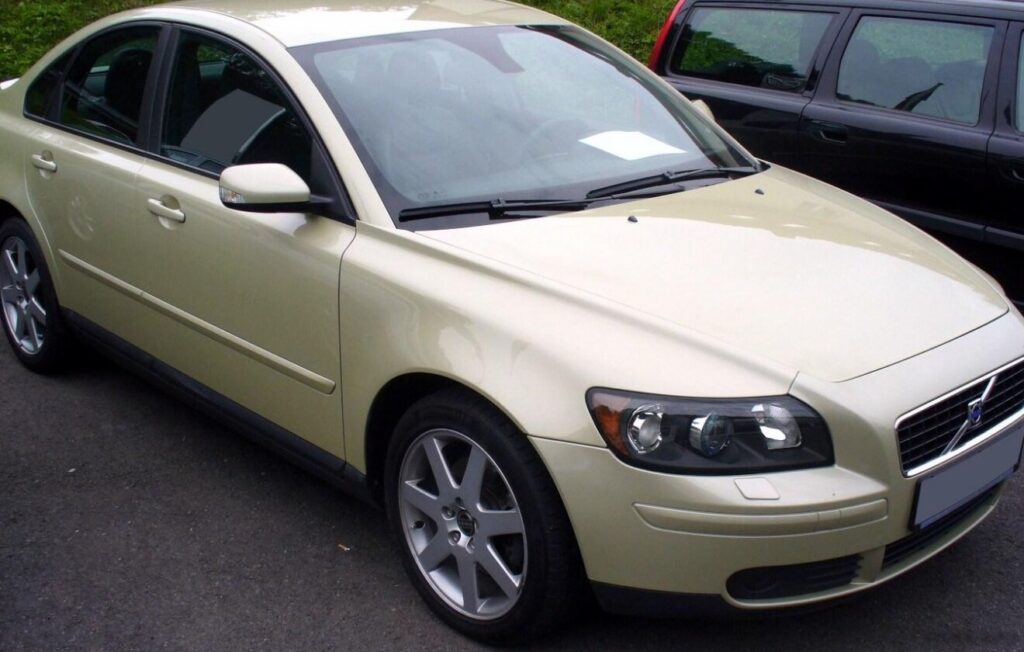
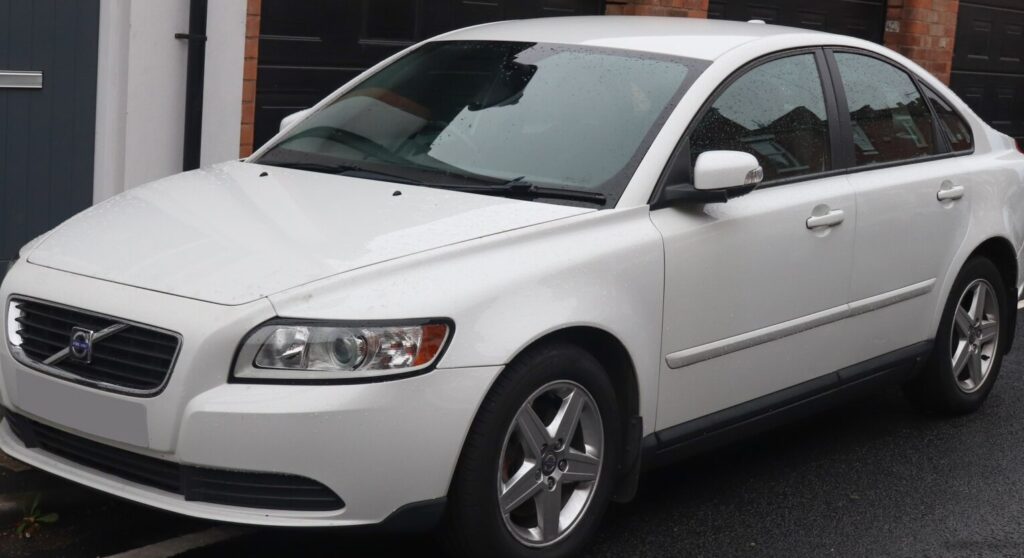
| Generation | S40 II (facelift 2007) |
| Type (Engine) | 2.0 D3 (150 Hp) Geartronic |
| Start of production | 2011 |
| End of production | 2012 |
| Powertrain Architecture | Internal Combustion engine |
| Body type | Sedan |
| Seats | 5 |
| Doors | 4 |
| Fuel consumption (urban) | 7.6 l/100 km (30.9 US mpg, 37.2 UK mpg, 13.2 km/l) |
| Fuel consumption (extra urban) | 4.5 l/100 km (52.3 US mpg, 62.8 UK mpg, 22.2 km/l) |
| Fuel consumption (combined) | 5.6 l/100 km (42 US mpg, 50.4 UK mpg, 17.9 km/l) |
| CO2 emissions | 149 g/km |
| Fuel Type | Diesel |
| Acceleration 0 – 100 km/h | 9.6 sec |
| Acceleration 0 – 62 mph | 9.6 sec |
| Acceleration 0 – 60 mph | 9.1 sec |
| Emission standard | Euro 5 |
| Weight-to-power ratio | 10 kg/Hp, 100.1 Hp/tonne |
| Weight-to-torque ratio | 4.3 kg/Nm, 233.6 Nm/tonne |
| Power | 150 Hp @ 3500 rpm |
| Power per litre | 75.6 Hp/l |
| Torque | 350 Nm @ 1500-2750 rpm (258.15 lb.-ft. @ 1500-2750 rpm) |
| Engine layout | Front, Transverse |
| Engine Model/Code | D5204T5 |
| Engine displacement | 1984 cm3 (121.07 cu. in.) |
| Number of cylinders | 5 |
| Engine configuration | Inline |
| Piston Stroke | 81 mm (3.19 in.) |
| Fuel injection system | Diesel Commonrail |
| Engine aspiration | Turbocharger, Intercooler |
| Engine oil capacity | 5.9 l (6.23 US qt | 5.19 UK qt) |
| Coolant | 8.5 l (8.98 US qt | 7.48 UK qt) |
| Kerb Weight | 1498 kg (3302.52 lbs.) |
| Max. weight | 2020 kg (4453.34 lbs.) |
| Max load | 522 kg (1150.81 lbs.) |
| Trunk (boot) space – minimum | 404 l (14.27 cu. ft.) |
| Fuel tank capacity | 60 l (15.85 US gal | 13.2 UK gal) |
| Length | 4476 mm (176.22 in.) |
| Width | 1770 mm (69.69 in.) |
| Height | 1454 mm (57.24 in.) |
| Wheelbase | 2640 mm (103.94 in.) |
| Front track | 1548 mm (60.94 in.) |
| Rear (Back) track | 1544 mm (60.79 in.) |
| Minimum turning circle | 11.1 m (36.42 ft.) |
| Drivetrain Architecture | The Internal combustion engine (ICE) drives the front wheels of the vehicle. |
| Drive wheel | Front wheel drive |
| Number of gears and type of gearbox | 6 gears, automatic transmission |
| Assisting systems | ABS (Anti-lock braking system) |
| Steering type | Steering rack and pinion |
The Volvo S40 II facelift, specifically the 2.0 D3 (150 hp) Geartronic variant, was produced from 2011 to 2012. This model represented a mid-cycle refresh of the second-generation S40 (introduced in 2004), falling within the broader 1HX0 chassis code family shared with the Mazda 3. Positioned as a fuel-efficient and comfortable entry-level luxury sedan, the D3 Geartronic aimed to provide a balance between performance and economy for European buyers, though limited numbers were sold in the US market. It served as a more affordable alternative to the higher-performance S40 2.5 and T5 models.
Powertrain & Engine Architecture
The heart of the S40 D3 Geartronic is the Volvo D5204T5, a 2.0-liter inline-five cylinder diesel engine. This engine utilizes a common-rail direct fuel injection system, delivering fuel at extremely high pressure for optimized combustion. A turbocharger with an intercooler is employed to boost power output and improve torque across a wide RPM range. The D5204T5 produces 150 horsepower at 3500 rpm and a substantial 350 Nm (258 lb-ft) of torque between 1500 and 2750 rpm. This torque curve is a key characteristic of the engine, providing strong pulling power for everyday driving. The Geartronic transmission is a six-speed automatic, offering smooth shifts and a torque converter for enhanced drivability. It’s not a dual-clutch system, prioritizing comfort over outright performance.
Driving Characteristics
The 150 hp and 350 Nm output of the D3 Geartronic translates to a 0-60 mph time of around 9.1 seconds, and a 0-100 km/h time of 9.6 seconds. While not a sports sedan, the D3 provides adequate acceleration for merging onto highways and overtaking. The automatic transmission is tuned for fuel efficiency and smooth operation, sometimes at the expense of responsiveness. Compared to the more powerful T5 variant, the D3 feels noticeably slower, particularly at higher speeds. However, the D3’s strong low-end torque makes it feel more effortless in city driving. The gear ratios are optimized for cruising, keeping engine speeds relatively low at highway speeds, contributing to improved fuel economy and reduced noise levels.
Equipment & Trim Levels
The S40 D3 Geartronic typically came equipped with a respectable level of standard features. These included climate control, power windows and mirrors, a CD stereo system, and alloy wheels. Safety features were a Volvo hallmark, with standard ABS brakes, traction control, and multiple airbags. Optional extras included leather upholstery, a sunroof, a premium audio system, and parking sensors. The trim level generally fell in the mid-range of the S40 lineup, offering a step up in comfort and features compared to the base models, but lacking the premium appointments of the T5.
Chassis & Braking
The S40 II utilized a MacPherson strut front suspension and a multi-link rear suspension. The D3 variant, due to its lower power output and weight compared to the T5, often featured slightly softer spring rates for a more comfortable ride. Braking systems consisted of ventilated front discs and either disc or drum brakes on the rear, depending on the specific market and optional equipment. The steering system employed a rack-and-pinion setup, providing reasonably precise steering feel. Stabilizer bars were fitted front and rear to reduce body roll during cornering.
Market Reception & Comparison
The S40 D3 Geartronic was generally well-received by automotive critics for its fuel efficiency and comfortable ride. However, some reviewers noted the lack of outright performance compared to its gasoline-powered siblings. Fuel economy was a strong point, with combined figures around 42 US mpg. Reliability was generally good, although, like all diesel engines, the D5204T5 required regular maintenance, including diesel particulate filter (DPF) regeneration. Compared to the S40 2.5, the D3 offered significantly better fuel economy but less power. The T5 provided the best performance but at a higher price and with lower fuel efficiency. The D3 aimed to strike a balance between these two extremes.
Legacy
The Volvo S40 D3 Geartronic, while not a high-volume seller, has established a reputation for reliability and fuel efficiency in the used car market. The D5204T5 engine, when properly maintained, is known to be durable. However, potential buyers should be aware of the maintenance requirements of diesel engines, including the DPF and potential issues with the fuel injection system. Today, these vehicles represent an affordable entry point into Volvo ownership, offering a comfortable and economical driving experience. Parts availability is generally good, and the relatively simple mechanical design makes them accessible for DIY repairs.