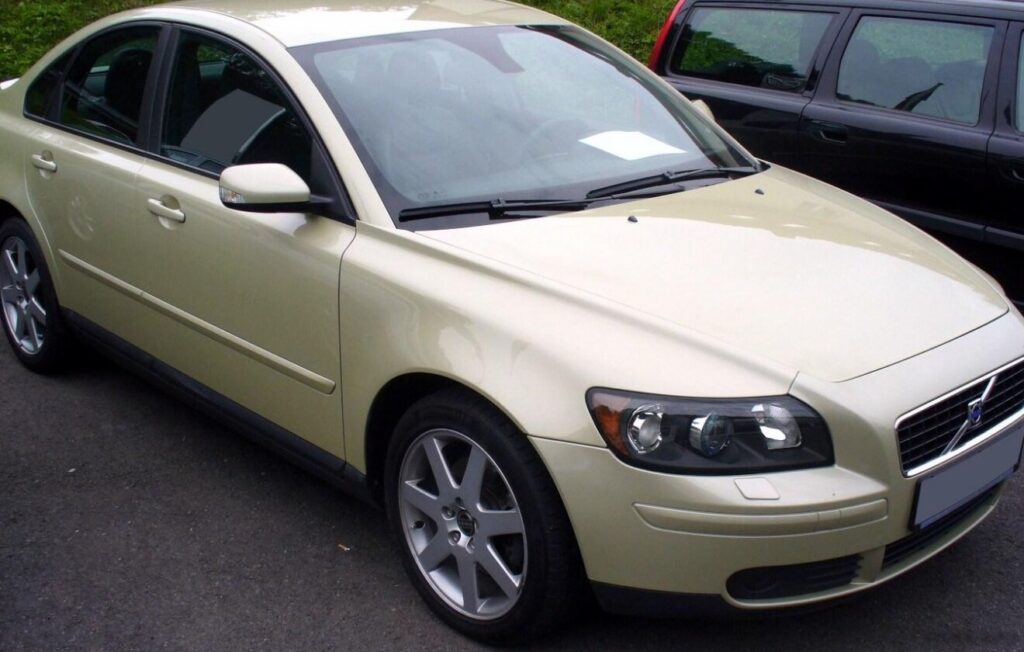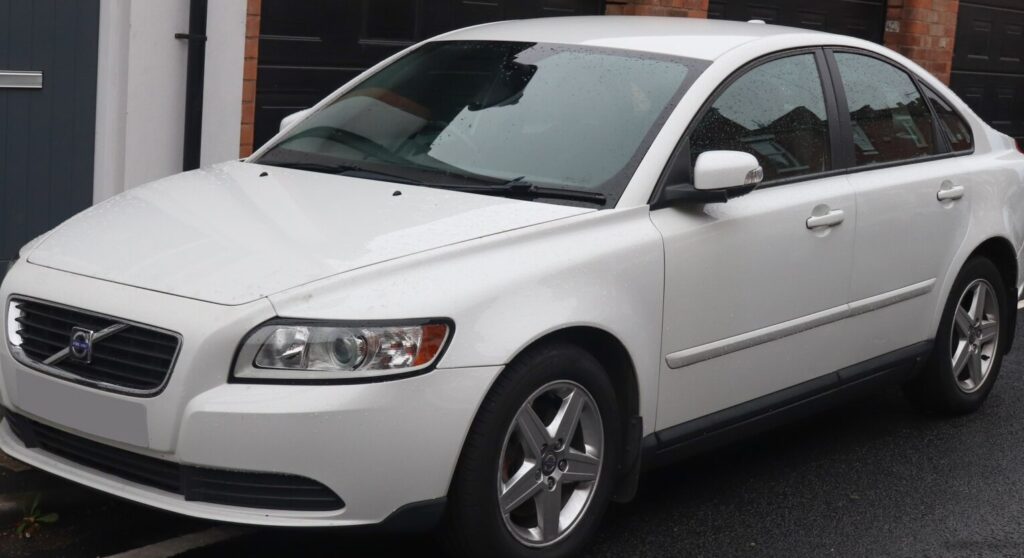
The Volvo S40 II 2.0 F (145 hp) represents a mid-cycle update to the second generation of Volvo’s compact executive car, produced from 2011 to 2012. This variant, powered by the B4204S4 engine, occupied a key position in the S40 lineup, offering a balance between performance and fuel efficiency. It was positioned as a step up from the base 1.6L engine, appealing to buyers seeking more power without the expense of the higher-trim T5 models. The S40 II, built on the Ford C1 platform (shared with the Mazda 3 and Ford Focus of the era), aimed to provide a comfortable and safe driving experience, characteristic of the Volvo brand, within a relatively affordable package for the North American market.
Technical Specifications
| Brand | Volvo |
| Model | S40 |
| Generation | S40 II (facelift 2007) |
| Type (Engine) | 2.0 F (145 Hp) |
| Start of production | 2011 |
| End of production | 2012 |
| Powertrain Architecture | Internal Combustion engine |
| Body type | Sedan |
| Seats | 5 |
| Doors | 4 |
| Fuel consumption (urban) | 10.9 l/100 km (21.6 US mpg) |
| Fuel consumption (extra urban) | 5.9 l/100 km (39.9 US mpg) |
| Fuel consumption (combined) | 7.7 l/100 km (30.5 US mpg) |
| CO2 emissions | 180 g/km |
| Fuel Type | Petrol (Gasoline) |
| Acceleration 0 – 100 km/h | 9.5 sec |
| Acceleration 0 – 62 mph | 9.5 sec |
| Acceleration 0 – 60 mph | 9 sec |
| Emission standard | Euro 5 |
| Weight-to-power ratio | 9.4 kg/Hp |
| Weight-to-torque ratio | 7.4 kg/Nm |
| Power | 145 Hp @ 6000 rpm |
| Torque | 185 Nm @ 4500 rpm (136.45 lb.-ft. @ 4500 rpm) |
| Engine layout | Front, Transverse |
| Engine Model/Code | B4204S4 |
| Engine displacement | 1999 cm3 (121.99 cu. in.) |
| Number of cylinders | 4 |
| Engine configuration | Inline |
| Piston Stroke | 87.5 mm (3.44 in.) |
| Fuel injection system | Multi-port manifold injection |
| Engine aspiration | Naturally aspirated engine |
| Engine oil capacity | 4.3 l (4.54 US qt | 3.78 UK qt) |
| Coolant capacity | 6.5 l (6.87 US qt | 5.72 UK qt) |
| Kerb Weight | 1360 kg (2998.29 lbs.) |
| Max. weight | 1850 kg (4078.55 lbs.) |
| Max load | 490 kg (1080.27 lbs.) |
| Trunk (boot) space – minimum | 404 l (14.27 cu. ft.) |
| Fuel tank capacity | 55 l (14.53 US gal | 12.1 UK gal) |
| Length | 4476 mm (176.22 in.) |
| Width | 1770 mm (69.69 in.) |
| Height | 1454 mm (57.24 in.) |
| Wheelbase | 2640 mm (103.94 in.) |
| Front track | 1548 mm (60.94 in.) |
| Rear track | 1544 mm (60.79 in.) |
| Minimum turning circle | 11.1 m (36.42 ft.) |
| Drivetrain | Front wheel drive |
| Number of gears | 5 |
| Gearbox type | Manual transmission |
| Assisting systems | ABS (Anti-lock braking system) |
Powertrain & Engine Architecture
The heart of the S40 2.0 F is the B4204S4 engine, a 1.999-liter inline-four cylinder gasoline engine. This engine belongs to Volvo’s modular engine family, designed for flexibility and efficiency. It utilizes a multi-port fuel injection system, delivering fuel directly into the intake ports, and a dual overhead camshaft (DOHC) valvetrain for optimized airflow. The engine produces 145 horsepower at 6000 rpm and 185 Nm (136 lb-ft) of torque at 4500 rpm. This power is delivered through a 5-speed manual transmission, which was the standard offering for this trim level. While an automatic transmission was available, the manual was favored by drivers seeking more control and slightly improved fuel economy. The engine’s design prioritized smooth operation and reasonable fuel consumption over outright performance.
Driving Characteristics
The 145 hp 2.0 F S40 offered a comfortable and predictable driving experience. Acceleration from 0-60 mph took approximately 9 seconds, making it adequate for everyday driving but not particularly sporty. The 5-speed manual transmission provided decent control, although the gear ratios were spaced to favor fuel efficiency rather than aggressive acceleration. Compared to the more powerful T5 variant (equipped with a turbocharged engine), the 2.0 F felt noticeably less responsive, especially during overtaking maneuvers. However, it offered a more relaxed driving experience, with less engine noise and vibration. The manual transmission allowed drivers to maximize the available power, but the engine’s relatively low torque output meant that frequent downshifting was often necessary, particularly when climbing hills or carrying a full load.
Equipment & Trim Levels
The S40 2.0 F typically came standard with features such as air conditioning, power windows and locks, a basic audio system, and ABS brakes. Safety features, a hallmark of Volvo, were also standard, including front and side airbags. Higher trim levels offered options like leather upholstery, a sunroof, upgraded audio systems, and automatic climate control. The interior design was functional and understated, reflecting Volvo’s Scandinavian design philosophy. The dashboard layout was clean and intuitive, with easy-to-read gauges and well-placed controls. The base trim focused on providing essential features at an accessible price point, while optional packages allowed buyers to customize their vehicle to their specific needs and preferences.
Chassis & Braking
The S40 II utilized a MacPherson strut front suspension and a multi-link rear suspension, providing a comfortable ride and decent handling characteristics. The suspension was tuned to prioritize comfort over sporty handling, resulting in a relatively soft ride quality. The braking system consisted of ventilated disc brakes at the front and drum brakes at the rear. ABS was standard, providing enhanced braking performance and stability in emergency situations. The chassis was designed to provide a good balance between rigidity and weight, contributing to the car’s overall stability and handling. Stabilizer bars were included at both the front and rear to reduce body roll during cornering.
Market Reception & Comparison
The Volvo S40 2.0 F was generally well-received by critics as a practical and safe compact sedan. However, it was often criticized for its relatively modest performance compared to some of its competitors. Fuel economy was considered to be average for its class, and reliability was generally good, although some owners reported minor issues with the electrical system. Compared to the turbocharged T5 variant, the 2.0 F offered a lower price point but sacrificed performance. It also competed with other compact executive cars such as the Audi A3, BMW 1 Series, and Mercedes-Benz C-Class, all of which offered a more premium driving experience but at a higher cost.
Legacy
The Volvo S40 II 2.0 F, while not the most exciting variant in the lineup, remains a reasonably reliable and affordable used car option. The B4204S4 engine is known for its durability, and the 5-speed manual transmission is relatively simple and robust. Parts availability is generally good, and maintenance costs are reasonable. Today, these cars are often sought after by buyers looking for a safe, comfortable, and fuel-efficient compact sedan. While not a collector’s item, the S40 2.0 F represents a solid and dependable example of Volvo’s commitment to building practical and well-engineered vehicles.