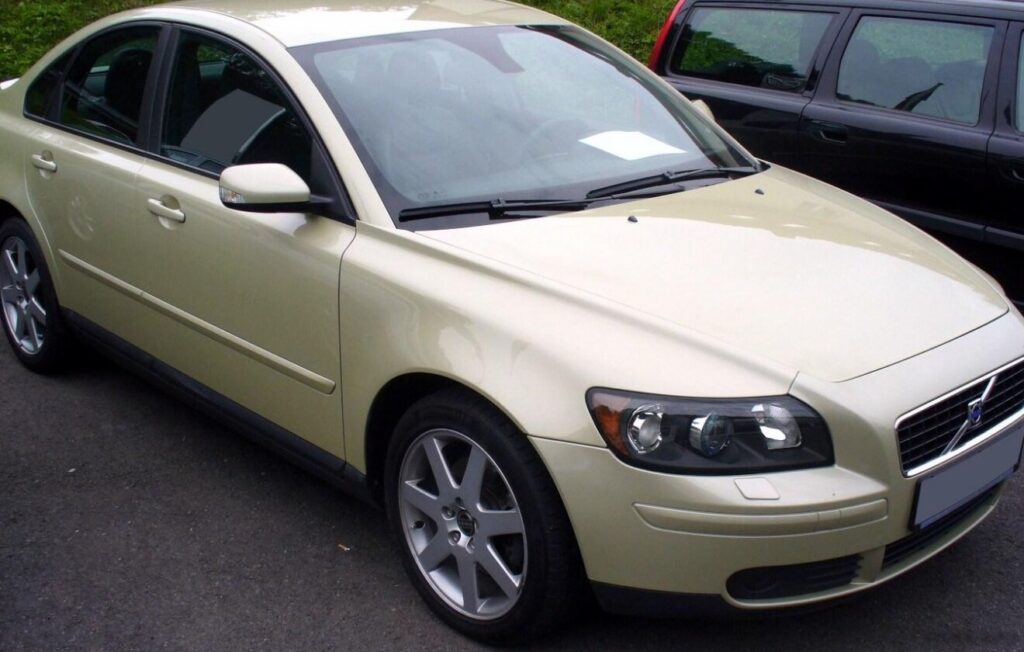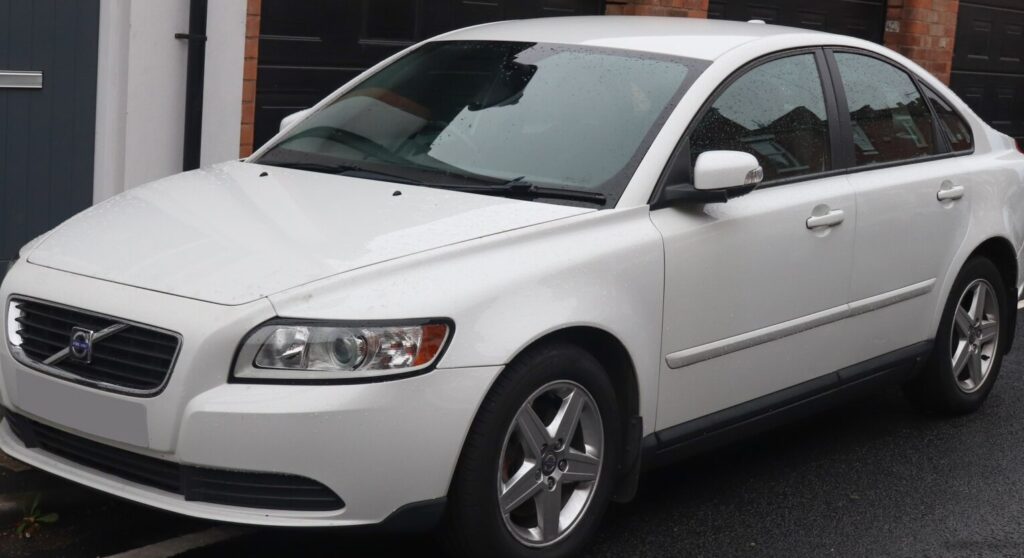
The Volvo S40 II (facelift, 2007) 2.0i, producing 145 horsepower, represents a mid-cycle refresh of the second-generation S40 sedan. Introduced in 2011 and continuing through 2012, this variant occupied a key position in Volvo’s compact executive car lineup. Built on the Ford C1 platform (shared with the Mazda 3 and Ford Focus of the era), the S40 aimed to blend Scandinavian design with a focus on safety and practicality. The 2.0i trim served as a balance between affordability and performance, offering a step up from the base 1.6L engine while remaining more accessible than the higher-performance 2.5L models. This version was primarily marketed in Europe and other international markets, with limited availability in the United States.
Technical Specifications
| Brand | Volvo |
| Model | S40 |
| Generation | S40 II (facelift 2007) |
| Type (Engine) | 2.0i (145 Hp) |
| Start of production | 2011 |
| End of production | 2012 |
| Powertrain Architecture | Internal Combustion engine |
| Body type | Sedan |
| Seats | 5 |
| Doors | 4 |
| Fuel consumption (urban) | 10.8 l/100 km (21.8 US mpg, 26.2 UK mpg, 9.3 km/l) |
| Fuel consumption (extra urban) | 5.7 l/100 km (41.3 US mpg, 49.6 UK mpg, 17.5 km/l) |
| Fuel consumption (combined) | 7.6 l/100 km (30.9 US mpg, 37.2 UK mpg, 13.2 km/l) |
| CO2 emissions | 176 g/km |
| Fuel Type | Petrol (Gasoline) |
| Acceleration 0 – 100 km/h | 9.5 sec |
| Acceleration 0 – 62 mph | 9.5 sec |
| Acceleration 0 – 60 mph | 9 sec |
| Emission standard | Euro 5 |
| Weight-to-power ratio | 9.4 kg/Hp, 105.8 Hp/tonne |
| Weight-to-torque ratio | 7.4 kg/Nm, 135 Nm/tonne |
| Power | 145 Hp @ 6000 rpm |
| Power per litre | 72.5 Hp/l |
| Torque | 185 Nm @ 4500 rpm (136.45 lb.-ft. @ 4500 rpm) |
| Engine layout | Front, Transverse |
| Engine Model/Code | B4204S3 |
| Engine displacement | 1999 cm3 (121.99 cu. in.) |
| Number of cylinders | 4 |
| Engine configuration | Inline |
| Piston Stroke | 87.5 mm (3.44 in.) |
| Fuel injection system | Multi-port manifold injection |
| Engine aspiration | Naturally aspirated engine |
| Engine oil capacity | 4.3 l (4.54 US qt | 3.78 UK qt) |
| Coolant capacity | 6.5 l (6.87 US qt | 5.72 UK qt) |
| Kerb Weight | 1370 kg (3020.33 lbs.) |
| Max. weight | 1850 kg (4078.55 lbs.) |
| Max load | 480 kg (1058.22 lbs.) |
| Trunk (boot) space – minimum | 404 l (14.27 cu. ft.) |
| Fuel tank capacity | 55 l (14.53 US gal | 12.1 UK gal) |
| Length | 4476 mm (176.22 in.) |
| Width | 1770 mm (69.69 in.) |
| Height | 1454 mm (57.24 in.) |
| Wheelbase | 2640 mm (103.94 in.) |
| Front track | 1548 mm (60.94 in.) |
| Rear (Back) track | 1544 mm (60.79 in.) |
| Minimum turning circle | 11.1 m (36.42 ft.) |
| Drivetrain Architecture | The Internal combustion engine (ICE) drives the front wheels of the vehicle. |
| Drive wheel | Front wheel drive |
| Number of gears and type of gearbox | 6 gears, manual transmission |
| Assisting systems | ABS (Anti-lock braking system) |
| Steering type | Steering rack and pinion |
Introduction
The Volvo S40 II facelift, specifically the 2.0i variant, was a crucial model for Volvo in the early 2010s. Positioned as a more accessible entry point into the S40 range, it aimed to attract buyers seeking a premium compact sedan with Volvo’s renowned safety features. The facelift, introduced in 2007 and continuing through these production years, brought subtle styling updates to the exterior and interior, enhancing the car’s overall appeal. The 2.0i model, with its 145 hp engine, was designed to provide a balance of fuel efficiency and adequate performance for everyday driving. It competed with other compact executive sedans like the Audi A3, BMW 1 Series, and Mercedes-Benz A-Class.
Powertrain & Engine Architecture
The heart of the S40 2.0i is the B4204S3 engine, a 1.999-liter inline-four cylinder petrol engine. This engine utilizes multi-port fuel injection, a relatively simple and reliable system for delivering fuel to the cylinders. The engine features a double overhead camshaft (DOHC) valvetrain, contributing to improved breathing and efficiency. The 145 horsepower output is achieved at 6000 rpm, while peak torque of 185 Nm (136.45 lb-ft) is delivered at 4500 rpm. The engine is transversely mounted in the front of the vehicle. Paired with this engine is a 6-speed manual transmission, offering precise gear changes and a more engaging driving experience compared to the optional automatic. The transmission’s gear ratios are tuned for a balance of acceleration and fuel economy, with a relatively tall sixth gear for highway cruising.
Driving Characteristics
The S40 2.0i with the manual transmission delivers a competent, if not particularly thrilling, driving experience. Acceleration from 0-60 mph takes around 9 seconds, which is adequate for everyday commuting and overtaking maneuvers. The engine feels responsive enough in the mid-range, providing sufficient power for most driving situations. Compared to the more powerful 2.5L models, the 2.0i feels noticeably less energetic, particularly at higher speeds. However, the manual transmission allows drivers to make the most of the available power, and the well-weighted steering provides a decent level of feedback. The suspension is tuned for comfort, absorbing bumps and imperfections in the road reasonably well. The 6-speed gearbox is well-matched to the engine’s powerband, allowing for smooth and efficient gear changes.
Equipment & Trim Levels
The S40 2.0i typically came equipped with a respectable level of standard features. These included air conditioning, power windows and mirrors, a CD stereo system, and ABS brakes. Safety was a key focus for Volvo, and the S40 2.0i included features such as front and side airbags, as well as a robust chassis designed to protect occupants in the event of a collision. Optional extras included leather upholstery, a sunroof, alloy wheels, and a premium audio system. Interior trim levels varied depending on the market, but generally featured a clean and functional Scandinavian design. The dashboard layout is straightforward and easy to use, with logically placed controls.
Chassis & Braking
The S40 2.0i utilizes a MacPherson strut front suspension and a multi-link rear suspension, providing a good balance of ride comfort and handling. The chassis is relatively lightweight, contributing to the car’s agility. Braking duties are handled by disc brakes on the front wheels and drum brakes on the rear wheels. ABS (Anti-lock Braking System) is standard, enhancing braking performance and stability, especially in slippery conditions. The steering is a rack and pinion system, providing precise and responsive steering feel. Stabilizer bars are fitted to both the front and rear axles to reduce body roll during cornering.
Market Reception & Comparison
The Volvo S40 2.0i was generally well-received by automotive critics as a practical and safe compact sedan. However, it wasn’t often praised for its outright performance or driving excitement. Compared to the more powerful 2.5L models, the 2.0i offered better fuel economy, making it a more attractive option for budget-conscious buyers. The manual transmission version was favored by enthusiasts for its more engaging driving experience. Reliability was generally good, although some owners reported minor issues with the electrical system. Fuel economy figures of around 30.9 US mpg combined were competitive for the segment.
Legacy
The Volvo S40 II 2.0i, while not a standout performer, remains a reasonably reliable and affordable used car option today. The B4204S3 engine is known for its durability, and parts availability is generally good. These cars are often sought after by buyers looking for a safe and practical compact sedan with a touch of Scandinavian style. While not a collector’s item, well-maintained examples of the S40 2.0i can provide years of reliable service. The car represents a transitional period for Volvo, showcasing the brand’s commitment to safety and practicality while operating under Ford ownership.