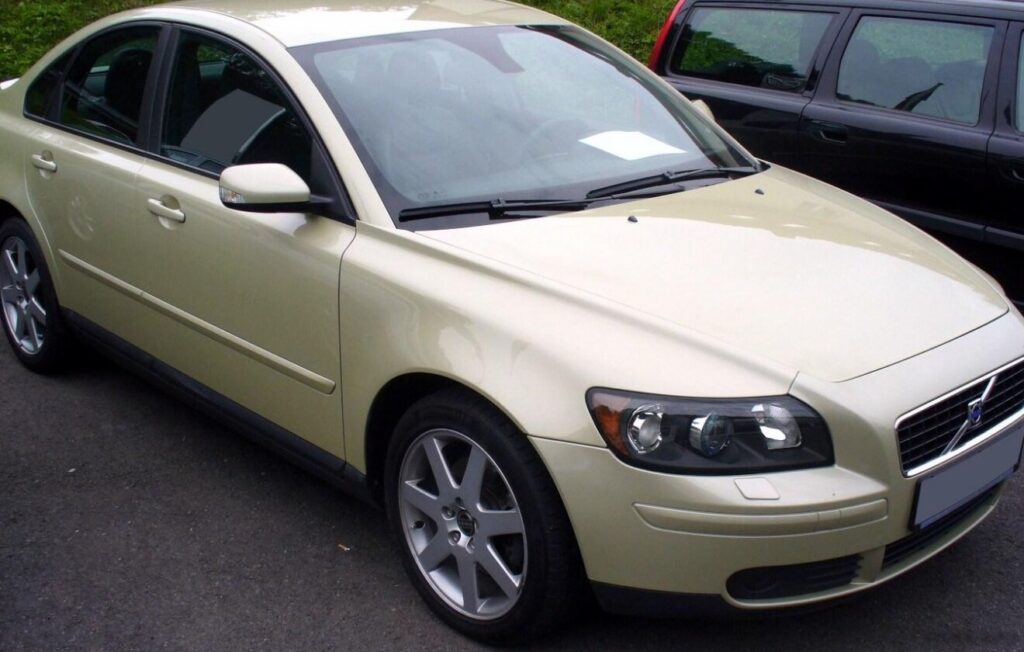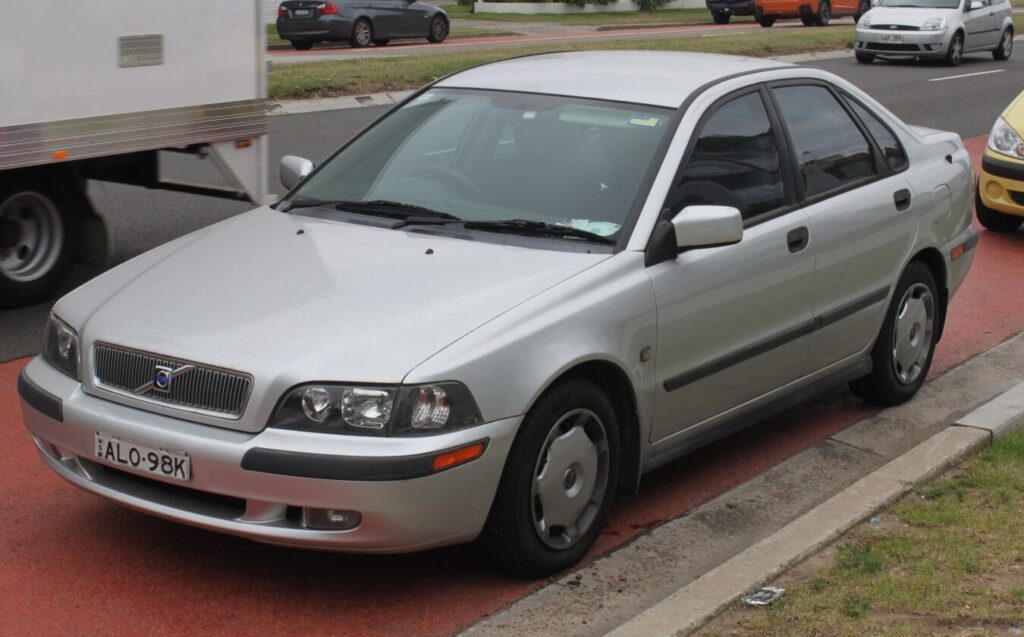
The Volvo S40 (VS) 1.6 16V, produced between 1999 and 2003, represented the entry point into Volvo’s compact executive sedan range during that period. Part of the first generation S40 (VS) series, built on the shared Volvo/Ford P24 platform, this variant aimed to provide a balance of Scandinavian practicality, safety, and affordability. It served as a crucial model for attracting a wider customer base, particularly those seeking a premium sedan experience without the higher price tag of the more powerful engine options. The 1.6-liter engine and five-speed manual transmission combination positioned it as a sensible choice for daily commuting and family use, prioritizing fuel efficiency and ease of driving over outright performance.
Technical Specifications
| Brand | Volvo |
| Model | S40 |
| Generation | S40 (VS) |
| Type (Engine) | 1.6 16V (109 Hp) |
| Start of production | 1999 |
| End of production | 2003 |
| Powertrain Architecture | Internal Combustion engine |
| Body type | Sedan |
| Seats | 5 |
| Doors | 4 |
| Fuel consumption (urban) | 11.1 l/100 km (21.2 US mpg) |
| Fuel consumption (extra urban) | 6 l/100 km (39.2 US mpg) |
| Fuel Type | Petrol (Gasoline) |
| Acceleration 0 – 100 km/h | 12 sec |
| Acceleration 0 – 62 mph | 12 sec |
| Acceleration 0 – 60 mph | 11.4 sec |
| Maximum speed | 190 km/h (118.06 mph) |
| Weight-to-power ratio | 11.5 kg/Hp |
| Weight-to-torque ratio | 8.7 kg/Nm |
| Power | 109 Hp @ 5800 rpm |
| Power per litre | 68.7 Hp/l |
| Torque | 145 Nm @ 4000 rpm (106.95 lb.-ft. @ 4000 rpm) |
| Engine layout | Front, Transverse |
| Engine Model/Code | B4164S2 |
| Engine displacement | 1587 cm3 (96.84 cu. in.) |
| Number of cylinders | 4 |
| Engine configuration | Inline |
| Cylinder Bore | 81 mm (3.19 in.) |
| Piston Stroke | 77 mm (3.03 in.) |
| Compression ratio | 10.5:1 |
| Number of valves per cylinder | 4 |
| Fuel injection system | Multi-port manifold injection |
| Engine aspiration | Naturally aspirated engine |
| Valvetrain | DOHC |
| Engine oil capacity | 5.4 l (5.71 US qt | 4.75 UK qt) |
| Coolant | 6.3 l (6.66 US qt | 5.54 UK qt) |
| Kerb Weight | 1255 kg (2766.8 lbs.) |
| Max. weight | 1750 kg (3858.09 lbs.) |
| Max load | 495 kg (1091.29 lbs.) |
| Trunk (boot) space – minimum | 415 l (14.66 cu. ft.) |
| Trunk (boot) space – maximum | 853 l (30.12 cu. ft.) |
| Fuel tank capacity | 60 l (15.85 US gal | 13.2 UK gal) |
| Length | 4516 mm (177.8 in.) |
| Width | 1716 mm (67.56 in.) |
| Height | 1422 mm (55.98 in.) |
| Wheelbase | 2562 mm (100.87 in.) |
| Front track | 1472 mm (57.95 in.) |
| Rear (Back) track | 1474 mm (58.03 in.) |
| Drivetrain Architecture | The Internal combustion engine (ICE) drives the front wheels of the vehicle. |
| Drive wheel | Front wheel drive |
| Number of gears and type of gearbox | 5 gears, manual transmission |
| Front suspension | Wishbone |
| Rear suspension | Coil spring |
| Front brakes | Ventilated discs |
| Rear brakes | Disc |
| Assisting systems | ABS (Anti-lock braking system) |
| Steering type | Steering rack and pinion |
| Power steering | Hydraulic Steering |
| Tires size | 195/55R15 |
| Wheel rims size | 15 |
Powertrain & Engine Architecture
The heart of the S40 1.6 16V is the Volvo B4164S2 engine, a 1.6-liter inline-four cylinder gasoline engine. This engine utilizes a naturally aspirated configuration with a multi-port fuel injection system, delivering fuel directly into the intake ports. The ‘16V’ designation indicates the engine features four valves per cylinder (Dual Overhead Camshaft – DOHC), enhancing volumetric efficiency and contributing to improved power output. The engine’s design prioritized smooth operation and fuel economy over peak performance. The five-speed manual transmission was the standard offering, providing a relatively direct connection between the engine and the front wheels. Gear ratios were tuned for everyday drivability, with a focus on maximizing fuel efficiency at cruising speeds.
Driving Characteristics
The S40 1.6 16V offered a comfortable and predictable driving experience. With 109 horsepower, acceleration was adequate for typical urban and highway driving, though it wasn’t particularly brisk. The 0-60 mph time of around 11.4 seconds reflects this. The engine delivered its peak torque of 145 Nm (106.95 lb-ft) at 4000 rpm, meaning drivers needed to utilize the engine’s rev range to achieve optimal performance. Compared to the higher-output 1.8L and 2.0L variants, the 1.6L felt noticeably less powerful, especially when fully loaded or tackling inclines. However, the lighter engine weight contributed to slightly improved handling balance. The five-speed manual transmission provided a reasonable level of control, although the shift quality wasn’t as precise as some competitors.
Equipment & Trim Levels
The S40 1.6 16V typically served as the base trim level. Standard equipment included power steering, ABS brakes, front airbags, and a basic audio system. Interior upholstery was generally cloth, with a functional, if somewhat understated, dashboard layout. Optional extras included alloy wheels, a sunroof, air conditioning, and upgraded audio systems. The overall interior ambiance focused on practicality and durability rather than luxury. The trim level was designed to appeal to buyers prioritizing value and essential features.
Chassis & Braking
The S40 (VS) utilized a front-wheel-drive layout with independent wishbone suspension at the front and a coil spring setup at the rear. This suspension configuration aimed to provide a comfortable ride while maintaining reasonable handling characteristics. The front brakes were ventilated discs, offering good stopping power, while the rear brakes were solid discs. The chassis was designed to prioritize safety and stability, reflecting Volvo’s core values. Stabilizer bars were included to reduce body roll during cornering, but the overall handling was geared towards comfort rather than sporty dynamics.
Market Reception & Comparison
The S40 1.6 16V was generally well-received as an affordable and practical entry-level premium sedan. Critics praised its safety features, comfortable ride, and fuel efficiency. However, the engine’s lack of outright power was a common criticism, particularly when compared to competitors offering more potent engines. Compared to the higher-spec S40 variants (1.8L and 2.0L), the 1.6L offered significantly lower running costs but at the expense of performance. The 1.8L offered a noticeable power increase, while the 2.0L provided a more substantial performance boost. In terms of reliability, the B4164S2 engine proved to be generally robust, although regular maintenance was essential.
Legacy
The Volvo S40 1.6 16V remains a relatively common sight on the used car market. Its reputation for reliability and affordability has contributed to its enduring popularity. While not a performance icon, it represents a solid and dependable choice for buyers seeking a practical and safe compact sedan. The B4164S2 engine, while not known for its complexity, requires regular servicing to maintain optimal performance. Parts availability is generally good, making maintenance relatively straightforward. Today, these vehicles are often sought after by those looking for a classic Volvo experience without the high price tag of more desirable models.