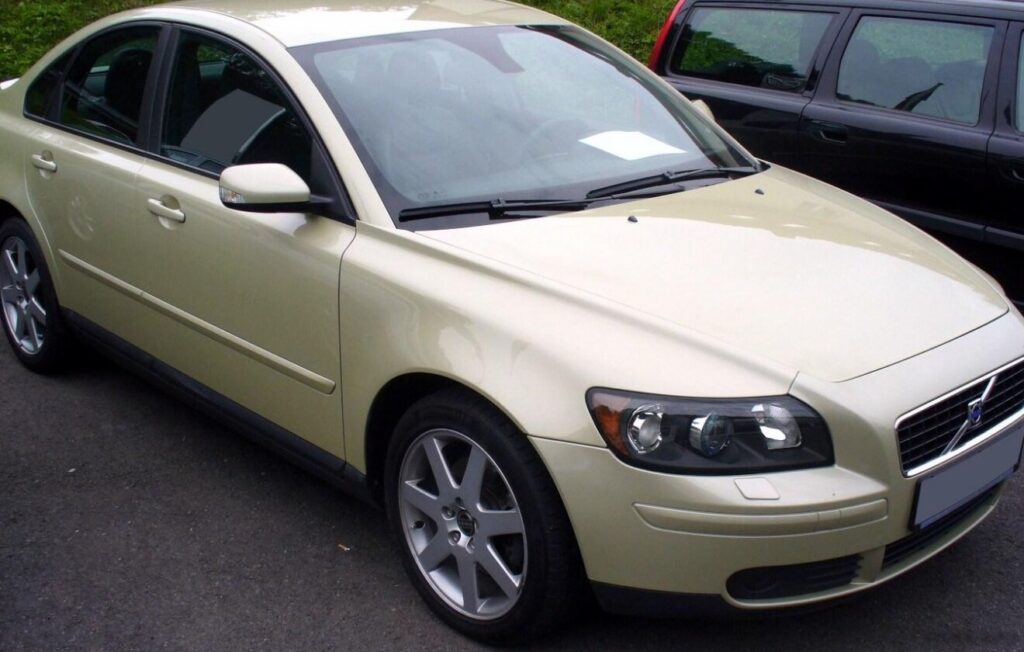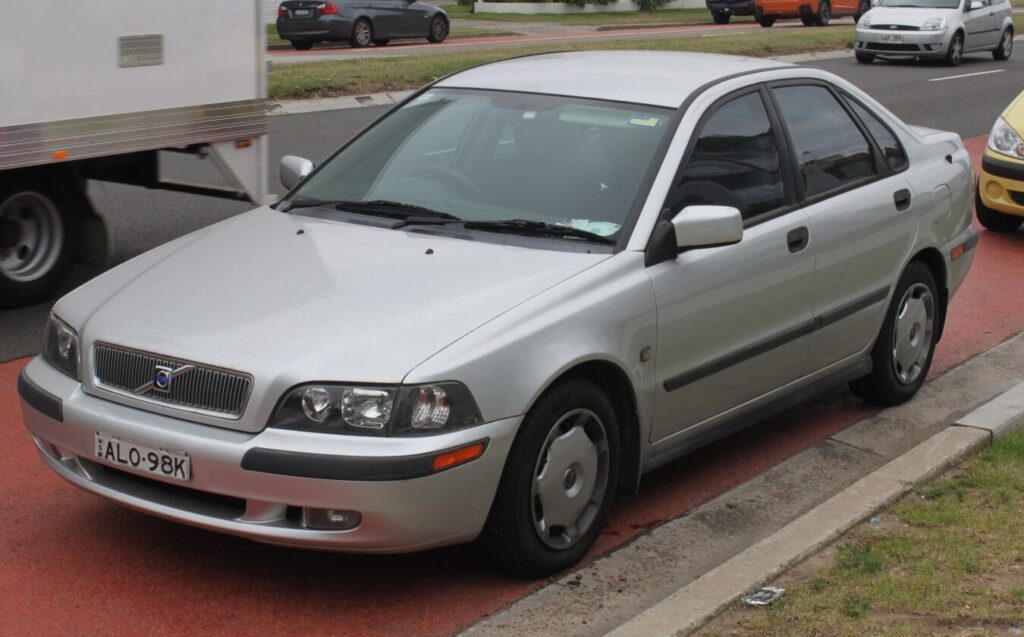
The Volvo S40 VS 1.8 16V, produced between 1995 and 1999, represented Volvo’s entry into the increasingly competitive compact sedan segment. This variant was a key component of the first-generation S40 (VS) series, built on Volvo’s 400-series platform, and aimed to offer a blend of Scandinavian practicality, safety, and a relatively affordable price point. Positioned as the base engine option in many markets, the 1.8L 16V engine paired with a 5-speed manual transmission provided a balance between fuel efficiency and acceptable performance for everyday driving. It served as the gateway to the S40 range, appealing to buyers prioritizing economy and reliability over outright speed.
Technical Specifications
| Brand | Volvo |
| Model | S40 |
| Generation | S40 (VS) |
| Type (Engine) | 1.8 16V (115 Hp) |
| Start of production | 1995 |
| End of production | 1999 |
| Powertrain Architecture | Internal Combustion engine |
| Body type | Sedan |
| Seats | 5 |
| Doors | 4 |
| Fuel consumption (urban) | 12 l/100 km (19.6 US mpg) |
| Fuel consumption (extra urban) | 6-6.7 l/100 km (39.2 – 35.1 US mpg) |
| Fuel consumption (combined) | 7.8 l/100 km (30.2 US mpg) |
| Fuel Type | Petrol (Gasoline) |
| Acceleration 0 – 100 km/h | 10.5 sec |
| Acceleration 0 – 62 mph | 10.5 sec |
| Acceleration 0 – 60 mph | 10 sec |
| Maximum speed | 195 km/h (121.17 mph) |
| Weight-to-power ratio | 11.2 kg/Hp |
| Weight-to-torque ratio | 7.8 kg/Nm |
| Power | 115 Hp @ 5500 rpm |
| Torque | 165 Nm @ 4100 rpm (121.7 lb.-ft. @ 4100 rpm) |
| Engine layout | Front, Transverse |
| Engine Model/Code | B4184S |
| Engine displacement | 1731 cm3 (105.63 cu. in.) |
| Number of cylinders | 4 |
| Engine configuration | Inline |
| Cylinder Bore | 83 mm (3.27 in.) |
| Piston Stroke | 80 mm (3.15 in.) |
| Compression ratio | 10.5:1 |
| Number of valves per cylinder | 4 |
| Fuel injection system | Multi-port manifold injection |
| Engine aspiration | Naturally aspirated engine |
| Valvetrain | DOHC |
| Engine oil capacity | 5.4 l (5.71 US qt | 4.75 UK qt) |
| Coolant capacity | 6.3 l (6.66 US qt | 5.54 UK qt) |
| Kerb Weight | 1286 kg (2835.14 lbs.) |
| Max. weight | 1720 kg (3791.95 lbs.) |
| Max load | 434 kg (956.81 lbs.) |
| Trunk (boot) space – minimum | 471 l (16.63 cu. ft.) |
| Trunk (boot) space – maximum | 853 l (30.12 cu. ft.) |
| Fuel tank capacity | 60 l (15.85 US gal | 13.2 UK gal) |
| Length | 4483 mm (176.5 in.) |
| Width | 1717 mm (67.6 in.) |
| Height | 1411 mm (55.55 in.) |
| Wheelbase | 2550 mm (100.39 in.) |
| Front track | 1450 mm (57.09 in.) |
| Rear track | 1470 mm (57.87 in.) |
| Drivetrain Architecture | Front wheel drive |
| Number of gears | 5 |
| Gearbox type | Manual transmission |
| Front suspension | Wishbone |
| Rear suspension | Coil spring |
| Front brakes | Ventilated discs |
| Rear brakes | Disc |
| Assisting systems | ABS (Anti-lock braking system) |
| Steering type | Steering rack and pinion |
| Power steering | Hydraulic Steering |
| Tires size | 195/55 R15 |
| Wheel rims size | 15 |
INTRODUCTION
The Volvo S40 VS 1.8 16V, launched in 1995, was a significant model for Volvo, representing a move downmarket into the compact sedan class. It was designed to appeal to a broader customer base than Volvo traditionally targeted, offering a more affordable and accessible alternative to the larger, more expensive 850 series. Built on the shared platform with the Renault 19, the S40 aimed to combine Volvo’s renowned safety standards with a more youthful and dynamic image. The 1.8L 16V engine, coupled with a 5-speed manual transmission, was the entry-level powertrain option, providing a balance of fuel economy and usability for daily commuting and family transport.
Powertrain & Engine Architecture
The heart of the S40 1.8 16V is the B4184S engine, a 1.8-liter inline-four cylinder gasoline engine. This engine features a cast iron block and an aluminum cylinder head, incorporating a double overhead camshaft (DOHC) valvetrain with four valves per cylinder – hence the “16V” designation. Fuel delivery is managed by a multi-port fuel injection system, providing precise fuel metering for improved efficiency and reduced emissions. The engine’s 16-valve configuration contributes to its relatively responsive nature, allowing it to produce 115 horsepower at 5500 rpm and 165 Nm (121.7 lb-ft) of torque at 4100 rpm. The 5-speed manual transmission offered a fairly conventional gear ratio spread, prioritizing fuel economy in higher gears while still providing adequate acceleration. The transmission itself was known for its smooth operation and relatively light shift feel.
Driving Characteristics
The S40 1.8 16V, with its 115 horsepower and 5-speed manual, offered a competent, if not exhilarating, driving experience. Acceleration from 0-60 mph took around 10 seconds, making it competitive with other compact sedans of the era. The engine felt reasonably responsive in the mid-range, providing enough power for overtaking maneuvers on the highway. However, it did require the driver to downshift to access its full potential, particularly when climbing hills or carrying a full load of passengers. Compared to the higher-output 2.0L versions of the S40, the 1.8L felt noticeably less powerful, but it also offered better fuel economy. The manual transmission allowed for greater driver control and engagement compared to the optional automatic transmission, and the relatively light clutch pedal made it comfortable for city driving.
Equipment & Trim Levels
The S40 1.8 16V typically came with a fairly basic level of standard equipment, reflecting its position as the entry-level model. Standard features generally included power steering, central locking, and a basic stereo system. Interior upholstery was typically cloth, and the dashboard featured a functional, if somewhat understated, design. Optional extras included air conditioning, power windows, a sunroof, and upgraded audio systems. Higher trim levels, such as the SE, added features like alloy wheels, upgraded interior trim, and additional comfort features. Safety features, a hallmark of Volvo, were well-represented even in the base model, including ABS brakes and a robust safety cage construction.
Chassis & Braking
The S40 VS utilized a front-wheel-drive layout with independent wishbone suspension at the front and a coil spring rear suspension. This setup provided a comfortable ride quality, absorbing bumps and imperfections in the road surface effectively. The front brakes were ventilated discs, offering good stopping power, while the rear brakes were solid discs. The steering was a rack-and-pinion system with hydraulic power assistance, providing precise and responsive steering feel. The chassis was designed to prioritize safety and stability, with a wide track and a relatively long wheelbase. Stabilizer bars were fitted to both the front and rear axles to reduce body roll during cornering.
Market Reception & Comparison
The Volvo S40 1.8 16V was generally well-received by automotive critics, who praised its safety features, comfortable ride, and relatively affordable price. However, some critics noted that the 1.8L engine felt underpowered, particularly when compared to its rivals. Fuel economy was considered to be good for its class, averaging around 30.2 US mpg in combined driving. Compared to the 2.0L S40, the 1.8L offered a more economical option, but at the expense of performance. The 1.8L appealed to buyers who prioritized fuel efficiency and practicality over outright speed, while the 2.0L catered to those seeking a more engaging driving experience.
Legacy
The Volvo S40 1.8 16V has proven to be a relatively reliable and durable vehicle, with many examples still on the road today. The B4184S engine is known for its longevity, and with proper maintenance, it can provide many years of trouble-free service. However, like any older vehicle, it is susceptible to age-related issues such as corrosion and wear and tear on suspension components. In the used car market, the S40 1.8 16V represents a good value proposition for buyers seeking a safe, reliable, and affordable compact sedan. Its reputation for durability and its relatively simple mechanical design make it an attractive option for those looking for a classic Volvo experience without breaking the bank.