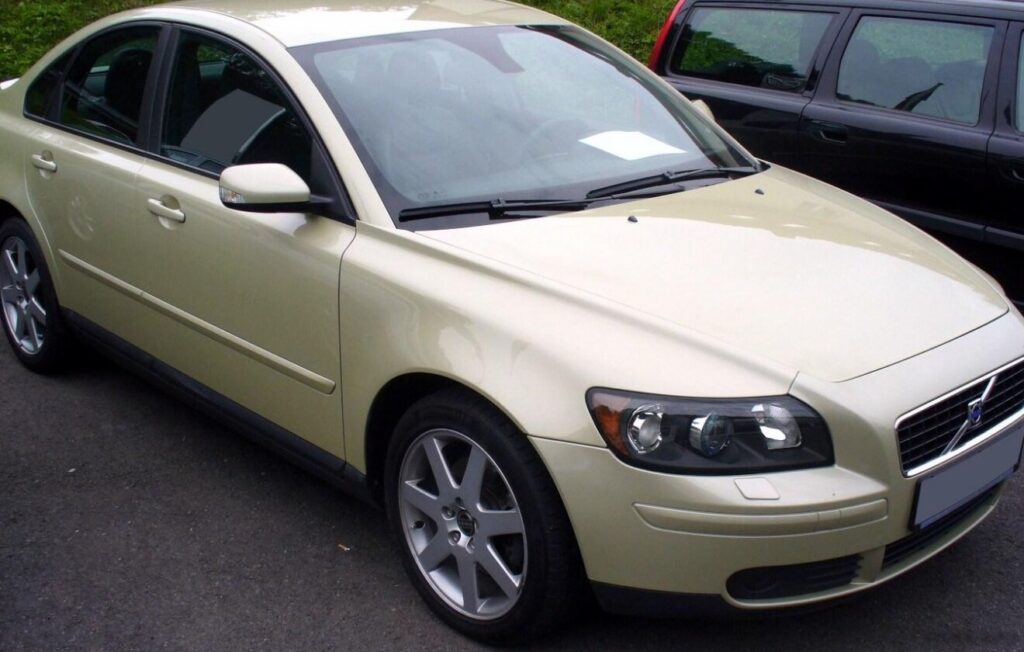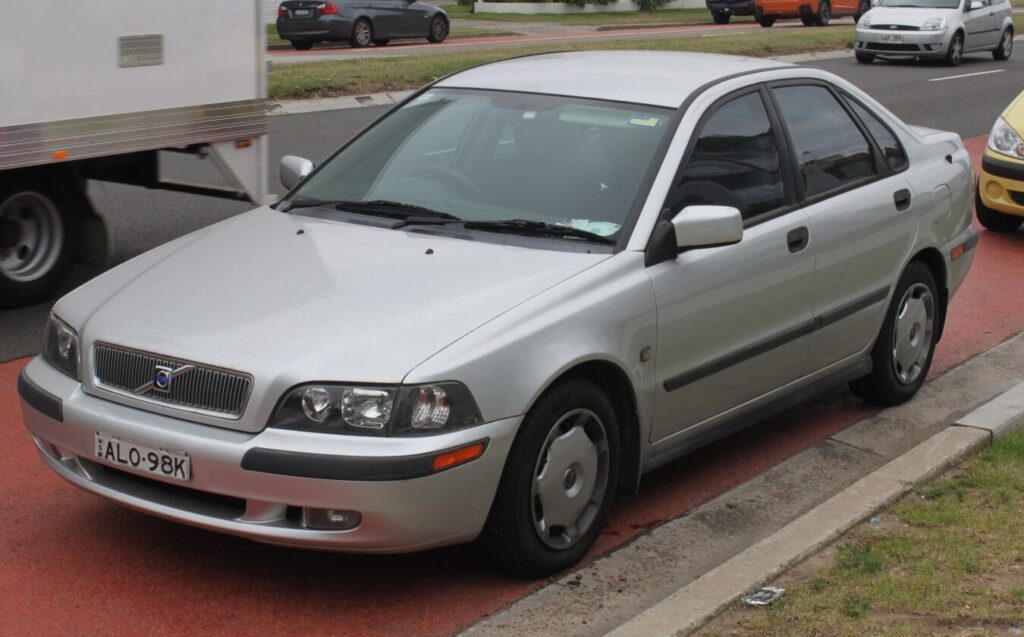
The Volvo S40 VS 1.8 16V, produced between 1999 and 2000, represented a key entry point into Volvo’s compact executive sedan lineup. This variant was part of the first generation (VS) S40, which was jointly developed with Mitsubishi and shared a platform with the Mitsubishi Carisma. Positioned as the base model in many markets, the 1.8 16V offered a balance of affordability, practicality, and Volvo’s renowned safety features. It served as a stepping stone for buyers wanting the Volvo experience without the higher price tag of the more powerful 1.9T or 2.0T models. The S40 VS aimed to compete with established rivals like the Audi A3, BMW 3 Series Compact, and Mercedes-Benz A-Class, offering a distinctly Scandinavian alternative.
Technical Specifications
| Brand | Volvo |
| Model | S40 |
| Generation | S40 (VS) |
| Type (Engine) | 1.8 16V (122 Hp) |
| Start of production | 1999 |
| End of production | 2000 |
| Powertrain Architecture | Internal Combustion engine |
| Body type | Sedan |
| Seats | 5 |
| Doors | 4 |
| Fuel consumption (urban) | 11.5 l/100 km (20.5 US mpg) |
| Fuel consumption (extra urban) | 6.1 l/100 km (38.6 US mpg) |
| Fuel Type | Petrol (Gasoline) |
| Acceleration 0 – 100 km/h | 10.5 sec |
| Acceleration 0 – 62 mph | 10.5 sec |
| Acceleration 0 – 60 mph | 10 sec |
| Maximum speed | 200 km/h (124.27 mph) |
| Weight-to-power ratio | 10.3 kg/Hp |
| Weight-to-torque ratio | 7.4 kg/Nm |
| Power | 122 Hp @ 5800 rpm |
| Torque | 170 Nm @ 4000 rpm (125.39 lb.-ft. @ 4000 rpm) |
| Engine layout | Front, Transverse |
| Engine Model/Code | B4184S |
| Engine displacement | 1783 cm3 (108.81 cu. in.) |
| Number of cylinders | 4 |
| Engine configuration | Inline |
| Cylinder Bore | 83 mm (3.27 in.) |
| Piston Stroke | 82.4 mm (3.24 in.) |
| Compression ratio | 10.5:1 |
| Number of valves per cylinder | 4 |
| Fuel injection system | Multi-port manifold injection |
| Engine aspiration | Naturally aspirated |
| Valvetrain | DOHC |
| Engine oil capacity | 4.3 l (4.54 US qt | 3.78 UK qt) |
| Coolant capacity | 6.3 l (6.66 US qt | 5.54 UK qt) |
| Kerb Weight | 1255 kg (2766.8 lbs.) |
| Max. weight | 1750 kg (3858.09 lbs.) |
| Max load | 495 kg (1091.29 lbs.) |
| Trunk (boot) space – minimum | 415 l (14.66 cu. ft.) |
| Trunk (boot) space – maximum | 853 l (30.12 cu. ft.) |
| Fuel tank capacity | 60 l (15.85 US gal | 13.2 UK gal) |
| Length | 4516 mm (177.8 in.) |
| Width | 1716 mm (67.56 in.) |
| Height | 1422 mm (55.98 in.) |
| Wheelbase | 2562 mm (100.87 in.) |
| Front track | 1472 mm (57.95 in.) |
| Rear track | 1474 mm (58.03 in.) |
| Drivetrain Architecture | Front wheel drive |
| Number of gears | 5 |
| Gearbox type | Manual transmission |
| Front suspension | Wishbone |
| Rear suspension | Coil spring |
| Front brakes | Ventilated discs |
| Rear brakes | Disc |
| Assisting systems | ABS (Anti-lock braking system) |
| Steering type | Steering rack and pinion |
| Power steering | Hydraulic |
| Tires size | 195/55 R15 |
| Wheel rims size | 15 |
Introduction
The Volvo S40 VS 1.8 16V, launched in 1999 and continuing through 2000, was a crucial model for Volvo as they sought to expand their presence in the competitive compact sedan segment. Built on the 1HX0 platform (shared with the Mitsubishi Carisma), the S40 offered a more affordable and accessible entry point into the Volvo brand compared to the larger S70 and V70 models. This variant, powered by the 1.8-liter naturally aspirated engine, was designed to appeal to buyers prioritizing fuel efficiency and practicality over outright performance. It represented a significant step for Volvo in offering a smaller, more modern vehicle aimed at a broader demographic.
Powertrain & Engine Architecture
The heart of the S40 1.8 16V is the Volvo B4184S engine, a 1.8-liter (1783cc) inline-four cylinder gasoline engine. This engine features a double overhead camshaft (DOHC) valvetrain with four valves per cylinder, contributing to its relatively good breathing and power output for its displacement. The engine utilizes multi-port fuel injection, delivering fuel directly into the intake ports. The B4184S engine is known for its robustness and relative simplicity, making it a fairly reliable unit. The 122 horsepower and 170 Nm (125 lb-ft) of torque were delivered at 5800 rpm and 4000 rpm respectively. The engine was typically paired with a five-speed manual transmission, although a four-speed automatic transmission was also available, impacting acceleration and fuel economy. The automatic transmission, while offering convenience, was generally considered less responsive than the manual counterpart.
Driving Characteristics
The S40 1.8 16V with the manual transmission offered a reasonably engaging driving experience for its class. Acceleration from 0-60 mph took around 10 seconds, which was adequate for everyday driving but not particularly sporty. The engine felt responsive enough in the mid-range, making overtaking maneuvers manageable. The automatic transmission version, however, noticeably dulled performance, adding approximately 0.5 seconds to the 0-60 mph time. Gear ratios were tuned for fuel efficiency rather than outright acceleration. The steering was light and precise, providing good feedback for a front-wheel-drive vehicle. The suspension, while comfortable, wasn’t particularly sporty, leaning towards a more compliant ride quality suitable for long journeys.
Equipment & Trim Levels
The S40 1.8 16V typically came with a respectable level of standard equipment. This included power windows, power door locks, central locking, and an AM/FM radio. Air conditioning was often standard, but could be optional in some markets. Interior upholstery was typically cloth, with a relatively simple and functional dashboard layout. Optional extras included alloy wheels, a sunroof, and upgraded audio systems. Higher trim levels, if available, might have added features like leather upholstery and automatic climate control. Safety features, a hallmark of Volvo, were well represented, including ABS brakes and front airbags as standard equipment.
Chassis & Braking
The S40 VS utilized a front-wheel-drive layout with independent wishbone suspension at the front and a coil spring rear suspension. This setup provided a good balance between ride comfort and handling. Braking duties were handled by ventilated discs at the front and solid discs at the rear. ABS (Anti-lock Braking System) was standard, enhancing braking performance and stability, particularly in adverse conditions. The chassis was designed to be relatively lightweight, contributing to the car’s overall efficiency. Stabilizer bars were fitted to both the front and rear axles to reduce body roll during cornering.
Market Reception & Comparison
The Volvo S40 1.8 16V was generally well-received by automotive critics as a practical and safe compact sedan. However, its performance was often criticized as being somewhat underwhelming compared to rivals like the BMW 3 Series and Audi A3. Fuel economy was considered good for its time, averaging around 38.6 US mpg on the highway. Reliability was generally good, although some owners reported minor issues with the automatic transmission. Compared to the higher-powered 1.9T and 2.0T versions of the S40, the 1.8 16V offered a more affordable entry point but sacrificed performance. The 1.9T, with its turbocharged engine, provided significantly more power and torque, while the 2.0T offered a balance between performance and fuel economy.
Legacy
The Volvo S40 1.8 16V, while not the most exciting variant in the lineup, proved to be a reliable and practical choice for many buyers. The B4184S engine is known for its durability, and well-maintained examples can still be found on the road today. In the used car market, these S40s are often sought after for their affordability and Volvo’s reputation for safety. While not a collector’s item, the S40 1.8 16V represents a significant chapter in Volvo’s history, marking their entry into the competitive compact sedan segment and offering a distinctly Scandinavian alternative to established European rivals.