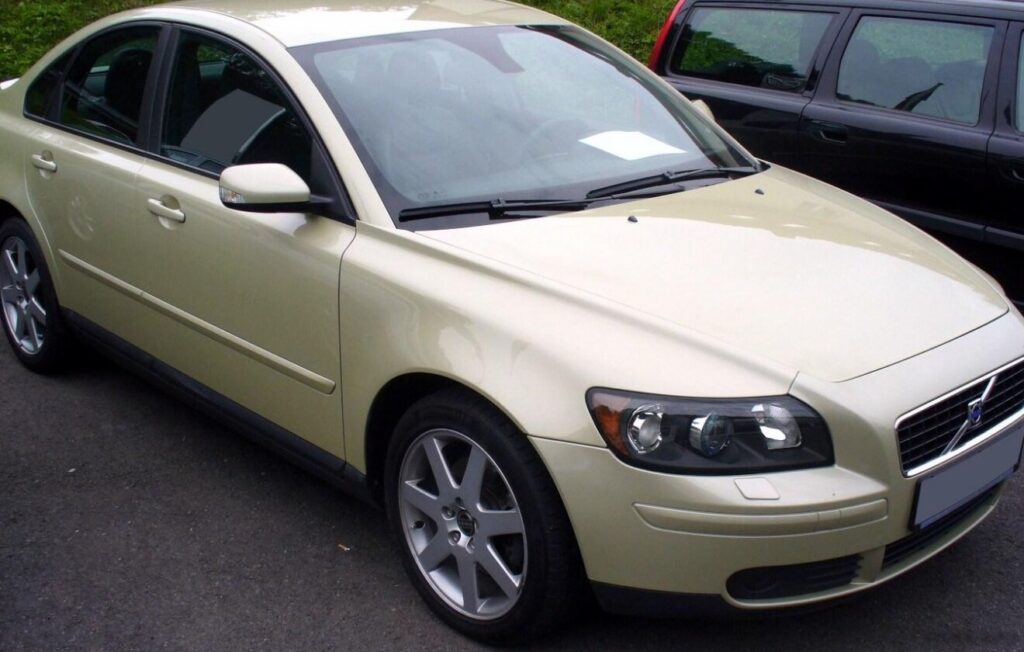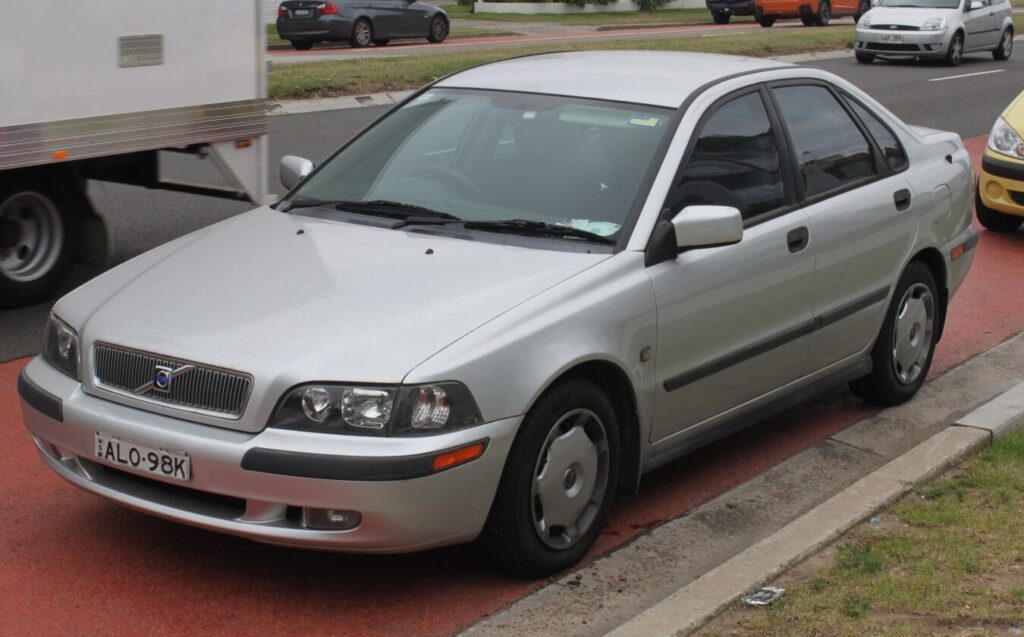
The Volvo S40 VS 2.0 16V, produced between 1995 and 1999, represented Volvo’s entry into the compact executive sedan market. This generation, internally designated VS, was a significant departure for Volvo, moving away from the boxy designs of the past towards a more contemporary and aerodynamic profile. The 2.0-liter 16-valve engine, producing 140 horsepower, served as a key engine option within the S40 lineup, positioned as a balance between affordability and performance. It was built on Volvo’s new P80 platform, shared with the V40 estate, and aimed to appeal to a younger, more style-conscious demographic than traditional Volvo buyers.
Technical Specifications
| Brand | Volvo |
| Model | S40 |
| Generation | S40 (VS) |
| Type (Engine) | 2.0 16V (140 Hp) |
| Start of production | 1995 |
| End of production | 1999 |
| Powertrain Architecture | Internal Combustion engine |
| Body type | Sedan |
| Seats | 5 |
| Doors | 4 |
| Fuel consumption (urban) | 10.7 l/100 km (22 US mpg, 26.4 UK mpg, 9.3 km/l) |
| Fuel consumption (extra urban) | 6.2 l/100 km (37.9 US mpg, 45.6 UK mpg, 16.1 km/l) |
| Fuel consumption (combined) | 8.2 l/100 km (28.7 US mpg, 34.4 UK mpg, 12.2 km/l) |
| Fuel Type | Petrol (Gasoline) |
| Acceleration 0 – 100 km/h | 9.3 sec |
| Acceleration 0 – 62 mph | 9.3 sec |
| Acceleration 0 – 60 mph | 8.8 sec |
| Maximum speed | 210 km/h (130.49 mph) |
| Weight-to-power ratio | 9.2 kg/Hp, 108.7 Hp/tonne |
| Weight-to-torque ratio | 7 kg/Nm, 142.1 Nm/tonne |
| Power | 140 Hp @ 6100 rpm |
| Power per litre | 71.9 Hp/l |
| Torque | 183 Nm @ 4500 rpm (134.97 lb.-ft. @ 4500 rpm) |
| Engine layout | Front, Transverse |
| Engine Model/Code | B4204S |
| Engine displacement | 1948 cm3 (118.87 cu. in.) |
| Number of cylinders | 4 |
| Engine configuration | Inline |
| Cylinder Bore | 83 mm (3.27 in.) |
| Piston Stroke | 90 mm (3.54 in.) |
| Compression ratio | 10.5:1 |
| Number of valves per cylinder | 4 |
| Fuel injection system | Multi-port manifold injection |
| Engine aspiration | Naturally aspirated engine |
| Valvetrain | DOHC |
| Engine oil capacity | 5.4 l (5.71 US qt | 4.75 UK qt) |
| Coolant | 6.3 l (6.66 US qt | 5.54 UK qt) |
| Kerb Weight | 1288 kg (2839.55 lbs.) |
| Max. weight | 1720 kg (3791.95 lbs.) |
| Max load | 432 kg (952.4 lbs.) |
| Trunk (boot) space – minimum | 471 l (16.63 cu. ft.) |
| Trunk (boot) space – maximum | 853 l (30.12 cu. ft.) |
| Fuel tank capacity | 60 l (15.85 US gal | 13.2 UK gal) |
| Length | 4483 mm (176.5 in.) |
| Width | 1717 mm (67.6 in.) |
| Height | 1411 mm (55.55 in.) |
| Wheelbase | 2550 mm (100.39 in.) |
| Front track | 1450 mm (57.09 in.) |
| Rear (Back) track | 1470 mm (57.87 in.) |
| Drivetrain Architecture | The Internal combustion engine (ICE) drives the front wheels of the vehicle. |
| Drive wheel | Front wheel drive |
| Number of gears and type of gearbox | 5 gears, manual transmission |
| Front suspension | Wishbone |
| Rear suspension | Coil spring |
| Front brakes | Ventilated discs |
| Rear brakes | Disc |
| Assisting systems | ABS (Anti-lock braking system) |
| Steering type | Steering rack and pinion |
| Power steering | Hydraulic Steering |
| Tires size | 195/55 R15 |
| Wheel rims size | 15 |
Powertrain & Engine Architecture
The heart of the S40 2.0 16V is the B4204S engine, a 1.948-liter inline-four cylinder gasoline engine. This engine featured a cast iron block with an aluminum cylinder head, incorporating a double overhead camshaft (DOHC) valvetrain with four valves per cylinder. This 16-valve configuration allowed for improved breathing and higher engine speeds compared to older Volvo engines. Fuel delivery was managed by a Bosch multi-port fuel injection system, providing precise fuel metering for optimal combustion. The engine’s 140 horsepower output at 6100 rpm and 183 Nm (135 lb-ft) of torque at 4500 rpm were respectable for its displacement and class. The engine was transversely mounted in the front of the vehicle, driving the front wheels. The standard transmission was a five-speed manual, although a four-speed automatic transmission was also available, impacting performance and fuel economy.
Driving Characteristics
The S40 2.0 16V offered a comfortable and composed driving experience. With 140 hp, acceleration from 0 to 60 mph took around 8.8 seconds, making it competitive with other compact executive sedans of the era. The five-speed manual transmission allowed drivers to fully utilize the engine’s powerband, while the optional automatic, though convenient, resulted in slightly slower acceleration and reduced fuel efficiency. The suspension, featuring wishbone front suspension and coil springs in the rear, provided a good balance between ride comfort and handling. Steering was precise thanks to the rack and pinion system with hydraulic power assistance. Compared to the more powerful S40 2.3 models, the 2.0 16V offered a more economical and accessible entry point into the S40 range, sacrificing some outright performance for improved fuel consumption.
Equipment & Trim Levels
The S40 2.0 16V typically came equipped with a reasonable level of standard features. These included power windows, central locking, power steering, and an AM/FM radio. Interior upholstery was typically cloth, with options for leather available at an extra cost. Higher trim levels offered features such as alloy wheels, a sunroof, and upgraded audio systems. Safety was a key Volvo priority, and even the base S40 2.0 16V included features like ABS brakes and a driver’s airbag. Optional extras included side airbags, traction control, and automatic climate control.
Chassis & Braking
The S40 VS utilized a front-wheel-drive chassis with independent wishbone suspension at the front and a semi-independent coil spring suspension at the rear. This setup provided a comfortable ride and predictable handling. Braking duties were handled by ventilated discs at the front and solid discs at the rear, providing adequate stopping power. The inclusion of ABS (Anti-lock Braking System) was standard, enhancing safety by preventing wheel lockup during hard braking. The chassis was designed to be relatively lightweight, contributing to the car’s agility and fuel efficiency.
Market Reception & Comparison
The Volvo S40 2.0 16V was generally well-received by automotive critics. It was praised for its stylish design, comfortable interior, and strong safety features. However, some critics noted that the 2.0-liter engine could feel somewhat underpowered, particularly when fully loaded or driving uphill. Compared to rivals like the BMW 3 Series and Audi A4, the S40 offered a more affordable price point and a distinct Scandinavian aesthetic. Fuel economy was competitive for its class, with combined fuel consumption averaging around 28.7 US mpg. Reliability was generally good, although some owners reported minor issues with the electrical system.
Legacy
The Volvo S40 VS 2.0 16V remains a popular choice among enthusiasts and used car buyers. The B4204S engine is known for its durability and relatively simple maintenance requirements. While not a high-performance machine, the S40 2.0 16V offers a comfortable, safe, and stylish driving experience. Parts availability is generally good, and the car’s relatively simple construction makes it a viable option for DIY mechanics. Today, well-maintained examples of the S40 2.0 16V can be found for reasonable prices, making it an attractive entry point into the world of classic Volvo ownership.