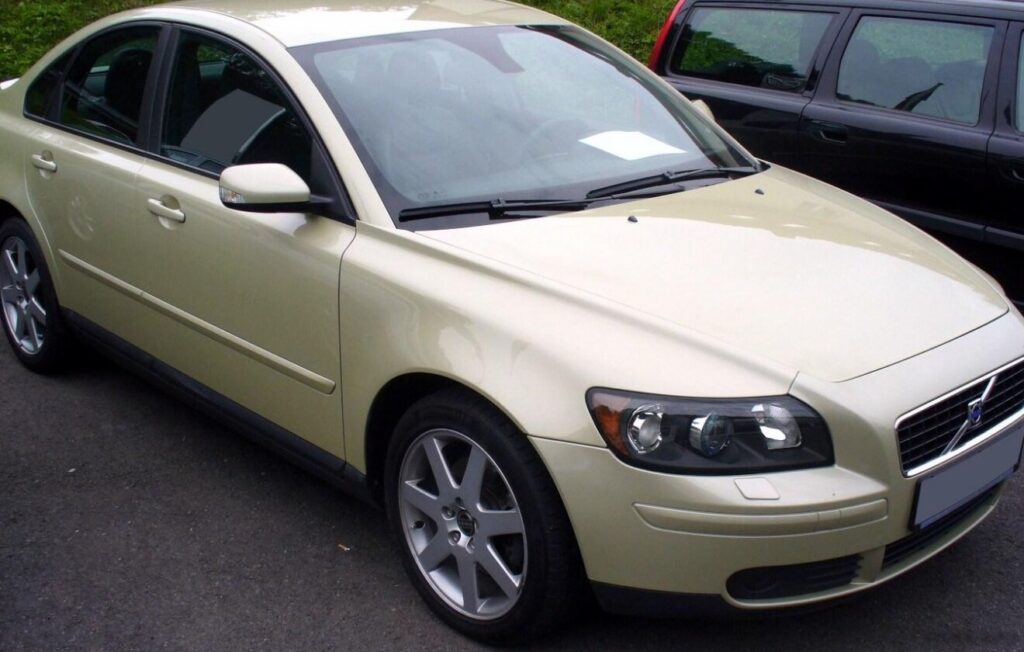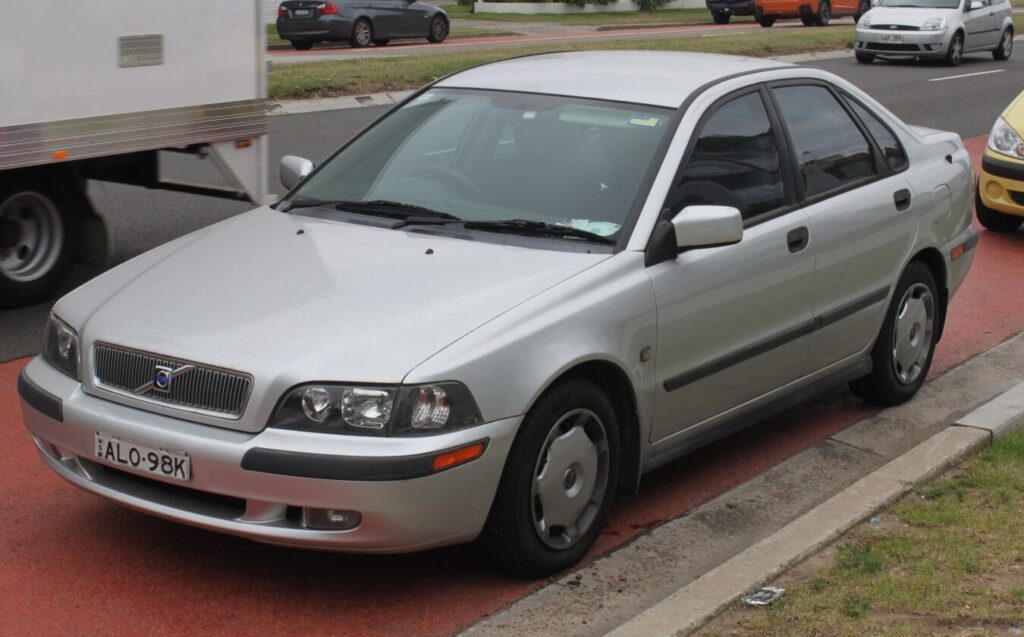
The Volvo S40 2.0 T, produced between 1997 and 2000, represented a significant step forward for Volvo’s compact sedan offering. Part of the VS generation (internally designated as the 1996-2000 model year), this variant occupied a mid-range position within the S40 lineup, slotting between the base 1.8L models and the higher-performance 1.9 T4. The S40 VS was Volvo’s entry into the increasingly popular compact executive car segment, primarily aimed at the European market, but with increasing presence in North America. It was designed to appeal to buyers seeking a blend of Scandinavian practicality, safety, and a touch of sporty performance.
Technical Specifications
| Brand | Volvo |
| Model | S40 |
| Generation | S40 (VS) |
| Type (Engine) | 2.0 T (160 Hp) |
| Start of production | 1997 |
| End of production | 2000 |
| Powertrain Architecture | Internal Combustion engine |
| Body type | Sedan |
| Seats | 5 |
| Doors | 4 |
| Fuel consumption (urban) | 12.5 l/100 km (18.8 US mpg) |
| Fuel consumption (extra urban) | 6.8 l/100 km (34.6 US mpg) |
| Fuel consumption (combined) | 8.9 l/100 km (26.4 US mpg) |
| Fuel Type | Petrol (Gasoline) |
| Acceleration 0 – 100 km/h | 8.5 sec |
| Acceleration 0 – 62 mph | 8.5 sec |
| Acceleration 0 – 60 mph | 8.1 sec |
| Maximum speed | 215 km/h (133.59 mph) |
| Weight-to-power ratio | 7.7 kg/Hp |
| Weight-to-torque ratio | 5.3 kg/Nm |
| Power | 160 Hp @ 5100 rpm |
| Torque | 230 Nm @ 1800 rpm (169.64 lb.-ft. @ 1800 rpm) |
| Engine layout | Front, Transverse |
| Engine Model/Code | B4204T |
| Engine displacement | 1948 cm3 (118.87 cu. in.) |
| Number of cylinders | 4 |
| Engine configuration | Inline |
| Cylinder Bore | 83 mm (3.27 in.) |
| Piston Stroke | 90 mm (3.54 in.) |
| Compression ratio | 9:1 |
| Number of valves per cylinder | 4 |
| Fuel injection system | Multi-port manifold injection |
| Engine aspiration | Turbocharger |
| Valvetrain | DOHC |
| Engine oil capacity | 4.3 l (4.54 US qt | 3.78 UK qt) |
| Coolant capacity | 5.7 l (6.02 US qt | 5.02 UK qt) |
| Kerb Weight | 1230 kg (2711.69 lbs.) |
| Max. weight | 1790 kg (3946.27 lbs.) |
| Max load | 560 kg (1234.59 lbs.) |
| Trunk (boot) space – minimum | 415 l (14.66 cu. ft.) |
| Trunk (boot) space – maximum | 853 l (30.12 cu. ft.) |
| Fuel tank capacity | 60 l (15.85 US gal | 13.2 UK gal) |
| Length | 4516 mm (177.8 in.) |
| Width | 1716 mm (67.56 in.) |
| Height | 1422 mm (55.98 in.) |
| Wheelbase | 2562 mm (100.87 in.) |
| Front track | 1472 mm (57.95 in.) |
| Rear track | 1474 mm (58.03 in.) |
| Drivetrain Architecture | Front wheel drive |
| Number of gears | 5 |
| Gearbox type | Manual transmission |
| Front suspension | Wishbone |
| Rear suspension | Coil spring |
| Front brakes | Ventilated discs |
| Rear brakes | Disc |
| Assisting systems | ABS (Anti-lock braking system) |
| Steering type | Steering rack and pinion |
| Power steering | Hydraulic |
| Tires size | 205/55 R15 |
| Wheel rims size | 15 |
Powertrain & Engine Architecture
The heart of the S40 2.0 T was the B4204T engine, a 1.948-liter, inline-four cylinder gasoline engine. This engine featured a single overhead camshaft (SOHC) design, although later revisions moved to a dual overhead camshaft (DOHC) configuration. Crucially, it was turbocharged, providing a significant boost in power compared to the naturally aspirated 1.8L engine. The B4204T utilized multi-port fuel injection and a relatively conservative 9:1 compression ratio. The turbocharger itself was a Mitsubishi TD04HL-13C, providing approximately 8 psi of boost. The five-speed manual transmission was the standard offering, providing a direct and engaging driving experience. The engine’s torque curve was relatively flat, delivering usable power across a wide RPM range, making it suitable for both city driving and highway cruising.
Driving Characteristics
The S40 2.0 T offered a noticeable performance upgrade over the base models. The 160 horsepower and 230 Nm (169.64 lb-ft) of torque allowed for a 0-60 mph time of around 8.1 seconds and a top speed of 133.59 mph. While not a sports car, the turbocharger provided a satisfying surge of acceleration, particularly in the mid-range. The five-speed manual transmission allowed drivers to fully exploit the engine’s power band. Compared to the later 1.9 T4, the 2.0 T felt more refined and less peaky, offering a more accessible power delivery. The suspension, tuned for comfort, provided a reasonably compliant ride, although it wasn’t as sporty as some of its rivals.
Equipment & Trim Levels
The S40 2.0 T typically came equipped with features such as power windows, power door locks, central locking, and an AM/FM radio with cassette player. Air conditioning was often standard, but could be optional depending on the market. Interior upholstery was typically cloth, with leather options available as an upgrade. Higher trim levels could include features like alloy wheels, a sunroof, and upgraded audio systems. Safety features, a hallmark of Volvo, were well represented, including ABS brakes and front airbags. The overall interior design was functional and understated, reflecting Volvo’s Scandinavian design philosophy.
Chassis & Braking
The S40 VS utilized a front-wheel-drive layout with independent wishbone suspension at the front and a semi-independent coil spring suspension at the rear. Brakes were ventilated discs at the front and solid discs at the rear. The braking system, coupled with ABS, provided adequate stopping power for the vehicle’s weight and performance. Steering was rack and pinion, providing precise and responsive handling. The chassis was designed to prioritize safety and comfort, rather than outright sportiness.
Market Reception & Comparison
The S40 2.0 T was generally well-received by automotive critics. It was praised for its safety, comfort, and refined driving experience. However, some critics noted that it lacked the outright performance of some of its rivals, such as the BMW 3 Series and Audi A4. Fuel economy was considered reasonable for the time, averaging around 26.4 US mpg in combined driving. Compared to the 1.8L models, the 2.0 T offered a significant performance boost, making it a more appealing option for drivers who wanted a bit more excitement. Compared to the 1.9 T4, it offered a more balanced driving experience, sacrificing some outright performance for greater refinement.
Legacy
The Volvo S40 2.0 T, while not a groundbreaking vehicle, played an important role in establishing Volvo as a competitor in the compact executive car segment. The B4204T engine proved to be relatively reliable, although turbocharger issues could occasionally arise. Today, well-maintained examples of the S40 2.0 T are becoming increasingly sought after by enthusiasts and collectors. Its blend of Scandinavian practicality, safety, and turbocharged performance continues to appeal to those looking for a classic Volvo with a bit of extra punch. Parts availability is generally good, making it a relatively easy car to maintain and restore.