
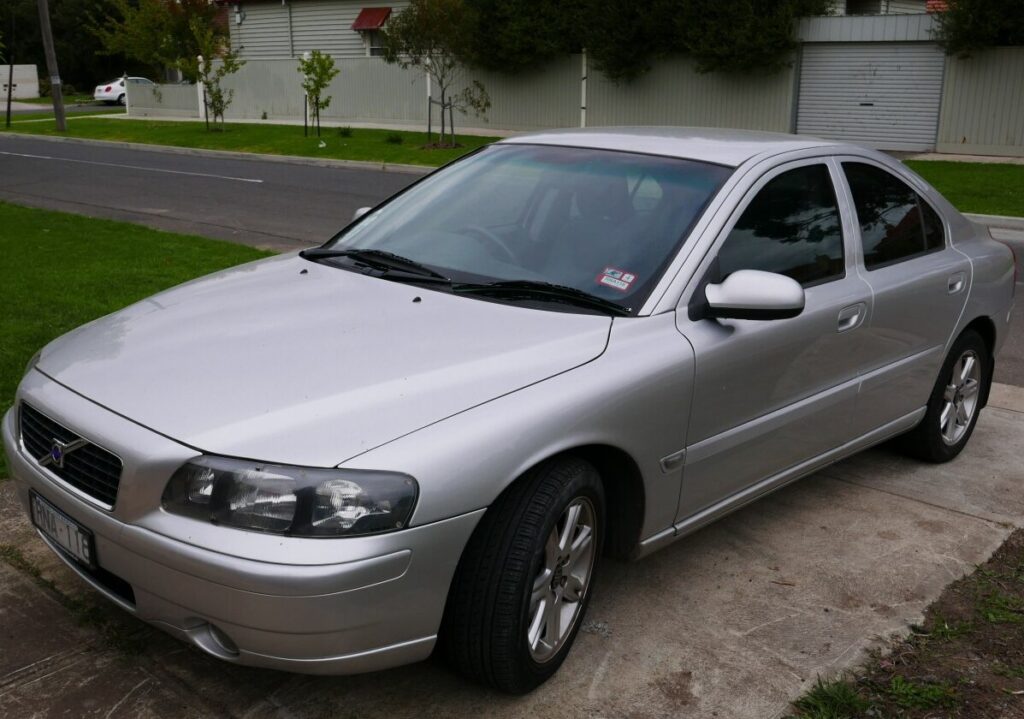
The Volvo S60 2.0 T Automatic, produced from 2003 to 2004, represented a key entry point into the second-generation S60 (P24) lineup. Positioned as a more accessible option within the range, it offered a blend of Scandinavian practicality, safety, and a turbocharged engine paired with a convenient automatic transmission. This variant was primarily aimed at buyers seeking a comfortable and refined sedan experience without the higher price tag of the more powerful T5 or flagship models. It sat within the P24 platform shared with other Volvo models of the era, benefiting from the advancements in chassis technology and safety features introduced with that generation.
Technical Specifications
| Brand | Volvo |
| Model | S60 |
| Generation | S60 |
| Type (Engine) | 2.0 T (180 Hp) Automatic |
| Start of production | 2003 |
| End of production | 2004 |
| Powertrain Architecture | Internal Combustion engine |
| Body type | Sedan |
| Seats | 5 |
| Doors | 4 |
| Fuel consumption (urban) | 12.8 l/100 km (18.4 US mpg, 22.1 UK mpg, 7.8 km/l) |
| Fuel consumption (extra urban) | 7.1 l/100 km (33.1 US mpg, 39.8 UK mpg, 14.1 km/l) |
| Fuel consumption (combined) | 10.1 l/100 km (23.3 US mpg, 28 UK mpg, 9.9 km/l) |
| Fuel Type | Petrol (Gasoline) |
| Acceleration 0 – 100 km/h | 9.5 sec |
| Acceleration 0 – 62 mph | 9.5 sec |
| Acceleration 0 – 60 mph | 9 sec |
| Maximum speed | 215 km/h (133.59 mph) |
| Weight-to-power ratio | 8.5 kg/Hp, 117.4 Hp/tonne |
| Weight-to-torque ratio | 6.4 kg/Nm, 156.6 Nm/tonne |
| Power | 180 Hp @ 5300 rpm |
| Power per litre | 90.7 Hp/l |
| Torque | 240 Nm @ 2200 rpm (177.01 lb.-ft. @ 2200 rpm) |
| Engine layout | Front, Transverse |
| Engine Model/Code | B5204T5 |
| Engine displacement | 1984 cm3 (121.07 cu. in.) |
| Number of cylinders | 5 |
| Engine configuration | Inline |
| Cylinder Bore | 81 mm (3.19 in.) |
| Piston Stroke | 77 mm (3.03 in.) |
| Compression ratio | 9.5:1 |
| Number of valves per cylinder | 4 |
| Fuel injection system | Multi-port manifold injection |
| Engine aspiration | Turbocharger, Intercooler |
| Valvetrain | DOHC |
| Engine oil capacity | 5.5 l (5.81 US qt | 4.84 UK qt) |
| Coolant | 8.8 l (9.3 US qt | 7.74 UK qt) |
| Kerb Weight | 1533 kg (3379.69 lbs.) |
| Max. weight | 2010 kg (4431.29 lbs.) |
| Max load | 477 kg (1051.6 lbs.) |
| Trunk (boot) space – minimum | 424 l (14.97 cu. ft.) |
| Trunk (boot) space – maximum | 1034 l (36.52 cu. ft.) |
| Fuel tank capacity | 70 l (18.49 US gal | 15.4 UK gal) |
| Length | 4576 mm (180.16 in.) |
| Width | 1804 mm (71.02 in.) |
| Height | 1428 mm (56.22 in.) |
| Wheelbase | 2715 mm (106.89 in.) |
| Front track | 1563 mm (61.54 in.) |
| Rear (Back) track | 1560 mm (61.42 in.) |
| Drivetrain Architecture | The Internal combustion engine (ICE) drives the front wheels of the vehicle. |
| Drive wheel | Front wheel drive |
| Number of gears and type of gearbox | 5 gears, automatic transmission |
| Front suspension | Wishbone |
| Rear suspension | Coil spring |
| Front brakes | Ventilated discs |
| Rear brakes | Disc |
| Assisting systems | ABS (Anti-lock braking system) |
| Steering type | Steering rack and pinion |
| Power steering | Hydraulic Steering |
| Tires size | 205/55 R16 |
| Wheel rims size | 16 |
Powertrain & Engine Architecture
The heart of the S60 2.0 T Automatic is the B5204T5 engine, a 1.984-liter (121.07 cubic inches) inline-five cylinder gasoline engine. This engine utilizes a light-pressure turbocharger with an intercooler to boost power output to 180 horsepower at 5300 rpm and 240 Nm (177 lb-ft) of torque at 2200 rpm. The engine employs multi-port fuel injection and a double overhead camshaft (DOHC) valvetrain, contributing to its relatively smooth power delivery. The automatic transmission is a 5-speed unit, chosen for its convenience and ease of use, particularly in urban driving conditions. This transmission was not known for particularly sporty shifts, prioritizing comfort and fuel efficiency over outright performance.
Driving Characteristics
The 2.0 T Automatic offered a comfortable and relaxed driving experience. Acceleration from 0-60 mph took around 9 seconds, which was adequate for everyday driving but noticeably slower than the more powerful T5 model. The automatic transmission, while smooth, did detract from the engine’s responsiveness. Gear ratios were tuned for fuel economy and cruising comfort, meaning the engine could feel somewhat strained during aggressive acceleration. Compared to the manual transmission versions of the 2.0 T, the automatic resulted in a slight decrease in fuel economy and a less engaging driving experience. However, it provided a significant advantage in stop-and-go traffic.
Equipment & Trim Levels
The S60 2.0 T Automatic typically came standard with features such as air conditioning, power windows and locks, a basic audio system, and ABS brakes. Interior upholstery was usually cloth, with options for leather available at an extra cost. Common optional extras included a sunroof, upgraded audio systems, and heated front seats. The dashboard layout was typical of Volvo at the time – functional and ergonomically designed, prioritizing ease of use and a clean aesthetic. Trim levels were relatively simple, with most variations coming down to the addition of optional packages.
Chassis & Braking
The S60 2.0 T Automatic utilized a front-wheel-drive layout with independent wishbone suspension in the front and a coil spring setup in the rear. Brakes consisted of ventilated discs at the front and solid discs at the rear. The suspension was tuned for comfort, providing a relatively smooth ride over most road surfaces. The steering was hydraulic power-assisted rack and pinion, offering reasonable precision without being overly sporty. Stabilizer bars were fitted front and rear to reduce body roll during cornering, but the overall handling characteristics were geared towards safe and predictable behavior rather than dynamic performance.
Market Reception & Comparison
The S60 2.0 T Automatic was generally well-received as a practical and comfortable entry-level luxury sedan. Critics praised its safety features, comfortable ride, and relatively fuel-efficient engine. However, some reviewers noted that the automatic transmission dulled the engine’s performance and that the interior, while well-built, lacked the visual flair of some competitors. Compared to the higher-trim S60 T5, the 2.0 T offered a more affordable price point but sacrificed significant performance. Fuel economy was comparable to other vehicles in its class, averaging around 23 mpg in combined driving. Reliability was generally good, although like all turbocharged engines, it required regular maintenance to prevent potential issues.
Legacy
The Volvo S60 2.0 T Automatic, while not the most powerful or sporty variant of the S60, remains a popular choice in the used car market due to its affordability, reliability, and reputation for safety. The B5204T5 engine, when properly maintained, is known to be durable and long-lasting. However, potential buyers should be aware of the typical maintenance requirements for a turbocharged engine, including regular oil changes and inspection of the turbocharger and intercooler. Today, these vehicles represent a relatively inexpensive way to experience classic Volvo design and engineering, offering a comfortable and safe driving experience for those seeking a practical and reliable sedan.
