
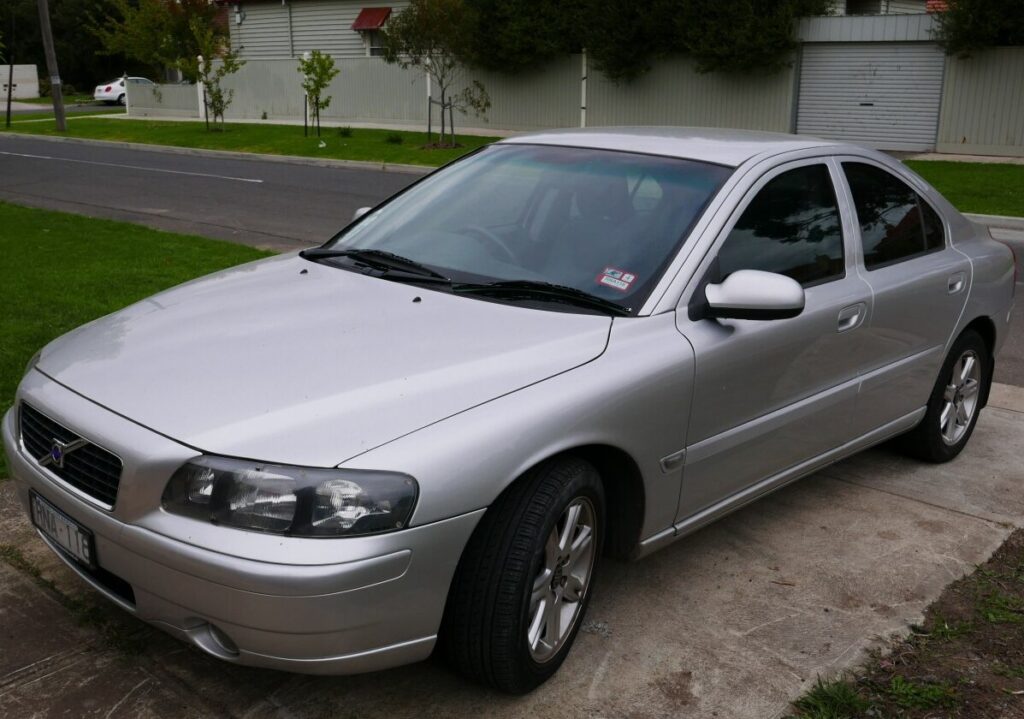
The Volvo S60 2.4 D, producing 130 horsepower, was a key variant in the first generation (P24) S60 lineup, manufactured between 2002 and 2005. Positioned as an entry-level diesel option, it aimed to provide fuel efficiency and reasonable performance for European buyers, particularly those seeking a comfortable and safe sedan. This model played a significant role in establishing the S60 as a competitor in the premium compact executive car segment, offering a diesel alternative to petrol-powered rivals like the BMW 3 Series and Audi A4. While not sold in large numbers in the US market, the S60 2.4 D represents a notable example of Volvo’s diesel technology of the early 2000s.
Technical Specifications
| Brand | Volvo |
| Model | S60 |
| Generation | S60 |
| Type (Engine) | 2.4 D (130 Hp) |
| Start of production | 2002 |
| End of production | 2005 |
| Powertrain Architecture | Internal Combustion engine |
| Body type | Sedan |
| Seats | 5 |
| Doors | 4 |
| Fuel consumption (urban) | 8.8 l/100 km (26.7 US mpg) |
| Fuel consumption (extra urban) | 5.1 l/100 km (46.1 US mpg) |
| Fuel consumption (combined) | 6.5 l/100 km (36.2 US mpg) |
| Fuel Type | Diesel |
| Acceleration 0 – 100 km/h | 11.6 sec |
| Acceleration 0 – 62 mph | 11.6 sec |
| Acceleration 0 – 60 mph | 11 sec |
| Maximum speed | 200 km/h (124.27 mph) |
| Weight-to-power ratio | 12.3 kg/Hp |
| Weight-to-torque ratio | 5.7 kg/Nm |
| Power | 130 Hp @ 4000 rpm |
| Power per litre | 54.1 Hp/l |
| Torque | 280 Nm @ 1750 rpm (206.52 lb.-ft. @ 1750 rpm) |
| Engine layout | Front, Transverse |
| Engine Model/Code | D5244T2 |
| Engine displacement | 2401 cm3 (146.52 cu. in.) |
| Number of cylinders | 5 |
| Engine configuration | Inline |
| Cylinder Bore | 81 mm (3.19 in.) |
| Piston Stroke | 93 mm (3.66 in.) |
| Compression ratio | 18:1 |
| Number of valves per cylinder | 4 |
| Fuel injection system | Diesel Commonrail |
| Engine aspiration | Turbocharger, Intercooler |
| Valvetrain | DOHC |
| Engine oil capacity | 6.5 l (6.87 US qt | 5.72 UK qt) |
| Coolant | 12.5 l (13.21 US qt | 11 UK qt) |
| Kerb Weight | 1600 kg (3527.4 lbs.) |
| Max. weight | 2030 kg (4475.38 lbs.) |
| Max load | 430 kg (947.99 lbs.) |
| Trunk (boot) space – minimum | 424 l (14.97 cu. ft.) |
| Trunk (boot) space – maximum | 1034 l (36.52 cu. ft.) |
| Fuel tank capacity | 70 l (18.49 US gal | 15.4 UK gal) |
| Length | 4576 mm (180.16 in.) |
| Width | 1804 mm (71.02 in.) |
| Height | 1428 mm (56.22 in.) |
| Wheelbase | 2715 mm (106.89 in.) |
| Front track | 1563 mm (61.54 in.) |
| Rear (Back) track | 1560 mm (61.42 in.) |
| Drivetrain Architecture | The Internal combustion engine (ICE) drives the front wheels of the vehicle. |
| Drive wheel | Front wheel drive |
| Number of gears and type of gearbox | 5 gears, manual transmission |
| Front suspension | Wishbone |
| Rear suspension | Coil spring |
| Front brakes | Ventilated discs |
| Rear brakes | Disc |
| Assisting systems | ABS (Anti-lock braking system) |
| Steering type | Steering rack and pinion |
| Power steering | Hydraulic Steering |
| Tires size | 205/55 R16 |
| Wheel rims size | 16 |
Powertrain & Engine Architecture
The S60 2.4 D was powered by Volvo’s D5244T2 engine, a 2.4-liter inline-five cylinder diesel. This engine was a significant development for Volvo, representing a move towards more efficient and refined diesel powerplants. The D5244T2 featured a cast iron block and aluminum cylinder head, incorporating a turbocharger with an intercooler to boost power output. Fuel was delivered via a common rail direct injection system, allowing for precise fuel metering and improved combustion efficiency. The engine utilized a double overhead camshaft (DOHC) valvetrain with four valves per cylinder, contributing to its relatively high specific output for a diesel engine of the time. The 130 horsepower and 280 Nm (206 lb-ft) of torque were respectable figures, providing adequate performance for everyday driving. The engine was paired with a 5-speed manual transmission, which was the standard offering. While an automatic transmission was available on other S60 models, it was less common with the 2.4 D engine.
Driving Characteristics
The S60 2.4 D with the manual transmission offered a balanced driving experience. Acceleration was not particularly brisk, taking around 11.6 seconds to reach 62 mph (100 km/h), but the engine provided a useful amount of torque from low engine speeds. This made it well-suited for relaxed cruising and overtaking on highways. The 5-speed gearbox was generally well-matched to the engine’s characteristics, although some drivers found the shift action to be slightly notchy. Compared to the higher-powered petrol versions of the S60, the 2.4 D lacked the outright performance, but it compensated with significantly better fuel economy. The manual transmission allowed for greater driver control and engagement compared to the optional automatic, and it also contributed to slightly improved fuel efficiency.
Equipment & Trim Levels
The S60 2.4 D typically came with a reasonable level of standard equipment, reflecting Volvo’s reputation for safety and comfort. Standard features included ABS brakes, power windows, central locking, and a basic audio system. Interior upholstery was typically cloth, although leather options were available. Trim levels varied depending on the market, but generally, the 2.4 D was positioned as the entry-level diesel model. Optional extras included alloy wheels, a sunroof, climate control, and upgraded audio systems. Safety features were a key selling point for the S60, and the 2.4 D included features such as side impact protection system (SIPS) and airbags as standard.
Chassis & Braking
The S60 2.4 D utilized a MacPherson strut front suspension and a multi-link rear suspension, providing a comfortable and controlled ride. The suspension was tuned to prioritize comfort over outright sportiness, making it well-suited for long-distance driving. The braking system consisted of ventilated discs on the front wheels and solid discs on the rear. ABS (Anti-lock Braking System) was standard, enhancing braking performance and stability. The chassis was designed to provide a good balance between handling and ride quality, although it wasn’t as dynamically focused as some of its rivals.
Market Reception & Comparison
The S60 2.4 D was generally well-received by critics as a practical and fuel-efficient option. It was praised for its comfortable ride, spacious interior, and strong safety credentials. However, some reviewers noted that the engine lacked the refinement and performance of some of its competitors. Compared to the higher-output petrol versions of the S60, the 2.4 D offered significantly better fuel economy, making it an attractive option for drivers who prioritized running costs. It also provided a more affordable entry point into the S60 range. Compared to other diesel-powered rivals, such as the BMW 320d and Audi A4 TDI, the S60 2.4 D offered a competitive package in terms of price, equipment, and fuel economy.
Legacy
The Volvo S60 2.4 D has proven to be a relatively reliable vehicle, with many examples still on the road today. The D5244T2 engine is known for its durability, although regular maintenance is essential to ensure long-term reliability. Common issues include turbocharger wear and potential problems with the fuel injection system. In the used car market, the S60 2.4 D represents a good value proposition, offering a comfortable and safe sedan at an affordable price. It remains a popular choice for drivers who are looking for a fuel-efficient and reliable vehicle.
