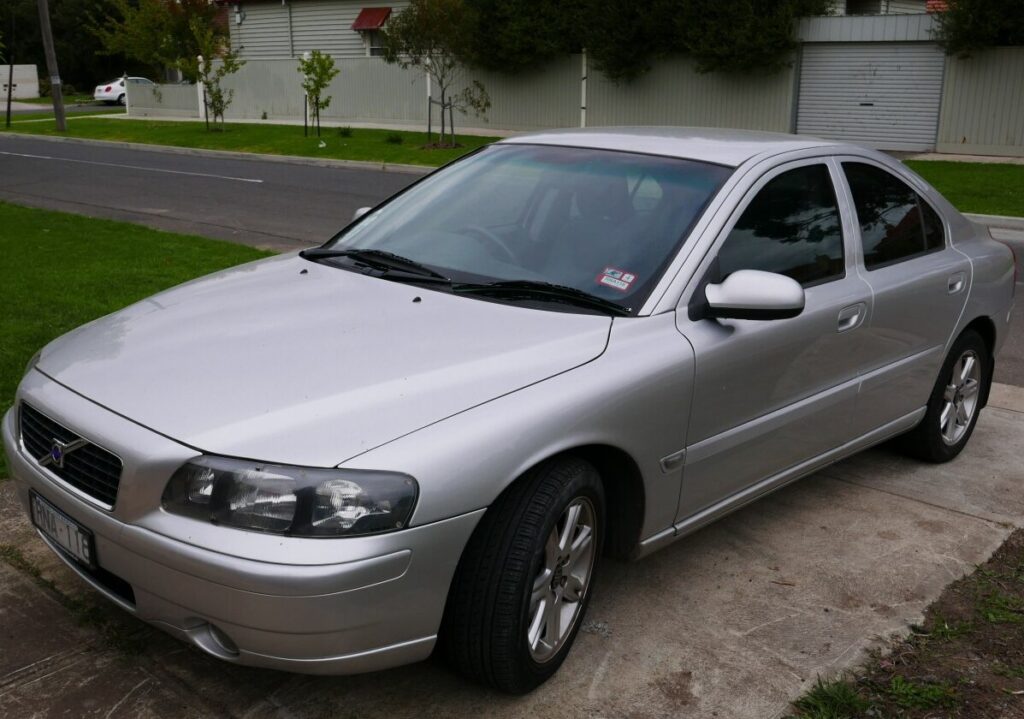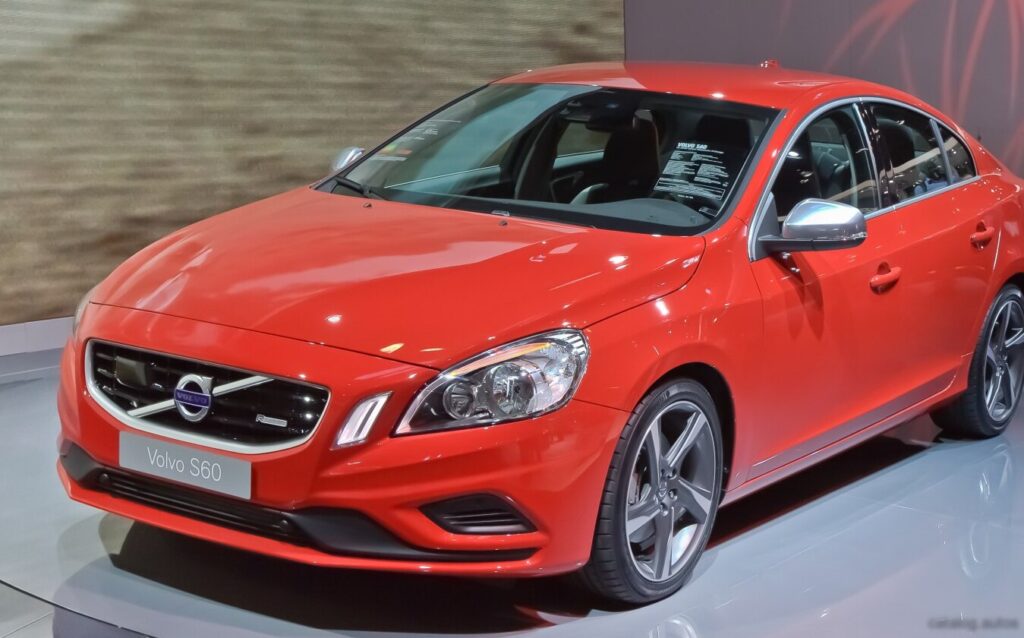
The Volvo S60 II 2.0 D3 (163 hp) S/S Automatic was a diesel-powered variant of the second-generation Volvo S60, produced from 2010 to 2013. Positioned as a fuel-efficient and relatively affordable entry point into the S60 range, it catered to European drivers seeking a comfortable and economical sedan. This model played a significant role in Volvo’s efforts to broaden its appeal and compete in the increasingly popular compact executive segment. It was built on the Volvo Y20 platform, also known as the 1HX0/A3 platform, shared with other Volvo models like the V60 and XC60.
Technical Specifications
| Brand | Volvo |
| Model | S60 |
| Generation | S60 II |
| Type (Engine) | 2.0 D3 (163 Hp) S/S Automatic |
| Start of production | 2010 |
| End of production | 2013 |
| Powertrain Architecture | Internal Combustion engine |
| Body type | Sedan |
| Seats | 5 |
| Doors | 4 |
| Fuel consumption (urban) | 6.8 l/100 km (34.6 US mpg, 41.5 UK mpg, 14.7 km/l) |
| Fuel consumption (extra urban) | 4.6 l/100 km (51.1 US mpg, 61.4 UK mpg, 21.7 km/l) |
| Fuel consumption (combined) | 5.4 l/100 km (43.6 US mpg, 52.3 UK mpg, 18.5 km/l) |
| CO2 emissions | 142 g/km |
| Fuel Type | Diesel |
| Acceleration 0 – 100 km/h | 9.2 sec |
| Acceleration 0 – 62 mph | 9.2 sec |
| Acceleration 0 – 60 mph | 8.7 sec |
| Maximum speed | 215 km/h (133.59 mph) |
| Emission standard | Euro 5 |
| Weight-to-power ratio | 9.6 kg/Hp |
| Weight-to-torque ratio | 3.9 kg/Nm |
| Power | 163 Hp @ 3500 rpm |
| Torque | 400 Nm @ 1500-2750 rpm (295.02 lb.-ft. @ 1500-2750 rpm) |
| Engine layout | Front, Transverse |
| Engine Model/Code | D5204T3 |
| Engine displacement | 1984 cm3 (121.07 cu. in.) |
| Number of cylinders | 5 |
| Engine configuration | Inline |
| Cylinder Bore | 81 mm (3.19 in.) |
| Piston Stroke | 77 mm (3.03 in.) |
| Compression ratio | 16.5:1 |
| Number of valves per cylinder | 4 |
| Fuel injection system | Diesel Commonrail |
| Engine aspiration | Turbocharger, Intercooler |
| Valvetrain | DOHC |
| Engine oil capacity | 5.9 l (6.23 US qt | 5.19 UK qt) |
| Coolant capacity | 8.9 l (9.4 US qt | 7.83 UK qt) |
| Kerb Weight | 1564 kg (3448.03 lbs.) |
| Max. weight | 2110 kg (4651.75 lbs.) |
| Max load | 546 kg (1203.72 lbs.) |
| Trunk (boot) space (minimum) | 380 l (13.42 cu. ft.) |
| Fuel tank capacity | 67.5 l (17.83 US gal | 14.85 UK gal) |
| Length | 4628 mm (182.2 in.) |
| Width | 1865 mm (73.43 in.) |
| Height | 1484 mm (58.43 in.) |
| Wheelbase | 2776 mm (109.29 in.) |
| Front track | 1588 mm (62.52 in.) |
| Rear track | 1585 mm (62.4 in.) |
| Minimum turning circle | 11.5 m (37.73 ft.) |
| Drivetrain | Front wheel drive |
| Number of gears | 6 |
| Gearbox type | Automatic transmission |
| Front suspension | Independent type McPherson |
| Rear suspension | Independent multi-link suspension |
| Front brakes | Ventilated discs, 336 mm |
| Rear brakes | Disc, 302 mm |
| Steering type | Steering rack and pinion |
| Power steering | Electric |
| Tires size | 235/40 R18 |
| Wheel rims size | 8J x 18 |
Powertrain & Engine Architecture
The heart of the S60 II D3 Automatic was the Volvo D5204T3 engine, a 2.0-liter inline-five cylinder diesel. This engine utilized a common rail direct injection system, delivering fuel at extremely high pressure for optimized combustion. A turbocharger with an intercooler was employed to boost power and torque, providing a relatively responsive driving experience for a diesel engine. The engine featured a double overhead camshaft (DOHC) valvetrain with four valves per cylinder, contributing to its efficiency and power output. The six-speed automatic transmission, sourced from Aisin, was chosen for its smoothness and efficiency. It was programmed to prioritize fuel economy, with gear changes often occurring at lower RPMs. The inclusion of a Start/Stop system further enhanced fuel efficiency by automatically shutting off the engine when the vehicle was stationary.
Driving Characteristics
The 163 hp and 400 Nm (295 lb-ft) of torque delivered by the D3 powertrain provided adequate, though not exhilarating, performance. Acceleration from 0-60 mph took around 8.7 seconds, and top speed was limited to 133.59 mph. Compared to the more powerful S60 T5 (with a gasoline engine) or the D5 (with a higher-output diesel), the D3 Automatic felt noticeably slower, particularly during overtaking maneuvers. However, the engine’s strong low-end torque made it well-suited for everyday driving and cruising. The automatic transmission, while smooth, could sometimes feel hesitant when downshifting. The gear ratios were optimized for fuel economy rather than outright performance. Overall, the driving experience was comfortable and refined, prioritizing efficiency and ease of use over sporty dynamics.
Equipment & Trim Levels
The S60 II 2.0 D3 Automatic typically came with a respectable level of standard equipment. This included climate control, power windows and mirrors, a basic audio system with CD player, and alloy wheels. Safety features were a Volvo hallmark, and the D3 included ABS, traction control, and multiple airbags. Higher trim levels, such as the SE or Executive, added features like leather upholstery, a more advanced audio system, parking sensors, and automatic headlights and wipers. Optional extras included a sunroof, navigation system, and upgraded interior trim.
Chassis & Braking
The S60 II featured an independent suspension setup, with McPherson struts at the front and a multi-link system at the rear. This provided a comfortable ride quality, absorbing bumps and imperfections in the road effectively. The front brakes were ventilated discs measuring 336mm, while the rear brakes were solid discs measuring 302mm. ABS (Anti-lock Braking System) was standard, providing enhanced braking performance and stability. The chassis was tuned to prioritize comfort and stability over sporty handling, reflecting the car’s intended role as a practical and refined sedan.
Market Reception & Comparison
The S60 II 2.0 D3 Automatic was generally well-received by critics as a sensible and economical choice. It was praised for its fuel efficiency, comfortable ride, and standard safety features. However, some reviewers noted its lack of outright performance compared to more powerful variants. Compared to rivals like the Audi A4, BMW 3 Series, and Mercedes-Benz C-Class, the S60 D3 offered a competitive package, particularly in terms of value for money. The D3’s fuel economy was generally better than that of its gasoline-powered competitors, and its reliability was considered to be good, although diesel engines can be more expensive to maintain in the long run due to the complexity of their emissions control systems.
Legacy
The Volvo S60 II 2.0 D3 Automatic has proven to be a relatively reliable vehicle in the used car market. The D5204T3 engine, while not without its potential issues (such as diesel particulate filter problems), is generally considered durable. Regular maintenance, including oil changes and filter replacements, is crucial for ensuring long-term reliability. Today, these S60s represent an affordable entry point into Volvo ownership, offering a comfortable and economical driving experience. They remain a popular choice for drivers seeking a practical and well-equipped sedan.