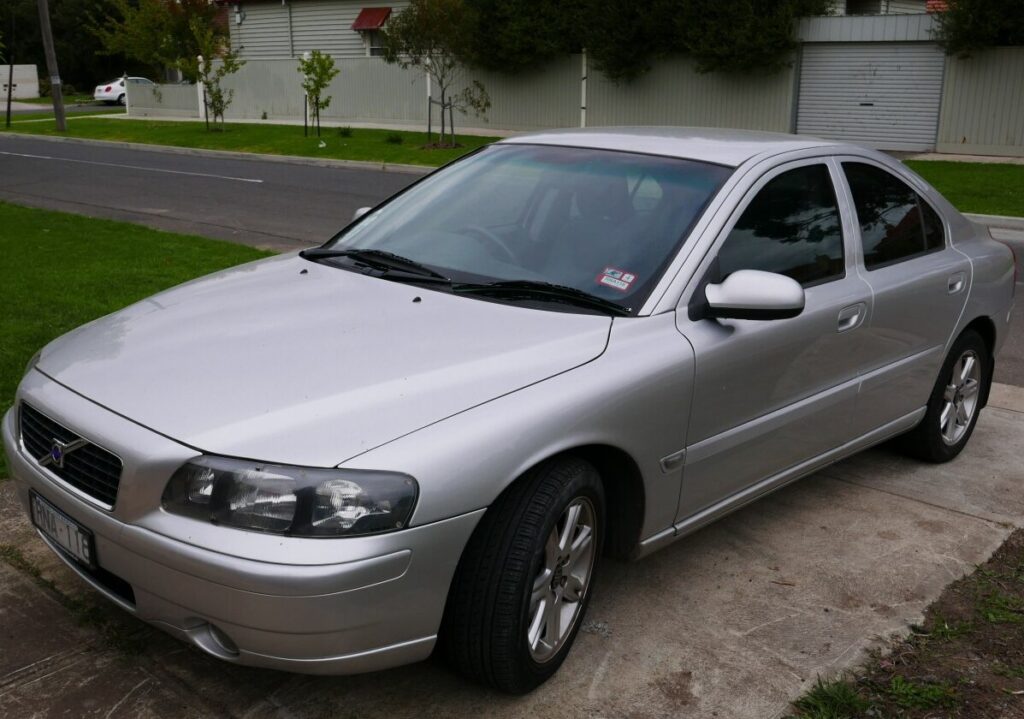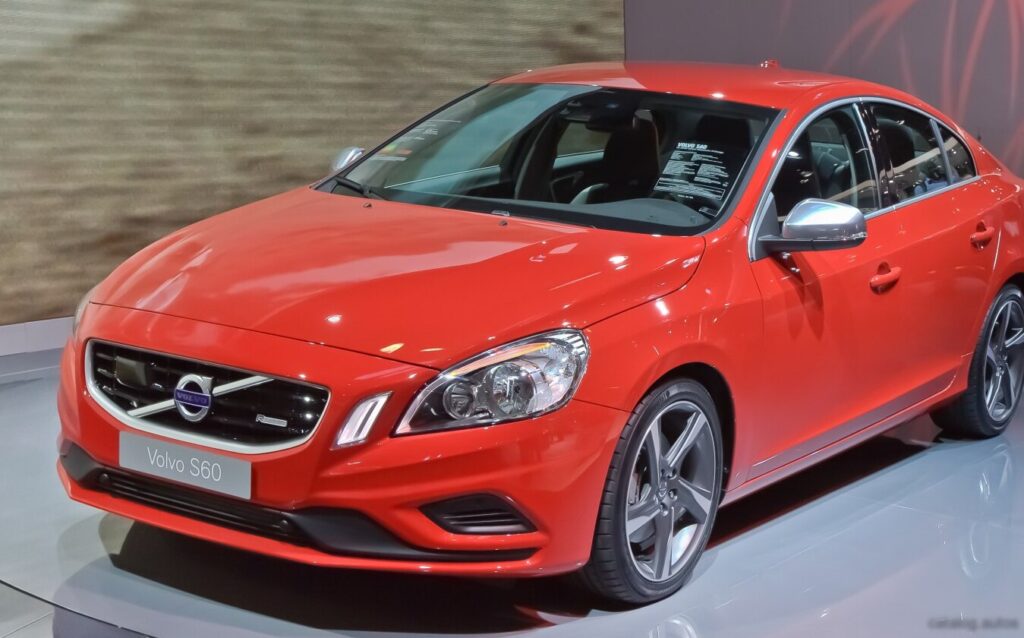
The Volvo S60 II 2.0 T5 (240 Hp) represents a significant iteration of Volvo’s popular executive sedan, produced between 2010 and 2013. This variant occupied a sweet spot in the S60 II lineup, offering a compelling blend of performance and efficiency. It was positioned as a step up from the base 1.6 GTDi models, appealing to buyers seeking more spirited driving without the higher price tag of the flagship T6 variants. The S60 II, built on the Volvo Y20 platform, aimed to modernize Volvo’s image and compete more effectively with German rivals like the BMW 3 Series and Audi A4.
Technical Specifications
| Brand | Volvo |
| Model | S60 |
| Generation | S60 II |
| Type (Engine) | 2.0 T5 (240 Hp) |
| Start of production | 2010 |
| End of production | 2013 |
| Powertrain Architecture | Internal Combustion engine |
| Body type | Sedan |
| Seats | 5 |
| Doors | 4 |
| Fuel consumption (urban) | 10.9 l/100 km (21.6 US mpg) |
| Fuel consumption (extra urban) | 6.2 l/100 km (37.9 US mpg) |
| Fuel consumption (combined) | 7.9 l/100 km (29.8 US mpg) |
| CO2 emissions | 184 g/km |
| Fuel Type | Petrol (Gasoline) |
| Acceleration 0 – 100 km/h | 7.3 sec |
| Acceleration 0 – 62 mph | 7.3 sec |
| Acceleration 0 – 60 mph | 6.9 sec |
| Emission standard | Euro 5 |
| Weight-to-power ratio | 6.3 kg/Hp |
| Weight-to-torque ratio | 4.7 kg/Nm |
| Power | 240 Hp @ 5500 rpm |
| Torque | 320 Nm @ 1800-5000 rpm (236.02 lb.-ft.) |
| Engine layout | Front, Transverse |
| Engine Model/Code | B4204T7 |
| Engine displacement | 1999 cm3 (121.99 cu. in.) |
| Number of cylinders | 4 |
| Engine configuration | Inline |
| Cylinder Bore | 87.5 mm (3.44 in.) |
| Piston Stroke | 83.1 mm (3.27 in.) |
| Fuel injection system | Direct injection |
| Engine aspiration | Turbocharger, Intercooler |
| Engine oil capacity | 5.4 l (5.71 US qt | 4.75 UK qt) |
| Coolant | 8.9 l (9.4 US qt | 7.83 UK qt) |
| Kerb Weight | 1516 kg (3342.21 lbs.) |
| Max. weight | 2040 kg (4497.43 lbs.) |
| Max load | 524 kg (1155.22 lbs.) |
| Trunk (boot) space – minimum | 380 l (13.42 cu. ft.) |
| Fuel tank capacity | 67.5 l (17.83 US gal | 14.85 UK gal) |
| Length | 4628 mm (182.2 in.) |
| Width | 1865 mm (73.43 in.) |
| Height | 1484 mm (58.43 in.) |
| Wheelbase | 2776 mm (109.29 in.) |
| Front track | 1588 mm (62.52 in.) |
| Rear (Back) track | 1585 mm (62.4 in.) |
| Minimum turning circle | 11.5 m (37.73 ft.) |
| Drivetrain Architecture | Front wheel drive |
| Number of gears | 6 gears, manual transmission |
| Front suspension | Independent type McPherson |
| Rear suspension | Independent multi-link suspension |
| Front brakes | Ventilated discs, 336 mm |
| Rear brakes | Disc, 302 mm |
| Tires size | 235/40 R18 |
| Wheel rims size | 8J x 18 |
Powertrain & Engine Architecture
At the heart of the S60 II 2.0 T5 lies the B4204T7 engine, a 2.0-liter inline-four cylinder powerplant. This engine is a key member of Volvo’s VEA (Volvo Engine Architecture) family, designed for modularity and efficiency. The B4204T7 utilizes direct fuel injection and a single turbocharger with an intercooler to boost output to 240 horsepower and 320 Nm (236 lb-ft) of torque. The turbocharger provides a broad torque curve, peaking between 1800 and 5000 rpm, offering good responsiveness in everyday driving situations. The engine features a timing chain for durability and reduced maintenance compared to timing belts. The 6-speed manual transmission was standard, providing drivers with full control over the engine’s power. The transmission’s gear ratios were tuned to balance acceleration and fuel economy, with a relatively tall sixth gear for highway cruising.
Driving Characteristics
The S60 II 2.0 T5 with the manual transmission delivers a noticeably more engaging driving experience than the lower-powered 1.6 GTDi models. Acceleration from 0-60 mph takes around 6.9 seconds, making it a competitive performer in its class. While not as quick as the S60 T6 with its supercharged and turbocharged 3.0-liter engine, the T5 offers a good balance of power and control. The manual gearbox allows for precise gear changes, and the turbocharger provides a noticeable surge of power when accelerating. The suspension, tuned for comfort, provides a relatively smooth ride, but it’s also capable of handling corners with reasonable composure. Compared to automatic versions, the manual transmission enhances driver involvement and allows for better control of the engine’s power delivery.
Equipment & Trim Levels
The S60 II 2.0 T5 typically came well-equipped, even in base form. Standard features included automatic climate control, power windows and locks, a leather-wrapped steering wheel, and a basic audio system. Higher trim levels, such as the “Premiere” or “Platinum” editions, added features like leather upholstery, a premium audio system (often from Harman Kardon), navigation, and parking sensors. Optional extras included a sunroof, heated seats, and advanced safety features like blind-spot monitoring and lane departure warning. Interior upholstery was typically cloth on the base models, with leather available as an upgrade. The dashboard layout was clean and Scandinavian in design, emphasizing simplicity and functionality.
Chassis & Braking
The S60 II utilizes a front-wheel-drive layout with independent suspension all around. The front suspension employs a McPherson strut design, while the rear features a multi-link setup. This configuration provides a good balance of ride comfort and handling. Brakes are ventilated discs at the front and solid discs at the rear, providing adequate stopping power for the vehicle’s weight and performance. Anti-lock braking system (ABS) is standard, along with electronic brake-force distribution (EBD). The steering is electrically assisted, providing a light and precise feel. Stabilizer bars are fitted to both the front and rear axles to reduce body roll during cornering.
Market Reception & Comparison
The Volvo S60 II 2.0 T5 was generally well-received by automotive critics. It was praised for its stylish design, comfortable interior, and strong performance. However, some reviewers noted that the interior, while well-built, lacked the outright luxury of some German competitors. Fuel economy was considered good for its class, averaging around 29.8 US mpg in combined driving. Compared to the S60 T6, the T5 offered a more affordable entry point into the S60 lineup, while still providing a satisfying driving experience. The 1.6 GTDi models, while more fuel-efficient, were often criticized for their lack of power. Reliability was generally good, although some owners have reported issues with the electronic systems.
Legacy
The Volvo S60 II 2.0 T5 has proven to be a relatively reliable and durable vehicle in the used car market. The B4204T7 engine is known for its longevity, provided it has been properly maintained. Common maintenance items include regular oil changes, timing chain inspection, and turbocharger health checks. Today, these S60s represent a good value for buyers seeking a comfortable, stylish, and reasonably powerful sedan. The availability of parts is generally good, and the relatively simple mechanical design makes them relatively easy to repair. The S60 II 2.0 T5 remains a popular choice for those who appreciate Volvo’s commitment to safety and Scandinavian design.