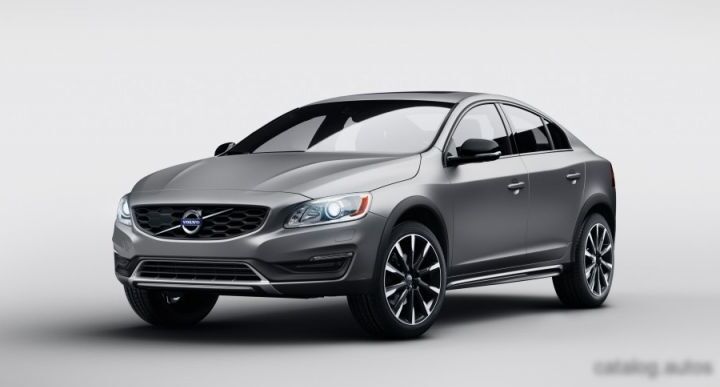
The Volvo S60 II Cross Country 2.0 D3 (150 hp) was a variant of the second-generation Volvo S60, specifically tailored for markets desiring a more rugged, all-weather capable sedan. Produced from 2015 to 2018, it occupied a niche position within the S60 lineup, bridging the gap between standard luxury sedans and the more overtly adventurous V60 Cross Country wagon. This model aimed to provide a comfortable and efficient driving experience with a slightly elevated ride height and standard all-wheel drive, appealing to buyers in regions with challenging road conditions or a preference for a more robust aesthetic.
Technical Specifications
| Brand | Volvo |
| Model | S60 |
| Generation | S60 II Cross Country |
| Type (Engine) | 2.0 D3 (150 Hp) |
| Start of production | 2015 |
| End of production | 2018 |
| Powertrain Architecture | Internal Combustion engine |
| Body type | Sedan |
| Seats | 5 |
| Doors | 4 |
| Fuel consumption (urban) | 4.6 l/100 km (51.1 US mpg, 61.4 UK mpg, 21.7 km/l) |
| Fuel consumption (extra urban) | 4.0 l/100 km (58.8 US mpg, 70.6 UK mpg, 25 km/l) |
| Fuel consumption (combined) | 4.2 l/100 km (56 US mpg, 67.3 UK mpg, 23.8 km/l) |
| CO2 emissions | 111 g/km |
| Fuel Type | Diesel |
| Acceleration 0 – 100 km/h | 9.1 sec |
| Acceleration 0 – 62 mph | 9.1 sec |
| Acceleration 0 – 60 mph | 8.6 sec |
| Maximum speed | 205 km/h (127.38 mph) |
| Power | 150 Hp @ 4250 rpm |
| Torque | 350 Nm @ 1500-2500 rpm (258.15 lb.-ft. @ 1500-2500 rpm) |
| Maximum engine speed | 5000 rpm |
| Engine layout | Front, Transverse |
| Engine Model/Code | D4204T4 |
| Engine displacement | 1969 cm3 (120.16 cu. in.) |
| Number of cylinders | 4 |
| Engine configuration | Inline |
| Cylinder Bore | 82 mm (3.23 in.) |
| Piston Stroke | 93.2 mm (3.67 in.) |
| Compression ratio | 15.8:1 |
| Number of valves per cylinder | 4 |
| Fuel injection system | Diesel Commonrail |
| Engine aspiration | Turbocharger, Intercooler |
| Valvetrain | DOHC |
| Engine oil capacity | 5.2 l (5.49 US qt | 4.58 UK qt) |
| Coolant | 8.9 l (9.4 US qt | 7.83 UK qt) |
| Kerb Weight | 1656 kg (3650.86 lbs.) |
| Max. weight | 2130 kg (4695.85 lbs.) |
| Max load | 474 kg (1044.99 lbs.) |
| Trunk (boot) space – minimum | 380 l (13.42 cu. ft.) |
| Fuel tank capacity | 67.5 l (17.83 US gal | 14.85 UK gal) |
| Max. roof load | 75 kg (165.35 lbs.) |
| Permitted trailer load with brakes (12%) | 1800 kg (3968.32 lbs.) |
| Permitted trailer load without brakes | 750 kg (1653.47 lbs.) |
| Length | 4637 mm (182.56 in.) |
| Width | 1825 mm (71.85 in.) |
| Width with mirrors folded | 1899 mm (74.76 in.) |
| Width including mirrors | 2097 mm (82.56 in.) |
| Height | 1539 mm (60.59 in.) |
| Wheelbase | 2774 mm (109.21 in.) |
| Front track | 1619 mm (63.74 in.) |
| Rear (Back) track | 1577 mm (62.09 in.) |
| Ride height (ground clearance) | 201 mm (7.91 in.) |
| Drag coefficient (Cd) | 0.28 |
| Minimum turning circle (turning diameter) | 11.4 m (37.4 ft.) |
| Drivetrain Architecture | The Internal combustion engine (ICE) drives the front wheels of the vehicle. |
| Drive wheel | Front wheel drive |
| Number of gears and type of gearbox | 6 gears, manual transmission |
| Front suspension | Independent, type McPherson with coil spring and anti-roll bar |
| Rear suspension | Trailing arm, Coil spring |
| Front brakes | Ventilated discs |
| Rear brakes | Disc |
| Assisting systems | ABS (Anti-lock braking system) |
| Steering type | Steering rack and pinion |
| Power steering | Electric Steering |
INTRODUCTION
The Volvo S60 II Cross Country 2.0 D3 (150 hp) represented Volvo’s attempt to cater to a growing demand for vehicles that could handle diverse terrains and weather conditions without sacrificing comfort or style. Introduced as part of the second-generation S60 (launched in 2010), the Cross Country variant distinguished itself through a raised suspension, standard all-wheel drive, and rugged styling cues. The “D3” designation indicated the engine – a 2.0-liter turbocharged diesel producing 150 horsepower. This particular configuration was primarily sold in European markets, where diesel engines were favored for their fuel efficiency and torque. It sat as an entry-level option within the Cross Country range, offering a more affordable and economical alternative to the higher-powered D4 and D5 models.
Powertrain & Engine Architecture
At the heart of the S60 II Cross Country D3 was Volvo’s D4204T4 engine, a 2.0-liter inline-four cylinder diesel. This engine utilized a common-rail direct fuel injection system, delivering fuel at extremely high pressure for optimized combustion. A turbocharger with an intercooler was employed to boost power output and improve responsiveness. The engine featured a double overhead camshaft (DOHC) valvetrain with four valves per cylinder, contributing to efficient gas exchange. The D3 version was tuned to produce 150 horsepower at 4250 rpm and 350 Nm (258 lb-ft) of torque between 1500 and 2500 rpm. This torque curve provided strong low-end and mid-range acceleration, making it well-suited for everyday driving and overtaking maneuvers. The engine was paired with a 6-speed manual transmission, channeling power to the front wheels.
Driving Characteristics
The S60 II Cross Country 2.0 D3 offered a comfortable and composed driving experience. While not overtly sporty, the engine’s ample torque allowed for brisk acceleration, with a 0-60 mph time of around 8.6 seconds. The raised suspension and all-wheel drive system provided increased ground clearance and enhanced traction, particularly on slippery surfaces. The 6-speed manual transmission offered precise shifts, although the gear ratios were geared towards fuel efficiency rather than outright performance. Compared to the more powerful D4 and D5 variants, the D3 felt less urgent in its acceleration, but it compensated with improved fuel economy and a more relaxed driving character. The steering was light and accurate, providing good feedback without being overly communicative.
Equipment & Trim Levels
The S60 II Cross Country D3 typically came well-equipped, even in base trim. Standard features included climate control, power windows and mirrors, a multi-function steering wheel, and a basic audio system. Safety was a key priority for Volvo, and the D3 included features such as ABS brakes, electronic stability control, and multiple airbags. Upholstery was typically cloth, although leather options were available. Optional extras included a sunroof, upgraded audio system, navigation system, and parking sensors. The interior design was typically Scandinavian, characterized by clean lines, minimalist aesthetics, and high-quality materials.
Chassis & Braking
The S60 II Cross Country featured a McPherson strut front suspension and a multi-link rear suspension, providing a good balance between ride comfort and handling. The raised suspension increased ground clearance, allowing the vehicle to tackle rougher terrain with ease. The braking system consisted of ventilated discs at the front and solid discs at the rear, providing adequate stopping power. ABS (Anti-lock Braking System) was standard, enhancing safety during emergency braking situations.
Market Reception & Comparison
The S60 II Cross Country 2.0 D3 was generally well-received by automotive critics, who praised its comfortable ride, fuel efficiency, and all-weather capability. However, some reviewers noted that the engine lacked the punch of the higher-powered variants. Compared to the D4 and D5 models, the D3 offered a more affordable entry point into the Cross Country range, but it came at the expense of performance. Fuel economy was a strong point, with combined figures around 56 US mpg. Reliability was generally good, although diesel engines can be more susceptible to issues with the fuel injection system and particulate filter.
Legacy
The Volvo S60 II Cross Country 2.0 D3 remains a popular choice in the used car market, particularly in Europe. Its combination of practicality, comfort, and fuel efficiency makes it a compelling option for buyers seeking a versatile and reliable sedan. The D4204T4 engine has proven to be relatively durable, although regular maintenance is essential to ensure long-term reliability. The Cross Country variant, in general, helped establish Volvo as a leader in the all-weather, all-road segment, paving the way for future models like the V60 and V90 Cross Country.