Technical Specifications
| Brand | Volvo |
| Model | S60 |
| Generation | S60 II (facelift 2013) |
| Type (Engine) | 2.0 D3 (136 Hp) Automatic |
| Start of production | 2013 |
| End of production | 2015 |
| Powertrain Architecture | Internal Combustion engine |
| Body type | Sedan |
| Seats | 5 |
| Doors | 4 |
| Fuel consumption (urban) | 6 l/100 km (39.2 US mpg, 47.1 UK mpg, 16.7 km/l) |
| Fuel consumption (extra urban) | 4.1 l/100 km (57.4 US mpg, 68.9 UK mpg, 24.4 km/l) |
| Fuel consumption (combined) | 4.8 l/100 km (49 US mpg, 58.9 UK mpg, 20.8 km/l) |
| CO2 emissions | 126 g/km |
| Fuel Type | Diesel |
| Acceleration 0 – 100 km/h | 10.2 sec |
| Acceleration 0 – 62 mph | 10.2 sec |
| Acceleration 0 – 60 mph | 9.7 sec |
| Maximum speed | 200 km/h (124.27 mph) |
| Emission standard | Euro 5 |
| Weight-to-power ratio | 12.2 kg/Hp, 81.8 Hp/tonne |
| Weight-to-torque ratio | 4.8 kg/Nm, 210.5 Nm/tonne |
| Power | 136 Hp @ 3500 rpm |
| Power per litre | 68.5 Hp/l |
| Torque | 350 Nm @ 1500-2250 rpm (258.15 lb.-ft. @ 1500-2250 rpm) |
| Engine layout | Front, Transverse |
| Engine Model/Code | D5204T7 |
| Engine displacement | 1984 cm3 (121.07 cu. in.) |
| Number of cylinders | 5 |
| Engine configuration | Inline |
| Cylinder Bore | 81 mm (3.19 in.) |
| Piston Stroke | 77 mm (3.03 in.) |
| Compression ratio | 16.5:1 |
| Number of valves per cylinder | 4 |
| Fuel injection system | Diesel Commonrail |
| Engine aspiration | Turbocharger, Intercooler |
| Valvetrain | DOHC |
| Engine oil capacity | 5.9 l (6.23 US qt | 5.19 UK qt) |
| Coolant | 8.9 l (9.4 US qt | 7.83 UK qt) |
| Kerb Weight | 1663 kg (3666.29 lbs.) |
| Max. weight | 2110 kg (4651.75 lbs.) |
| Max load | 447 kg (985.47 lbs.) |
| Trunk (boot) space – minimum | 380 l (13.42 cu. ft.) |
| Fuel tank capacity | 67.5 l (17.83 US gal | 14.85 UK gal) |
| Length | 4635 mm (182.48 in.) |
| Width | 1899 mm (74.76 in.) |
| Height | 1484 mm (58.43 in.) |
| Wheelbase | 2776 mm (109.29 in.) |
| Front track | 1588 mm (62.52 in.) |
| Rear (Back) track | 1585 mm (62.4 in.) |
| Ride height (ground clearance) | 136 mm (5.35 in.) |
| Minimum turning circle (turning diameter) | 11.5 m (37.73 ft.) |
| Drivetrain Architecture | The Internal combustion engine (ICE) drives the front wheels of the vehicle. |
| Drive wheel | Front wheel drive |
| Number of gears and type of gearbox | 6 gears, automatic transmission |
| Front suspension | Independent, type McPherson with coil spring and anti-roll bar |
| Rear suspension | Independent coil spring |
| Front brakes | Ventilated discs |
| Rear brakes | Disc |
| Assisting systems | ABS (Anti-lock braking system) |
| Steering type | Steering rack and pinion |
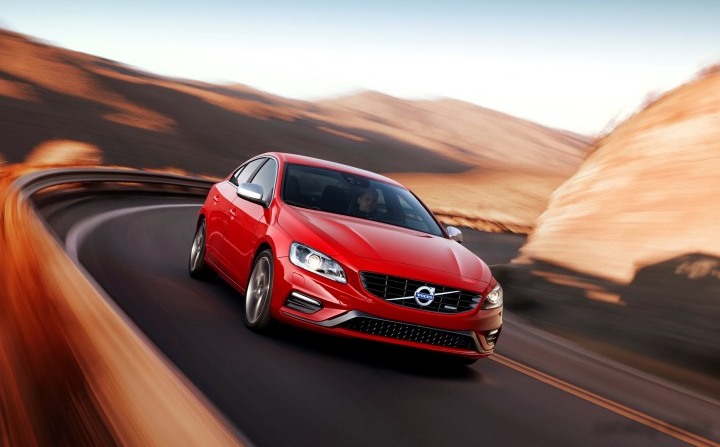
The Volvo S60 II facelift, specifically the 2.0 D3 (136 horsepower) Automatic variant, was produced from 2013 to 2015. This model represents a mid-cycle refresh of the second-generation S60 (introduced in 2010), falling within the broader P24 S60 platform family. Positioned as an entry-level to mid-range offering, the D3 Automatic aimed to provide a balance of fuel efficiency, reasonable performance, and Volvo’s renowned safety features to a wider customer base, particularly in European markets where diesel engines were highly favored. It served as a more economical alternative to the higher-performance S60 trims like the T5 and T6.
Powertrain & Engine Architecture
The heart of the S60 D3 Automatic is Volvo’s D5204T7 2.0-liter inline-five cylinder diesel engine. This engine is a key member of Volvo’s VEA (Volvo Engine Architecture) family, designed for modularity and efficiency. The D5204T7 utilizes a common-rail direct fuel injection system, delivering fuel at extremely high pressure for optimized combustion. A single turbocharger with an intercooler is employed to boost power and torque. The engine features a double overhead camshaft (DOHC) valvetrain with four valves per cylinder, contributing to its relatively high specific output. The automatic transmission paired with this engine is a six-speed unit, known for its smooth shifts and responsiveness. While not a dual-clutch transmission, it was well-regarded for its reliability and suitability for everyday driving.
Driving Characteristics
The 136 horsepower and 350 Nm (258 lb-ft) of torque produced by the D3 powertrain resulted in a 0-60 mph time of around 9.7 seconds and a top speed of 124 mph. While not particularly sporty, the D3 Automatic offered adequate performance for most driving situations. The torque curve was relatively flat, providing good pulling power from low engine speeds, making it suitable for overtaking and highway cruising. Compared to the more powerful T5 or T6 models, the D3 felt noticeably slower, especially during acceleration. However, the automatic transmission helped to mask some of the engine’s limitations, providing seamless gear changes and a comfortable driving experience. The gear ratios were tuned for fuel efficiency, prioritizing economy over outright performance.
Equipment & Trim Levels
The S60 D3 Automatic typically came equipped with a respectable level of standard features. These included climate control, power windows and mirrors, a basic audio system with USB connectivity, and Volvo’s City Safety system (automatic braking at low speeds to mitigate collisions). Interior upholstery was usually cloth, with leather options available as an upgrade. Higher trim levels offered features like a sunroof, premium audio system, navigation, and parking sensors. The dashboard layout was typical of Volvo’s Scandinavian design philosophy – clean, functional, and focused on user-friendliness.
Chassis & Braking
The S60 D3 Automatic utilized a McPherson strut front suspension and an independent coil spring rear suspension. This setup provided a comfortable ride quality, absorbing bumps and imperfections in the road effectively. The front brakes were ventilated discs, while the rear brakes were solid discs. Anti-lock Braking System (ABS) was standard. The suspension tuning was geared towards comfort rather than sporty handling, resulting in a slight degree of body roll during cornering. Stabilizer bars were fitted to both the front and rear axles to reduce body roll and improve stability.
Market Reception & Comparison
The S60 D3 Automatic was generally well-received by automotive critics as a practical and efficient option. Its fuel economy was a major selling point, particularly in Europe. However, some reviewers noted that the engine lacked the refinement and performance of its competitors, such as the BMW 320d or Audi A4 2.0 TDI. Compared to the higher-output S60 trims, the D3 offered a more affordable entry point into the Volvo brand, but at the expense of performance. Reliability was generally good, with the D5204T7 engine proving to be a durable unit.
Legacy
The Volvo S60 D3 Automatic has established a reputation as a reliable and economical used car. The D5204T7 engine is known for its longevity, provided it has been properly maintained. While not a particularly exciting car to drive, it offers a comfortable and practical driving experience. The availability of spare parts is good, and maintenance costs are generally reasonable. Today, these vehicles represent a good value proposition for buyers seeking a safe, fuel-efficient, and well-built sedan.