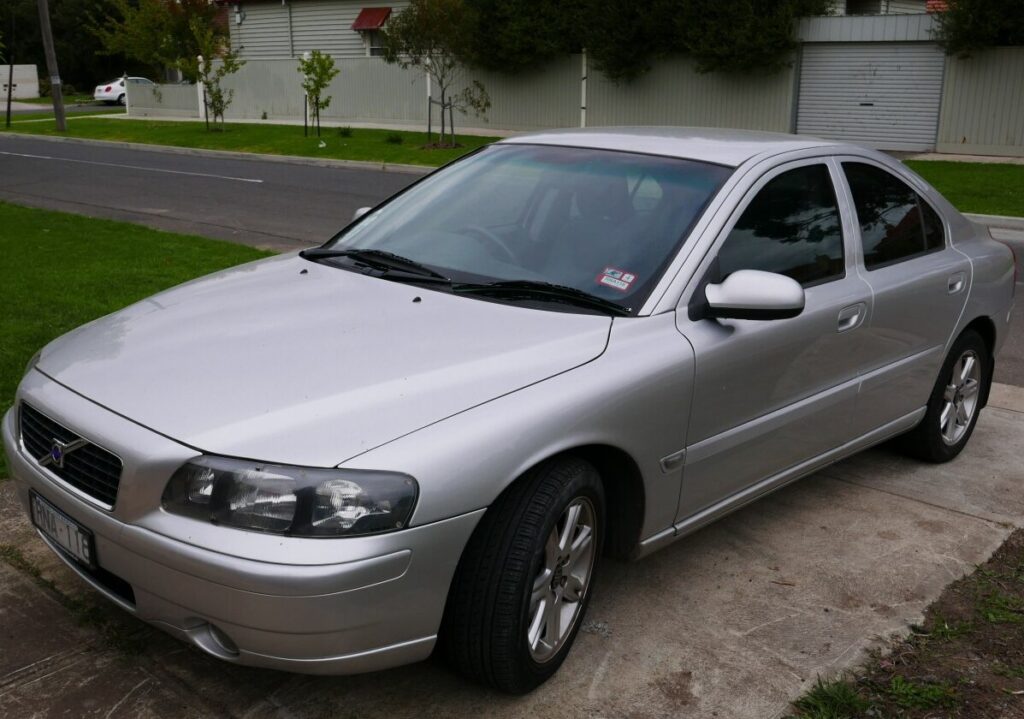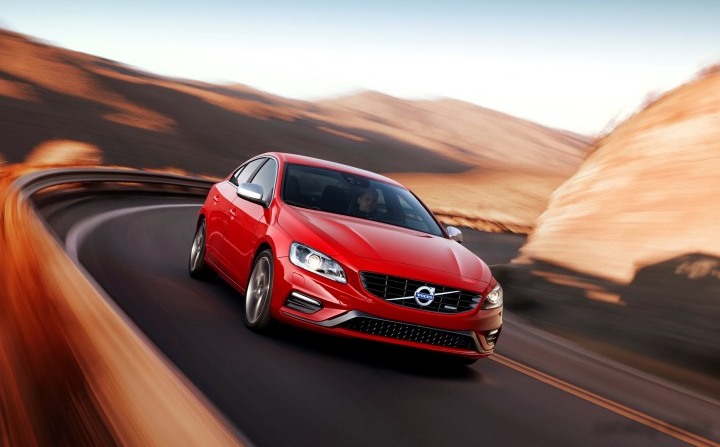
The Volvo S60 II facelift, specifically the 2.0 D3 (136 horsepower) Start/Stop variant, was produced from 2013 to 2015. This model represented a key offering in Volvo’s compact executive sedan lineup, positioned as an efficient and economical option within the broader S60 range. It was primarily marketed in Europe and other regions prioritizing fuel efficiency and lower running costs. The “facelift” designation refers to styling and technological updates applied to the second-generation S60 (introduced in 2010), enhancing its appeal and competitiveness. This particular D3 trim aimed to balance practicality with Volvo’s renowned safety features.
Technical Specifications
| Brand | Volvo |
| Model | S60 |
| Generation | S60 II (facelift 2013) |
| Type (Engine) | 2.0 D3 (136 Hp) start/stop |
| Start of production | 2013 |
| End of production | 2015 |
| Powertrain Architecture | Internal Combustion engine |
| Body type | Sedan |
| Seats | 5 |
| Doors | 4 |
| Fuel consumption (urban) | 5.1 l/100 km (46.1 US mpg, 55.4 UK mpg, 19.6 km/l) |
| Fuel consumption (extra urban) | 3.9 l/100 km (60.3 US mpg, 72.4 UK mpg, 25.6 km/l) |
| Fuel consumption (combined) | 4.3 l/100 km (54.7 US mpg, 65.7 UK mpg, 23.3 km/l) |
| CO2 emissions | 114 g/km |
| Fuel Type | Diesel |
| Acceleration 0 – 100 km/h | 10.2 sec |
| Acceleration 0 – 62 mph | 10.2 sec |
| Acceleration 0 – 60 mph | 9.7 sec |
| Maximum speed | 205 km/h (127.38 mph) |
| Emission standard | Euro 5 |
| Weight-to-power ratio | 12.1 kg/Hp, 83 Hp/tonne |
| Weight-to-torque ratio | 4.7 kg/Nm, 213.5 Nm/tonne |
| Power | 136 Hp @ 3500 rpm |
| Power per litre | 68.5 Hp/l |
| Torque | 350 Nm @ 1500-2250 rpm (258.15 lb.-ft. @ 1500-2250 rpm) |
| Engine layout | Front, Transverse |
| Engine Model/Code | D5204T7 |
| Engine displacement | 1984 cm3 (121.07 cu. in.) |
| Number of cylinders | 5 |
| Engine configuration | Inline |
| Cylinder Bore | 81 mm (3.19 in.) |
| Piston Stroke | 77 mm (3.03 in.) |
| Compression ratio | 16.5:1 |
| Number of valves per cylinder | 4 |
| Fuel injection system | Diesel Commonrail |
| Engine aspiration | Turbocharger, Intercooler |
| Valvetrain | DOHC |
| Engine oil capacity | 5.9 l (6.23 US qt | 5.19 UK qt) |
| Coolant | 8.9 l (9.4 US qt | 7.83 UK qt) |
| Kerb Weight | 1639 kg (3613.38 lbs.) |
| Max. weight | 2090 kg (4607.66 lbs.) |
| Max load | 451 kg (994.28 lbs.) |
| Trunk (boot) space – minimum | 380 l (13.42 cu. ft.) |
| Fuel tank capacity | 67.5 l (17.83 US gal | 14.85 UK gal) |
| Length | 4635 mm (182.48 in.) |
| Width | 1899 mm (74.76 in.) |
| Height | 1484 mm (58.43 in.) |
| Wheelbase | 2776 mm (109.29 in.) |
| Front track | 1588 mm (62.52 in.) |
| Rear (Back) track | 1585 mm (62.4 in.) |
| Ride height (ground clearance) | 136 mm (5.35 in.) |
| Minimum turning circle | 11.5 m (37.73 ft.) |
| Drivetrain Architecture | ICE drives front wheels |
| Drive wheel | Front wheel drive |
| Number of gears | 6 |
| Gearbox type | Manual transmission |
| Front suspension | Independent, McPherson with coil spring and anti-roll bar |
| Rear suspension | Independent torsion suspension |
| Front brakes | Ventilated discs |
| Rear brakes | Disc |
| Assisting systems | ABS |
| Steering type | Steering rack and pinion |
Powertrain & Engine Architecture
The heart of the S60 D3 is the Volvo’s D5204T7 2.0-liter inline-five cylinder diesel engine. This engine is a key member of Volvo’s VEA (Volvo Engine Architecture) family, designed for modularity and efficiency. The D5204T7 utilizes a common-rail direct fuel injection system, delivering fuel at extremely high pressure for optimized combustion. A turbocharger with an intercooler is employed to boost power and torque, providing a relatively responsive driving experience for a diesel engine. The engine features a double overhead camshaft (DOHC) valvetrain with four valves per cylinder, contributing to its breathing efficiency. The Start/Stop system, standard on this variant, automatically shuts off the engine when the vehicle is stationary (e.g., at traffic lights) to reduce fuel consumption and emissions. The engine is transversely mounted in the front of the vehicle, driving the front wheels.
Driving Characteristics
The 136 horsepower and 350 Nm (258 lb-ft) of torque produced by the D3 engine provide adequate, though not exhilarating, performance. Acceleration from 0-60 mph takes around 9.7 seconds, and top speed is limited to 205 km/h (127 mph). The engine’s torque peak, available from 1500-2250 rpm, means that the car feels reasonably punchy in everyday driving situations, particularly for overtaking. Compared to higher-output S60 variants like the T5 or T6 (petrol engines), the D3 feels noticeably slower. However, it offers significantly better fuel economy. The manual transmission, with its six forward gears, is well-matched to the engine’s characteristics, allowing for efficient cruising and reasonable acceleration. The gear ratios are tuned for economy rather than outright performance.
Equipment & Trim Levels
The S60 D3 typically came equipped with a respectable level of standard features. These included climate control, power windows and mirrors, a basic audio system with USB connectivity, and Volvo’s City Safety system (automatic braking at low speeds to mitigate collisions). Interior upholstery was generally cloth, though leather options were available. Trim levels varied by market, but generally, the D3 represented a mid-range offering. Optional extras included a premium audio system, navigation, sunroof, and various driver assistance features like lane departure warning and blind-spot monitoring. The dashboard layout was typical of Volvo at the time, characterized by a clean and functional design.
Chassis & Braking
The S60 D3 utilizes an independent suspension setup, with McPherson struts at the front and a multi-link torsion beam arrangement at the rear. This provides a comfortable ride quality, absorbing bumps and imperfections in the road surface effectively. The front brakes are ventilated discs, providing good stopping power, while the rear brakes are solid discs. Anti-lock Braking System (ABS) is standard. The chassis is tuned for a balance between comfort and handling, leaning more towards the former. Stabilizer bars are fitted to both the front and rear axles to reduce body roll during cornering.
Market Reception & Comparison
The S60 D3 was generally well-received by automotive critics as a practical and economical choice. Its fuel efficiency was a major selling point, particularly in Europe where diesel engines were (and still are) popular. Compared to the petrol-powered S60 T5, the D3 offered significantly better fuel economy, though at the expense of performance. The D3 also compared favorably to other diesel-powered competitors in the compact executive segment, such as the Audi A4 TDI and BMW 320d, offering a competitive blend of price, economy, and features. Reliability was generally good, though like any diesel engine, it required regular maintenance and careful attention to oil quality.
Legacy
The Volvo S60 D3 (2013-2015) remains a relatively common sight on used car markets. The D5204T7 engine, when properly maintained, is known for its durability and longevity. However, potential buyers should be aware of the potential for issues with the diesel particulate filter (DPF), particularly if the vehicle has primarily been used for short journeys. Overall, the S60 D3 represents a sensible and reliable choice for those seeking a comfortable and economical compact executive sedan. Its blend of practicality, safety, and fuel efficiency continues to appeal to buyers today.