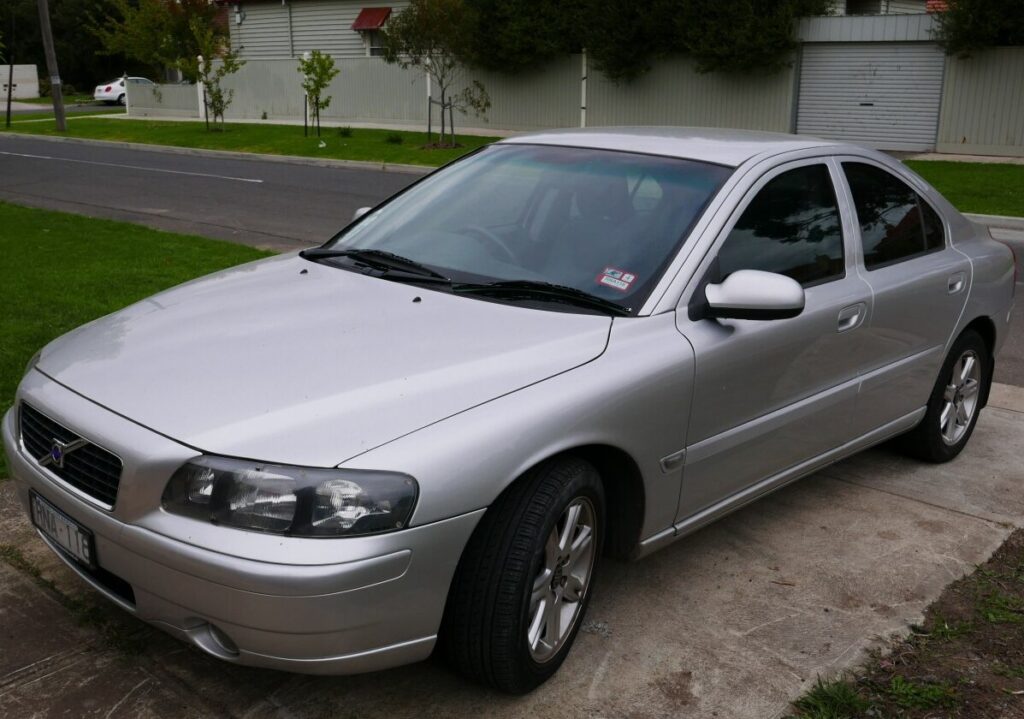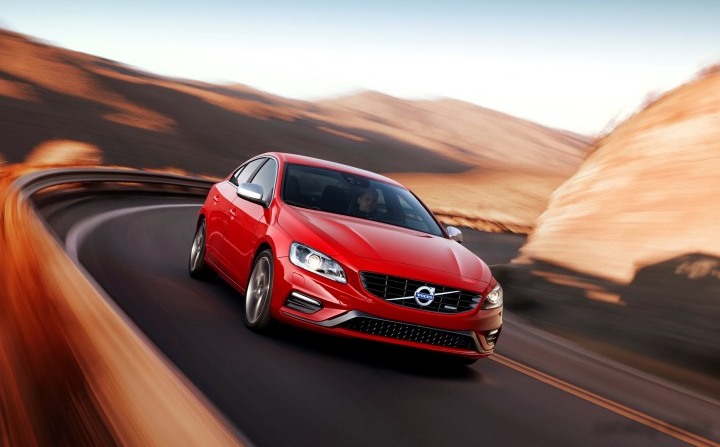
The Volvo S60 II (facelift 2013) 2.0 T3, producing 152 horsepower, was a key variant in Volvo’s mid-size sedan lineup from 2015 to 2018. Positioned as an entry-level offering within the second-generation S60 range (internally designated as the 136 platform), it aimed to provide a balance of fuel efficiency, reasonable performance, and Volvo’s renowned safety features at a more accessible price point. This model was primarily marketed in Europe and other regions where smaller displacement engines and lower tax brackets were favored. The T3 designation signified Volvo’s engine family and output level, differentiating it from the more powerful T5 and T6 variants.
Technical Specifications
| Brand | Volvo |
| Model | S60 |
| Generation | S60 II (facelift 2013) |
| Type (Engine) | 2.0 T3 (152 Hp) |
| Start of production | 2015 |
| End of production | 2018 |
| Powertrain Architecture | Internal Combustion engine |
| Body type | Sedan |
| Seats | 5 |
| Doors | 4 |
| Fuel consumption (urban) | 7.4 l/100 km (31.8 US mpg) |
| Fuel consumption (extra urban) | 4.6 l/100 km (51.1 US mpg) |
| Fuel consumption (combined) | 5.6 l/100 km (42 US mpg) |
| CO2 emissions | 131 g/km |
| Fuel Type | Petrol (Gasoline) |
| Acceleration 0 – 100 km/h | 8.6 sec |
| Acceleration 0 – 62 mph | 8.6 sec |
| Acceleration 0 – 60 mph | 8.2 sec |
| Maximum speed | 210 km/h (130.49 mph) |
| Emission standard | Euro 6 |
| Weight-to-power ratio | 10.1 kg/Hp |
| Weight-to-torque ratio | 6.1 kg/Nm |
| Power | 152 Hp @ 5000 rpm |
| Torque | 250 Nm @ 1300-4000 rpm (184.39 lb.-ft.) |
| Maximum engine speed | 5000 rpm |
| Engine layout | Front, Transverse |
| Engine Model/Code | B4204T37 |
| Engine displacement | 1969 cm3 (120.16 cu. in.) |
| Number of cylinders | 4 |
| Engine configuration | Inline |
| Cylinder Bore | 82 mm (3.23 in.) |
| Piston Stroke | 93.2 mm (3.67 in.) |
| Compression ratio | 11.3:1 |
| Number of valves per cylinder | 4 |
| Fuel injection system | Direct injection |
| Engine aspiration | Turbocharger, Intercooler |
| Engine oil capacity | 5.9 l (6.23 US qt | 5.19 UK qt) |
| Coolant | 8.3 l (8.77 US qt | 7.3 UK qt) |
| Kerb Weight | 1534 kg (3381.89 lbs.) |
| Max. weight | 2060 kg (4541.52 lbs.) |
| Max load | 526 kg (1159.63 lbs.) |
| Trunk (boot) space – minimum | 380 l (13.42 cu. ft.) |
| Trunk (boot) space – maximum | 1749 l (61.77 cu. ft.) |
| Fuel tank capacity | 67.5 l (17.83 US gal | 14.85 UK gal) |
| Max. roof load | 75 kg (165.35 lbs.) |
| Permitted trailer load with brakes (12%) | 1800 kg (3968.32 lbs.) |
| Length | 4635 mm (182.48 in.) |
| Width | 1865 mm (73.43 in.) |
| Width with mirrors folded | 1899 mm (74.76 in.) |
| Width including mirrors | 2097 mm (82.56 in.) |
| Height | 1484 mm (58.43 in.) |
| Wheelbase | 2776 mm (109.29 in.) |
| Front track | 1588 mm (62.52 in.) |
| Rear (Back) track | 1585 mm (62.4 in.) |
| Ride height (ground clearance) | 136 mm (5.35 in.) |
| Drag coefficient (Cd) | 0.28 |
| Minimum turning circle | 11.3 m (37.07 ft.) |
| Drivetrain Architecture | Front wheel drive |
| Number of gears and type of gearbox | 6 gears, manual transmission |
| Front suspension | Independent, type McPherson with coil spring and anti-roll bar |
| Rear suspension | Independent coil spring |
| Front brakes | Ventilated discs |
| Rear brakes | Disc |
| Assisting systems | ABS (Anti-lock braking system) |
| Steering type | Steering rack and pinion |
| Power steering | Electric Steering |
INTRODUCTION
The Volvo S60 II facelift, launched in 2013 and continuing through 2018, represented a significant refresh of Volvo’s popular mid-size sedan. The 2.0 T3 variant, introduced in 2015, was a key component of this update, offering a more economical and accessible entry point into the S60 range. Powered by Volvo’s Drive-E engine family, the T3 aimed to balance performance with fuel efficiency, appealing to buyers prioritizing practicality and running costs. It sat below the more powerful T5 and T6 models, offering a different driving experience and targeting a distinct segment of the market.
Powertrain & Engine Architecture
The heart of the S60 2.0 T3 is the B4204T37 engine, a 1.969-liter inline-four cylinder powerplant. This engine is part of Volvo’s Drive-E family, characterized by its modular design and focus on efficiency. The B4204T37 utilizes direct fuel injection and a single turbocharger with an intercooler to boost power output to 152 horsepower and 250 Nm (184 lb-ft) of torque. The turbocharger provides a relatively flat torque curve, peaking between 1300 and 4000 rpm, offering good responsiveness in everyday driving situations. The engine features a 11.3:1 compression ratio and four valves per cylinder. The engine is transversely mounted in the front of the vehicle. The transmission paired with the 2.0 T3 is a 6-speed manual gearbox, contributing to the car’s fuel efficiency and driver engagement. While an automatic transmission was available on other S60 models, the T3 was primarily offered with the manual to keep costs down and emphasize fuel economy.
Driving Characteristics
The S60 2.0 T3 with the manual transmission delivers a reasonably engaging driving experience, though it’s not intended to be a performance machine. Acceleration from 0-60 mph takes around 8.2 seconds, and the top speed is electronically limited to 130 mph. The turbocharger provides a noticeable boost in power, but it’s not as dramatic as in the higher-output T5 or T6 models. The 6-speed manual gearbox is well-matched to the engine’s characteristics, offering smooth shifts and a decent level of control. Compared to the T5, the T3 feels less urgent in its acceleration, but it offers better fuel economy. The suspension is tuned for comfort, providing a relatively smooth ride over most road surfaces. However, it’s not as sporty or responsive as the suspension in the T5 or Polestar-engineered versions.
Equipment & Trim Levels
The S60 2.0 T3 typically came with a respectable level of standard equipment, though it was less lavish than the higher trim levels. Standard features generally included climate control, power windows and mirrors, a basic audio system with USB connectivity, and Volvo’s City Safety system, which includes automatic braking at low speeds to help prevent collisions. Interior upholstery was typically cloth, and the dashboard featured a relatively simple design. Optional extras included leather upholstery, a premium audio system, navigation, and various driver assistance features like lane departure warning and blind-spot monitoring. The T3 trim was often seen as a base model, with buyers able to add options to personalize their vehicle.
Chassis & Braking
The S60 2.0 T3 utilizes a McPherson strut front suspension and an independent coil spring rear suspension. This setup provides a good balance of comfort and handling. The front suspension incorporates an anti-roll bar to reduce body roll during cornering. The braking system consists of ventilated discs at the front and solid discs at the rear. ABS (Anti-lock Braking System) is standard, providing enhanced braking performance in emergency situations. The steering is a rack and pinion system with electric power assistance, offering a light and precise feel.
Market Reception & Comparison
The S60 2.0 T3 was generally well-received by critics as a sensible and economical option in the mid-size sedan segment. It was praised for its fuel efficiency, comfortable ride, and standard safety features. However, some reviewers noted that its performance was somewhat underwhelming compared to the more powerful T5 and T6 models. Compared to rivals like the Audi A4 and BMW 3 Series with similar engine displacements, the S60 T3 offered a competitive level of equipment and fuel economy. Its fuel economy figures of around 42 US mpg combined were a significant selling point for buyers prioritizing running costs.
Legacy
The Volvo S60 2.0 T3 has proven to be a relatively reliable vehicle in the used car market. The Drive-E engine family is generally known for its durability, and the manual transmission is relatively simple and robust. Common issues are typically related to routine maintenance items, such as oil leaks and worn suspension components. The T3’s focus on fuel efficiency and practicality has made it a popular choice for buyers seeking a comfortable and economical mid-size sedan. Today, these models represent a good value proposition for those looking for a safe and reliable used car.