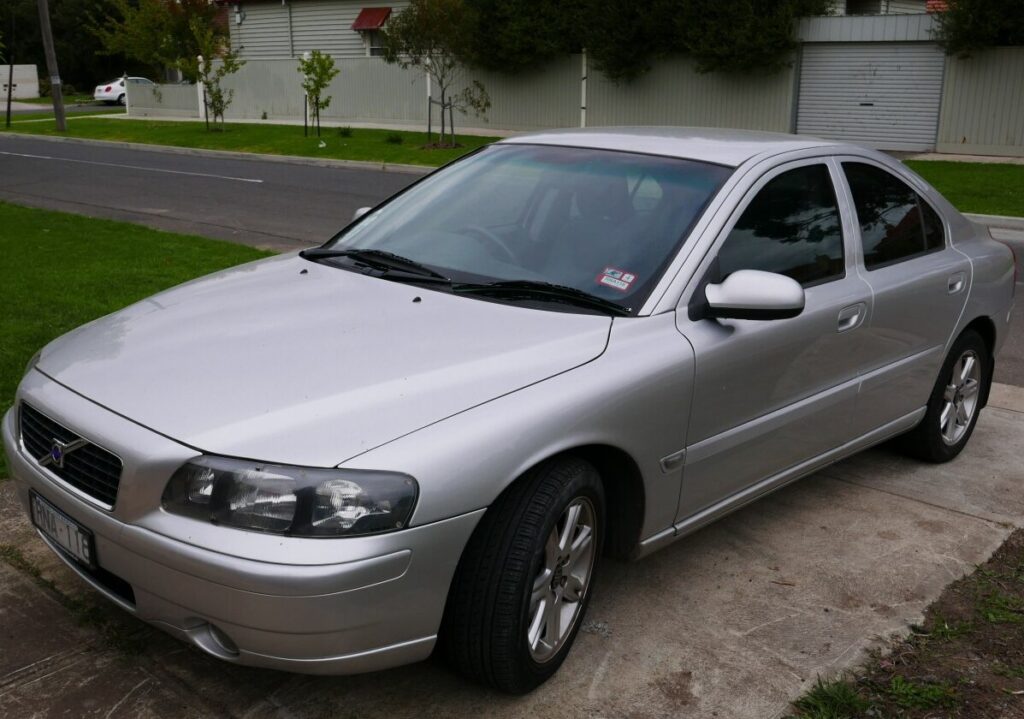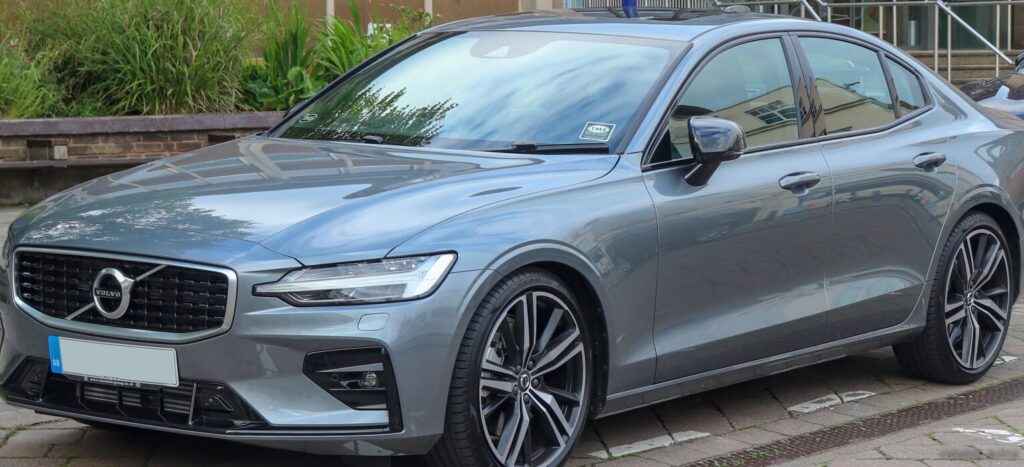
The Volvo S60 III 2.0 T8 Twin Engine, produced from 2019 to September 2021, represents a significant step in Volvo’s commitment to electrification and performance. This variant, a plug-in hybrid (PHEV) sedan, was positioned as a premium offering within the S60 III range, blending strong performance with impressive fuel efficiency. Built on the Scalable Product Architecture (SPA) platform, shared with other Volvo models like the XC60 and XC90, the T8 Twin Engine aimed to deliver a sophisticated driving experience while minimizing environmental impact. It was primarily marketed in Europe and North America, catering to buyers seeking a luxury sedan with advanced technology and a reduced carbon footprint.
Technical Specifications
| Brand | Volvo |
| Model | S60 |
| Generation | S60 III |
| Type (Engine) | 2.0 T8 Twin Engine (303 Hp) Plug-in Hybrid AWD Geartronic |
| Start of production | 2019 |
| End of production | September, 2021 |
| Powertrain Architecture | PHEV (Plug-in Hybrid Electric Vehicle) |
| Body type | Sedan |
| Seats | 5 |
| Doors | 4 |
| Combined fuel consumption (WLTP) | 1.7-2.1 l/100 km (138.4 – 112 US mpg, 166.2 – 134.5 UK mpg, 58.8 – 47.6 km/l) |
| CO2 emissions (WLTP) | 37-46 g/km |
| Fuel consumption (NEDC, WLTP equivalent) | 1.5 l/100 km (156.8 US mpg, 188.3 UK mpg, 66.7 km/l) |
| CO2 emissions (NEDC, WLTP equivalent) | 34 g/km |
| Fuel Type | Petrol / electricity |
| Acceleration 0 – 100 km/h | 4.6 sec |
| Acceleration 0 – 62 mph | 4.6 sec |
| Acceleration 0 – 60 mph | 4.4 sec |
| Maximum speed | 250 km/h (155.34 mph) |
| Gross battery capacity | 11.6 kWh |
| Battery voltage | 400 V |
| Battery technology | Lithium-ion (Li-Ion) |
| Battery location | In the central tunnel |
| All-electric range (WLTP) | 50-58 km (31.07 – 36.04 mi) |
| All-electric range (NEDC, WLTP equivalent) | 59 km (36.66 mi) |
| Average Energy consumption (WLTP) | 14.8-16.8 kWh/100 km (23.82 – 27.04 kWh/100 mi, 141 – 125 MPGe, 6.8 – 6 km/kWh, 4.2 – 3.7 mi/kWh) |
| Average Energy consumption (NEDC, WLTP equivalent) | 14 kWh/100 km (22.53 kWh/100 mi, 150 MPGe, 7.1 km/kWh, 4.4 mi/kWh) |
| Max speed (electric) | 125 km/h (77.67 mph) |
| Electric motor power | 87 Hp |
| Electric motor Torque | 240 Nm (177.01 lb.-ft.) |
| Electric motor location | Rear axle, Transverse |
| Power | 303 Hp @ 6000 rpm |
| Torque | 400 Nm @ 2200-4800 rpm (295.02 lb.-ft. @ 2200-4800 rpm) |
| Maximum engine speed | 6000 rpm |
| Engine layout | Front, Transverse |
| Engine Model/Code | B4204T34 |
| Engine displacement | 1969 cm3 (120.16 cu. in.) |
| Number of cylinders | 4 |
| Engine configuration | Inline |
| Cylinder Bore | 82 mm (3.23 in.) |
| Piston Stroke | 93.2 mm (3.67 in.) |
| Compression ratio | 10.3:1 |
| Number of valves per cylinder | 4 |
| Fuel injection system | Direct injection |
| Engine aspiration | Turbocharging and Supercharger, Intercooler |
| Valvetrain | DOHC |
| Engine oil capacity | 5.6 l (5.92 US qt | 4.93 UK qt) |
| Kerb Weight | 1973 kg (4349.72 lbs.) |
| Max. weight | 2500 kg (5511.56 lbs.) |
| Max load | 527 kg (1161.84 lbs.) |
| Trunk (boot) space – minimum | 390 l (13.77 cu. ft.) |
| Fuel tank capacity | 60 l (15.85 US gal | 13.2 UK gal) |
| Max. roof load | 75 kg (165.35 lbs.) |
| Permitted trailer load with brakes (12%) | 2000 kg (4409.25 lbs.) |
| Permitted trailer load without brakes | 750 kg (1653.47 lbs.) |
| Permitted towbar download | 100 kg (220.46 lbs.) |
| Length | 4761 mm (187.44 in.) |
| Width | 1850 mm (72.83 in.) |
| Width with mirrors folded | 1916 mm (75.43 in.) |
| Width including mirrors | 2040 mm (80.31 in.) |
| Height | 1431 mm (56.34 in.) |
| Wheelbase | 2872 mm (113.07 in.) |
| Front track | 1600 mm (62.99 in.) |
| Rear (Back) track | 1600 mm (62.99 in.) |
| Front overhang | 848 mm (33.39 in.) |
| Rear overhang | 1041 mm (40.98 in.) |
| Ride height (ground clearance) | 142 mm (5.59 in.) |
| Drag coefficient (Cd) | 0.27 |
| Minimum turning circle (turning diameter) | 11.7 m (38.39 ft.) |
| Drivetrain Architecture | The Internal combustion engine (ICE) permanently drives the front wheels of the vehicle, the electric motor drives the rear wheels of the vehicle, capable of running in full electric mode, only by the Internal combustion engine (ICE) or in mixed mode. |
| Drive wheel | All wheel drive (4×4) |
| Number of gears and type of gearbox | 8 gears, automatic transmission Geartronic |
| Front suspension | Double wishbone, Transverse stabilizer |
| Rear suspension | Transverse stabilizer, Leaf spring |
| Front brakes | Ventilated discs, 345×30 mm |
| Rear brakes | Ventilated discs, 320×20 mm |
| Assisting systems | ABS (Anti-lock braking system) |
| Steering type | Steering rack and pinion |
| Power steering | Electric Steering |
| Tires size | 235/45 R18; 235/45 R19 |
| Wheel rims size | 8J x 18; 8J x 19 |
INTRODUCTION
The Volvo S60 III 2.0 T8 Twin Engine, produced between 2019 and 2021, is a plug-in hybrid variant of the third-generation S60 sedan. It represents Volvo’s push towards electrification, offering a compelling combination of performance and fuel efficiency. This model utilizes a 2.0-liter turbocharged and supercharged four-cylinder engine paired with an electric motor, delivering a combined output of 303 horsepower. The T8 Twin Engine was positioned as a premium trim level, offering a more sophisticated and environmentally conscious alternative to the standard gasoline-powered S60 models. It was a key component of Volvo’s strategy to increase the proportion of electrified vehicles in its lineup.
Powertrain & Engine Architecture
At the heart of the S60 III T8 Twin Engine lies the Volvo B4204T34 engine, a 2.0-liter inline-four cylinder powerplant. This engine is notable for its combination of a turbocharger and a supercharger, a configuration designed to provide both low-end torque and high-end power. The supercharger provides instant boost at lower RPMs, eliminating turbo lag, while the turbocharger takes over at higher speeds for sustained power delivery. Direct fuel injection further enhances efficiency and performance. The engine produces 303 horsepower at 6000 rpm and 400 Nm (295 lb-ft) of torque between 2200 and 4800 rpm.
Complementing the internal combustion engine is an 87 hp electric motor driving the rear wheels. This configuration creates an all-wheel-drive system where the front wheels are powered by the gasoline engine and the rear wheels by the electric motor. The electric motor draws power from an 11.6 kWh lithium-ion battery pack located in the central tunnel. The battery can be charged via an external power source, providing an all-electric range of 50-58 km (31-36 miles) under WLTP testing. The transmission is an 8-speed automatic gearbox (Geartronic), optimized for smooth and efficient power delivery.
Driving Characteristics
The S60 III T8 Twin Engine offers a unique driving experience. In pure electric mode, the car provides near-silent acceleration and impressive responsiveness around town. Switching to hybrid mode seamlessly blends the power of the gasoline engine and electric motor, resulting in brisk acceleration – 0-60 mph in approximately 4.4 seconds. The all-wheel-drive system provides excellent traction in various conditions. Compared to the standard gasoline-powered S60 models, the T8 Twin Engine delivers significantly more power and torque. While the added weight of the battery pack slightly impacts handling agility compared to lighter trims, the overall driving experience is refined and engaging. The Geartronic transmission provides smooth gear changes, and the steering is precise and well-weighted.
Equipment & Trim Levels
The T8 Twin Engine trim typically came standard with a high level of equipment. This included leather upholstery, a panoramic sunroof, a premium sound system, and a comprehensive suite of safety features such as automatic emergency braking, lane keeping assist, and adaptive cruise control. The infotainment system, centered around a large touchscreen display, offered navigation, smartphone integration (Apple CarPlay and Android Auto), and access to various connected services. Optional extras included upgraded interior trim materials, advanced driver-assistance systems, and a head-up display. The interior design emphasized Scandinavian minimalism, with clean lines and high-quality materials.
Chassis & Braking
The S60 III T8 Twin Engine utilizes a double wishbone front suspension and a transverse stabilizer rear suspension. This setup provides a comfortable ride while maintaining good handling characteristics. The car is equipped with ventilated disc brakes on all four wheels, providing ample stopping power. The electronic stability control (ESC) system and anti-lock braking system (ABS) work in conjunction to enhance safety and control. Due to the increased weight of the T8 model, the suspension was often tuned slightly firmer compared to the standard S60 trims to maintain body control.
Market Reception & Comparison
The S60 III T8 Twin Engine was generally well-received by automotive critics. It was praised for its strong performance, fuel efficiency, and luxurious interior. However, some reviewers noted that the ride could be slightly firm and that the infotainment system could be complex to navigate. Compared to other trims in the S60 lineup, the T8 Twin Engine offered a significant performance advantage and a lower environmental impact. Against competitors like the BMW 330e and Mercedes-Benz C300e, the Volvo S60 T8 Twin Engine offered a compelling combination of power, efficiency, and Scandinavian design.
Legacy
The Volvo S60 III 2.0 T8 Twin Engine represents an important step in Volvo’s transition to an all-electric future. The powertrain, while now superseded by newer technologies, proved to be relatively reliable, with few widespread issues reported. On the used car market, these models hold their value reasonably well, particularly those with well-maintained batteries and service histories. The T8 Twin Engine demonstrated Volvo’s commitment to innovation and sustainability, paving the way for the company’s fully electric models.