
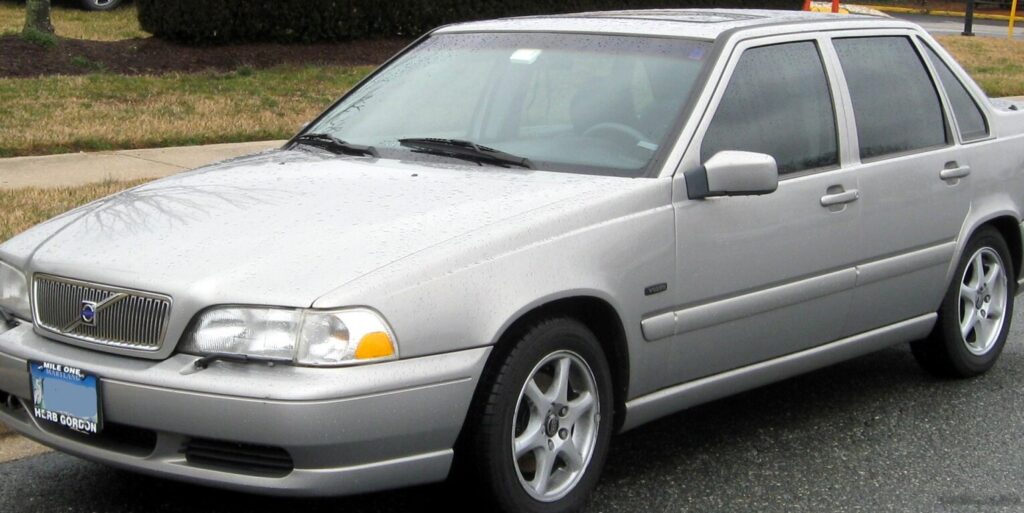
The Volvo S70 2.0, produced between 1996 and 2000, represented the entry point into Volvo’s mid-size sedan lineup during that period. Positioned within the first generation of the S70 (Project City Car), it served as a more accessible alternative to the higher-performance and more luxurious variants like the S70 T5. The S70 itself was a significant model for Volvo, replacing the 850 series and embodying the company’s commitment to safety, reliability, and Scandinavian design. This 2.0-liter version was primarily aimed at buyers prioritizing fuel efficiency and a comfortable ride over outright performance, making it a popular choice in European markets and gaining some traction in North America as a sensible family sedan.
Technical Specifications
| Brand | Volvo |
| Model | S70 |
| Generation | S70 |
| Type (Engine) | 2.0 (126 Hp) |
| Start of production | 1996 |
| End of production | 2000 |
| Powertrain Architecture | Internal Combustion engine |
| Body type | Sedan |
| Seats | 5 |
| Doors | 4 |
| Fuel consumption (urban) | 13.4 l/100 km (17.6 US mpg, 21.1 UK mpg, 7.5 km/l) |
| Fuel consumption (extra urban) | 8.1 l/100 km (29 US mpg, 34.9 UK mpg, 12.3 km/l) |
| Fuel Type | Petrol (Gasoline) |
| Acceleration 0 – 100 km/h | 11.7 sec |
| Acceleration 0 – 62 mph | 11.7 sec |
| Acceleration 0 – 60 mph | 11.1 sec |
| Maximum speed | 195 km/h (121.17 mph) |
| Weight-to-power ratio | 11.3 kg/Hp, 88.1 Hp/tonne |
| Weight-to-torque ratio | 8.4 kg/Nm, 118.9 Nm/tonne |
| Power | 126 Hp @ 6250 rpm |
| Power per litre | 63.5 Hp/l |
| Torque | 170 Nm @ 4800 rpm (125.39 lb.-ft. @ 4800 rpm) |
| Engine layout | Front, Transverse |
| Engine Model/Code | B5202FS |
| Engine displacement | 1984 cm3 (121.07 cu. in.) |
| Number of cylinders | 5 |
| Engine configuration | Inline |
| Cylinder Bore | 81 mm (3.19 in.) |
| Piston Stroke | 77 mm (3.03 in.) |
| Compression ratio | 10:1 |
| Number of valves per cylinder | 2 |
| Fuel injection system | Multi-port manifold injection |
| Engine aspiration | Naturally aspirated engine |
| Valvetrain | DOHC |
| Engine oil capacity | 5.8 l (6.13 US qt | 5.1 UK qt) |
| Coolant | 7.2 l (7.61 US qt | 6.34 UK qt) |
| Kerb Weight | 1430 kg (3152.61 lbs.) |
| Max. weight | 1890 kg (4166.74 lbs.) |
| Max load | 460 kg (1014.13 lbs.) |
| Trunk (boot) space – minimum | 470 l (16.6 cu. ft.) |
| Fuel tank capacity | 70 l (18.49 US gal | 15.4 UK gal) |
| Length | 4720 mm (185.83 in.) |
| Width | 1760 mm (69.29 in.) |
| Height | 1400 mm (55.12 in.) |
| Wheelbase | 2664 mm (104.88 in.) |
| Front track | 1520 mm (59.84 in.) |
| Rear (Back) track | 1470 mm (57.87 in.) |
| Drivetrain Architecture | The Internal combustion engine (ICE) drives the front wheels of the vehicle. |
| Drive wheel | Front wheel drive |
| Number of gears and type of gearbox | 5 gears, manual transmission |
| Front suspension | Wishbone |
| Rear suspension | Coil spring |
| Front brakes | Ventilated discs |
| Rear brakes | Disc |
| Assisting systems | ABS (Anti-lock braking system) |
| Steering type | Steering rack and pinion |
| Power steering | Hydraulic Steering |
| Tires size | 185/65 R15; 195/60 R15 |
| Wheel rims size | 6J x 15 |
Powertrain & Engine Architecture
The heart of the S70 2.0 is the Volvo B5202FS engine, a 1.984-liter inline-five cylinder gasoline engine. This engine is a naturally aspirated unit, meaning it doesn’t utilize a turbocharger or supercharger. The ‘FS’ designation indicates a specific iteration of the B5202 series, tailored for fuel efficiency and smooth operation. It features a dual overhead camshaft (DOHC) valvetrain with two valves per cylinder, and utilizes a multi-port fuel injection system. This system delivers fuel directly into the intake ports, optimizing the air-fuel mixture for improved combustion. The engine’s 10:1 compression ratio contributes to its efficiency, while the inline-five configuration provides a unique engine note and relatively smooth power delivery. The S70 2.0 was typically paired with a 5-speed manual transmission, although a 4-speed automatic transmission was also available, impacting performance and fuel economy.
Driving Characteristics
The S70 2.0, particularly with the manual transmission, offered a reasonably engaging driving experience for its class. However, with 126 horsepower and 170 Nm (125 lb-ft) of torque, acceleration was not its strong suit. The 0-60 mph time of around 11.1 seconds reflects this. The automatic transmission further dulled performance, adding to the 0-60 time. The engine’s powerband was relatively flat, providing adequate torque for everyday driving situations, but requiring the driver to downshift for quicker overtaking maneuvers. The suspension, tuned for comfort, provided a smooth ride, absorbing bumps and imperfections in the road effectively. Steering was light and precise, making the car easy to maneuver in urban environments. Compared to the S70 T5, which boasted a turbocharged engine and significantly more power, the 2.0 felt considerably less responsive. However, it offered a more relaxed and fuel-efficient driving experience, appealing to drivers who prioritized practicality over performance.
Equipment & Trim Levels
The S70 2.0 typically came with a respectable level of standard equipment, reflecting Volvo’s commitment to safety and comfort. Standard features included power windows, power door locks, central locking, and an AM/FM radio with cassette player. Safety features were a key selling point, with standard ABS brakes and a driver’s side airbag. Higher trim levels offered options such as leather upholstery, a sunroof, automatic climate control, and upgraded audio systems. Interior upholstery was typically cloth, with a focus on durable and comfortable materials. The dashboard layout was functional and ergonomically designed, with easy-to-read gauges and intuitive controls.
Chassis & Braking
The S70 2.0 utilized a front-wheel-drive layout with an independent wishbone front suspension and a coil spring rear suspension. This setup provided a good balance between ride comfort and handling. The front brakes were ventilated discs, offering good stopping power, while the rear brakes were solid discs. The ABS anti-lock braking system was standard, enhancing safety by preventing wheel lockup during hard braking. The chassis was designed to provide a stable and predictable driving experience, with a focus on minimizing body roll and maximizing grip.
Market Reception & Comparison
The S70 2.0 was generally well-received by critics as a sensible and practical family sedan. It was praised for its comfortable ride, spacious interior, and strong safety features. However, its relatively modest performance was often noted. Compared to other models in the S70 lineup, such as the T5, the 2.0 offered a more affordable entry point but lacked the excitement and performance of its more powerful siblings. Fuel economy was a key advantage, making it an attractive option for drivers who prioritized efficiency. Reliability was generally good, although routine maintenance was essential to ensure long-term durability.
Legacy
The Volvo S70 2.0 has proven to be a relatively durable and reliable vehicle, with many examples still on the road today. The B5202FS engine is known for its longevity, provided it receives regular maintenance. However, like any older vehicle, it is susceptible to age-related issues such as oil leaks and corrosion. In the used car market, the S70 2.0 represents an affordable and practical option for buyers seeking a comfortable and safe sedan. Its simple mechanical design makes it relatively easy to maintain and repair, appealing to DIY enthusiasts. While it may not offer the performance or prestige of some of its competitors, the S70 2.0 remains a testament to Volvo’s enduring commitment to quality and reliability.
