
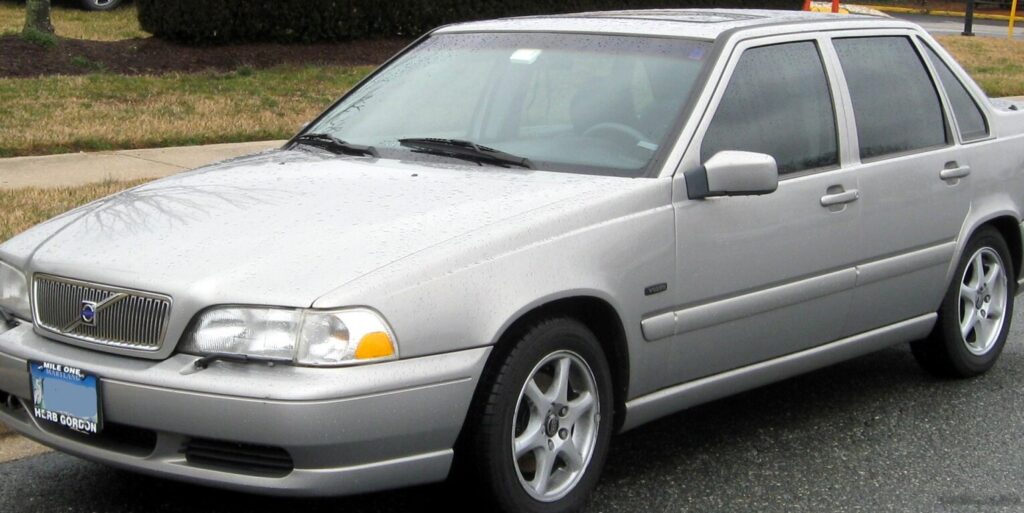
The Volvo S70 2.5 20V Turbo, produced between 1996 and 2000, represented a significant evolution in Volvo’s mid-size sedan offerings. Positioned as a performance-oriented variant within the S70 range, it aimed to deliver a blend of Scandinavian practicality, safety, and respectable power. This model was part of Volvo’s broader effort to modernize its lineup and compete more effectively in the international market, particularly against German rivals. The S70, and subsequently the V70 wagon, replaced the aging 850 series, building upon its foundation with refined styling and improved dynamics. The 2.5 20V Turbo trim occupied a middle ground in the S70 lineup, offering more performance than the base 2.3-liter models but remaining more accessible than the flagship T5 variants.
Technical Specifications
| Brand | Volvo |
| Model | S70 |
| Generation | S70 |
| Type (Engine) | 2.5 20V Turbo (193 Hp) |
| Start of production | 1996 |
| End of production | 2000 |
| Powertrain Architecture | Internal Combustion engine |
| Body type | Sedan |
| Seats | 5 |
| Doors | 4 |
| Fuel consumption (urban) | 15.5 l/100 km (15.2 US mpg, 18.2 UK mpg, 6.5 km/l) |
| Fuel consumption (extra urban) | 8.2 l/100 km (28.7 US mpg, 34.4 UK mpg, 12.2 km/l) |
| Fuel Type | Petrol (Gasoline) |
| Acceleration 0 – 100 km/h | 7.8 sec |
| Acceleration 0 – 62 mph | 7.8 sec |
| Acceleration 0 – 60 mph | 7.4 sec |
| Maximum speed | 225 km/h (139.81 mph) |
| Weight-to-power ratio | 7.6 kg/Hp, 132.2 Hp/tonne |
| Weight-to-torque ratio | 5.4 kg/Nm, 184.9 Nm/tonne |
| Power | 193 Hp @ 5100 rpm |
| Power per litre | 79.3 Hp/l |
| Torque | 270 Nm @ 1800 rpm (199.14 lb.-ft. @ 1800 rpm) |
| Engine layout | Front, Transverse |
| Engine Model/Code | B5244T |
| Engine displacement | 2435 cm3 (148.59 cu. in.) |
| Number of cylinders | 5 |
| Engine configuration | Inline |
| Cylinder Bore | 83 mm (3.27 in.) |
| Piston Stroke | 90 mm (3.54 in.) |
| Compression ratio | 9:1 |
| Number of valves per cylinder | 4 |
| Fuel injection system | Multi-port manifold injection |
| Engine aspiration | Turbocharger |
| Valvetrain | DOHC |
| Engine oil capacity | 5.8 l (6.13 US qt | 5.1 UK qt) |
| Coolant | 7.2 l (7.61 US qt | 6.34 UK qt) |
| Kerb Weight | 1460 kg (3218.75 lbs.) |
| Max. weight | 1910 kg (4210.83 lbs.) |
| Max load | 450 kg (992.08 lbs.) |
| Trunk (boot) space – minimum | 470 l (16.6 cu. ft.) |
| Fuel tank capacity | 70 l (18.49 US gal | 15.4 UK gal) |
| Length | 4720 mm (185.83 in.) |
| Width | 1760 mm (69.29 in.) |
| Height | 1400 mm (55.12 in.) |
| Wheelbase | 2660 mm (104.72 in.) |
| Front track | 1520 mm (59.84 in.) |
| Rear (Back) track | 1470 mm (57.87 in.) |
| Drivetrain Architecture | The Internal combustion engine (ICE) drives the front wheels of the vehicle. |
| Drive wheel | Front wheel drive |
| Number of gears and type of gearbox | 5 gears, manual transmission |
| Front suspension | Wishbone |
| Rear suspension | Coil spring |
| Front brakes | Ventilated discs |
| Rear brakes | Disc |
| Assisting systems | ABS (Anti-lock braking system) |
| Steering type | Steering rack and pinion |
| Power steering | Hydraulic Steering |
| Tires size | 205/50 R16 |
| Wheel rims size | 16 |
Powertrain & Engine Architecture
The heart of the S70 2.5 20V Turbo is the B5244T engine, a 2.4-liter inline-five cylinder powerplant. This engine, a hallmark of Volvo’s engineering during the 1990s, featured a cast iron block and an aluminum cylinder head. The “20V” designation refers to the four valves per cylinder, contributing to improved breathing and power output. A Mitsubishi TD04HL-13C turbocharger, with an intercooler, forces air into the engine, boosting horsepower and torque. Fuel delivery is managed by a Bosch multi-port fuel injection system. The engine’s relatively low 9:1 compression ratio was a design choice to accommodate the turbocharging system and ensure reliability. The five-speed manual transmission was the standard offering, providing drivers with direct control over the engine’s power. The engine’s transverse mounting and front-wheel-drive configuration were typical for European sedans of this era.
Driving Characteristics
The S70 2.5 20V Turbo offered a noticeable step up in performance compared to the naturally aspirated versions. The 193 horsepower and 270 Nm (199 lb-ft) of torque provided brisk acceleration, with a 0-60 mph time of around 7.4 seconds. The turbocharger’s boost came on strong around 1800 rpm, delivering a surge of power that made overtaking and merging onto highways relatively effortless. The five-speed manual transmission allowed for precise gear selection, although the shift linkage wasn’t always the most precise. Compared to the later T5 models with their higher output, the 2.5 Turbo felt more manageable and less prone to torque steer. The front-wheel-drive layout, while providing good traction in most conditions, could exhibit some understeer when pushed hard through corners.
Equipment & Trim Levels
The S70 2.5 20V Turbo typically came well-equipped, reflecting Volvo’s commitment to safety and comfort. Standard features included power windows, power locks, a power sunroof, and air conditioning. The interior typically featured cloth upholstery, although leather was available as an option. A basic audio system was standard, with an upgrade available featuring a CD changer. Safety features were a major selling point, with standard ABS brakes and available side airbags. Optional extras included automatic climate control, heated front seats, and a premium audio system. The dashboard layout was functional and ergonomically designed, prioritizing ease of use.
Chassis & Braking
The S70 utilized a MacPherson strut front suspension and a multi-link rear suspension, providing a comfortable ride and reasonable handling. The suspension was tuned to prioritize comfort over outright sportiness, but it still offered good body control. The front brakes were ventilated discs, while the rear brakes were solid discs. ABS was standard, providing enhanced braking performance and stability. The steering was a hydraulic rack-and-pinion system, offering a reasonable level of feedback. The S70’s chassis was designed to provide a safe and stable platform, and it performed well in crash tests.
Market Reception & Comparison
The S70 2.5 20V Turbo was generally well-received by automotive critics. It was praised for its comfortable ride, spacious interior, and strong performance. However, some critics noted that the styling was somewhat conservative compared to its German rivals. Compared to the base S70 models, the 2.5 Turbo offered a significant performance upgrade, making it a more appealing option for drivers who wanted more power. Compared to the higher-output T5 models, the 2.5 Turbo was more affordable and offered better fuel economy. Reliability was generally good, although some owners reported issues with the turbocharger and fuel injection system.
Legacy
The Volvo S70 2.5 20V Turbo remains a popular choice among Volvo enthusiasts today. The B5244T engine is known for its durability and tunability, and parts are generally readily available. While not as sought-after as the T5 models, the 2.5 Turbo offers a good balance of performance, reliability, and affordability. Well-maintained examples can still provide years of reliable service. The S70’s reputation for safety and practicality continues to make it a desirable used car, particularly for those seeking a comfortable and dependable sedan.
