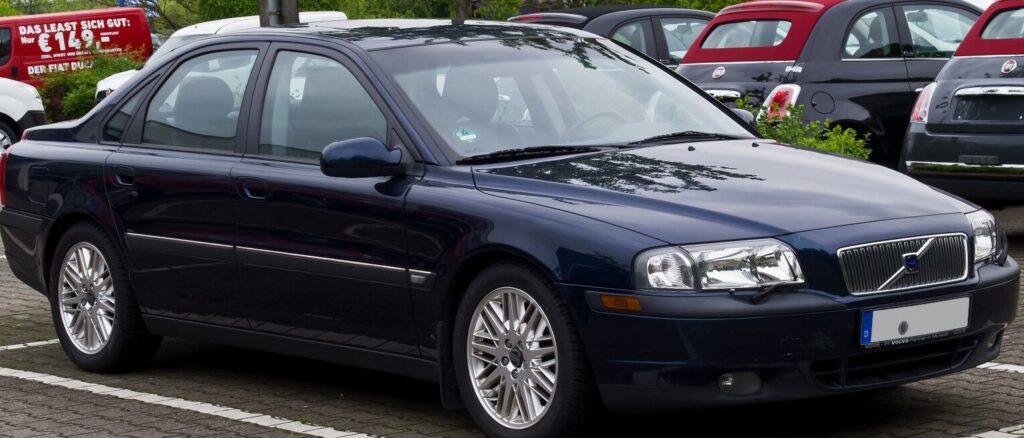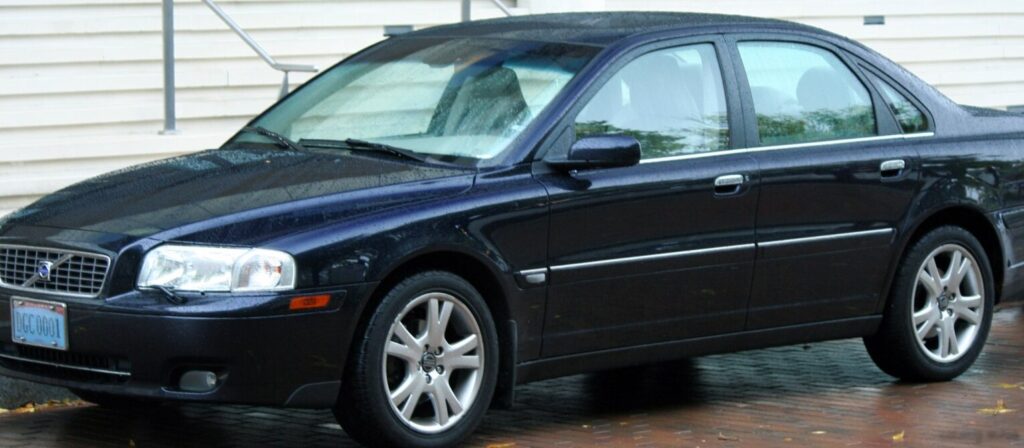
The Volvo S80 2.4 Bi-Fuel, produced from 2003 to 2006, represents a unique offering within the second-generation (1998-2006) S80 lineup. This variant combined a 2.4-liter inline-five cylinder engine with the flexibility of both petrol and Liquefied Petroleum Gas (LPG) fuel systems, paired exclusively with a five-speed automatic transmission. Positioned as a mid-range option, it aimed to provide a balance between fuel efficiency, reasonable performance, and the comfort expected of a Volvo executive sedan. The facelifted S80, introduced in 2003, featured subtle styling revisions and updated technology compared to the pre-2003 models.
Technical Specifications
| Brand | Volvo |
| Model | S80 |
| Generation | S80 (facelift 2003) |
| Type (Engine) | 2.4 (140 Hp) Bi-Fuel LPG Automatic |
| Start of production | 2003 |
| End of production | 2006 |
| Powertrain Architecture | Internal Combustion engine |
| Body type | Sedan |
| Seats | 5 |
| Doors | 4 |
| Fuel consumption (economy) – urban | 14.2 l/100 km (16.6 US mpg, 19.9 UK mpg, 7 km/l) |
| Fuel consumption (economy) – urban (LPG) | 18.7 l/100 km |
| Fuel consumption (economy) – extra urban | 7.6 l/100 km (30.9 US mpg, 37.2 UK mpg, 13.2 km/l) |
| Fuel consumption (economy) – extra urban (LPG) | 10.1 l/100 km |
| Fuel consumption (economy) – combined | 10 l/100 km (23.5 US mpg, 28.2 UK mpg, 10 km/l) |
| Fuel consumption (economy) – combined (LPG) | 13.3 l/100 km |
| CO2 emissions | 240 g/km |
| CO2 emissions (LPG) | 214 g/km |
| Fuel Type | Petrol / LPG |
| Acceleration 0 – 100 km/h | 11.4 sec |
| Acceleration 0 – 62 mph | 11.4 sec |
| Acceleration 0 – 100 km/h (LPG) | 11.5 sec |
| Acceleration 0 – 60 mph | 10.8 sec (Calculated) |
| Maximum speed | 200 km/h (124.27 mph) |
| Emission standard | Euro 4 |
| Weight-to-power ratio | 11.2 kg/Hp, 89.3 Hp/tonne |
| Weight-to-torque ratio | 7.1 kg/Nm, 140.4 Nm/tonne |
| Power | 140 Hp @ 4500 rpm |
| Power per litre | 57.5 Hp/l |
| Power (LPG) | 140 Hp @ 5100 rpm |
| Power per litre (LPG) | 57.5 Hp/l |
| Torque | 220 Nm @ 3300 rpm (162.26 lb.-ft. @ 3300 rpm) |
| Torque (LPG) | 214 Nm @ 4500 rpm |
| Engine layout | Front, Transverse |
| Engine Model/Code | B5244SG2 |
| Engine displacement | 2435 cm3 (148.59 cu. in.) |
| Number of cylinders | 5 |
| Engine configuration | Inline |
| Cylinder Bore | 83 mm (3.27 in.) |
| Piston Stroke | 90 mm (3.54 in.) |
| Compression ratio | 10.3:1 |
| Number of valves per cylinder | 4 |
| Fuel injection system | Multi-port manifold injection |
| Engine aspiration | Naturally aspirated |
| Valvetrain | DOHC |
| Engine oil capacity | 5.8 l (6.13 US qt, 5.1 UK qt) |
| Coolant | 8 l (8.45 US qt, 7.04 UK qt) |
| Kerb Weight | 1567 kg (3454.64 lbs.) |
| Max. weight | 2140 kg (4717.89 lbs.) |
| Max load | 573 kg (1263.25 lbs.) |
| Trunk (boot) space – minimum | 407 l (14.37 cu. ft.) |
| Trunk (boot) space – maximum | 902 l (31.85 cu. ft.) |
| Fuel tank capacity | 29 l (7.66 US gal, 6.38 UK gal) |
| Fuel tank capacity (LPG) | 50 l |
| Max. roof load | 100 kg (220.46 lbs.) |
| Permitted trailer load with brakes (12%) | 1800 kg (3968.32 lbs.) |
| Permitted trailer load without brakes | 750 kg (1653.47 lbs.) |
| Permitted towbar download | 75 kg (165.35 lbs.) |
| Length | 4849 mm (190.91 in.) |
| Width | 1832 mm (72.13 in.) |
| Height | 1452 mm (57.17 in.) |
| Wheelbase | 2791 mm (109.88 in.) |
| Front track | 1570 mm (61.81 in.) |
| Rear track | 1548 mm (60.94 in.) |
| Drag coefficient (Cd) | 0.28 |
| Minimum turning circle | 11.9 m (39.04 ft.) |
| Drivetrain Architecture | Front wheel drive |
| Number of gears and type of gearbox | 5 gears, automatic transmission |
| Front suspension | Independent type McPherson |
| Rear suspension | Independent multi-link suspension |
| Front brakes | Ventilated discs, 288 mm |
| Rear brakes | Disc, 288 mm |
| Assisting systems | ABS (Anti-lock braking system) |
| Steering type | Steering rack and pinion |
| Power steering | Hydraulic |
| Tires size | 215/55 R16; 225/50 R17 |
| Wheel rims size | 7J x 16; 7J x 17 |
Powertrain & Engine Architecture
The heart of the S80 2.4 Bi-Fuel is the Volvo B5244SG2 engine, a 2.4-liter (2435 cc) inline-five cylinder powerplant. This engine is characterized by its robust construction and relatively simple design. It utilizes a cast iron block and aluminum cylinder head, featuring a double overhead camshaft (DOHC) valvetrain with four valves per cylinder. Fuel delivery is managed by a multi-port fuel injection system. The LPG system is installed as a factory option, integrating seamlessly with the petrol system and allowing the driver to switch between fuels on the fly. The engine produces 140 horsepower at 4500 rpm and 220 Nm (162 lb-ft) of torque at 3300 rpm on petrol. When running on LPG, power output remains at 140 hp, but torque slightly decreases to 214 Nm (158 lb-ft) at a higher 4500 rpm. The engine is transversely mounted in the front of the vehicle. The sole transmission option is a five-speed automatic gearbox, designed for smooth and comfortable shifts rather than outright performance.
Driving Characteristics
The S80 2.4 Bi-Fuel with the automatic transmission offers a comfortable, but not particularly sporty, driving experience. Acceleration from 0-60 mph takes around 10.8 seconds, and top speed is limited to 124 mph. The automatic transmission, while smooth, can feel somewhat sluggish, especially during quick overtaking maneuvers. The gear ratios are tuned for fuel efficiency and relaxed cruising rather than aggressive acceleration. Switching to LPG doesn’t dramatically alter the driving experience, although a slight reduction in power and torque is noticeable, particularly when accelerating uphill or carrying a full load. The suspension is tuned for comfort, absorbing bumps and imperfections in the road well, but it doesn’t offer the same level of control as sportier alternatives.
Equipment & Trim Levels
The S80 2.4 Bi-Fuel typically came equipped with a respectable level of standard features, befitting its position as a mid-range Volvo. These included climate control, power windows and mirrors, a basic audio system, and ABS brakes. Interior upholstery was typically cloth, although leather was available as an option. Higher trim levels could add features such as a sunroof, upgraded audio system, and wood trim. The dashboard layout is typical of early 2000s Volvo designs, prioritizing functionality and ease of use over flashy aesthetics.
Chassis & Braking
The S80 2.4 Bi-Fuel utilizes an independent suspension setup at all four wheels. The front suspension employs McPherson struts, while the rear features a multi-link design. This configuration provides a good balance between ride comfort and handling. Braking duties are handled by ventilated discs at the front and solid discs at the rear. ABS (Anti-lock Braking System) is standard, enhancing safety and control during emergency braking situations. The steering is rack and pinion with hydraulic power assistance, providing a reasonably direct and responsive feel.
Market Reception & Comparison
The S80 2.4 Bi-Fuel was primarily marketed in countries where LPG was a readily available and cost-effective fuel source, particularly in Europe. Critics generally praised the car’s comfort, safety features, and the added flexibility of running on LPG. However, the performance was often considered adequate rather than exciting, especially compared to higher-powered S80 variants like the T5 or T6. Fuel economy on petrol was comparable to other 2.4-liter sedans of the time, but the LPG system offered significant cost savings in regions with high petrol prices. Compared to the diesel-powered S80 models, the 2.4 Bi-Fuel offered a smoother and quieter driving experience, but typically lower fuel economy when running on petrol.
Legacy
The Volvo S80 2.4 Bi-Fuel represents an interesting chapter in Volvo’s history, showcasing the company’s willingness to explore alternative fuel technologies. The B5244SG2 engine is known for its durability and reliability, and the LPG system, when properly maintained, can add many years of service. Today, these cars are relatively rare, and well-maintained examples are sought after by enthusiasts and those looking for a unique and economical classic Volvo. The availability of LPG infrastructure remains a key factor in the continued viability of these vehicles.