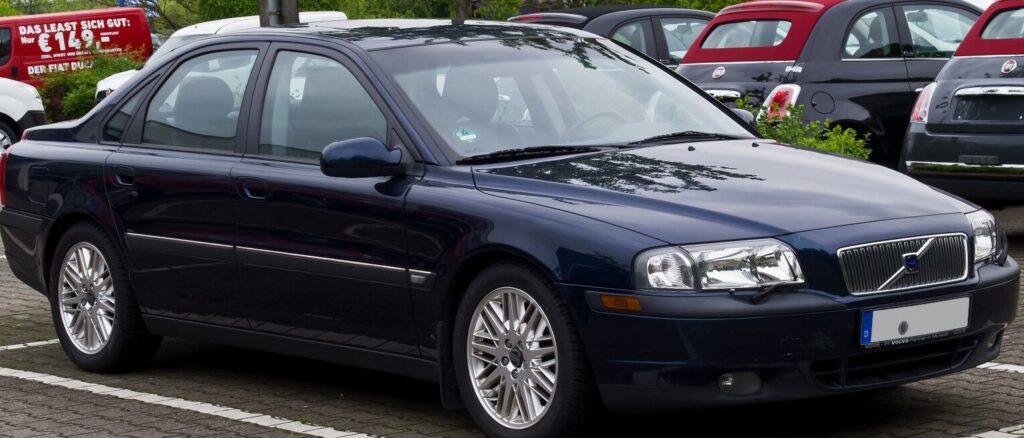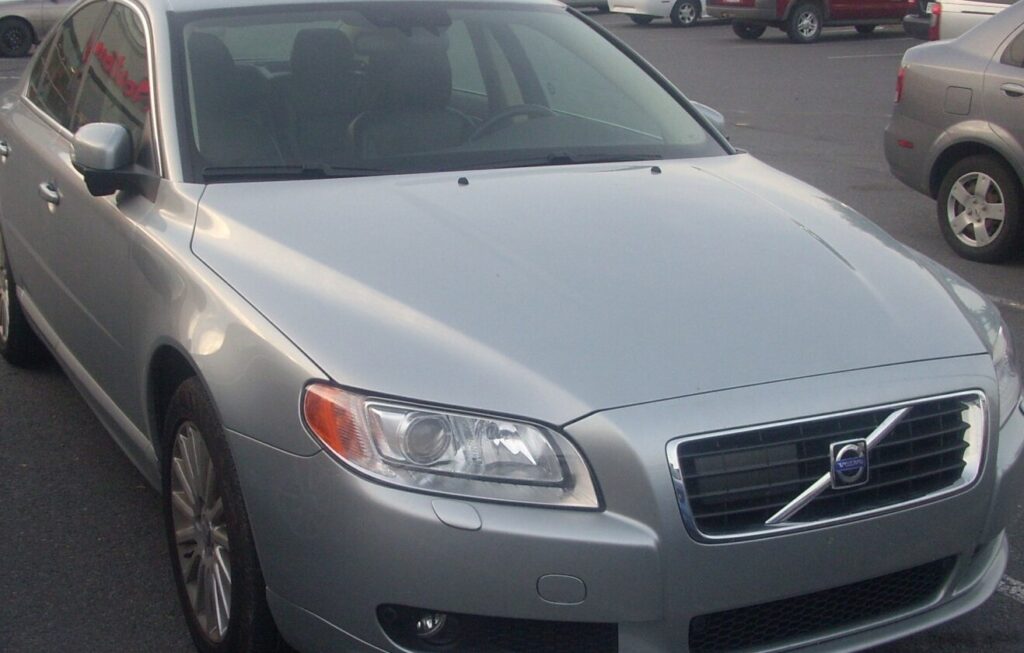
The Volvo S80 II 2.0 D, produced between 2006 and 2009, represented a key entry point into the second-generation S80 lineup. Positioned as a more fuel-efficient alternative to the gasoline-powered variants, and offering a lower price point than the higher-output diesel models, this 136 horsepower diesel sedan aimed to broaden the S80’s appeal in the European market. It was a significant offering for buyers prioritizing economy and practicality within Volvo’s premium sedan range, built on the P2 platform shared with other Volvo models of the era. This variant offered a balance between Volvo’s renowned safety features and a more accessible price tag.
Technical Specifications
| Brand | Volvo |
| Model | S80 |
| Generation | S80 II |
| Type (Engine) | 2.0 D (136 Hp) |
| Start of production | 2006 |
| End of production | 2009 |
| Powertrain Architecture | Internal Combustion engine |
| Body type | Sedan |
| Seats | 5 |
| Doors | 4 |
| Fuel consumption (economy) – urban (NEDC) | 7.6 l/100 km (30.9 US mpg, 37.2 UK mpg, 13.2 km/l) |
| Fuel consumption (economy) – extra urban (NEDC) | 4.7 l/100 km (50 US mpg, 60.1 UK mpg, 21.3 km/l) |
| Fuel consumption (economy) – combined (NEDC) | 5.7 l/100 km (41.3 US mpg, 49.6 UK mpg, 17.5 km/l) |
| CO2 emissions (NEDC) | 151 g/km |
| Fuel Type | Diesel |
| Acceleration 0 – 100 km/h | 10.7 sec |
| Acceleration 0 – 62 mph | 10.7 sec |
| Acceleration 0 – 60 mph | 10.2 sec |
| Maximum speed | 200 km/h (124.27 mph) |
| Emission standard | Euro 4 |
| Weight-to-power ratio | 11.8 kg/Hp, 84.9 Hp/tonne |
| Weight-to-torque ratio | 5 kg/Nm, 199.8 Nm/tonne |
| Power | 136 Hp @ 4000 rpm |
| Power per litre | 68.1 Hp/l |
| Torque | 320 Nm @ 2000 rpm (236.02 lb.-ft. @ 2000 rpm) |
| Engine layout | Front, Transverse |
| Engine Model/Code | D4204T |
| Engine displacement | 1997 cm3 (121.86 cu. in.) |
| Number of cylinders | 4 |
| Engine configuration | Inline |
| Cylinder Bore | 85 mm (3.35 in.) |
| Piston Stroke | 88 mm (3.46 in.) |
| Compression ratio | 18.5:1 |
| Number of valves per cylinder | 4 |
| Fuel injection system | Diesel Commonrail |
| Engine aspiration | Turbocharger, Intercooler |
| Valvetrain | DOHC |
| Engine oil capacity | 4.8 l (5.07 US qt | 4.22 UK qt) |
| Coolant | 9.4 l (9.93 US qt | 8.27 UK qt) |
| Kerb Weight | 1602 kg (3531.81 lbs.) |
| Trunk (boot) space – minimum | 480 l (16.95 cu. ft.) |
| Fuel tank capacity | 70 l (18.49 US gal | 15.4 UK gal) |
| Permitted trailer load with brakes (12%) | 1600 kg (3527.4 lbs.) |
| Permitted trailer load without brakes | 750 kg (1653.47 lbs.) |
| Length | 4851 mm (190.98 in.) |
| Width | 1861 mm (73.27 in.) |
| Width including mirrors | 2106 mm (82.91 in.) |
| Height | 1493 mm (58.78 in.) |
| Wheelbase | 2835 mm (111.61 in.) |
| Front track | 1588 mm (62.52 in.) |
| Rear (Back) track | 1585 mm (62.4 in.) |
| Front overhang | 978 mm (38.5 in.) |
| Rear overhang | 1038 mm (40.87 in.) |
| Drag coefficient (Cd) | 0.29 |
| Drivetrain Architecture | The Internal combustion engine (ICE) drives the front wheels of the vehicle. |
| Drive wheel | Front wheel drive |
| Number of gears and type of gearbox | 6 gears, manual transmission |
| Front suspension | Spring Strut |
| Rear suspension | Coil spring |
| Front brakes | Ventilated discs |
| Rear brakes | Ventilated discs |
| Assisting systems | ABS (Anti-lock braking system) |
| Steering type | Steering rack and pinion |
| Power steering | Electric Steering |
| Tires size | 225/55 R16 |
| Wheel rims size | 16 |
Powertrain & Engine Architecture
The S80 II 2.0 D utilized the Volvo D4204T engine, a 1997cc inline-four cylinder diesel. This engine was part of Volvo’s modular engine family, designed for flexibility and efficiency. The D4204T featured a common rail direct injection system, delivering fuel at extremely high pressure for optimized combustion. A turbocharger with an intercooler was employed to boost power output and improve torque across the rev range. The engine also incorporated a Diesel Particulate Filter (DPF) to meet increasingly stringent Euro 4 emission standards. The engine’s DOHC (Double Overhead Camshaft) valvetrain, with four valves per cylinder, further contributed to its performance and efficiency. The 6-speed manual transmission was standard, providing a good balance between fuel economy and driver control.
Driving Characteristics
The 2.0 D offered a distinctly different driving experience compared to the more powerful S80 variants. With 136 horsepower and 320 Nm (236 lb-ft) of torque, acceleration was adequate for everyday driving, with a 0-60 mph time of around 10.2 seconds. However, it wasn’t designed for spirited performance. The engine delivered its peak torque at a relatively low 2000 rpm, providing good responsiveness in typical driving situations. The 6-speed manual transmission allowed drivers to keep the engine in its optimal power band. Compared to the 1.8L gasoline engine, the 2.0 D offered significantly better fuel economy and more usable low-end torque. It lacked the refinement and outright speed of the higher-output diesel models, but provided a practical and economical option for those prioritizing fuel efficiency.
Equipment & Trim Levels
The 2.0 D trim typically included standard features such as climate control, power windows, power mirrors, and a basic audio system. Safety was a key focus, with standard equipment including ABS brakes, airbags, and Volvo’s whiplash protection system (WHIPS). Upholstery was generally cloth, although leather options were available as upgrades. Optional extras included a premium audio system, sunroof, parking sensors, and upgraded alloy wheels. The trim level sat as the entry-level diesel offering, providing a good level of standard equipment while remaining competitively priced.
Chassis & Braking
The S80 II 2.0 D utilized a MacPherson strut front suspension and a multi-link coil spring rear suspension. This setup provided a comfortable ride quality, typical of Volvo’s focus on passenger comfort. The braking system consisted of ventilated discs on all four wheels, providing adequate stopping power for the vehicle’s weight and performance. ABS (Anti-lock Braking System) was standard, enhancing safety during emergency braking situations. The chassis was tuned to prioritize comfort and stability over sporty handling.
Market Reception & Comparison
The S80 II 2.0 D was generally well-received by critics as a practical and economical option within the premium sedan segment. It was praised for its fuel efficiency and comfortable ride. However, some reviewers noted that the engine lacked the refinement and performance of its competitors. Compared to other trims in the S80 lineup, the 2.0 D offered the best fuel economy but the slowest acceleration. The higher-output diesel variants provided more power and a more refined driving experience, but at a higher price point. The gasoline-powered models offered a smoother engine but were less fuel-efficient.
Legacy
The D4204T engine, while not known for being exceptionally complex, has proven to be reasonably reliable in the long term, provided it has received regular maintenance, particularly regarding the DPF system. Used examples of the S80 II 2.0 D are still available today, often representing a relatively affordable entry point into Volvo ownership. The key to long-term reliability lies in adhering to Volvo’s recommended service intervals and addressing any potential issues with the DPF promptly. The 2.0 D variant remains a popular choice for buyers seeking a comfortable, safe, and fuel-efficient sedan.