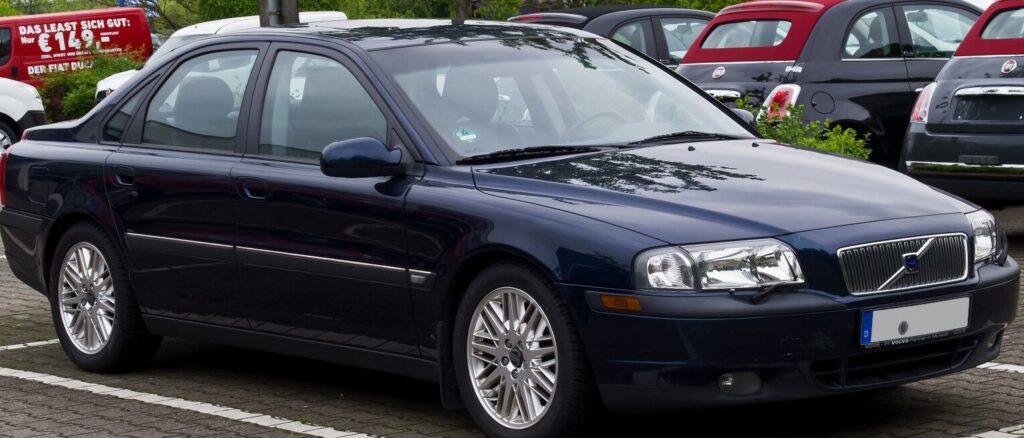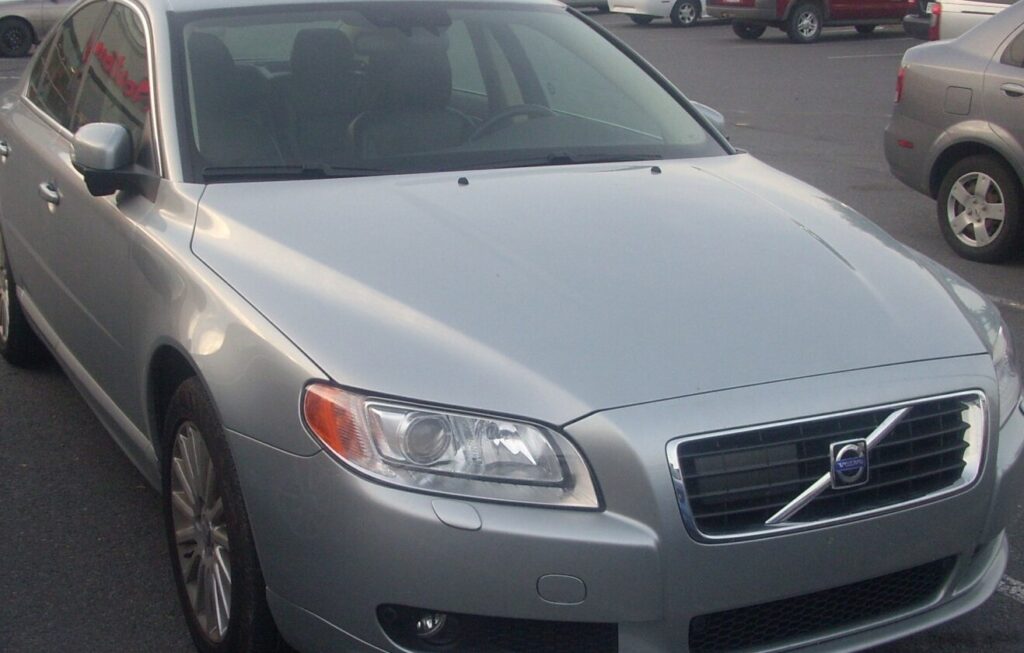
The Volvo S80 II 2.5 FT (200 Hp) Ethanol, produced from 2008 to 2009, represents a unique offering within the second generation (1998-2006) of Volvo’s flagship sedan. This variant was specifically tailored for markets, particularly in Northern Europe, embracing the growing availability and benefits of E85 ethanol fuel. Positioned as a mid-range option within the S80 II lineup, it bridged the gap between the more economical base models and the higher-performance turbocharged variants. The “FT” designation signifies its flexible-fuel capability, allowing it to run on gasoline, E85, or any blend of the two. This model played a role in Volvo’s commitment to alternative fuels and reducing carbon emissions.
Technical Specifications
| Brand | Volvo |
| Model | S80 |
| Generation | S80 II |
| Type (Engine) | 2.5 FT (200 Hp) Ethanol |
| Start of production | 2008 |
| End of production | 2009 |
| Powertrain Architecture | Internal Combustion engine |
| Body type | Sedan |
| Seats | 5 |
| Doors | 4 |
| Fuel consumption (economy) – urban | 13.2 l/100 km (17.8 US mpg, 21.4 UK mpg, 7.6 km/l) |
| Fuel consumption (economy) – extra urban | 6.8 l/100 km (34.6 US mpg, 41.5 UK mpg, 14.7 km/l) |
| Fuel consumption (economy) – combined | 9.2 l/100 km (25.6 US mpg, 30.7 UK mpg, 10.9 km/l) |
| CO2 emissions | 219 g/km |
| Fuel Type | Petrol / Ethanol – E85 |
| Acceleration 0 – 100 km/h | 7.7 sec |
| Acceleration 0 – 62 mph | 7.7 sec |
| Acceleration 0 – 60 mph | 7.3 sec |
| Maximum speed | 235 km/h (146.02 mph) |
| Weight-to-power ratio | 7.7 kg/Hp, 129.9 Hp/tonne |
| Weight-to-torque ratio | 5.1 kg/Nm, 194.8 Nm/tonne |
| Power | 200 Hp @ 4800 rpm |
| Power per litre | 79.3 Hp/l |
| Torque | 300 Nm @ 1500-4500 rpm (221.27 lb.-ft. @ 1500-4500 rpm) |
| Engine layout | Front, Transverse |
| Engine Model/Code | B5254T8 |
| Engine displacement | 2521 cm3 (153.84 cu. in.) |
| Number of cylinders | 5 |
| Engine configuration | Inline |
| Cylinder Bore | 83 mm (3.27 in.) |
| Piston Stroke | 93.2 mm (3.67 in.) |
| Compression ratio | 9:1 |
| Number of valves per cylinder | 4 |
| Fuel injection system | Multi-port manifold injection |
| Engine aspiration | Turbocharger, Intercooler |
| Valvetrain | DOHC |
| Engine oil capacity | 5.5 l (5.81 US qt | 4.84 UK qt) |
| Coolant | 9 l (9.51 US qt | 7.92 UK qt) |
| Kerb Weight | 1540 kg (3395.12 lbs.) |
| Trunk (boot) space – minimum | 480 l (16.95 cu. ft.) |
| Fuel tank capacity | 70 l (18.49 US gal | 15.4 UK gal) |
| Max. roof load | 75 kg (165.35 lbs.) |
| Permitted trailer load with brakes (12%) | 1600 kg (3527.4 lbs.) |
| Permitted trailer load without brakes | 750 kg (1653.47 lbs.) |
| Length | 4851 mm (190.98 in.) |
| Width | 1861 mm (73.27 in.) |
| Width including mirrors | 2106 mm (82.91 in.) |
| Height | 1493 mm (58.78 in.) |
| Wheelbase | 2835 mm (111.61 in.) |
| Front track | 1588 mm (62.52 in.) |
| Rear (Back) track | 1585 mm (62.4 in.) |
| Front overhang | 978 mm (38.5 in.) |
| Rear overhang | 1038 mm (40.87 in.) |
| Ride height (ground clearance) | 148 mm (5.83 in.) |
| Drag coefficient (Cd) | 0.29 |
| Minimum turning circle (turning diameter) | 11.7 m (38.39 ft.) |
| Drivetrain Architecture | The Internal combustion engine (ICE) drives the front wheels of the vehicle. |
| Drive wheel | Front wheel drive |
| Number of gears and type of gearbox | 6 gears, manual transmission |
| Front suspension | Independent, type McPherson with coil spring and anti-roll bar |
| Rear suspension | Independent coil spring |
| Front brakes | Ventilated discs |
| Rear brakes | Ventilated discs |
| Assisting systems | ABS (Anti-lock braking system) |
| Steering type | Steering rack and pinion |
| Power steering | Electric Steering |
| Tires size | 225/55 R16 |
| Wheel rims size | 16 |
Powertrain & Engine Architecture
The heart of the S80 II 2.5 FT is the Volvo B5254T8 engine, a 2.5-liter inline-five cylinder powerplant. This engine is a turbocharged, multi-port fuel-injected unit designed to operate efficiently on both gasoline and E85 ethanol. The B5254T8 features a relatively low 9:1 compression ratio, a necessity for reliable operation with the higher octane requirements of E85. The turbocharger, coupled with an intercooler, provides a significant boost in power and torque compared to naturally aspirated engines of similar displacement. The engine utilizes a double overhead camshaft (DOHC) valvetrain, optimizing airflow for improved performance. The six-speed manual transmission was standard, offering drivers precise control over the engine’s power delivery. The engine’s flexible-fuel capability is achieved through sensors that detect the ethanol content in the fuel and adjust the engine’s parameters accordingly, including fuel injection timing and duration.
Driving Characteristics
The 200 horsepower and 300 Nm (221 lb-ft) of torque delivered by the B5254T8 engine provided the S80 II 2.5 FT with respectable performance. Acceleration from 0 to 60 mph took approximately 7.3 seconds, making it reasonably quick for a mid-size luxury sedan of its era. The turbocharger provides a noticeable surge of power in the mid-range, offering good overtaking capability. Compared to the higher-output turbocharged S80 variants, the 2.5 FT felt less aggressively powered, but it offered a more relaxed and fuel-efficient driving experience. The six-speed manual transmission allowed for engaging driving, but the gear ratios were tuned more for economy than outright performance. The suspension provided a comfortable ride, typical of Volvo’s focus on passenger comfort, but it wasn’t particularly sporty.
Equipment & Trim Levels
The S80 II 2.5 FT typically came equipped with a solid array of standard features, reflecting its position as a luxury vehicle. These included automatic climate control, power windows and mirrors, a premium audio system, and leather upholstery. Safety features were, as always with Volvo, a priority, with standard inclusion of ABS brakes, traction control, and multiple airbags. Optional extras included a sunroof, upgraded audio systems, navigation, and parking assist. The interior trim was generally well-appointed, with a focus on Scandinavian design principles – clean lines, functional layout, and high-quality materials.
Chassis & Braking
The S80 II utilized an independent suspension system on all four wheels, with McPherson struts at the front and a multi-link setup at the rear. This configuration provided a comfortable ride and decent handling characteristics. The braking system consisted of ventilated discs on all four wheels, providing adequate stopping power. ABS (Anti-lock Braking System) was standard, enhancing safety during emergency braking situations. The chassis was designed to prioritize comfort and refinement over sporty handling, resulting in a relatively soft and forgiving ride.
Market Reception & Comparison
The S80 II 2.5 FT was generally well-received by critics, who praised its fuel efficiency, comfortable ride, and commitment to alternative fuels. However, some reviewers noted that its performance wasn’t as exhilarating as that of the higher-output turbocharged models. Compared to the 2.5T and T6 variants, the 2.5 FT offered a more affordable entry point into the S80 II range, appealing to buyers who prioritized economy and environmental consciousness over outright performance. Its fuel economy, particularly when running on E85, was a significant selling point.
Legacy
The Volvo S80 II 2.5 FT represents an interesting chapter in Volvo’s history, showcasing the brand’s early adoption of flexible-fuel technology. While not as common as other S80 II variants, it has developed a following among enthusiasts who appreciate its unique combination of fuel efficiency, practicality, and Scandinavian design. The B5254T8 engine, when properly maintained, has proven to be a relatively reliable unit. Today, these vehicles can be found on the used car market at affordable prices, offering a comfortable and environmentally conscious driving experience.