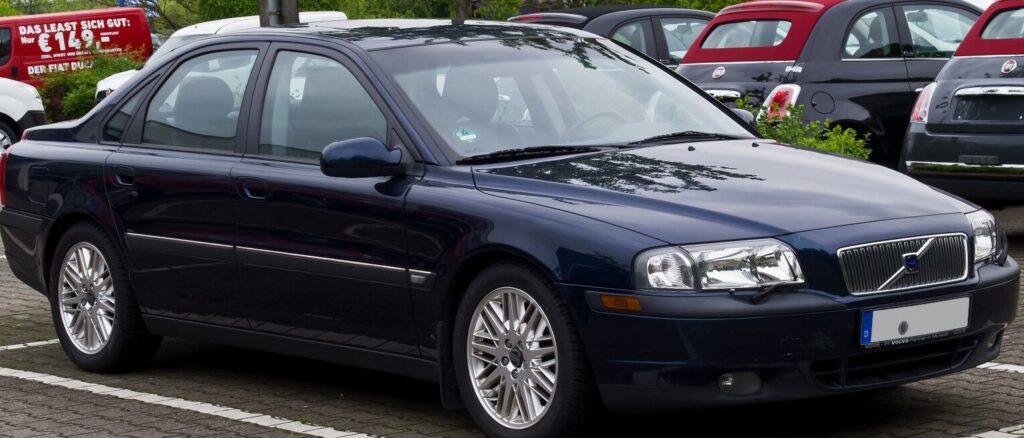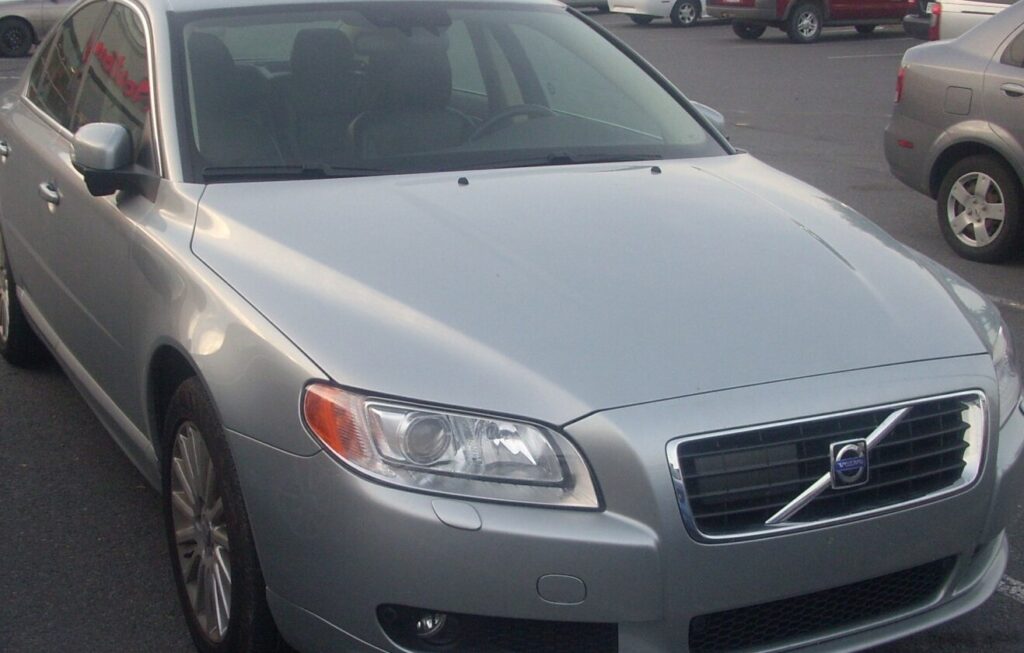
The Volvo S80 II 4.4 V8 AWD Geartronic, produced from 2006 to 2009, represented the pinnacle of performance and luxury within the second-generation S80 (YS01) lineup. Positioned as the flagship trim, it offered a significant step up in power and all-wheel-drive capability compared to the more common 2.5L inline-five and 3.2L inline-six engine options. This variant aimed to compete with established luxury sedans from German manufacturers, offering a blend of Scandinavian design, safety features, and a surprisingly potent V8 engine. The S80 II platform itself was a significant departure from the first generation, moving to the larger P2 platform shared with other Volvo models and the Ford Mondeo.
Technical Specifications
| Brand | Volvo |
| Model | S80 |
| Generation | S80 II |
| Type (Engine) | 4.4 V8 (315 Hp) AWD Geartronic |
| Start of production | 2006 |
| End of production | 2009 |
| Powertrain Architecture | Internal Combustion engine |
| Body type | Sedan |
| Seats | 5 |
| Doors | 4 |
| Fuel consumption (economy) – urban (NEDC) | 18 l/100 km (13.1 US mpg, 15.7 UK mpg, 5.6 km/l) |
| Fuel consumption (economy) – extra urban (NEDC) | 8.3 l/100 km (28.3 US mpg, 34 UK mpg, 12 km/l) |
| Fuel consumption (economy) – combined (NEDC) | 11.9 l/100 km (19.8 US mpg, 23.7 UK mpg, 8.4 km/l) |
| CO2 emissions (NEDC) | 286 g/km |
| Fuel Type | Petrol (Gasoline) |
| Acceleration 0 – 100 km/h | 6.5 sec |
| Acceleration 0 – 62 mph | 6.5 sec |
| Acceleration 0 – 60 mph | 6.2 sec |
| Maximum speed | 250 km/h (155.34 mph) |
| Emission standard | Euro 4 |
| Weight-to-power ratio | 5.5 kg/Hp, 180.8 Hp/tonne |
| Weight-to-torque ratio | 4 kg/Nm, 252.6 Nm/tonne |
| Power | 315 Hp @ 5950 rpm |
| Power per litre | 71.4 Hp/l |
| Torque | 440 Nm @ 3950 rpm (324.53 lb.-ft. @ 3950 rpm) |
| Engine layout | Front, Transverse |
| Engine Model/Code | B8444S |
| Engine displacement | 4414 cm3 (269.36 cu. in.) |
| Number of cylinders | 8 |
| Engine configuration | V-engine |
| Cylinder Bore | 94 mm (3.7 in.) |
| Piston Stroke | 79.5 mm (3.13 in.) |
| Compression ratio | 10.4:1 |
| Number of valves per cylinder | 4 |
| Fuel injection system | Multi-port manifold injection |
| Engine aspiration | Naturally aspirated engine |
| Valvetrain | DOHC |
| Engine oil capacity | 7 l (7.4 US qt | 6.16 UK qt) |
| Coolant | 10.2 l (10.78 US qt | 8.97 UK qt) |
| Kerb Weight | 1742 kg (3840.45 lbs.) |
| Trunk (boot) space – minimum | 480 l (16.95 cu. ft.) |
| Fuel tank capacity | 70 l (18.49 US gal | 15.4 UK gal) |
| Max. roof load | 75 kg (165.35 lbs.) |
| Permitted trailer load with brakes (12%) | 1800 kg (3968.32 lbs.) |
| Permitted trailer load without brakes | 750 kg (1653.47 lbs.) |
| Length | 4851 mm (190.98 in.) |
| Width | 1861 mm (73.27 in.) |
| Width including mirrors | 2106 mm (82.91 in.) |
| Height | 1493 mm (58.78 in.) |
| Wheelbase | 2835 mm (111.61 in.) |
| Front track | 1588 mm (62.52 in.) |
| Rear (Back) track | 1585 mm (62.4 in.) |
| Front overhang | 978 mm (38.5 in.) |
| Rear overhang | 1038 mm (40.87 in.) |
| Drag coefficient (Cd) | 0.29 |
| Drivetrain Architecture | The Internal combustion engine (ICE) drives the front wheels permanently, and the rear wheels are driven through an electrically or mechanically operated clutch if necessary. |
| Drive wheel | All wheel drive (4×4) |
| Number of gears and type of gearbox | 6 gears, automatic transmission |
| Front suspension | Spring Strut |
| Rear suspension | Coil spring |
| Front brakes | Ventilated discs |
| Rear brakes | Ventilated discs |
| Assisting systems | ABS (Anti-lock braking system) |
| Steering type | Steering rack and pinion |
| Power steering | Electric Steering |
| Tires size | 225/50 R17 |
| Wheel rims size | 17 |
Powertrain & Engine Architecture
The heart of the S80 II 4.4 V8 was the B8444S engine, a naturally aspirated 4.4-liter V8. This engine, developed in collaboration with Yamaha, featured a 60-degree V-angle and utilized a cast aluminum block with cast iron cylinder liners. It employed multi-port fuel injection and a double overhead camshaft (DOHC) valvetrain with four valves per cylinder. The engine produced 315 horsepower at 5950 rpm and 440 Nm (324.53 lb-ft) of torque at 3950 rpm. The engine was transversely mounted in the front of the vehicle. The Geartronic automatic transmission was a 6-speed unit, offering smooth shifts and the ability for manual gear selection. This transmission was designed to handle the V8’s substantial torque output and contribute to a relatively refined driving experience.
Driving Characteristics
The 4.4 V8 AWD S80 delivered a noticeably different driving experience compared to its four and six-cylinder siblings. Acceleration was brisk, with a 0-60 mph time of around 6.2 seconds. The all-wheel-drive system provided excellent traction, particularly in inclement weather. While not a sports sedan, the V8 offered ample power for confident highway passing and merging. The automatic transmission, while smooth, wasn’t particularly quick to downshift, and the overall feel was more geared towards comfortable cruising than aggressive driving. The gear ratios were tuned for a balance of performance and fuel economy, though fuel consumption remained a significant drawback.
Equipment & Trim Levels
The 4.4 V8 AWD trim was generously equipped. Standard features typically included leather upholstery, wood trim, a premium audio system, automatic climate control, power-adjustable front seats with memory function, and a sunroof. Safety features were, as with all Volvos, a priority, and included ABS, traction control, and a comprehensive airbag system. Optional extras included navigation, rear-seat entertainment, and upgraded wheels. The interior design emphasized Scandinavian minimalism and functionality, with a focus on creating a comfortable and inviting cabin.
Chassis & Braking
The S80 II utilized a MacPherson strut front suspension and a multi-link rear suspension. The V8 models often featured slightly stiffer springs and dampers to manage the increased weight and power. Braking duties were handled by ventilated discs on all four wheels, providing ample stopping power. The ABS system was standard, enhancing braking performance and stability. The all-wheel-drive system distributed power between the front and rear axles as needed, optimizing traction and handling.
Market Reception & Comparison
The S80 II 4.4 V8 was generally well-received by critics, who praised its powerful engine, comfortable ride, and luxurious interior. However, its fuel consumption was a common criticism, and some reviewers found the handling to be less engaging than that of its German rivals. Compared to the 3.2L inline-six, the V8 offered significantly more power and a more refined driving experience, but at a higher price point and with considerably worse fuel economy. The V8 was positioned as a direct competitor to the BMW 5 Series and Mercedes-Benz E-Class, but often struggled to match their brand prestige and driving dynamics.
Legacy
The Volvo S80 II 4.4 V8 AWD Geartronic represents a bold attempt by Volvo to enter the premium luxury sedan segment with a unique offering. While it didn’t achieve the same sales success as its competitors, it remains a desirable vehicle for enthusiasts seeking a comfortable, powerful, and relatively rare Volvo. The B8444S engine, while not known for exceptional reliability, is generally durable with proper maintenance. Today, these vehicles can be found on the used car market at relatively affordable prices, offering a compelling value proposition for those willing to accept the fuel consumption trade-off. Parts availability is generally good, though some specific V8 components may be more difficult to source than those for the more common S80 trims.