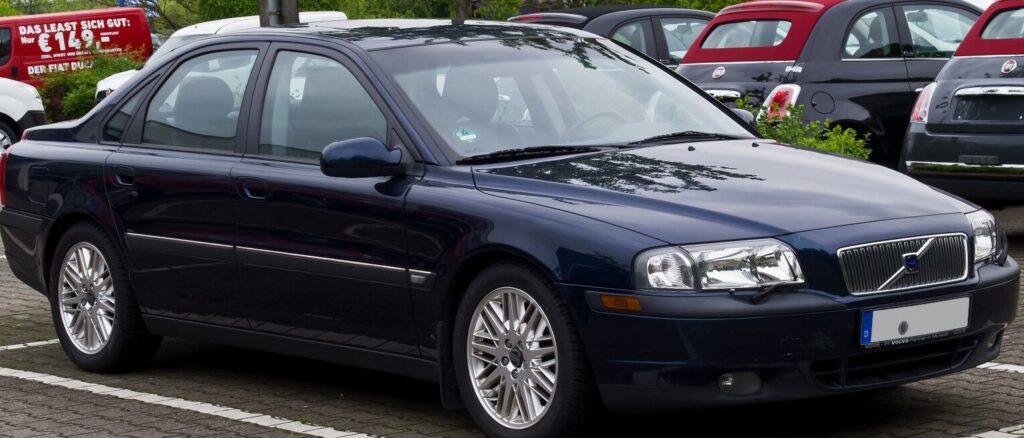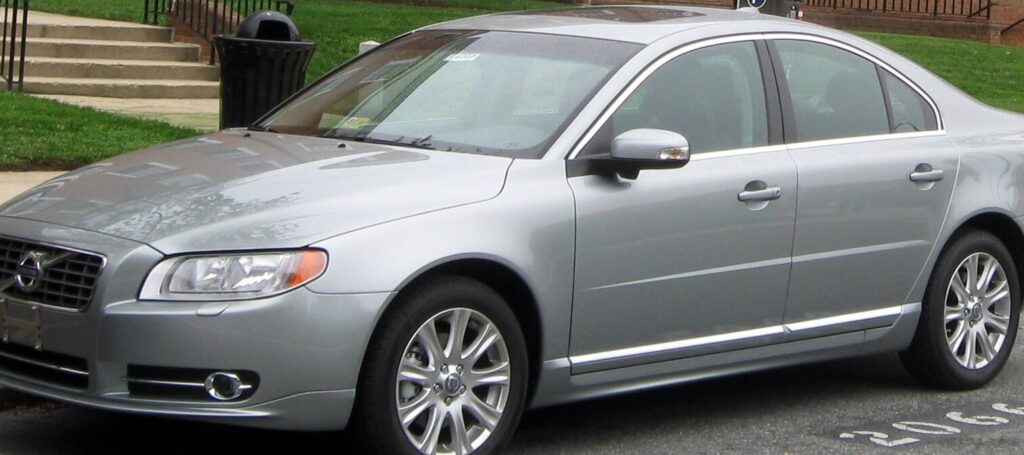
The Volvo S80 II (facelift 2009) 1.6 D DRIVE, producing 109 horsepower, was a key variant in Volvo’s mid-size executive sedan lineup from 2009 to 2011. Positioned as the entry-level diesel option, it aimed to provide fuel efficiency and reasonable performance for buyers prioritizing economy over outright speed. This model represented Volvo’s continued commitment to diesel technology within the European market, offering a balance between luxury and practicality. The facelifted S80, introduced in 2009, brought revised styling and updated technology to the second-generation S80, which originally debuted in 2006 as a replacement for the long-running S80 series.
Technical Specifications
| Brand | Volvo |
| Model | S80 |
| Generation | S80 II (facelift 2009) |
| Type (Engine) | 1.6 D DRIVE (109 Hp) |
| Start of production | 2009 |
| End of production | 2011 |
| Powertrain Architecture | Internal Combustion engine |
| Body type | Sedan |
| Seats | 5 |
| Doors | 4 |
| Fuel consumption (combined) | 4.9 l/100 km (48 US mpg, 57.6 UK mpg, 20.4 km/l) |
| Fuel Type | Diesel |
| Acceleration 0 – 100 km/h | 13 sec |
| Acceleration 0 – 62 mph | 13 sec |
| Acceleration 0 – 60 mph | 12.4 sec |
| Weight-to-power ratio | 15 kg/Hp |
| Weight-to-torque ratio | 6.8 kg/Nm |
| Power | 109 Hp @ 4000 rpm |
| Power per litre | 69.9 Hp/l |
| Torque | 240 Nm @ 1750 rpm (177.01 lb.-ft. @ 1750 rpm) |
| Engine layout | Front, Transverse |
| Engine Model/Code | D4164T |
| Engine displacement | 1560 cm3 (95.2 cu. in.) |
| Number of cylinders | 4 |
| Engine configuration | Inline |
| Piston Stroke | 87.5 mm (3.44 in.) |
| Fuel injection system | Diesel Commonrail |
| Engine aspiration | Turbocharger, Intercooler |
| Engine oil capacity | 3.7 l (3.91 US qt | 3.26 UK qt) |
| Coolant | 10.5 l (11.1 US qt | 9.24 UK qt) |
| Kerb Weight | 1630 kg (3593.53 lbs.) |
| Max. weight | 2160 kg (4761.98 lbs.) |
| Max load | 530 kg (1168.45 lbs.) |
| Trunk (boot) space – minimum | 480 l (16.95 cu. ft.) |
| Fuel tank capacity | 70 l (18.49 US gal | 15.4 UK gal) |
| Length | 4851 mm (190.98 in.) |
| Width | 1861 mm (73.27 in.) |
| Height | 1493 mm (58.78 in.) |
| Wheelbase | 2835 mm (111.61 in.) |
| Front track | 1588 mm (62.52 in.) |
| Rear (Back) track | 1585 mm (62.4 in.) |
| Minimum turning circle | 11.7 m (38.39 ft.) |
| Drivetrain Architecture | The Internal combustion engine (ICE) drives the front wheels of the vehicle. |
| Drive wheel | Front wheel drive |
| Number of gears and type of gearbox | 5 gears, manual transmission |
| Assisting systems | ABS (Anti-lock braking system) |
| Steering type | Steering rack and pinion |
Powertrain & Engine Architecture
The heart of the S80 1.6 D DRIVE is the Volvo-developed D4164T 1.6-liter inline-four cylinder diesel engine. This engine utilizes a common-rail direct fuel injection system, delivering fuel at extremely high pressure for optimized combustion. A turbocharger with an intercooler is employed to boost power output and improve torque across a wider rev range. The engine produces 109 horsepower at 4000 rpm and 240 Nm (177 lb-ft) of torque at 1750 rpm. This configuration was designed for efficiency rather than outright performance. The engine’s architecture is relatively simple, contributing to its reliability. The 5-speed manual transmission was standard, chosen for its efficiency and cost-effectiveness. While an automatic transmission was available on other S80 models, it wasn’t offered with the 1.6 D DRIVE, further emphasizing the focus on fuel economy.
Driving Characteristics
The 1.6 D DRIVE S80 offered a comfortable, but not particularly sporty, driving experience. Acceleration from 0-60 mph took around 12.4 seconds, making it noticeably slower than higher-powered S80 variants like the 2.5T or the 3.2. The engine’s torque, however, was readily available from low RPMs, providing adequate pulling power for everyday driving situations. The 5-speed manual transmission was well-matched to the engine’s characteristics, allowing drivers to keep the engine in its optimal power band. Compared to the more powerful S80 models, the 1.6 D DRIVE felt less refined and exhibited more engine noise, particularly during acceleration. The front-wheel-drive configuration provided predictable handling, but lacked the all-weather capability of Volvo’s all-wheel-drive systems.
Equipment & Trim Levels
The 1.6 D DRIVE trim typically came with a respectable level of standard equipment, reflecting Volvo’s commitment to safety and comfort. Standard features included climate control, power windows and mirrors, a basic audio system, and Volvo’s signature City Safety system, which automatically applied the brakes at low speeds to mitigate or avoid collisions. Interior upholstery was typically cloth, with options for leather upgrades. The dashboard layout was functional and ergonomically designed, with a focus on ease of use. Optional extras included a premium audio system, navigation, sunroof, and parking sensors. The trim level was generally considered the entry point into the S80 range, appealing to buyers seeking a comfortable and safe sedan without the expense of higher-spec models.
Chassis & Braking
The S80 II utilized a MacPherson strut front suspension and a multi-link rear suspension, providing a comfortable ride quality. The suspension was tuned for comfort rather than sporty handling. The 1.6 D DRIVE variant, due to its lower weight compared to higher-powered models, generally featured a slightly softer suspension setup. Braking duties were handled by disc brakes on the front wheels and drum brakes on the rear wheels. Anti-lock Braking System (ABS) was standard. The braking performance was adequate for everyday driving, but lacked the stopping power of the larger brake systems found on more powerful S80 models. Stabilizer bars were fitted to both the front and rear axles to reduce body roll during cornering.
Market Reception & Comparison
The Volvo S80 1.6 D DRIVE was generally well-received by critics as a fuel-efficient and practical option within the executive sedan segment. However, its performance was often criticized as being underwhelming compared to its competitors and even other S80 variants. Fuel economy was a major selling point, with the car achieving around 48 US mpg on the combined cycle. Compared to the S80 2.5T, the 1.6 D DRIVE offered significantly lower running costs but sacrificed performance and refinement. The 1.6 D DRIVE was primarily targeted at buyers who prioritized fuel efficiency and practicality over driving excitement. It was a popular choice in Europe, where diesel engines were favored due to lower fuel taxes and higher gasoline prices.
Legacy
The D4164T engine, while not known for being a powerhouse, proved to be relatively reliable in the S80. Common issues were generally limited to diesel particulate filter (DPF) problems, which are typical of modern diesel engines, and occasional turbocharger failures. In the used car market, the S80 1.6 D DRIVE represents an affordable entry point into Volvo ownership. Its fuel efficiency and relatively low maintenance costs make it an attractive option for budget-conscious buyers. However, potential buyers should be aware of the potential for DPF issues and ensure that the car has been properly maintained. The 1.6 D DRIVE S80, while not the most exciting variant, remains a testament to Volvo’s commitment to building safe, comfortable, and efficient vehicles.