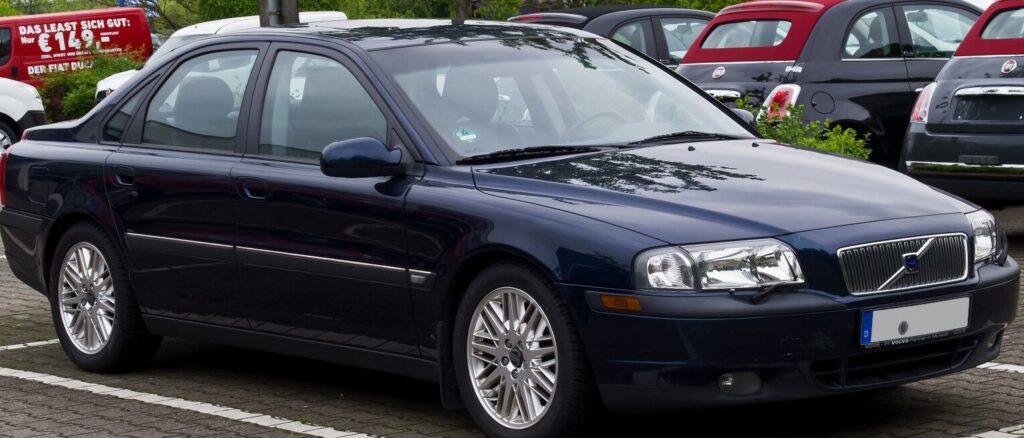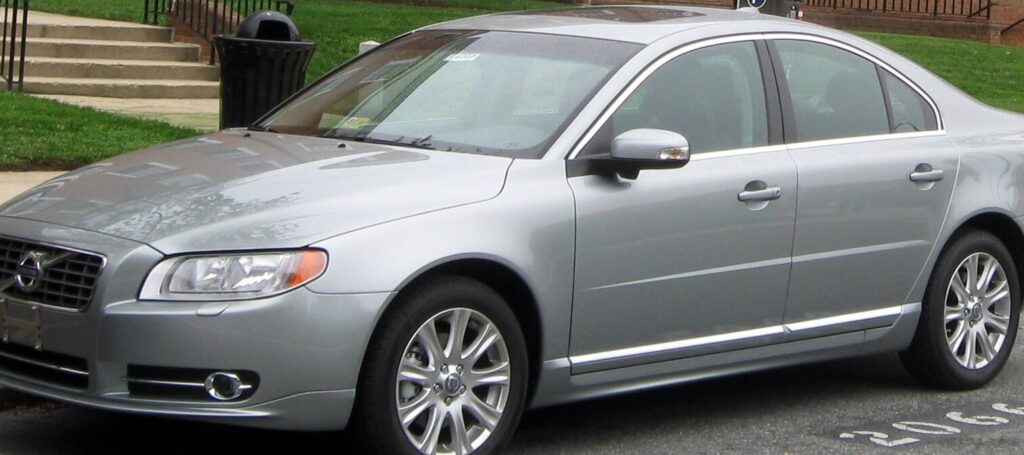
The Volvo S80 II (facelift 2009) 2.0 D, producing 136 horsepower, represents a significant iteration within the second generation of Volvo’s flagship sedan. Introduced in 2009 and continuing through 2011, this variant was positioned as an entry-level offering in the S80 lineup, primarily aimed at European markets seeking a balance between fuel efficiency and comfortable long-distance cruising. It utilized Volvo’s established platform, the P24 chassis, and was a key component in Volvo’s strategy to offer a wider range of powertrain options to cater to diverse customer needs. This model year saw a notable facelift to the S80 II, incorporating revised styling cues and updated technology.
Technical Specifications
| Brand | Volvo |
| Model | S80 |
| Generation | S80 II (facelift 2009) |
| Type (Engine) | 2.0 D (136 Hp) |
| Start of production | 2009 |
| End of production | 2011 |
| Powertrain Architecture | Internal Combustion engine |
| Body type | Sedan |
| Seats | 5 |
| Doors | 4 |
| Fuel consumption (urban) | 7.6 l/100 km (30.9 US mpg, 37.2 UK mpg, 13.2 km/l) |
| Fuel consumption (extra urban) | 4.7 l/100 km (50 US mpg, 60.1 UK mpg, 21.3 km/l) |
| Fuel consumption (combined) | 5.7 l/100 km (41.3 US mpg, 49.6 UK mpg, 17.5 km/l) |
| CO2 emissions | 151 g/km |
| Fuel Type | Diesel |
| Acceleration 0 – 100 km/h | 11 sec |
| Acceleration 0 – 62 mph | 11 sec |
| Acceleration 0 – 60 mph | 10.5 sec |
| Emission standard | Euro 4 |
| Weight-to-power ratio | 12.1 kg/Hp, 82.6 Hp/tonne |
| Weight-to-torque ratio | 5.1 kg/Nm, 194.3 Nm/tonne |
| Power | 136 Hp @ 4000 rpm |
| Power per litre | 68.1 Hp/l |
| Torque | 320 Nm @ 2000 rpm (236.02 lb.-ft. @ 2000 rpm) |
| Engine layout | Front, Transverse |
| Engine Model/Code | D4204T |
| Engine displacement | 1997 cm3 (121.86 cu. in.) |
| Number of cylinders | 4 |
| Engine configuration | Inline |
| Piston Stroke | 85 mm (3.35 in.) |
| Fuel injection system | Diesel Commonrail |
| Engine aspiration | Turbocharger, Intercooler |
| Engine oil capacity | 4.8 l (5.07 US qt | 4.22 UK qt) |
| Coolant | 9.1 l (9.62 US qt | 8.01 UK qt) |
| Kerb Weight | 1647 kg (3631.01 lbs.) |
| Max. weight | 2200 kg (4850.17 lbs.) |
| Max load | 553 kg (1219.16 lbs.) |
| Trunk (boot) space – minimum | 480 l (16.95 cu. ft.) |
| Fuel tank capacity | 70 l (18.49 US gal | 15.4 UK gal) |
| Length | 4851 mm (190.98 in.) |
| Width | 1861 mm (73.27 in.) |
| Height | 1493 mm (58.78 in.) |
| Wheelbase | 2835 mm (111.61 in.) |
| Front track | 1588 mm (62.52 in.) |
| Rear (Back) track | 1585 mm (62.4 in.) |
| Minimum turning circle | 11.7 m (38.39 ft.) |
| Drivetrain Architecture | The Internal combustion engine (ICE) drives the front wheels of the vehicle. |
| Drive wheel | Front wheel drive |
| Number of gears and type of gearbox | 6 gears, manual transmission |
| Assisting systems | ABS (Anti-lock braking system) |
| Steering type | Steering rack and pinion |
Powertrain & Engine Architecture
The heart of the S80 II 2.0 D is the Volvo D4204T, a 2.0-liter inline-four cylinder diesel engine. This engine is a member of Volvo’s modular engine family, designed for flexibility and efficiency. It features a common-rail direct fuel injection system, delivering fuel at extremely high pressure for optimized combustion. A turbocharger with an intercooler is employed to boost power output and improve torque across a wider rev range. The engine’s 16-valve configuration, utilizing a double overhead camshaft (DOHC) design, contributes to its relatively high specific output. The 6-speed manual transmission was standard, providing a good balance between fuel economy and driver control. The engine’s design prioritized low-end torque, making it well-suited for everyday driving and highway cruising.
Driving Characteristics
The 136 horsepower and 320 Nm (236 lb-ft) of torque delivered by the 2.0 D engine provided adequate, though not exhilarating, performance. Acceleration from 0-60 mph took around 10.5 seconds, making it competitive with other diesel-powered sedans in its class. The manual transmission allowed for precise gear selection, but the engine’s limited power meant frequent downshifts were often necessary when overtaking or climbing hills. Compared to the higher-output 2.4 D5 variants, the 2.0 D felt noticeably less responsive. However, it offered a smoother and more refined driving experience than the petrol-powered options, particularly at highway speeds. The gear ratios were tuned for fuel efficiency, resulting in a relaxed cruising experience.
Equipment & Trim Levels
The 2.0 D trim of the S80 II typically came standard with features such as climate control, power windows and mirrors, a basic audio system, and alloy wheels. Safety was a key focus for Volvo, and even the base trim included features like ABS, traction control, and multiple airbags. Optional extras included leather upholstery, a premium audio system, a sunroof, and parking sensors. The interior design was characterized by Volvo’s Scandinavian aesthetic, emphasizing simplicity and functionality. The dashboard layout was clean and intuitive, with logically placed controls.
Chassis & Braking
The S80 II utilized a MacPherson strut front suspension and a multi-link rear suspension, providing a comfortable and controlled ride. The suspension was tuned to prioritize comfort over sporty handling. The 2.0 D variant typically featured disc brakes on the front wheels and drum brakes on the rear, a cost-saving measure compared to the all-disc setups found on higher-trim models. Anti-lock Braking System (ABS) was standard, enhancing braking performance and stability. Stabilizer bars were fitted to both the front and rear axles to reduce body roll during cornering.
Market Reception & Comparison
The Volvo S80 II 2.0 D was generally well-received by critics as a practical and fuel-efficient option. It was praised for its comfortable ride, spacious interior, and strong safety credentials. However, some reviewers noted that the engine lacked the punch of its larger counterparts. Compared to the 2.4 D5, the 2.0 D offered significantly better fuel economy but at the expense of performance. It also represented a more affordable entry point into the S80 range, making it attractive to budget-conscious buyers. Its fuel economy of around 41.3 US mpg combined was a key selling point in European markets.
Legacy
The D4204T engine, while not known for being a high-performance unit, proved to be relatively reliable. Common issues included turbocharger wear and potential problems with the diesel particulate filter (DPF), particularly on vehicles primarily used for short trips. However, with regular maintenance, these engines can provide many years of service. Today, the S80 II 2.0 D represents an affordable and practical used car option. Its fuel efficiency and comfortable ride continue to appeal to buyers seeking a reliable and economical sedan. Parts availability is generally good, and the relatively simple mechanical design makes it a viable option for DIY mechanics.