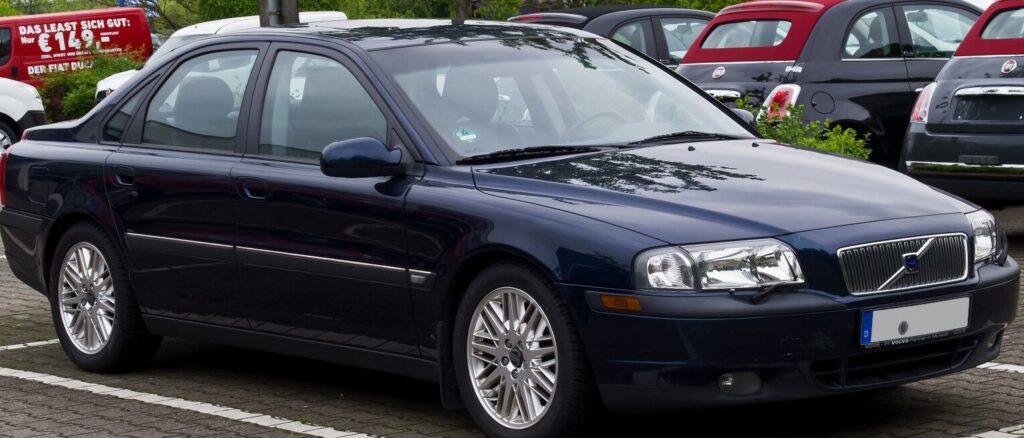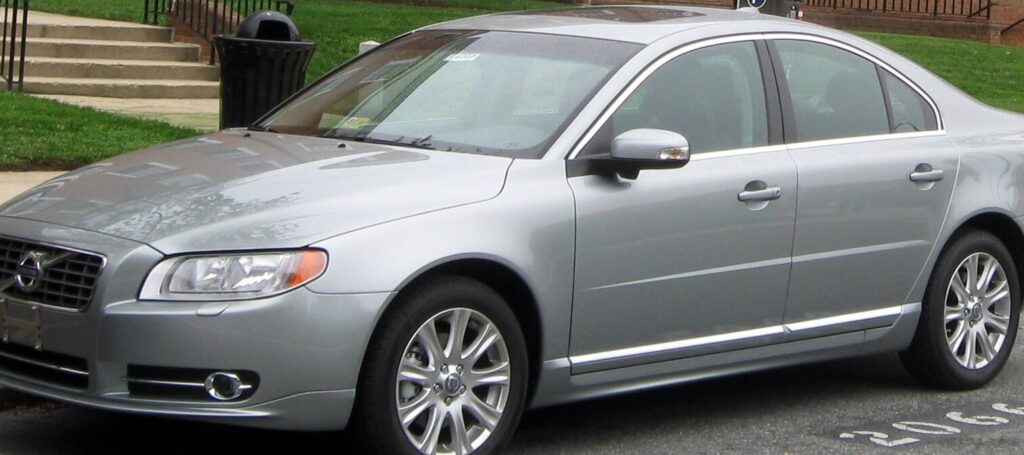
The Volvo S80 II facelift, produced from 2009 to 2011, represented a significant refresh of Volvo’s flagship sedan. Among the engine options available, the 2.4 D5 variant, generating 205 horsepower, occupied a crucial position in the lineup, offering a balance of performance and fuel efficiency. This model aimed to appeal to buyers seeking a comfortable, refined, and economical luxury sedan. It was primarily marketed in Europe and other regions where diesel engines were favored, offering a compelling alternative to gasoline-powered competitors.
Technical Specifications
| Brand | Volvo |
| Model | S80 |
| Generation | S80 II (facelift 2009) |
| Type (Engine) | 2.4 D5 (205 Hp) |
| Start of production | 2009 |
| End of production | 2011 |
| Powertrain Architecture | Internal Combustion engine |
| Body type | Sedan |
| Seats | 5 |
| Doors | 4 |
| Fuel consumption (economy) – urban (NEDC) | 8.7 l/100 km (27 US mpg, 32.5 UK mpg, 11.5 km/l) |
| Fuel consumption (economy) – extra urban (NEDC) | 4.8 l/100 km (49 US mpg, 58.9 UK mpg, 20.8 km/l) |
| Fuel consumption (economy) – combined (NEDC) | 6.2 l/100 km (37.9 US mpg, 45.6 UK mpg, 16.1 km/l) |
| CO2 emissions (NEDC) | 164 g/km |
| Fuel Type | Diesel |
| Acceleration 0 – 100 km/h | 8 sec |
| Acceleration 0 – 62 mph | 8 sec |
| Acceleration 0 – 60 mph | 7.6 sec |
| Maximum speed | 230 km/h (142.92 mph) |
| Emission standard | Euro 5 |
| Weight-to-power ratio | 7.6 kg/Hp, 132.4 Hp/tonne |
| Weight-to-torque ratio | 3.7 kg/Nm, 271.3 Nm/tonne |
| Power | 205 Hp @ 4000 rpm |
| Power per litre | 85.4 Hp/l |
| Torque | 420 Nm @ 1500-3250 rpm (309.78 lb.-ft. @ 1500-3250 rpm) |
| Engine layout | Front, Transverse |
| Engine Model/Code | D5244T10 |
| Engine displacement | 2400 cm3 (146.46 cu. in.) |
| Number of cylinders | 5 |
| Engine configuration | Inline |
| Cylinder Bore | 81 mm (3.19 in.) |
| Piston Stroke | 93.15 mm (3.67 in.) |
| Compression ratio | 16.5:1 |
| Number of valves per cylinder | 4 |
| Fuel injection system | Diesel Commonrail |
| Engine aspiration | Turbocharger, Intercooler |
| Valvetrain | DOHC |
| Engine oil capacity | 6 l (6.34 US qt | 5.28 UK qt) |
| Coolant | 12.6 l (13.31 US qt | 11.09 UK qt) |
| Kerb Weight | 1548 kg (3412.76 lbs.) |
| Max. weight | 2190 kg (4828.12 lbs.) |
| Max load | 642 kg (1415.37 lbs.) |
| Trunk (boot) space – minimum | 480 l (16.95 cu. ft.) |
| Fuel tank capacity | 70 l (18.49 US gal | 15.4 UK gal) |
| Max. roof load | 100 kg (220.46 lbs.) |
| Permitted trailer load with brakes (12%) | 1600 kg (3527.4 lbs.) |
| Permitted trailer load without brakes | 750 kg (1653.47 lbs.) |
| Permitted towbar download | 75 kg (165.35 lbs.) |
| Length | 4851 mm (190.98 in.) |
| Width | 1861 mm (73.27 in.) |
| Width including mirrors | 2106 mm (82.91 in.) |
| Height | 1493 mm (58.78 in.) |
| Wheelbase | 2835 mm (111.61 in.) |
| Front track | 1588 mm (62.52 in.) |
| Rear (Back) track | 1585 mm (62.4 in.) |
| Front overhang | 978 mm (38.5 in.) |
| Rear overhang | 1038 mm (40.87 in.) |
| Minimum turning circle (turning diameter) | 11.7 m (38.39 ft.) |
| Drivetrain Architecture | The Internal combustion engine (ICE) drives the front wheels of the vehicle. |
| Drive wheel | Front wheel drive |
| Number of gears and type of gearbox | 6 gears, manual transmission |
| Front suspension | Independent, type McPherson with coil spring and anti-roll bar |
| Rear suspension | Independent multi-link spring suspension with stabilizer |
| Front brakes | Ventilated discs |
| Rear brakes | Disc |
| Assisting systems | ABS (Anti-lock braking system) |
| Steering type | Steering rack and pinion |
| Power steering | Electric Steering |
| Tires size | 225/55 R16; 245/40 R18 |
| Wheel rims size | 7J x 16; 8J x 18 |
INTRODUCTION
The Volvo S80 II facelift, launched in 2009, built upon the foundation laid by the original S80 II, introducing styling refinements and updated technology. The 2.4 D5 variant, powered by Volvo’s renowned five-cylinder diesel engine, was a key component of the S80 lineup. Positioned as a mid-range offering, it provided a step up in performance and refinement from the lower-spec models while remaining more accessible than the range-topping petrol variants. This engine was a mainstay of Volvo’s offerings during this period, known for its durability and strong torque output. The facelift brought subtle changes to the exterior, including a revised grille, headlights, and taillights, along with interior enhancements focused on improving the overall user experience.
Powertrain & Engine Architecture
The heart of the S80 2.4 D5 is the D5244T10 engine, a 2.4-liter inline-five cylinder diesel. This engine utilizes a common rail direct injection system, delivering fuel at extremely high pressure for optimized combustion. The D5244T10 is equipped with a variable geometry turbocharger (VGT) and an intercooler, enhancing both power and efficiency. The engine’s valvetrain features a double overhead camshaft (DOHC) design with four valves per cylinder, contributing to its responsive nature. The engine produces 205 horsepower at 4000 rpm and a substantial 420 Nm (309.78 lb-ft) of torque between 1500 and 3250 rpm. This broad torque curve provides strong acceleration and effortless cruising. The engine’s robust construction and advanced technologies allowed it to meet stringent Euro 5 emission standards. The S80 2.4 D5 was typically paired with a 6-speed manual transmission, although an automatic transmission was also available, albeit less common.
Driving Characteristics
The S80 2.4 D5 offered a refined and comfortable driving experience. The engine’s ample torque meant that strong acceleration was readily available, making overtaking and merging onto highways easy. While not a sports sedan, the D5 provided sufficient power for confident driving in most situations. The 6-speed manual transmission allowed for precise control, while the optional automatic offered smooth and convenient gear changes. Compared to the higher-output petrol versions, the D5 prioritized fuel efficiency and relaxed cruising over outright performance. The manual transmission offered a more engaging driving experience, while the automatic prioritized comfort and ease of use. The suspension was tuned for comfort, absorbing bumps and imperfections in the road effectively, contributing to a smooth and quiet ride.
Equipment & Trim Levels
The S80 2.4 D5 typically came equipped with a generous array of standard features. These included climate control, power windows and mirrors, a premium audio system, and leather upholstery. Safety was a key focus for Volvo, and the S80 2.4 D5 included features such as ABS, traction control, and multiple airbags. Optional extras included a navigation system, sunroof, and upgraded audio systems. Trim levels varied depending on the market, but generally offered increasing levels of luxury and technology. Higher trim levels might include features such as heated seats, a rear parking sensor, and a more sophisticated infotainment system.
Chassis & Braking
The S80 II utilized a McPherson strut front suspension and a multi-link independent rear suspension. This setup provided a good balance of comfort and handling. The chassis was designed to minimize noise, vibration, and harshness, contributing to a refined driving experience. The S80 2.4 D5 was equipped with ventilated disc brakes at the front and solid disc brakes at the rear. ABS (Anti-lock Braking System) was standard, enhancing braking performance and stability. The steering was a rack and pinion system with power assistance, providing precise and responsive control.
Market Reception & Comparison
The Volvo S80 2.4 D5 was generally well-received by automotive critics. It was praised for its comfortable ride, refined interior, and fuel-efficient engine. The diesel engine’s strong torque was also a highlight. Compared to the petrol-powered S80 variants, the D5 offered superior fuel economy and a more relaxed driving experience. However, some critics noted that the D5 wasn’t as sporty or engaging as some of its competitors. Against rivals like the BMW 5 Series and Audi A6, the S80 2.4 D5 offered a compelling alternative, particularly for buyers prioritizing comfort and value. Its fuel economy was competitive, and its reliability was generally considered good.
Legacy
The Volvo S80 2.4 D5 has proven to be a durable and reliable vehicle. The D5 engine is known for its longevity, and many examples are still on the road today. While maintenance costs can be higher than some competitors due to the complexity of the diesel engine, the S80 2.4 D5 remains a popular choice in the used car market. Its combination of comfort, fuel efficiency, and reliability makes it an attractive option for buyers seeking a well-rounded luxury sedan. The S80 II, and particularly the 2.4 D5 variant, represents a high point in Volvo’s commitment to building safe, comfortable, and durable vehicles.