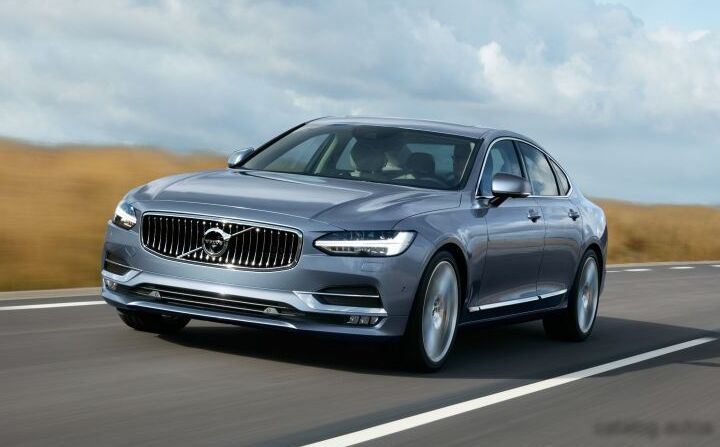
The Volvo S90 2.0 D4, produced from 2016 to 2018, represented a key entry point into the redesigned second generation of Volvo’s flagship sedan. Built on the Scalable Product Architecture (SPA) platform – also underpinning the XC90 and V90 – the D4 variant offered a balance of fuel efficiency, comfortable driving dynamics, and Volvo’s renowned safety features. Positioned as the more economical option within the S90 lineup, it catered to buyers prioritizing practicality and lower running costs over outright performance, slotting below the more powerful D5 and petrol-powered T6 and T8 models.
The heart of the S90 D4 is Volvo’s 2.0-liter four-cylinder diesel engine, designated the D4204T14. This engine is a member of Volvo’s Drive-E family, characterized by its modular design and advanced technologies. It utilizes a common-rail direct fuel injection system, delivering fuel at extremely high pressure for optimized combustion. The engine employs a twin-turbocharger setup – a low-inertia turbocharger for immediate response and a larger turbocharger for increased peak power. A double overhead camshaft (DOHC) valvetrain with four valves per cylinder further enhances breathing and efficiency. The engine produces 190 horsepower at 4250 rpm and 400 Nm (295 lb-ft) of torque between 1750 and 2520 rpm. The engine’s 15.8:1 compression ratio is relatively high for a turbocharged diesel, contributing to its thermal efficiency.
In practice, the S90 D4 offered smooth and refined performance, particularly well-suited for long-distance cruising. While not overtly sporty, the engine provided ample torque for confident overtaking and merging onto highways. The six-speed automatic transmission, while not the fastest shifting, was programmed for comfort and fuel economy, with gear changes largely imperceptible during normal driving. Acceleration from 0 to 62 mph (0-100 km/h) took approximately 8.2 seconds, and the car reached a top speed of 142.92 mph (230 km/h). Compared to the more powerful D5, the D4 felt noticeably less urgent in acceleration, but its fuel economy advantage was significant.
The S90 D4 typically came equipped with a generous level of standard features. Interior appointments included comfortable cloth or leather upholstery (depending on trim level), a 9-inch Sensus touchscreen infotainment system controlling most vehicle functions, and a suite of driver assistance technologies such as City Safety (Volvo’s automatic emergency braking system). Optional extras included a premium Bowers & Wilkins audio system, heated and ventilated front seats, a panoramic sunroof, and adaptive cruise control. Trim levels varied by market, but generally progressed from base ‘Momentum’ to mid-range ‘Inscription’ and potentially a luxury ‘Excellence’ variant, each adding progressively more features and premium materials.
The S90 D4’s chassis featured a double wishbone front suspension and an independent multi-link rear suspension with a stabilizer bar, providing a comfortable and controlled ride. Braking duties were handled by ventilated discs at the front and solid discs at the rear, equipped with ABS (Anti-lock Braking System). Steering was provided by an electric power steering system, offering light and precise control. Tire sizes varied depending on the trim level, ranging from 225/55 R17 to 255/35 R20. The car’s drag coefficient of between 0.26 and 0.29 contributed to its aerodynamic efficiency and fuel economy.
Critics generally praised the S90 D4 for its comfortable ride, refined interior, and strong fuel economy. The engine was considered adequate for most driving situations, although some reviewers noted its lack of outright performance compared to its more powerful siblings. Fuel consumption figures were impressive, averaging around 53.5 US mpg (64.2 UK mpg) on the combined cycle, with CO2 emissions of 116 g/km. Reliability proved generally good, although, as with any modern diesel, the particulate filter required periodic regeneration and could be susceptible to issues with infrequent long journeys. Compared to the D5, the D4 offered a more affordable entry point into the S90 range, making it a popular choice for buyers prioritizing value and efficiency.
| Engine Model/Code | D4204T14 |
| Engine Displacement | 1969 cm3 (120.16 cu. in.) |
| Number of Cylinders | 4, Inline |
| Power | 190 Hp @ 4250 rpm |
| Torque | 400 Nm (295.02 lb.-ft.) @ 1750-2520 rpm |
| Fuel Type | Diesel |
| Fuel Consumption (Combined) | 4.4 l/100 km (53.5 US mpg, 64.2 UK mpg, 22.7 km/l) |
| CO2 Emissions | 116 g/km |
| Acceleration 0-100 km/h | 8.2 sec |
| Acceleration 0-62 mph | 8.2 sec |
| Maximum Speed | 230 km/h (142.92 mph) |
| Transmission | 6-speed Automatic |
| Drive Type | Front Wheel Drive |
| Length | 4963 mm (195.39 in.) |
| Width | 1879 mm (73.98 in.) |
| Height | 1443 mm (56.81 in.) |
| Trunk Space | 500 l (17.66 cu. ft.) |
Today, the S90 D4 represents a compelling used car option. Its robust diesel engine, when properly maintained, can offer long-term reliability. However, potential buyers should be aware of the potential costs associated with diesel particulate filter maintenance and ensure the car has a full service history. The S90 D4’s blend of comfort, efficiency, and safety features continues to make it an attractive choice in the premium sedan segment, offering a sophisticated and practical alternative to its more performance-focused counterparts.