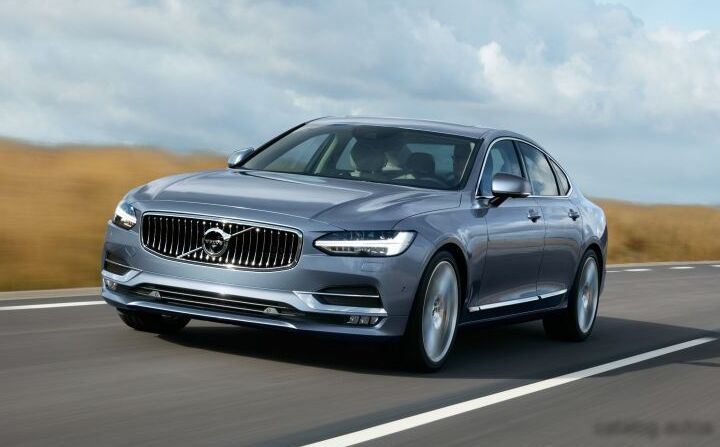
The Volvo S90 2.0 T4 Automatic, produced from 2018 to 2020, represents a key entry point into the second generation of Volvo’s flagship sedan (introduced in 2016). Positioned as a mid-range offering within the S90 lineup, it bridged the gap between the base T5 models and the more powerful T6 and T8 variants. Built on Volvo’s Scalable Product Architecture (SPA) platform – designated internally as the P20 – the S90 aimed to combine Scandinavian luxury with modern technology and a focus on safety. The 2.0 T4, with its 190 horsepower output and eight-speed automatic transmission, was designed to appeal to buyers prioritizing fuel efficiency and a comfortable driving experience over outright performance.
Powertrain & Engine Architecture
The heart of the S90 2.0 T4 is Volvo’s Drive-E 2.0-liter inline-four cylinder gasoline engine, specifically the B4204T31 engine code. This engine is a turbocharged, direct-injection powerplant. Direct injection allows for precise fuel delivery, improving efficiency and reducing emissions. The turbocharger, coupled with an intercooler, provides a boost in power and torque. The engine utilizes a dual overhead camshaft (DOHC) valvetrain with four valves per cylinder, optimizing airflow for enhanced performance.
The engine’s compression ratio is 10.8:1, a balance between efficiency and performance. It produces 190 horsepower at 5000 rpm and 300 Nm (221.27 lb-ft) of torque between 1700 and 4000 rpm. The engine’s displacement is 1969 cm³ (120.16 cubic inches).
The S90 2.0 T4 exclusively utilized Volvo’s eight-speed automatic transmission, branded as “Geartronic.” This transmission is known for its smooth shifting and responsiveness. It features a wide range of gear ratios designed to optimize both fuel economy and acceleration. The transmission is electronically controlled, adapting to driving conditions and driver input. The gear ratios are tuned to prioritize comfortable cruising and efficient acceleration rather than aggressive downshifts.
Fuel Injection and Turbocharging
The B4204T31 engine employs a sophisticated direct injection system. Fuel is injected directly into the combustion chamber, allowing for more precise control over the combustion process. This results in improved fuel efficiency, reduced emissions, and increased power output. The turbocharger is a single-scroll unit, designed to minimize turbo lag and provide a more immediate response to throttle inputs. The intercooler cools the compressed air from the turbocharger, increasing its density and further enhancing performance.
Driving Characteristics
The S90 2.0 T4 Automatic delivers a comfortable and refined driving experience. Acceleration from 0 to 60 mph is approximately 8.3 seconds, and 0-100 km/h takes 8.7 seconds. While not a performance-oriented variant, the engine provides adequate power for everyday driving situations, including highway merging and overtaking. The eight-speed automatic transmission contributes to smooth and seamless gear changes, enhancing the overall driving experience.
Compared to the higher-output T6 (supercharged and turbocharged) and T8 (plug-in hybrid) models, the 2.0 T4 offers a more relaxed and fuel-efficient driving experience. The T6 and T8 provide significantly more power and quicker acceleration, but at the expense of fuel economy. The 2.0 T4’s front-wheel-drive configuration also contributes to a slightly different handling feel compared to the all-wheel-drive T6 and T8 models. The front-wheel drive setup prioritizes efficiency and reduces complexity, but may offer less grip in challenging weather conditions.
Equipment & Trim Levels
The S90 2.0 T4 Automatic typically came well-equipped, reflecting Volvo’s commitment to luxury and safety. Standard features generally included leather upholstery, a 9-inch touchscreen infotainment system with Apple CarPlay and Android Auto compatibility, a rearview camera, automatic emergency braking, lane keeping assist, and a panoramic sunroof.
Optional extras included premium audio systems (such as Bowers & Wilkins), adaptive cruise control with Pilot Assist (Volvo’s semi-autonomous driving system), heated and ventilated front seats, a head-up display, and upgraded interior trim materials. Trim levels varied slightly depending on the market, but generally offered packages that bundled together popular options. The interior design emphasized Scandinavian minimalism, with clean lines, high-quality materials, and a focus on user-friendliness.
Chassis & Braking
The S90 2.0 T4 utilizes a double wishbone front suspension and a multi-link rear suspension, providing a comfortable and controlled ride. The suspension is tuned to prioritize comfort over sporty handling. The car’s kerb weight of 1831 kg (4036.66 lbs) influences the suspension tuning, requiring a balance between ride comfort and body control.
Braking duties are handled by disc brakes on all four wheels, with front discs measuring 296 mm and rear discs measuring 302 mm. The braking system is equipped with ABS (Anti-lock Braking System) and electronic brake-force distribution. The steering system is an electric power steering rack and pinion, providing precise and responsive steering feel. Tire sizes varied depending on the trim level, ranging from 245/45 R18 to 255/35 R20.
Market Reception & Comparison
The S90 2.0 T4 Automatic was generally well-received by automotive critics. It was praised for its comfortable ride, spacious interior, and advanced safety features. However, some critics noted that the engine’s performance was adequate but not particularly exciting. Fuel economy was a strong point, with combined fuel consumption figures around 6.7 l/100 km (35.1 US mpg).
Compared to its siblings, the 2.0 T4 offered a more affordable entry point into the S90 range. It was a compelling option for buyers who prioritized fuel efficiency and comfort over outright performance. The T5 model, with a slightly more powerful engine, offered a modest performance upgrade, while the T6 and T8 models provided significantly more power and all-wheel drive capability. In terms of reliability, the Drive-E engine family has generally proven to be reliable, although some owners have reported issues with the turbocharger and fuel injectors.
Technical Specifications
| Engine Model/Code | B4204T31 |
| Engine Displacement | 1969 cm³ (120.16 cu. in.) |
| Number of Cylinders | 4, Inline |
| Fuel Type | Petrol (Gasoline) |
| Power | 190 Hp @ 5000 rpm |
| Torque | 300 Nm @ 1700-4000 rpm (221.27 lb.-ft.) |
| Compression Ratio | 10.8:1 |
| Fuel Injection System | Direct Injection |
| Turbocharger | Single-Scroll |
| Transmission | 8-speed Automatic (Geartronic) |
| Drive Wheels | Front Wheel Drive |
| Kerb Weight | 1831 kg (4036.66 lbs.) |
| Fuel Consumption (Combined) | 6.7 l/100 km (35.1 US mpg, 42.2 UK mpg) |
| CO2 Emissions | 155 g/km |
| Acceleration 0-100 km/h | 8.7 sec |
| Maximum Speed | 210 km/h (130.49 mph) |
| Fuel Tank Capacity | 55 l (14.53 US gal, 12.1 UK gal) |
Legacy
The Volvo S90 2.0 T4 Automatic remains a popular choice in the used car market. Its combination of luxury, safety, and fuel efficiency makes it an attractive option for buyers seeking a comfortable and reliable sedan. The Drive-E engine has proven to be relatively durable, although regular maintenance is essential to ensure long-term reliability. Common maintenance items include oil changes, spark plug replacements, and turbocharger inspections. The S90 2.0 T4 represents a significant step forward in Volvo’s design and engineering, showcasing the brand’s commitment to innovation and Scandinavian luxury.