
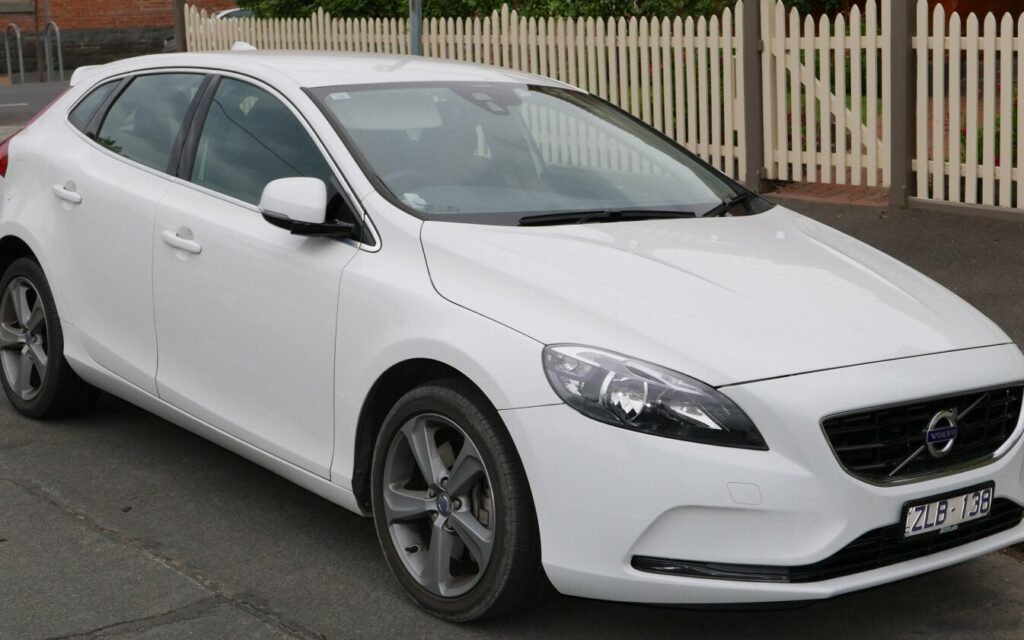
The Volvo V40 2.0 D2, producing 120 horsepower, was a key variant within the second-generation V40 series produced between 2012 and 2016 (though the D2 specifically saw production from 2015-2016). Positioned as the entry-level diesel option, it aimed to deliver a balance of fuel efficiency, affordability, and practicality within Volvo’s premium compact hatchback lineup, built on the C/D platform shared with Ford. This model represented Volvo’s attempt to capture a larger share of the European market, particularly appealing to buyers seeking lower running costs without sacrificing the brand’s reputation for safety and Scandinavian design.
The 2.0 D2: Volvo’s Efficient Entry Point
The V40 2.0 D2 was designed to be the most economical diesel offering in the V40 range. It sat below the more powerful D3 and D4 variants, offering a lower purchase price and significantly improved fuel economy. While not focused on outright performance, the D2 aimed to provide adequate power for everyday driving needs, making it a popular choice for urban commuters and those prioritizing fuel savings. It was marketed towards buyers who valued efficiency and practicality over sporty driving dynamics.
Powertrain & Engine Architecture
At the heart of the V40 2.0 D2 lies the D4204T8, a 2.0-liter inline-four cylinder diesel engine. This engine is a member of Volvo’s VEA (Volvo Engine Architecture) family, designed for modularity and efficiency. The D2 variant utilizes a single turbocharger with an intercooler to boost power and torque. Fuel is delivered via a common rail direct injection system, operating at a high pressure to optimize combustion. The engine features a double overhead camshaft (DOHC) valvetrain with four valves per cylinder, contributing to improved breathing and efficiency.
The engine’s compression ratio is relatively high at 16:1, typical for diesel engines, maximizing thermal efficiency. Lubrication is managed by a 5.2-liter (5.49 US qt) oil capacity, requiring oil meeting Volvo’s specific standards. The cooling system holds 8 liters (8.45 US qt) of coolant. The engine produces 120 hp at 3750 rpm and 280 Nm (206.52 lb-ft) of torque between 1500-2250 rpm. This torque curve provides good low-end responsiveness, making it suitable for everyday driving. The engine is transversely mounted in the front of the vehicle, driving the front wheels.
Driving Characteristics
The V40 2.0 D2, while not a performance-oriented vehicle, offers a surprisingly refined driving experience. The 280 Nm of torque available from 1500 rpm provides adequate acceleration for merging onto highways and overtaking slower traffic. However, the 10.5-second 0-62 mph (10-second 0-60 mph) acceleration time reflects its focus on efficiency rather than speed. The engine feels most comfortable in the mid-range, delivering smooth and predictable power. Compared to the more powerful D3 and D4 variants, the D2 feels noticeably less responsive, particularly at higher engine speeds. The six-speed manual transmission (the only transmission offered with this engine) is well-matched to the engine’s characteristics, providing precise shifts and contributing to the overall driving experience. The gear ratios are optimized for fuel efficiency, with a taller final drive ratio.
Equipment & Trim Levels
The V40 2.0 D2 was typically offered in base and mid-level trim configurations. Standard equipment generally included air conditioning, power windows, power mirrors, a basic audio system with USB connectivity, and a comprehensive suite of safety features, including ABS, electronic stability control, and multiple airbags. Higher trim levels added features such as alloy wheels, a more advanced infotainment system with a larger touchscreen display, automatic climate control, rear parking sensors, and leather upholstery. Optional extras included a panoramic sunroof, heated front seats, and a premium audio system. Interior upholstery typically consisted of cloth seats in the base trim, with leather options available on higher-spec models. The dashboard layout was characterized by Volvo’s minimalist Scandinavian design, with a focus on functionality and ease of use.
Chassis & Braking
The V40 2.0 D2 utilizes an independent McPherson strut suspension setup at the front, providing a comfortable and controlled ride. The rear suspension employs an independent coil spring arrangement. The suspension is tuned for comfort, prioritizing ride quality over sporty handling. Stabilizer bars are fitted to both the front and rear axles to reduce body roll during cornering. The braking system consists of ventilated discs at the front and solid discs at the rear. Anti-lock braking system (ABS) is standard, enhancing braking performance and stability. The steering system is a rack and pinion type, providing precise and responsive steering feel.
Market Reception & Comparison
The V40 2.0 D2 received generally positive reviews from automotive critics, particularly for its fuel efficiency and low running costs. It was praised for its comfortable ride, spacious interior, and comprehensive safety features. However, some critics noted its lack of outright performance compared to its more powerful siblings. In terms of fuel economy, the D2 excelled, achieving a combined fuel consumption of 3.6 l/100 km (65.3 US mpg, 78.5 UK mpg), and CO2 emissions of 94 g/km. Compared to the D3 and D4 variants, the D2 offered significantly better fuel economy, but at the expense of performance. The D3, with its slightly more powerful engine, provided a better balance of performance and efficiency, while the D4 offered the most performance but with higher fuel consumption. The D2 was often compared to rivals such as the Audi A3, BMW 1 Series, and Mercedes-Benz A-Class, offering a competitive package in terms of price, fuel economy, and features.
Technical Specifications
| Brand | Volvo |
| Model | V40 |
| Generation | V40 (2012) |
| Type (Engine) | 2.0 D2 (120 Hp) |
| Start of production | 2015 |
| End of production | 2016 |
| Powertrain Architecture | Internal Combustion engine |
| Body type | Hatchback |
| Seats | 5 |
| Doors | 5 |
| Fuel consumption (combined) | 3.6 l/100 km |
| CO2 emissions | 94 g/km |
| Fuel Type | Diesel |
| Acceleration 0 – 100 km/h | 10.5 sec |
| Acceleration 0 – 62 mph | 10.5 sec |
| Acceleration 0 – 60 mph | 10 sec |
| Maximum speed | 190 km/h (118.06 mph) |
| Power | 120 Hp @ 3750 rpm |
| Torque | 280 Nm @ 1500-2250 rpm (206.52 lb.-ft.) |
| Engine layout | Front, Transverse |
| Engine Model/Code | D4204T8 |
| Engine displacement | 1969 cm3 (120.16 cu. in.) |
| Number of cylinders | 4 |
| Engine configuration | Inline |
| Cylinder Bore | 82 mm (3.23 in.) |
| Piston Stroke | 93.2 mm (3.67 in.) |
| Compression ratio | 16:1 |
| Number of valves per cylinder | 4 |
| Fuel injection system | Diesel Commonrail |
| Engine aspiration | Turbocharger, Intercooler |
| Valvetrain | DOHC |
| Engine oil capacity | 5.2 l (5.49 US qt | 4.58 UK qt) |
| Coolant | 8 l (8.45 US qt | 7.04 UK qt) |
| Trunk (boot) space – minimum | 335 l (11.83 cu. ft.) |
| Fuel tank capacity | 62 l (16.38 US gal | 13.64 UK gal) |
| Length | 4369 mm (172.01 in.) |
| Width | 1857 mm (73.11 in.) |
| Height | 1439 mm (56.65 in.) |
| Wheelbase | 2647 mm (104.21 in.) |
| Drive wheel | Front wheel drive |
| Number of gears and type of gearbox | 6 gears, manual transmission |
Legacy
The Volvo V40 2.0 D2 has proven to be a relatively reliable powertrain in the used car market. The D4204T8 engine, while not without its potential issues (such as diesel particulate filter clogging and occasional turbocharger problems), is generally considered durable and long-lasting when properly maintained. The manual transmission is also known for its robustness. The V40 2.0 D2 remains a popular choice for buyers seeking an affordable, fuel-efficient, and safe compact hatchback. Its reputation for reliability and low running costs continues to make it a viable option in the used car market today, particularly for those prioritizing practicality and economy over outright performance.
