
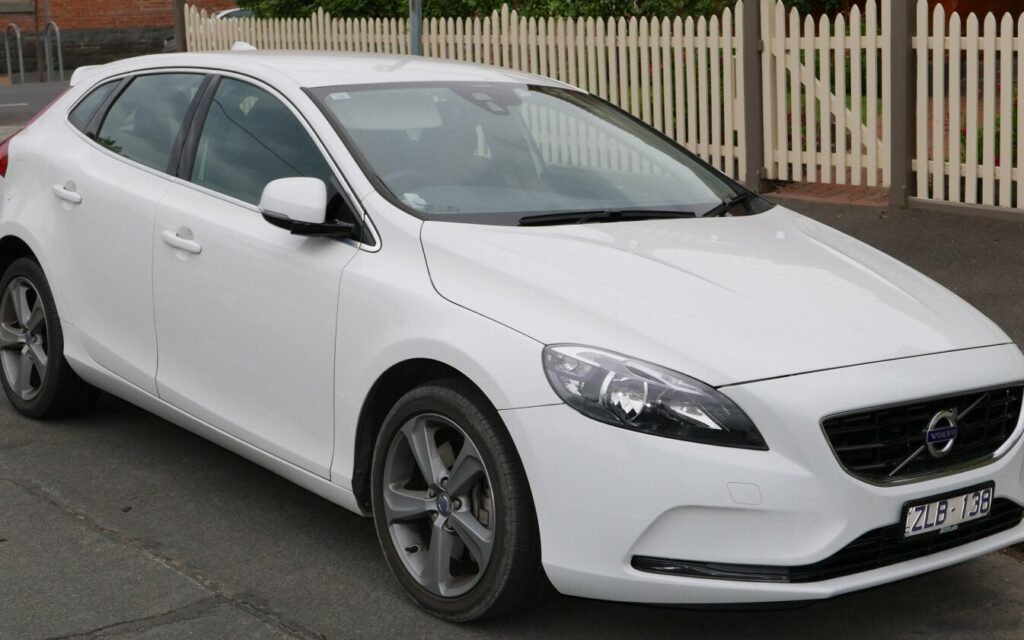
The Volvo V40 is a compact hatchback that was produced by the Swedish manufacturer Volvo Cars from 2012 to 2019. The V40, built on the C30 platform (internally designated as the 1HX0/A3 platform shared with Ford Focus models), aimed to provide a premium experience in the increasingly competitive small family car segment. Introduced as a replacement for the aging S40 and V50 models, the V40 distinguished itself with a focus on safety, design, and technology. The 2.0 D4 variant, producing 190 horsepower, was a key engine option offered from 2014 to 2016, representing a mid-range offering within the V40 lineup, positioned between the lower-powered D2 and D3 diesels and the higher-performance T5 gasoline model.
Volvo V40 2.0 D4 (190 Hp): An Overview
The 2.0 D4 version of the Volvo V40 was a popular choice for buyers seeking a balance of performance, fuel efficiency, and refinement. It targeted drivers who frequently undertake longer journeys and appreciate a more responsive driving experience than the entry-level diesel options could provide. The D4 engine was designed to offer strong torque for effortless cruising and overtaking, while still maintaining competitive fuel economy figures. This model year (2014-2016) saw the V40 establish itself as a strong contender in the premium hatchback class, competing with vehicles like the Audi A3, BMW 1 Series, and Mercedes-Benz A-Class.
Powertrain & Engine Architecture
The heart of the V40 D4 is the Volvo D4204T14 2.0-liter inline-four cylinder diesel engine. This engine is a member of Volvo’s VEA (Volvo Engine Architecture) family, designed for modularity and efficiency. It features a common-rail direct fuel injection system, operating at a maximum pressure of 1,800 bar, ensuring precise fuel delivery and optimized combustion. The engine utilizes a single turbocharger with an intercooler to boost power and torque. The D4204T14 boasts a compression ratio of 15.8:1, contributing to its thermal efficiency. The valvetrain is a Double Overhead Camshaft (DOHC) configuration with four valves per cylinder, maximizing airflow and enhancing performance. The engine’s oil capacity is 5.2 liters (5.49 US quarts / 4.58 UK quarts) and requires an oil meeting Volvo’s specific standards. A particulate filter is included as standard equipment to reduce emissions, meeting Euro 6 standards.
Driving Characteristics
The 190 horsepower and 400 Nm (295 lb-ft) of torque produced by the D4 engine provide the V40 with a noticeably more spirited driving experience compared to the lower-powered diesel variants. Acceleration from 0 to 100 km/h (0-62 mph) takes approximately 7.4 seconds, making it a competitive performer in its class. The engine delivers strong torque from as low as 1750 rpm, providing excellent responsiveness for everyday driving and effortless overtaking. While not a sports car, the D4 offers a confident and composed driving experience. The six-speed manual transmission (the primary transmission offered with this engine) is well-matched to the engine’s characteristics, providing precise shifts and a satisfying mechanical feel. The gear ratios are tuned to prioritize both fuel efficiency and usable performance. Compared to the gasoline T5 model, the D4 offers superior fuel economy and a broader torque curve, but lacks the ultimate top-end power of the petrol engine.
Equipment & Trim Levels
The V40 D4 was available in several trim levels, including ES, SE, and R-Design. The base ES trim included standard features such as alloy wheels, air conditioning, a leather-wrapped steering wheel, and a basic audio system. The SE trim added features like rear parking sensors, rain-sensing wipers, and upgraded upholstery. The R-Design trim, positioned as the sportier option, featured a more aggressive exterior styling package, sport seats, and a lowered suspension. Optional extras available across the range included a panoramic sunroof, navigation system, premium audio system, and a host of advanced safety features such as City Safety (Volvo’s autonomous braking system), Lane Keeping Aid, and Blind Spot Information System. Interior upholstery options ranged from cloth to leather, with various color combinations available. The dashboard layout was generally consistent across trims, featuring a clean and modern design with intuitive controls.
Chassis & Braking
The Volvo V40 D4 utilizes an independent suspension system on both the front and rear axles. The front suspension employs a McPherson strut design with coil springs and an anti-roll bar, while the rear suspension features an independent multi-link setup with coil springs. This suspension configuration provides a comfortable ride quality while maintaining good handling characteristics. The V40 D4 is equipped with ventilated disc brakes on the front wheels and solid disc brakes on the rear wheels. The braking system is assisted by ABS (Anti-lock Braking System) and Electronic Brake-force Distribution (EBD) to ensure optimal stopping performance. Steering is provided by a rack and pinion system with electric power assistance, offering precise and responsive steering feel.
Market Reception & Comparison
The Volvo V40 2.0 D4 received generally positive reviews from automotive critics. It was praised for its stylish design, comfortable interior, and strong fuel economy. The D4 engine was considered a good compromise between performance and efficiency, offering a more engaging driving experience than the lower-powered diesel options. However, some critics noted that the V40’s rear passenger space was somewhat limited compared to some of its rivals. In terms of fuel economy, the D4 achieved combined figures of around 3.8 l/100 km (61.9 US mpg / 74.3 UK mpg), making it a highly efficient option. Compared to the V40 D2 and D3 models, the D4 offered significantly more power and torque, resulting in improved acceleration and overtaking capability. Compared to the V40 T5 gasoline model, the D4 provided better fuel economy but lacked the T5’s outright performance. Reliability reports generally indicate that the D4 engine is a robust and dependable unit, although regular maintenance is essential to ensure long-term reliability.
Technical Specifications
| Body Type | Hatchback, 5 Doors, 5 Seats |
| Fuel Economy (Urban) | 4.2 l/100 km (56 US mpg, 67.3 UK mpg) |
| Fuel Economy (Extra Urban) | 3.6 l/100 km (65.3 US mpg, 78.5 UK mpg) |
| Fuel Economy (Combined) | 3.8 l/100 km (61.9 US mpg, 74.3 UK mpg) |
| CO2 Emissions | 99 g/km |
| Fuel Type | Diesel |
| Acceleration 0-100 km/h | 7.4 sec |
| Acceleration 0-62 mph | 7.4 sec |
| Maximum Speed | 230 km/h (142.92 mph) |
| Emission Standard | Euro 6 |
| Power | 190 Hp @ 4250 rpm |
| Torque | 400 Nm @ 1750-2500 rpm (295.02 lb.-ft.) |
| Engine Layout | Front, Transverse |
| Engine Model/Code | D4204T14 |
| Engine Displacement | 1969 cm3 (120.16 cu. in.) |
| Number of Cylinders | 4 |
| Engine Configuration | Inline |
| Cylinder Bore | 82 mm (3.23 in.) |
| Piston Stroke | 93.2 mm (3.67 in.) |
| Compression Ratio | 15.8:1 |
| Number of Valves per Cylinder | 4 |
| Fuel Injection System | Diesel Commonrail |
| Engine Aspiration | Turbocharger, Intercooler |
| Valvetrain | DOHC |
| Fuel Tank Capacity | 62 l (16.38 US gal, 13.64 UK gal) |
| Length | 4369 mm (172.01 in.) |
| Width | 1857 mm (73.11 in.) |
| Height | 1439 mm (56.65 in.) |
| Wheelbase | 2647 mm (104.21 in.) |
| Drivetrain | Front Wheel Drive |
| Number of Gears | 6, Manual Transmission |
Legacy
The Volvo V40 2.0 D4 has proven to be a relatively reliable vehicle in the used car market. The D4 engine, when properly maintained, is known for its durability and longevity. Common issues are typically related to wear and tear on components such as the turbocharger and fuel injectors, but these are generally not major concerns. The V40’s strong safety credentials and comfortable interior continue to make it an appealing option for buyers seeking a premium compact hatchback. While newer models have since replaced the V40, the 2.0 D4 variant remains a well-regarded and capable vehicle, offering a good balance of performance, efficiency, and practicality.
