
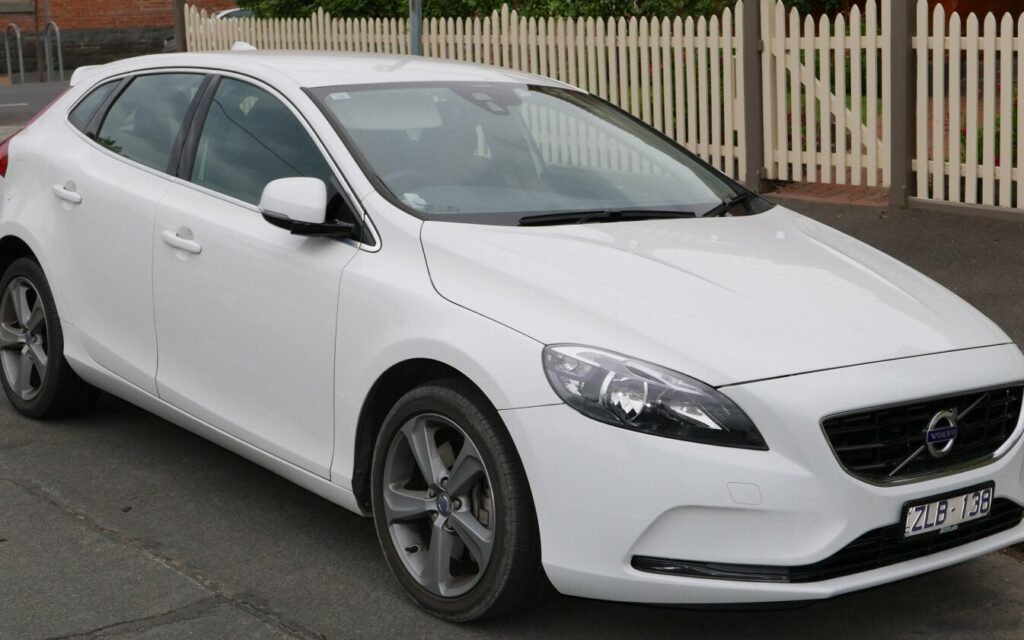
The Volvo V40 2.0 T2 (122 hp) was a front-wheel-drive, five-door hatchback produced by Volvo between 2015 and 2016 as part of the V40 series (introduced in 2012). Positioned as the entry-level engine option within the V40 lineup, the T2 aimed to provide a balance of fuel efficiency and acceptable performance for everyday driving. It occupied the lower end of the V40’s powertrain offerings, sitting below the more powerful T3, T4, and T5 variants, as well as the diesel-powered D2 and D4 models. The V40 itself was built on Volvo’s C/S platform, also known as the 1HX0/A3 platform, shared with other compact vehicles of the era.
Powertrain & Engine Architecture
The heart of the V40 2.0 T2 is the B4204T38 engine, a 1.969-liter (120.16 cubic inches) inline-four cylinder gasoline engine. This engine utilizes direct fuel injection and is turbocharged with an intercooler to enhance power output and efficiency. The engine produces 122 horsepower at 5000 rpm and 220 Nm (162.26 lb-ft) of torque between 1100 and 3500 rpm. The compression ratio is set at 11.3:1. The engine features a double overhead camshaft (DOHC) valvetrain with four valves per cylinder. Engine oil capacity is 5.9 liters (6.23 US quarts / 5.19 UK quarts), and the recommended coolant capacity is 7.5 liters (7.93 US quarts / 6.6 UK quarts).
While the T2 engine was available with both manual and automatic transmissions in some markets, the configuration detailed here focuses on the 6-speed automatic transmission. This transmission was chosen to provide ease of use and comfort, appealing to drivers prioritizing convenience over sporty driving dynamics. The automatic transmission’s gear ratios are tuned for fuel efficiency and smooth acceleration, rather than outright performance.
Fuel Injection and Turbocharging
The direct injection system in the B4204T38 engine delivers fuel directly into the combustion chamber, allowing for more precise fuel control and improved combustion efficiency. This contributes to both increased power and reduced emissions. The turbocharger forces more air into the engine, increasing its power output. The intercooler cools the compressed air from the turbocharger, further increasing its density and improving performance.
Driving Characteristics
The Volvo V40 2.0 T2 with the automatic transmission delivers a comfortable and predictable driving experience. Acceleration from 0 to 100 km/h (0-62 mph) takes approximately 9.8 seconds, while 0-60 mph is achieved in around 9.3 seconds. The maximum speed is 190 km/h (118.06 mph). Compared to the manual transmission version of the T2, the automatic offers slightly slower acceleration due to the inherent power losses within the torque converter. Compared to the higher-output T4 and T5 models, the T2 feels noticeably less powerful, particularly during overtaking maneuvers or when carrying a full load. However, the readily available torque from 1100 rpm provides adequate responsiveness for everyday driving situations. The automatic transmission shifts smoothly, prioritizing comfort over aggressive gear changes. The steering is light and precise, making the V40 easy to maneuver in urban environments.
The automatic transmission’s gear ratios are optimized for fuel economy, with taller gearing in higher gears to reduce engine speed at cruising speeds. This contributes to the combined fuel consumption of 5.5 l/100 km (42.8 US mpg / 51.4 UK mpg / 18.2 km/l).
Equipment & Trim Levels
The V40 2.0 T2 typically came with a reasonable level of standard equipment, though specific features varied depending on the market and optional packages selected. Standard features generally included air conditioning, power windows, power mirrors, a basic audio system with USB connectivity, and alloy wheels. Safety features were a Volvo hallmark, and the T2 included standard equipment such as ABS (Anti-lock Braking System), electronic stability control, and multiple airbags. Interior upholstery was typically cloth, with options for leather upgrades. The dashboard layout was clean and functional, with a central infotainment screen providing access to vehicle settings and audio controls.
Optional extras available for the T2 included a premium audio system, navigation system, parking sensors, automatic climate control, heated seats, and a sunroof. Higher trim levels offered more luxurious interior appointments and additional convenience features.
Chassis & Braking
The V40 2.0 T2 utilizes an independent suspension system on both the front and rear axles. The front suspension employs a McPherson strut design with coil springs and an anti-roll bar, while the rear suspension features an independent coil spring setup. This suspension configuration provides a comfortable ride and good handling characteristics. The front brakes are ventilated discs, providing strong stopping power, while the rear brakes are discs. The steering system is a rack and pinion type, offering precise and responsive steering feel. The V40’s chassis was designed to provide a balance between comfort and handling, prioritizing ride quality over sporty performance.
Market Reception & Comparison
The Volvo V40 2.0 T2 was generally well-received by critics as a practical and fuel-efficient hatchback. However, some reviewers noted that the engine felt underpowered, particularly when compared to the more powerful T4 and T5 variants. The automatic transmission was praised for its smoothness and ease of use, but criticized for its slightly slower acceleration. Fuel economy was a strong point, with the T2 achieving competitive figures in its class. Compared to other entry-level hatchbacks on the market, the V40 T2 offered a more premium interior and a higher level of standard safety equipment. Reliability was generally good, although some owners reported minor issues with the electronic systems.
The T2’s CO2 emissions of 127 g/km were relatively low, making it an attractive option for environmentally conscious buyers. The V40’s compact dimensions and easy maneuverability made it well-suited for urban driving.
Technical Specifications
| Brand | Volvo |
| Model | V40 |
| Generation | V40 (2012) |
| Type (Engine) | 2.0 T2 (122 Hp) |
| Start of production | 2015 |
| End of production | 2016 |
| Powertrain Architecture | Internal Combustion engine |
| Body type | Hatchback |
| Seats | 5 |
| Doors | 5 |
| Fuel consumption (combined) | 5.5 l/100 km |
| Fuel consumption (US mpg) | 42.8 |
| Fuel consumption (UK mpg) | 51.4 |
| CO2 emissions | 127 g/km |
| Fuel Type | Petrol (Gasoline) |
| Acceleration 0 – 100 km/h | 9.8 sec |
| Acceleration 0 – 62 mph | 9.8 sec |
| Acceleration 0 – 60 mph | 9.3 sec |
| Maximum speed | 190 km/h (118.06 mph) |
| Power | 122 Hp @ 5000 rpm |
| Torque | 220 Nm @ 1100-3500 rpm (162.26 lb.-ft.) |
| Engine layout | Front, Transverse |
| Engine Model/Code | B4204T38 |
| Engine displacement | 1969 cm3 (120.16 cu. in.) |
| Number of cylinders | 4 |
| Engine configuration | Inline |
| Cylinder Bore | 82 mm (3.23 in.) |
| Piston Stroke | 93.2 mm (3.67 in.) |
| Compression ratio | 11.3:1 |
| Number of valves per cylinder | 4 |
| Fuel injection system | Direct injection |
| Engine aspiration | Turbocharger, Intercooler |
| Valvetrain | DOHC |
| Engine oil capacity | 5.9 l (6.23 US qt | 5.19 UK qt) |
| Coolant capacity | 7.5 l (7.93 US qt | 6.6 UK qt) |
| Trunk (boot) space – minimum | 324 l (11.44 cu. ft.) |
| Fuel tank capacity | 62 l (16.38 US gal | 13.64 UK gal) |
| Length | 4369 mm (172.01 in.) |
| Width | 1857 mm (73.11 in.) |
| Height | 1439 mm (56.65 in.) |
| Wheelbase | 2647 mm (104.21 in.) |
| Drive wheel | Front wheel drive |
| Number of gears and type of gearbox | 6 gears, automatic transmission |
| Front suspension | Independent, type McPherson with coil spring and anti-roll bar |
| Rear suspension | Independent coil spring |
| Front brakes | Ventilated discs |
| Rear brakes | Disc |
Legacy
The Volvo V40 2.0 T2, while not the most powerful or dynamically engaging version of the V40, remains a reasonably reliable and fuel-efficient option in the used car market. The B4204T38 engine is generally considered to be durable, although regular maintenance is essential to prevent issues. Common problems reported by owners include occasional issues with the turbocharger and the direct injection system. The automatic transmission is generally reliable, but fluid changes should be performed according to the manufacturer’s recommendations. The V40’s strong safety credentials and comfortable ride continue to appeal to buyers looking for a practical and well-equipped hatchback. Its relatively low running costs and availability of spare parts make it a sensible choice for those seeking a used Volvo.
